










There are 59 products.


Freeze-dried pitaya - 200g
€14.90
-20%

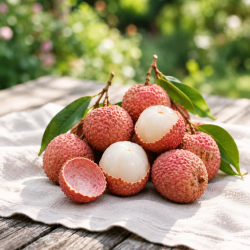
Freeze-dried lychees - 200g
€11.92 €14.90

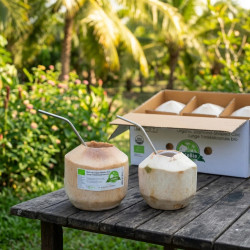
Freeze-dried coconut - 200g
€14.90


Freeze-dried longans - 200g
€14.90
New to
Biovie?
Discover living food
at your own pace.
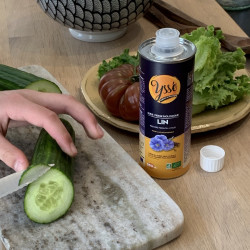
Organic camelina oil
€15.00
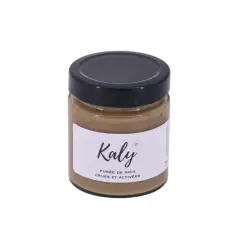
Activated whole nut puree
€15.90
-15%
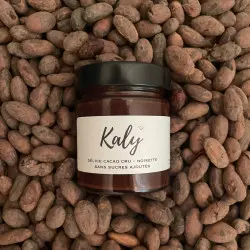
Raw cacao delight and activated hazelnuts
€13.52 €15.90
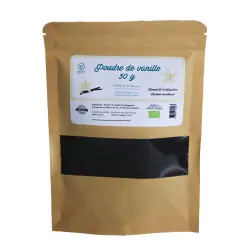

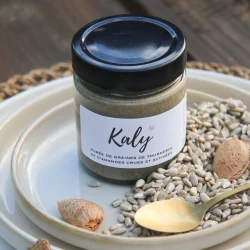



Activated cashew puree
€15.70

Activated hazelnut puree
€15.70
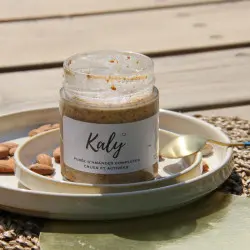
Activated almond puree
€15.70

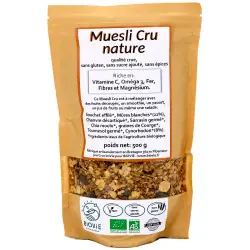


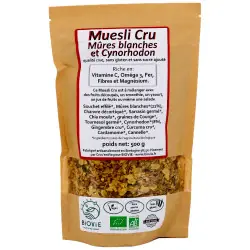
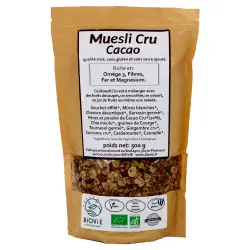
Cocoa muesli - raw, organic
€21.90


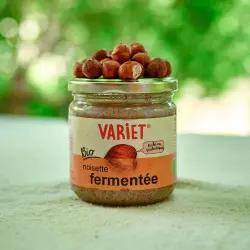
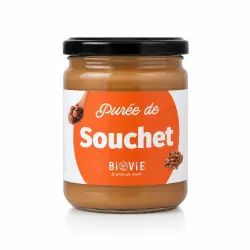
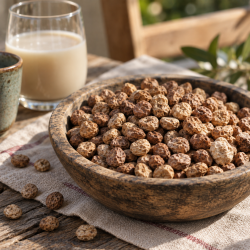
Organic tiger nut puree
€14.90

Online only

Online only
-20%

Freeze-dried jackfruits - 200g
€11.92 €14.90


You have seen 48 of 59 products
Questions & answers
All about FOOD.
The questions we get asked most often, and our straight answers.
💚 Frequently Asked Questions About Raw Foods:
➡️ What is raw food ?
A raw food is a food that has never been heated above 42°C. This limit is crucial: beyond this temperature, the enzymes naturally present in the food begin to denature, and some of the thermolabile vitamins (notably vitamin C and B vitamins) start to degrade. At Biovie, this threshold is a non-negotiable selection criterion, contractually verified with each supplier.
> To understand what this definition concretely implies in a daily meal: What is raw food ?
> And to delve into the details of the role of dietary enzymes: What is the role of enzymes in digestion ?
➡️ Why eat raw foods as part of a balanced diet ?
Raw foods provide enzymes, heat-sensitive vitamins, and intact phytonutrients. When included as part of a varied and balanced diet, they help diversify and complete nutritional intake. A study published in the Journal of Epidemiology (Akter et al., 2016, n = 88,184 adults) showed an association between regular consumption of raw vegetables and lower all-cause mortality.
> To note : the goal is not to eat everything raw - but to gradually incorporate a portion of living foods into daily life, at one's own pace.
> Two additional readings to go further:
Living foods: source of vitality and health
How to start with a raw food diet ?
➡️ What is the difference between raw food and cooked food ?
Cooking alters the structure of food: enzymes become denatured beyond 42-45°C, and vitamin C can decrease by 15 to 55% depending on the duration and method.Rumm-Kreuter & Demmel, 1990), and some phytochemical compounds degrade. Raw food retains its nutritional matrix in its native state. This does not mean that cooking should be avoided - it improves the digestibility and bioavailability of many nutrients - but including some raw food in the daily diet helps preserve nutrients that are otherwise difficult to obtain.
> On this specific topic, our article The best ways to transform our food Compare cooking, dehydration, fermentation, and freeze-drying in a fairly comprehensive way.
> And if oxalates in raw foods concern you, we have also addressed the issue here: Eating raw and enzymes: an indirect aid for managing oxalates ?
➡️ How to preserve the enzymes in foods during processing ?
The most effective method is low-temperature dehydration (below 42°C) or freeze-drying. The Lyophilization consists of freezing the food and then sublimating the water under vacuum - without heat. The enzymatic and vitamin structures remain intact. This is the technique used for our freeze-dried fruits. Slow dehydration at low temperature also preserves the enzymes, provided that the temperature never exceeds the critical threshold - which we verify directly with our producers.
> To better understand what an enzyme is, how it functions, and why its integrity matters: Enzymes: Keys to Digestion and Vitality. .
> And for those who wish to explore the role of enzymes in the body's natural elimination functions: How digestive enzymes support your natural elimination functions.
➡️ What are the raw foods richest in enzymes ?
Among the raw foods in our range, those most concentrated in native enzymatic activity are: sprouted seeds and young broccoli shoots (rich in glucoraphanin, a precursor of sulforaphane - Fahey et al., PNAS, 1997), activated oilseeds, low-temperature dried ginger (rich in zingibain, a natural protease), and raw cacao beans. The germination process is particularly interesting: it can increase the enzyme content by 10 to 100 times compared to the dry seed. As part of a varied and balanced diet, these foods can be easily incorporated into daily life.
> To learn more about food sources of enzymes and how to incorporate them practically: How to improve the absorption of nutrients from our diet ? - an article that combines the principles of raw food with digestive physiology.
Scientific references
- Akter, S., et al. (2016). "Vegetables consumption and its association with total mortality and cause-specific mortality in Japan." Journal of Epidemiology, 26(2), 87–96. (prospective observational study, n = 88,184)
- Rumm-Kreuter, D., & Demmel, I. (1990). "Comparison of vitamin losses in vegetables due to various cooking methods." Journal of Nutritional Science and Vitaminology, 36 (Suppl 1), S7–S15. (comparative review, cooking methods)
- Fahey, J.W., Zhang, Y., & Talalay, P. (1997). "Broccoli sprouts: an exceptionally rich source of inducers of enzymes that protect against chemical carcinogens." Proceedings of the National Academy of Sciences, 94(19), 10367–10372. (laboratory assay, reference glucoraphanin/sulforaphane)
Warning: The information presented on this page is provided for informational purposes only and does not constitute medical advice. Consult a qualified healthcare professional before making any changes to your diet or supplementation. As part of a varied and balanced diet and a healthy lifestyle.