






Organic Osteen Mangoes from Spain - 5 kg images


Organic Osteen Mangoes from Spain - 5 kg
No queries yet, leave the first!
Price:
€31.00
Product availability:
LAST SHIPMENT (END OF SEASON)
Tax included
Organic OSTEEN Mangoes from Spain - 5 kg
Shipping costs will be automatically added to your cart = €13.95 for up to 5 boxes maximum (beyond that, a new order will need to be placed)
📦Direct shipment from our producer via GLS (only in France, Portugal, Luxembourg, Poland, Spain, Belgium, Italy, Germany, Czech Republic, Slovenia, Switzerland, Netherlands, Austria, and Denmark)
Mixing possible on all boxes of fresh fruits.
Sales open until 09/19 at 8 AM
📦 NEXT SHIPMENT on 09/21
ORGANIC OSTEEN MANGOES - 5 kilograms
Origin Southern Spain: SALOBREÑA
Direct shipment from the supplier's location, more speed, more freshness, less damage due to transport !
Delivery fee of €13.95 for up to a maximum of 5 boxes, beyond that, please contact us at the following address: sav@biovie.fr
Mango 🥭 Harvested at physiological maturity by our partner Iulian, located on the Spanish Tropical Coast.
To withstand transport, the fruits are delivered still firm and will be ready to eat a few days after receipt. Once ripe, you can store them in the fridge for up to 15 days.
We have tested different varieties of mangoes and they are all so delicious that we have decided to set up the logistics to offer them to you for pre-sale.. The Osteens are not very fibrous, juicy, and sweet.
How to know when an Osteen is ripe ?
Do not rely on the color. That's the classic mistake. The Osteen retains a green to pale yellow skin, often covered with a beautiful reddish-purple blush - and this blush appears long before the fruit is ripe. Frankly, the only reliable indicator is touch: gently press near the stem, the flesh should yield slightly under your thumb, without being soft. The fragrance also provides a clue. A ripe Osteen fills the room with its aroma.
Specifically: leave your mangoes at room temperature, in the open air, without stacking them. Allow a few days to a week depending on the temperature of your kitchen. To speed up the process, the old trick of using a paper bag with an apple or a banana still works very well. And as soon as a mango is ripe, put it in the fridge - this allows you to spread out the consumption of a 5 kg box over three good weeks without losing anything.
In the kitchen. The Osteen has a thin and flat core, which changes everything when cutting: you get two beautiful, thick cheeks. The flesh is not very fibrous, a deep orange, very juicy, with a hint of acidity behind the sweetness that prevents it from being cloying. Enjoy it as is, in slices, without anything, or prepare it diced in a pea shoot salad with a drizzle of olive oil and some sprouted seeds, for example - the sweet-vegetal contrast works really well.
It also works very well in smoothies, instant sorbet (frozen pieces + blender, nothing else), or raw chutney. Not as well with prolonged cooking: it would be a shame to waste its aroma.
A word about the season. The Osteen is the queen variety of Andalusia - it is even about the only area in the world that produces it on this scale. It is harvested from September to November, a little earlier than the Keitt. Sizes vary, generally between 300 and 700 g per fruit. Therefore, you will have between approximately 8 and 15 mangoes in your 5 kg box, depending on the harvest.
🥭 What the mango really contains:
1) Rich in vitamin C
The number one asset of mango, and it's a strong one: 36 mg of vitamin C per 100 g, which is 46% of the reference intake. A 300 g Osteen mango provides you with about 110 mg of vitamin C. Vitamin C contributes to the normal functioning of the immune system, protects cells against oxidative stress, and helps reduce fatigue.
2) Source of folates (vitamin B9)
Much less known, and yet. With 43 µg per 100 g, mango is a source of folates - a vitamin that plant-based diets generally cover well, but which is rarely in excess. Folates contribute to normal psychological function, normal blood formation, and the cell division process. They also contribute to the growth of maternal tissues during pregnancy.
3) Carotenoids, including lutein and zeaxanthin
It is the deep orange color of the Osteen's flesh that signals it to you: beta-carotene, lutein, zeaxanthin. These carotenoids are the subject of numerous research studies, particularly concerning vision. Let's be honest: to date, no health claims are officially authorized in Europe for lutein and zeaxanthin. Research is ongoing, the results are interesting, but no promises can be made yet. What we can say is that mango contains them, and that's one more good reason to eat it.
4) Vitamin C increases iron absorption.
It is widely read that mango is very rich in iron. In reality, this is false: it contains very little. But - and this is much more interesting - its vitamin C, on the other hand, increases iron absorption Non-heme, the type found in plants. Specifically: adding mango cubes to a lentil salad or sprouted seeds, and you significantly improve the iron absorption of this meal. It's a simple habit, and particularly useful when consuming little or no animal products.
5) Vitamin C, collagen, and skin
Vitamin C contributes to the normal formation of collagen to ensure the normal function of the skin, blood vessels, bones, and cartilage. That is well established. However, mango does not "rejuvenate" the skin and does not replace sun protection-don't listen to what is said about this.
6) A moderate glycemic index
The mango has a very sweet taste, yet its glycemic index is around 50 - a moderate GI, comparable to that of an unripe banana. Its fibers and water slow down the absorption of sugars. That said, each person reacts differently, and if you are concerned about diabetes or glycemic monitoring, talk to your doctor or dietitian rather than a commercial website.
7) Fiber, water, and true nutritional density
1.6 g of fiber per 100 g, about 83% water, 60 kcal. A beautiful 400 g Osteen, therefore, contains approximately 6 g of fiber and the equivalent of a large glass of water, with vitamins as a bonus. Honestly, as a 4 PM snack, it's hard to do better - and it's far more interesting than a chocolate bar.
A varied and balanced diet and a healthy lifestyle are important. The beneficial effects mentioned above are achieved with a consumption of about 200 to 300 g of mango, as part of a balanced diet.
🥭 To learn more, check out our blog post: The 7 health benefits of mango.
Direct route Andalusia
We cannot be more direct from this producer in Spain, in Granada! Iulian Perseca has taken over the family business since 2018. Two generations have succeeded in cultivating the various fields organically.avocados, of papayas, of cherimoyas and other local and seasonal exotic fruits, all of excellent quality and enhanced by the sun of southern Spain.
The Osteen was selected in Florida in the 1930s, but it is Andalusia that has made it its emblematic variety - the coasts of Granada and Malaga now concentrate the majority of the world's production. The subtropical microclimate of the Costa Tropical, nestled between the Sierra Nevada and the Mediterranean, suits it remarkably well.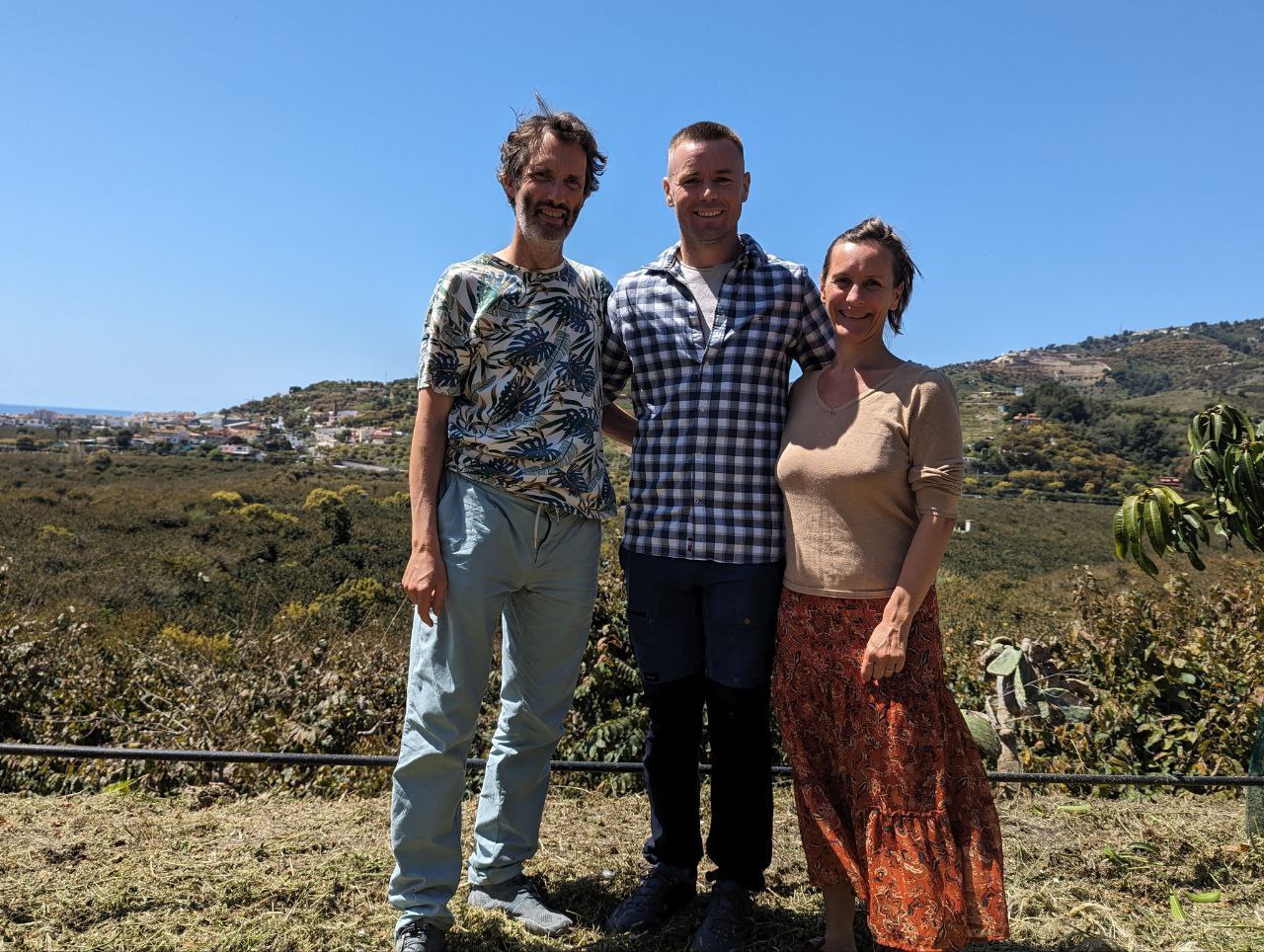
The packaging of mangoes is 5 kilograms.
The shipment is made directly from Malaga, at the producer's location, via GLS. Once your package is dispatched, delivery to your home takes 2/3 business days (non-contractual). You will receive an email from the carrier GLS to inform you of the dispatch of your package with a tracking link.
If you order other products from our store, you will also need to pay the standard shipping fees for your other products: one package will be sent from Marseille and another from Malaga. Arrival in 2 separate packages.
No relay points. No delivery in Switzerland.
🥭 Average nutritional values per 100 g of raw mango
| For 100 g | Quantity | % of reference intakes |
|---|---|---|
| Energy | 60 kcal / 250 kJ | 3% |
| Carbohydrates no sugars | 15 g including 13.7 g | 6% |
| Dietary fibers | 1.6 g | - |
| Proteins | 0.8 g | 2% |
| Lipids | 0.4 g | 1% |
| Vitamin C | 36 mg | 46% |
| Folate (vitamin B9) | 43 µg | 21% |
| Vitamin B6 | 0.12 mg | 9% |
| Potassium | 168 mg | 8% |
| Vitamin E | 0.9 mg | 7% |
| Beta-carotene | 640 µg | - |
Indicative average values for raw mango (sources: Ciqual ANSES table and USDA FoodData Central). They vary according to the variety, maturity, and terroir. Reference intakes for a typical adult (EU regulation 1169/2011).
Frequently Asked Questions
What is the difference between an Osteen mango and a Keitt mango ?
The Osteen is harvested earlier (September to November compared to October to December for the Keitt), it is slightly smaller (300 to 700 g compared to 450 g to 1 kg), and its skin takes on a reddish-purple blush while the Keitt remains distinctly green. In terms of taste, the Osteen is a bit sweeter and more fragrant, with a hint of acidity at the finish. Both are low in fiber. If you're unsure, our organic mango mix 2 varieties allows for comparison on the same checkout/register.
How do I know if my Osteen mango is ripe ?
By touch and smell, never by color. Gently press near the stem: the flesh should yield slightly under your thumb, without being mushy. A ripe Osteen also emits a clear and sweet fragrance. The reddish-purple blush of the skin appears well before maturity - this is the classic trap of this variety.
Is it normal for my mangoes to arrive hard ?
Yes, it is even intentional. The fruits are picked at physiological maturity and shipped firm to withstand the 2 to 3 days of transport from Malaga without getting damaged. They finish ripening at your place, at room temperature, in a few days to a week.
How to speed up ripening ?
The kraft paper bag with an apple or a banana inside: these fruits release ethylene, which triggers ripening. You can save 24 to 48 hours. Conversely, if you want to slow it down, space the fruits out in a cool and airy place - definitely not in the refrigerator as long as they are hard, as the cold blocks the process.
How many mangoes are in a 5 kg box ?
Between approximately 8 and 15 fruits, depending on the sizes of the harvest. Osteen mangoes generally weigh between 300 and 700 g each. We do not sort by size: the box is shipped as it comes from the orchard.
How long do they last ?
Once ripe, up to 15 days in the refrigerator. The right approach with a 5 kg crate: leave everything at room temperature, and move each fruit to the fridge as soon as it is ripe. This way, you can spread the consumption over three good weeks without losing anything.
Can you freeze Osteen mangoes ?
Yes, and it's even the best way to absorb a surplus. Cut the flesh into cubes, spread them on a tray, freeze, then transfer to a bag. The frozen cubes blended together make an instant sorbet without any additions. However, the defrosted texture is softer: reserve it for smoothies and purees rather than for slicing and eating.
When is the Osteen mango season in Spain ?
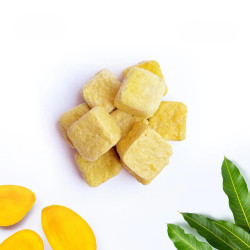
From September to November, with a peak in October. During the off-season, you can fall back on our freeze-dried mangoes, which retain the essential nutrients and taste.
Is mango suitable for people with diabetes ?
Its glycemic index is moderate (around 50), and its fibers slow down the absorption of sugars. That said, each person reacts differently, and we are not doctors: if you are concerned about diabetes or glycemic monitoring, the only correct answer is that of your doctor or dietitian.
🥭 To go further, here is what we recommend you read or taste on the side:
- The health benefits of mango - the feature article, with sources.
- Mango, avocado, and pea shoot salad - Aurélie's raw recipe, ready in 10 minutes.
- The complete list of tropical fruits, from the rarest to the most well-known.
- The benefits of freeze-dried fruits - to extend the season.
- The other funds in the same sector: organic papayas, , Organic cherimoyas and Reed bio avocados.
A varied and balanced diet and a healthy lifestyle are important. The beneficial effects mentioned in the BENEFITS tab are achieved with a consumption of about 200 to 300 g of mango, as part of a balanced diet.
Warning: The information presented on this page is provided for informational purposes only and does not constitute medical advice. Consult a qualified healthcare professional before making any changes to your diet or supplementation. As part of a varied and balanced diet and a healthy lifestyle.
Update: August 2026. Form validated by Éric Viard, founder of Biovie and engineer ISTOM, co-author of Seaweed in everyday life (Gallimard, 2024) - Best cookbook in the world, Gourmand Cookbook Awards 2025, and Best cookbook in France, National Academy of Cuisine 2025.
Wondering… ?
Everything you need to know before ordering.
Be the first to ask a question about this product!
Question about the product
Ask a question