


Organic and Fair Trade Brazil Nuts 1kg
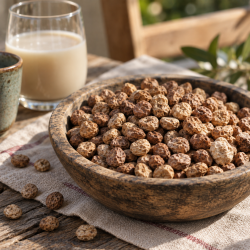
Organic Amazon Nuts (= Brazil Nuts), in nuggets
Fair harvest and processing in Bolivia
1 kg bag
No queries yet, leave the first!
Price:
€31.20
Product availability:
In stock
Tax included


Organic and Fair Trade Brazil Nuts 1kg images


Organic Amazon nuts, small-producer supply chain
The organic Amazon nut in pieces is the same fruit as the Brazil nut, hand-picked in the heart of the Bolivian Amazon rainforest, then shelled by hand and cut into half-nuts. This nut-piece format is, in our opinion at Biovie, one of the most practical for everyday cooking. And the selenium it contains (4,600 µg/kg measured on our Natural Andes batches, i.e. 460 µg per 100 g, 836% of the NRV) contributes to the protection of cells from oxidative stress and to the normal function of the immune system, as part of a varied and balanced diet.
Amazon nuts come from the primary forests of South America. Formerly called "Brazil nuts", their production has fallen drastically in Brazil, a victim of deforestation since the 1970s. With Bolivia becoming the main producer (around 80 to 85% of world production today), they have been renamed "Amazon nuts".
Honestly, their taste - between almond and macadamia - lets them pair with sweet and savoury alike. The texture is crunchy and the half-nut format that Biovie offers you is the ideal size for snacking on easily, or for adding to your preparations without even cutting it. It is also one of the most interesting nuts for making your own home-made plant milk, or plant-based creams and nut cheeses.
> On our blog you will find a recipe for Raw Brazil nut bread, and advice on how to make a plant milk.
🤎 How do you use Amazon nut pieces every day?
- In a morning muesli or porridge, simply sprinkled over fresh fruit.
- As a snack, 2 to 4 pieces are enough (the equivalent of one to two whole nuts).
- Blended with filtered water to make a smooth, rich plant milk.
- As a base for plant-based cream, after a few hours of soaking, for raw nut cheeses.
- Crushed over a lamb's lettuce and beetroot salad, with a drizzle of flaxseed oil.
- In a raw tart base (rawcake), mixed with Medjool dates.
And one small step makes all the difference when you eat them: activation.
🤎 How do you activate your Amazon nuts?
As with almonds, hazelnuts or cashews, we advise soaking your Amazon nut pieces before eating them. In concrete terms, here is how:
- Put the pieces in a bowl of filtered water (1 part nuts to 2 parts water).
- Leave to soak for 4 to 8 hours (overnight is perfect).
- Rinse thoroughly in clean water.
- Eat within 48 hours, keeping them in the fridge.
Soaking starts the nut's germination. There you go, it is very simple, and the difference when you eat them is real - softer texture, milder taste.
🤎 Why pieces and not whole nuts?
Our partner Natural Andes has created a truly innovative and ethical supply chain around the Amazon nut piece. To support artisanal work and the local population, they chose hand shelling. But this manual shelling causes breakage, and these slightly damaged nuts are of no interest to most large exporters. Yet they are absolutely identical in taste and nutritional quality.
Each broken nut is therefore neatly recut by hand by the Bolivian women and men of Riberalta. Their size varies between that of a hazelnut and a large almond. The nut piece is nothing but advantages:
- Anti-waste : nuts damaged during shelling are downgraded, but by making use of these losses, we can save around 15% of the annual production. The pieces therefore come from an upcycling process.
- Job-creating : the manual cutting of broken nuts has led to the creation of a new trade. Today, 20 people are employed solely to cut each nut by hand.
- More practical to eat : consumers prefer it for its size, better suited to their needs than a whole Amazon nut. The size of a hazelnut, the piece can be eaten more easily in a single bite, mixed into a muesli, a yoghurt or a dried fruit and nut mix.
🤎 Still-wild nuts
Amazon nuts are among the rare nuts that are not cultivated. They are gathered in the heart of the Amazon rainforest. The nut ripens at the top of century-old trees, up to 50 metres tall. Amazon nut trees (Bertholletia excelsa) need their natural ecosystem to develop. As with chestnuts, it is up to people to collect the fruit that has fallen from the tree. It looks like a large coconut and contains 10 to 25 nuts. The husk is opened at the foot of the tree with a machete, and the three-sided nuts are carried out of the forest to be shelled.
And here is what is remarkable: gathering Amazon nuts protects the Amazon from deforestation. As long as these trees produce, they are not cut down. It is, in my view, one of the finest examples of wild agroforestry still preserved on the planet.
See the harvest in pictures in this video:
🤎 Ethical, sustainable production
While the Amazon nut cannot be cultivated, its processing is becoming industrialised and mechanised, threatening the livelihoods of families in Bolivia: hundreds of jobs are being lost. The local population depends on manual shelling to make a living, so it is important for us to keep supporting them. What is more, recut nuts limit waste and allow organic producers to innovate.
🤎 Nutritional composition of the Amazon nut
The Amazon nut is particularly concentrated in selenium. An analysis carried out on our Natural Andes batches shows a level of 4,600 µg/kg, i.e. 460 µg per 100 g (836% of the NRV). In concrete terms, two to three pieces are enough to cover the daily reference intake of selenium for an adult.
🤎 Per 100 g, Amazon nuts provide 66.1 g of fat (of which 16 g saturated fatty acids), 16.9 g of protein and 6.17 g of carbohydrate (table in the "Practical info" tab).
Selenium : this trace element contributes to the protection of cells from oxidative stress, to the normal function of the immune system, to the maintenance of normal hair, to the maintenance of normal nails and to normal thyroid function (claims authorised by EU Regulation 432/2012).
After analysis, Natural Andes Amazon nuts show a level of 4,600 µg/kg (460 µg per 100 g, i.e. 836% of the NRV). To meet the daily reference intake (70 µg/day for an adult according to EFSA), this corresponds to around 15 grams of nuts per day, i.e. between 1 and 2 whole Amazon nuts, or 2 to 4 pieces.
Lipid profile : the Amazon nut contains 66.1 g of fat per 100 g, with a majority of unsaturated fatty acids - around 22% monounsaturated and 25% polyunsaturated, versus 16% saturated fatty acids (notably palmitic acid and stearic acid).
🤎 On the climate front: the Amazon nut, an excellent carbon footprint
According to the Life Cycle Assessment (LCA) carried out on the Natural Andes supply chain, the Amazon nut emits only 0.77 kg CO2 equivalent per kg, practically the same rate as the Grenoble walnut grown and produced in France (0.75 EQ/kg). To give an order of magnitude, 1 kg of meat emits 20.18 EQ/kg - nearly 26 times more.
The production method in its natural environment reduces the greenhouse gas impact, and transport accounts for only 30% of the total carbon footprint. Honestly, that is rare for a food that crosses the Atlantic.
What is more, as the Amazon nut tree is a protected species, its use contributes to the conservation of millions of hectares of Amazon rainforest, and prevents deforestation and intensive soya farming for livestock - as is the case in neighbouring Brazil.
> And for those who follow a plant-based or vegan diet, the question of selenium intake is central. We cover it in detail in our complete guide: The 10 essential nutrients for vegans.
NATURAL ANDES
It is a project that first grew out of Maxime Chiquet's encounter with the people of Bolivia, with whom he lived for more than 5 years. During his travels, he met small producers who still work in an artisanal way and in keeping with tradition. Their story touched him, and more particularly seeing that they are no longer valued, to the benefit of production that is becoming industrialised.
Then came his meeting with Jhomaira Vera, his wife, with whom he decided to set up Natural Andes with the aim of valuing the Living, the Earth and People. Their commitment rests on preserving the values of people who respect their land, the Pachamama (Mother Earth). Authentic Bolivian culture respects the Earth, but industrialisation threatens the nobility of sustainable ancestral practices, which protect the future and economic security of producers.
Their purpose: authenticity. Their action: 100% organic, endemic products sourced from supply chains that leave a positive impact on their region of production.
Beyond organic and fair trade, their commitment to producers operates on 3 levels:
- Sustainability of production activities.
- Economic security for the local population.
- A more even distribution of wealth.
The search for the Authentic Terroir: preserving People and their Land.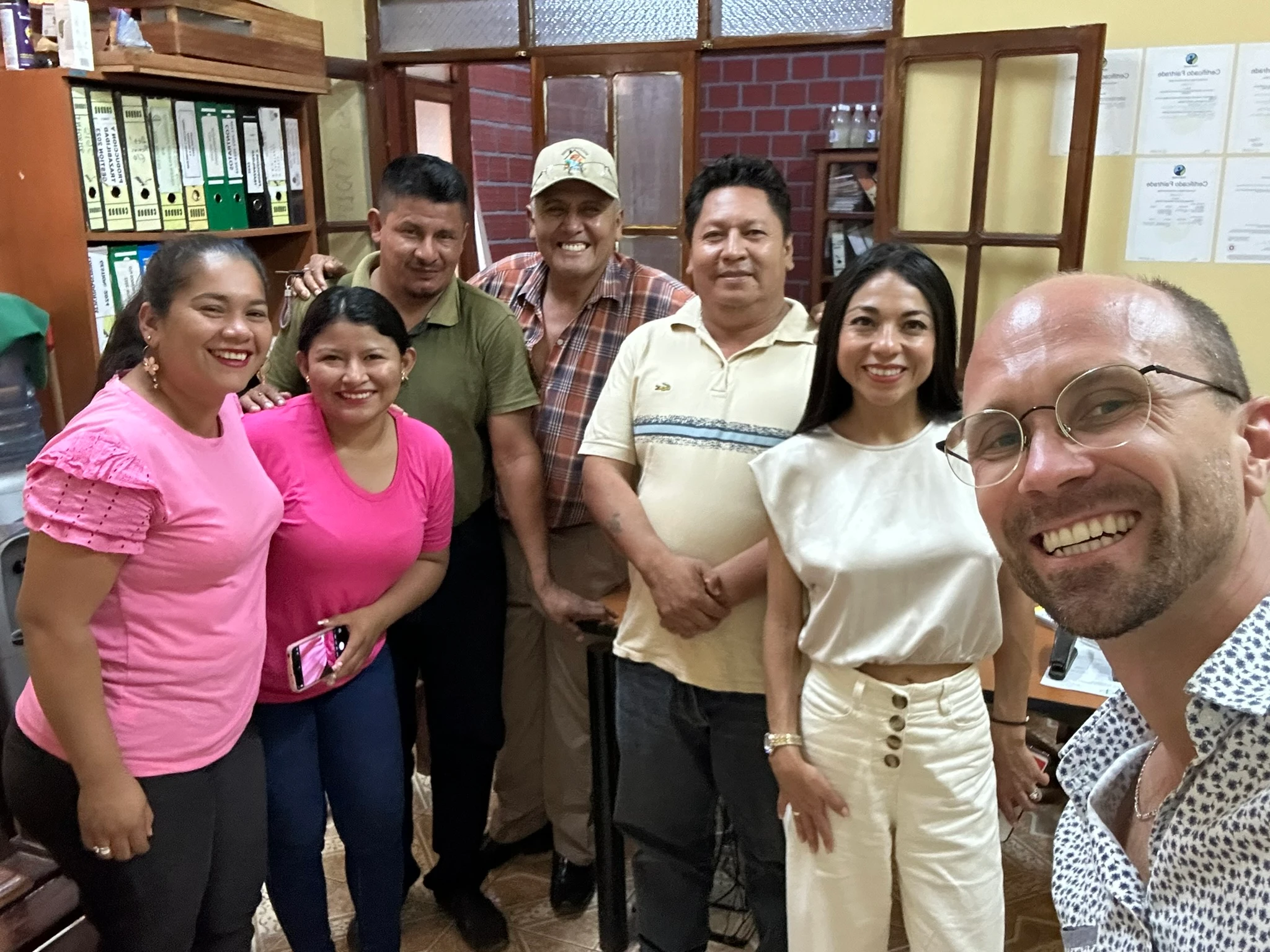
On the Natural Andes website you can find an article about the logistics of their supply chain as well as the Calendar of their harvests in Bolivia.
Best before: 01/05/2027
🤎 Product characteristics
- Ingredients : 100% Amazon nuts from organic farming, in pieces (half-nuts).
- Packaging : 1 kg packed in a protective atmosphere.
- Storage : In a cool, dry place, preferably in an airtight jar. To preserve their nutritional qualities over time, we even advise the fridge once the bag has been opened.
🤎 Nutritional values per 100 g
| Nutrient | Per 100 g |
|---|---|
| Energy | 2,890 kJ / 701 kcal |
| Fat | 66.1 g |
| of which saturates | 16 g |
| Carbohydrate | 6.17 g |
| of which sugars | 2.33 g |
| Protein | 16.9 g |
| Selenium (Natural Andes batch analysis) | 460 µg (836% of the NRV) |
🤎 Frequently asked questions (FAQ)
How many Amazon nuts can you eat per day?
To enjoy the selenium without excess, allow 1 to 2 whole Amazon nuts per day, or 2 to 4 pieces (around 10 to 15 g). That is more than enough to cover the daily reference intake of selenium (70 µg/day for an adult according to EFSA). Beyond 5 nuts per day over a prolonged period, the risk of selenosis (excess selenium) increases - so it is better to stay sensible and rotate with other nuts and seeds.
Why soak Amazon nuts before eating them?
Soaking for 4 to 8 hours starts germination and softens the nut: the texture becomes more tender and the taste milder. Once soaked, keep them in the fridge and eat them within 48 hours.
What is the difference between Brazil nuts and Amazon nuts?
No botanical difference: it is the same fruit, from the same tree (Bertholletia excelsa). The change of name reflects a change of geographical origin. Formerly harvested mainly in Brazil, today 80-85% comes from the Bolivian Amazon rainforest, following Brazilian deforestation. The name "Amazon nut" also reflects the fact that the harvest actually extends across Brazil, Bolivia and Peru.
Why choose pieces rather than whole nuts?
The pieces come from an anti-waste process: they are the nuts slightly damaged during manual shelling, recut by hand by the Bolivian producers. This saves around 15% of the annual production that would otherwise be downgraded. With identical nutritional quality, you get a more practical format (the size of a hazelnut to a large almond), ideal for mueslis, salads, raw pastries or snacking.
How do you store Amazon nut pieces once the bag is open?
Once the bag is open, transfer the pieces to an airtight glass jar and keep them in a cool, dry place. To best preserve their lipid profile (unsaturated fatty acids, sensitive to oxidation), the fridge is even recommended, especially if you plan to eat them over several weeks. Avoid direct light and heat, which speed up rancidity.
Are Amazon nuts suitable for pregnant women?
In reasonable quantities (1 to 2 nuts per day), Amazon nuts can be part of a varied and balanced diet during pregnancy. As with all tree nuts, it is wise to talk to your healthcare professional if there is a history of tree nut allergy in the family, and not to exceed the recommended portions.
Can you use Amazon nuts to make a plant milk?
Yes, and it is even one of their most interesting uses. Soak 100 g of pieces overnight, then blend with 1 litre of filtered water. Strain using an organic cotton nut milk bag. You get a smooth, naturally slightly sweet milk. The okara (solid residue) can be reused in cookies or crackers, zero waste.
Discover our full range of organic and activated nuts and seeds
Updated: May 2026. Article approved by Éric Viard, founder of Biovie and ISTOM, co-author of "Algues au quotidien" (Gallimard, 2024) - Best Cookbook in the World, Gourmand Cookbook Awards 2025, and Best Cookbook in France, Académie Nationale de Cuisine 2025.
Disclaimer: The information presented on this page is provided for information purposes only and does not constitute medical advice. Consult a qualified healthcare professional before making any change to your diet or supplementation, particularly if you are on medication, pregnant or breastfeeding. As part of a varied, balanced diet and a healthy lifestyle.
The documents that back up what we write about this product. Every document is dated; we remove those that are no longer valid.
Biovie organic certificate
Valid until 31/03/2027Natural Andes organic certificate
Valid until 31/03/2027Wondering… ?
Everything you need to know before ordering.
Be the first to ask a question about this product!
Question about the product
Ask a question