


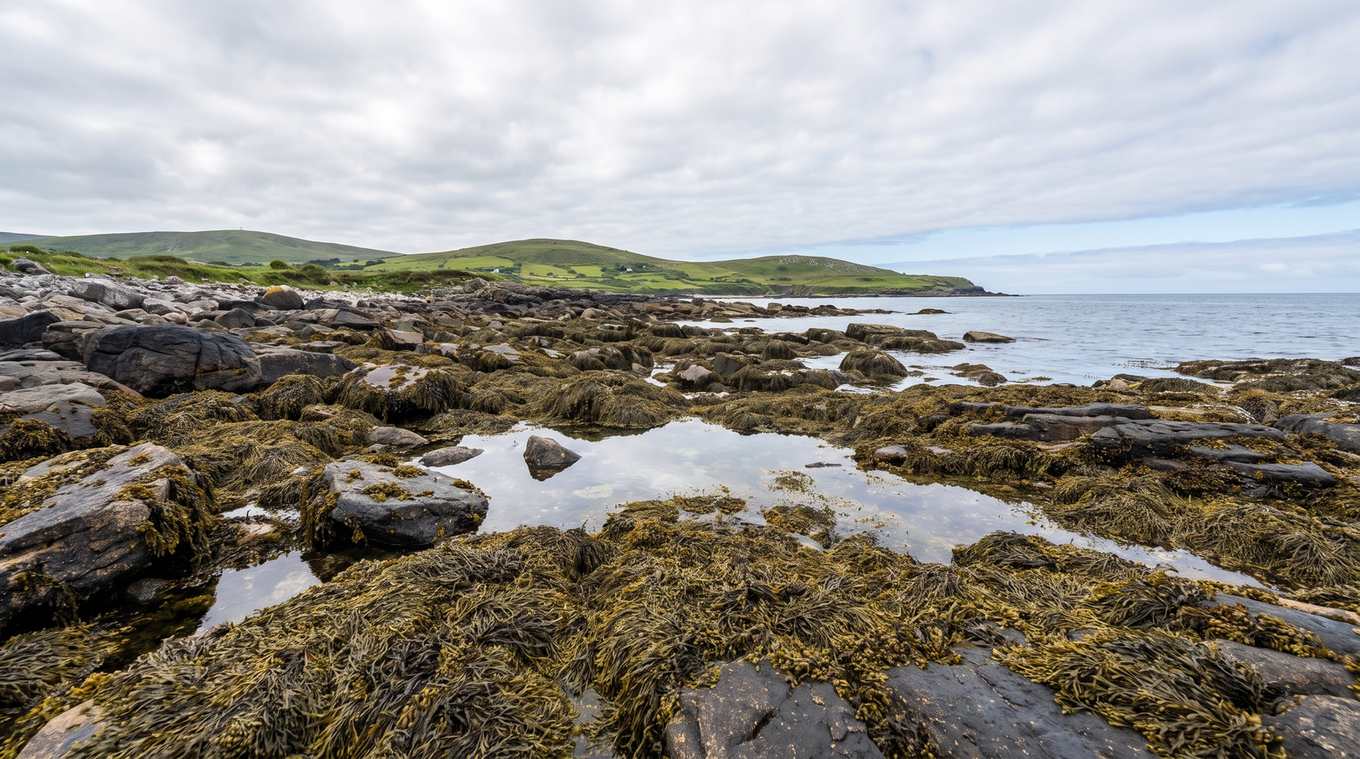
On the Irish foreshore, the same seaweed can end up on our plate, in a cow's feed trough or in a field as a biostimulant. When it comes to seaweed, methane and cattle, a single cultivated red seaweed, Asparagopsis, clearly reduces methane in trials, but eating seaweed directly remains the shortest path. What follows rests on official statistics and published trials, read through my eyes as an ISTOM engineer and founder of Biovie since 2007.
In Connemara, in the west of Ireland, harvesters have cut Ascophyllum by hand for generations. The Kilkieran plant, long state-owned, now belongs to a Canadian group, and its harvesting plans worry the harvesters (The New York Times, 2026). For me, having co-written Algues au quotidien with Aurélie, and a vegan since 1992, this local conflict raises a simple question: who should really eat seaweed?
Connemara: one seaweed, three appetites
Long publicly owned (it was from 1949), the Arramara Teoranta plant at Kilkieran has belonged since 2014 to Acadian Seaplants, a Canadian group (TheJournal.ie, 2026). In 2022, it stopped supplying local businesses and applied for exclusive harvesting licenses over a large part of the Galway foreshore. By 2028, every harvester will have to hold their own license, a costly step for them.
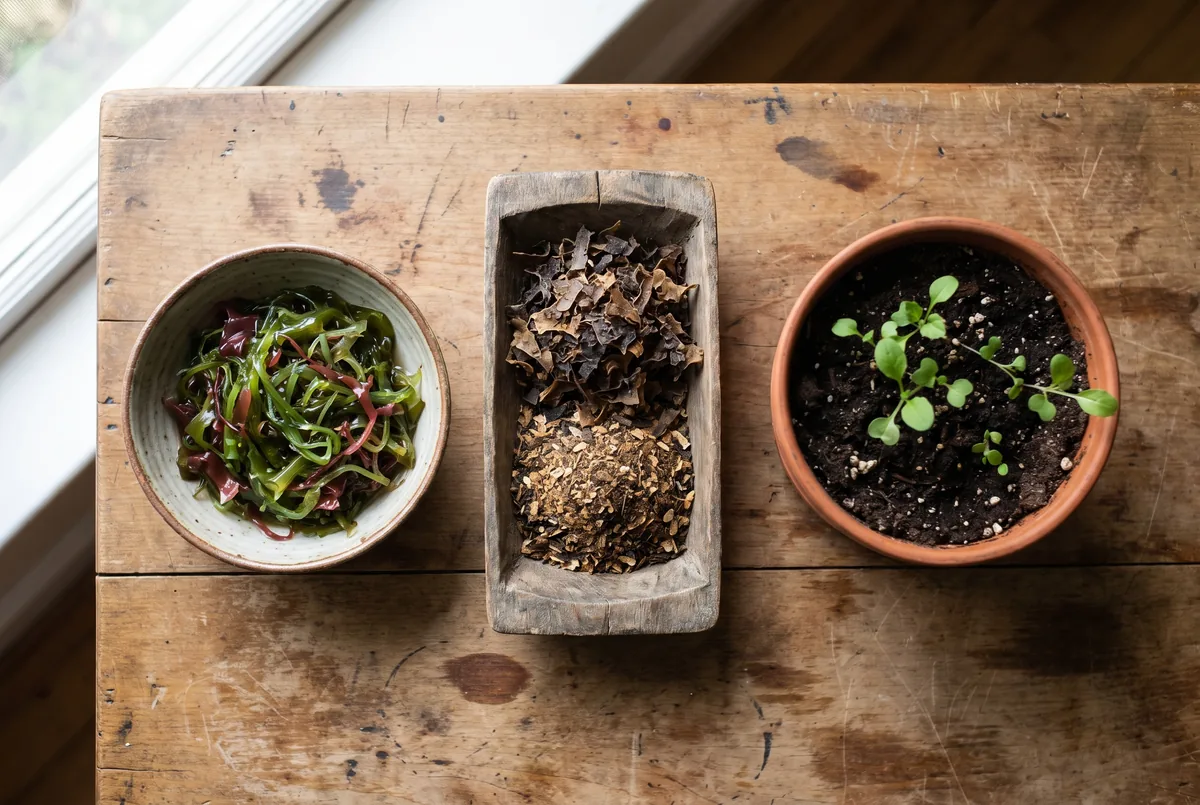
In total, four companies are applying for licenses over more than 14,000 hectares of Irish coastline, for nearly 51,000 tonnes of wet seaweed a year. To picture it, think of whole bays cut into plots. It all plays out in a Natura 2000 site (Special Area of Conservation), under the eye of the regulator MARA, and a petition has already passed 21,000 signatures.
Three appetites, one seaweed.
Seaweed harvesting has changed scale. Maggie M. Reddy, of the University of Galway, sums up the shift: seaweed has gone from a niche product to an economic force. For Charlene Vance (UCD), the real question is rather how big Ireland wants this industry to be.
Who the harvesters are
Colemann Pat Dundass is 78, Maidhc Ó Curraoin is 58: two generations who make a living from cutting by hand. At the Carna Research Station of the University of Galway, Oilibhéar Ó Niaidh is meanwhile looking for a sustainable way to harvest.
Figures that don't add up
Depending on the source, the tonnages change completely, and the temptation to add them up is strong.
| Source | Figure | Scope |
|---|---|---|
| Official notice FS006108 (Irish government) | 40,000 t of Ascophyllum nodosum and Fucus | 21 management areas, west coast (Mayo and Galway), status “applied for” |
| TheJournal.ie, August 2026 | Arramara: over 24,000 t wet per year over nearly 3,000 ha (8 applications). BioAtlantis: 11,018 t wet per year over 93 km² | Detailed applications: Galway for Arramara, Clew Bay (Mayo) for BioAtlantis |
| The New York Times, September 2026 | About 74,000 t sustainably harvestable per year; Acadian's target: 20,000 t per year | West coast; tonnage judged sustainable, set against a company target |
These figures don't measure the same thing. The official file covers 21 areas between Mayo and Galway, while TheJournal.ie's investigation details applications in Galway and in Clew Bay. As for the New York Times report, it sets a company target against the tonnage judged sustainable. Each tonnage therefore stays attached to its source, and we take care not to stack them up.
First appetite: fields (fertilizers and biostimulants)
A biostimulant is not a fertilizer
A seaweed fertilizer for plants and a seaweed biostimulant are not the same thing. Take a tomato plant in the vegetable garden. The fertilizer fills its plate. The biostimulant plays more the role of a good digestive system: it helps the plant absorb better what it finds under its roots and cope better with a dry summer or salty soil. There you go, that's the picture.
The European Biostimulants Industry Council (EBIC), cited in a scientific review (Shukla et al., 2019), talks about stimulating natural processes to improve nutrient uptake, nutrient efficiency, tolerance to climate or soil stress and crop quality.
Now, according to this review, the seaweed most studied as a source of biostimulants is precisely Ascophyllum nodosum, the brown seaweed of the Irish foreshore. A useful detail: one of the co-authors, Alan T. Critchley, is affiliated with Acadian Seaplants. The company itself describes research on seaweed-based biostimulants in agriculture and on supplements for animal feed, based on this seaweed (Acadian Seaplants).
A growing market
The World Bank identifies 10 emerging markets for farmed seaweed, representing a possible extra 11.8 billion dollars by 2030 (World Bank, 2023). The most promising in the short term are biostimulants, animal feed, pet food and anti-methane additives, worth 4.4 billion dollars by 2030. In other words, a good share of the expected growth is happening far from our plates. These figures concern farmed seaweed; the wild foreshore is not part of them.
A private firm, Spherical Insights, estimates the seaweed-based biostimulants market at 1.83 billion dollars in 2025 and 5.29 billion in 2035, which is 11.2% growth a year (Spherical Insights, 2026). The figure remains a commercial estimate, with no independent measurement behind it.
Second appetite: seaweed, methane and cattle
A red seaweed, Asparagopsis, contains bromoform, a molecule that blocks the formation of methane in the rumen. In a 147-day trial on 21 steers (Roque et al., 2021), the seaweed reduced methane yield in cattle by 45 to 68% depending on the dose.
How a red seaweed slows down methane
Picture the rumen, the cow's first stomach, as a big fermentation vat. Microbes cut up the grass there (that is the whole know-how of ruminants), and some of them make methane along the way, which the animal releases mostly through the mouth. Bromoform cuts this step.
In the French Meth'Algues trial, dairy cows emitted 432 g of enteric methane per day, or 12.9 g per kilo of milk (Idele and chambers of agriculture, 2024). Nearly half a kilo of gas per day per cow: it's easy to see why the idea of cattle fed on seaweed appeals to livestock farming.
Back to the 2021 trial: Asparagopsis made up 0.25% or 0.5% of the organic matter eaten, a tiny fraction of the ration. Methane yield fell on average by 45% at the low dose and by 68% at the high dose, and even by 69.8% and 80% with a low-forage ration. At the high dose, the steers ate 14% less, with no difference in weight gain, and bromoform stayed below the detection threshold in the meat.
The figure is impressive. But this is a small animal study, and the “82%” or “95%” read in some media come from other trials. Faced with a percentage on Asparagopsis and seaweed methane in cattle, the right reflex is to look at the dose and the ration.
One caveat, only one
In the Netherlands, a team from Wageningen gave Asparagopsis to 12 dairy cows for up to 22 days (Muizelaar et al., 2021). Bromoform passed into the milk (9.1 and 11 µg/L on the first day, at the low and medium doses) and into the urine, without accumulating in the tissues. A microgram is a millionth of a gram: we are talking traces. The researchers also observed abnormalities of the rumen wall in some cows, which often refused their ration.
The seaweed of our coasts doesn't have this effect
In France, the Meth'Algues project tested a seaweed cattle feed mix of Fucus vesiculosus (60%) and Chondrus crispus (40%) from the coasts of Brittany and the Loire. On 56 cows over 10 weeks, methane did not fall: the content of anti-methane compounds was judged insufficient. The brown seaweeds of the Irish foreshore are therefore mainly sought for biostimulants and livestock supplements.
Honestly, I understand the farmers' interest, and reducing a herd's methane is a good thing in itself. But feeding an entire herd takes seaweed on a very large scale, and I remain convinced that the real leeway for the climate lies first in the amount of animal products we consume, more than in the additive slipped into the trough. That is the view of a vegan since 1992, and everyone goes at their own pace.
Third appetite: us
In 2022, world aquatic production reached 223.2 million tonnes, including 37.8 million tonnes of seaweed (FAO, 2024). Seaweed is therefore not a health-store curiosity: it is a global production in its own right.
According to the World Bank, most farmed seaweed today goes to direct human consumption, to aquaculture as fresh feed or to hydrocolloids, the gelling agents extracted from seaweed. Most of this production is Asian.
In Europe, we still eat little of it. France has plenty to offer, though, as the French edible seaweed industry shows.
The paradox: why take the detour through the cow?
At every link in the food chain, a large part of the energy and nutrients is lost along the way, because the animal spends some of it living and keeping warm. In reality, giving seaweed to a cow in order to then eat the cow is a bit like posting a letter to the house next door by way of Dublin. The letter arrives, of course. But it has made quite a detour.
So why feed a herd with a seaweed that we can put straight into our bowl? Eating the seaweed remains the shortest path between the sea and us. It's simply common sense: observing nature.
As for composition, seaweed contains fiber and minerals, including iodine, in amounts that vary widely from one species to another. Iodine deserves an article of its own (seaweed, iodine and the thyroid), as do the nutrients and culinary uses of seaweed. As part of a varied and balanced diet and a healthy lifestyle, seaweed finds its place alongside vegetables and legumes.
A wild resource is not infinite
The foreshore is shared, and it doesn't replenish at will. Hand harvesting, as practiced by the Connemara harvesters, lets Ascophyllum regrow, and it is precisely to preserve this balance that licenses and quotas exist. Here too, shoreline seaweed sometimes leads a double life, like the sea lettuce of the Breton coasts.
What you can do
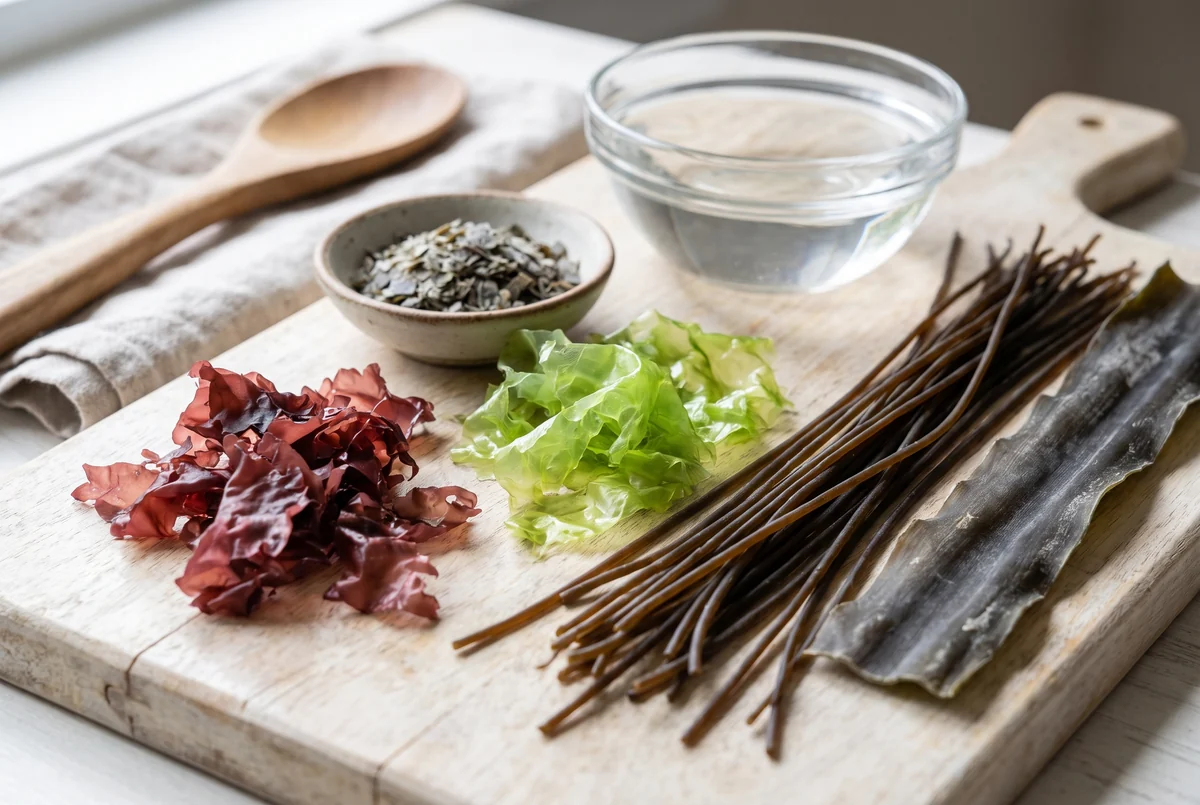
Well, the first step is really low: a single seaweed, this week, slipped into a dish you already make. The real effort is mostly getting used to a new taste of the sea (iodine-like, sometimes surprising the first few times), and remembering to desalt fresh seaweed when it is preserved in salt. Choosing seaweed harvested or farmed in France, from an identified supply chain, also means knowing where what you eat comes from.
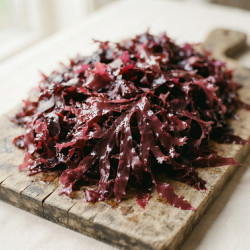
To taste several seaweeds at once, the Organic Fresh 4-Seaweed Assortment is a good way in. And if I could keep only one, it would be fresh dulse, the red seaweed of the Atlantic foreshore that is eaten just as it is in Ireland as in Brittany.