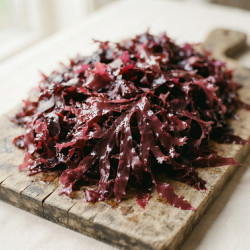
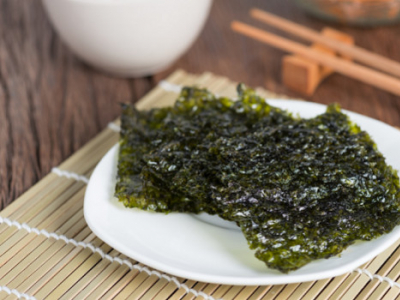
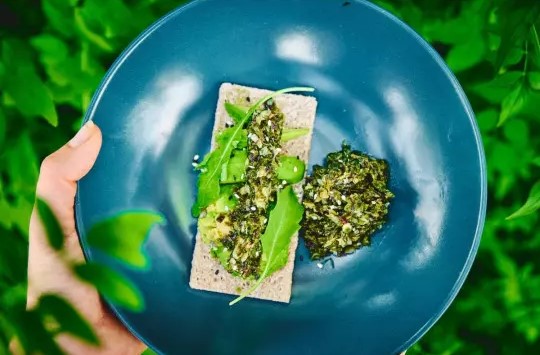
The variation: dulse and hazelnut tartare (serves 4)
The recipe above is the multi-seaweed fresh version. Here is a second, shorter one, built around dulse alone - and the crunch of hazelnuts. Ten minutes, no cooking.
Ingredients
- 80 g fresh desalted dulse, or 20 g dried dulse rehydrated for 10 minutes in cold water
- 50 g activated hazelnuts (soaked 8 hours, drained and dried)
- 1 spring shallot, finely chopped
- 4 salt-fermented gherkins, chopped
- 1 tablespoon salted capers, rinsed
- 2 tablespoons extra virgin olive oil
- 1 tablespoon gluten-free tamari and the juice of half a lemon
- A turn of the pepper mill, a few sprigs of coriander or nasturtium (optional)
Step-by-step preparation
- Desalt the fresh dulse for one minute in clear water, then wring it out between two clean tea towels.
- Chop it with a knife, flat on a board, into thin strips. Avoid the blender: it would turn the seaweed into a purée and you would lose all the texture.
- Roughly crush the hazelnuts, to keep some crunch.
- Mix the dulse, hazelnuts, shallot, gherkins and capers, then season with olive oil, tamari, lemon and pepper.
- Let it rest for five minutes in the fridge before serving: that's how long the flavours need to come together.
Storage: three to four days in the fridge, in a sealed glass jar, with a film of olive oil on top. The flavour intensifies after twenty-four hours. Count on roughly 95 kcal, 4 g of protein and 2 g of fibre per 50 g serving - indicative values, which vary with how hydrated the seaweed is.
Three variations worth trying
- Breton classic: replace half the dulse with chopped sea lettuce. Greener, softer, milder.
- Smoked: dry-fry the dulse for thirty seconds before chopping it - this gives the famous "bacon of the sea" note. Note that this version is no longer raw.
- Spring greens: a handful of chopped wild garlic, a few nasturtium flowers and a double dose of capers. This gets close to a marine pesto.
What exactly is seaweed tartare?
Seaweed tartare is a fresh condiment made from chopped, seasoned seaweed. Think of it as a pesto, but a sea version. Finely cut fresh seaweed is mixed with olive oil, gherkins, capers, shallot, a dash of vinegar. And that's it, it's ready.
What's great about this format is that it makes seaweed accessible to everyone. No need to know how to cook it, rehydrate it, or wonder what to do with it. You open the jar, spread it, and off you go. This is exactly why, in our workshops, the tartare is systematically the product that wins over the sceptics. Participants who had never tasted seaweed before leave with a jar.
To understand the tartare, it also helps to understand where the seaweed in it comes from. Brittany accounts for around 70% of seaweed harvesting in France. It is a genuine maritime terroir, with harvesting know-how passed down for generations. If you want to learn more about the different edible seaweed varieties, I recommend our complete guide to edible seaweed, which details each species.
The seaweeds used: sea lettuce, dulse and kombu
A good seaweed tartare relies on the complementarity of several species. This is what we call the green-red-brown trio, and it is a genuine nutritional differentiator that few people know about.
Sea lettuce (green) brings a fresh, iodised, slightly herbaceous flavour. It is rich in magnesium and vitamin C. It's the mildest-tasting seaweed, the one that reassures beginners.
Discover our organic sea lettuce
Dulse (red) is a seaweed with a tender texture and a subtle, slightly nutty flavour. It's a little plant-protein bomb: dulse contains as much protein as soy, which makes it a valuable ally for people cutting back on meat.
Discover our organic dulse
Kombu (brown) is the umami seaweed, that famous fifth taste the Japanese have used for centuries to add depth to their dishes. Kombu is also remarkable for its richness in minerals and its specific benefits. With kombu, you can also explore its unique umami flavour to elevate your dishes.
Discover our organic kombu
By combining these three seaweed families, you get a much broader nutritional spectrum than with a single species. It's a bit like eating vegetables of different colours: each colour brings its own nutrients.
Fresh vs pasteurised tartare: what's the difference?
This is a point I want to stress, because it makes a real difference to the quality of what ends up on your plate.
A fresh, unpasteurised tartare keeps the full range of nutrients, enzymes and natural probiotics of the seaweed. Everything that makes these marine plants so vibrantly rich stays intact. This is exactly the philosophy we have defended at Biovie since the beginning: preserving the raw quality of food.
A pasteurised tartare, or one made with ingredients dried some other way than at low temperature, has been heated to extend its shelf life. That's convenient, certainly, but this heat treatment destroys some of the heat-sensitive enzymes and nutrients. If you've read our book "Algues au Quotidien" (published by Gallimard and awarded at the Gourmand Awards and by the Académie Nationale de Cuisine), you know we place a lot of emphasis on this idea of raw quality.
The tartare we selected at Biovie, in partnership with BRETALG, is precisely a fresh, unpasteurised tartare. And another important point: seaweed is the first ingredient on the list, not oil. With many competitors, it's the opposite - oil dominates, and seaweed is just a walk-on part. Always check the ingredient list, it's revealing.
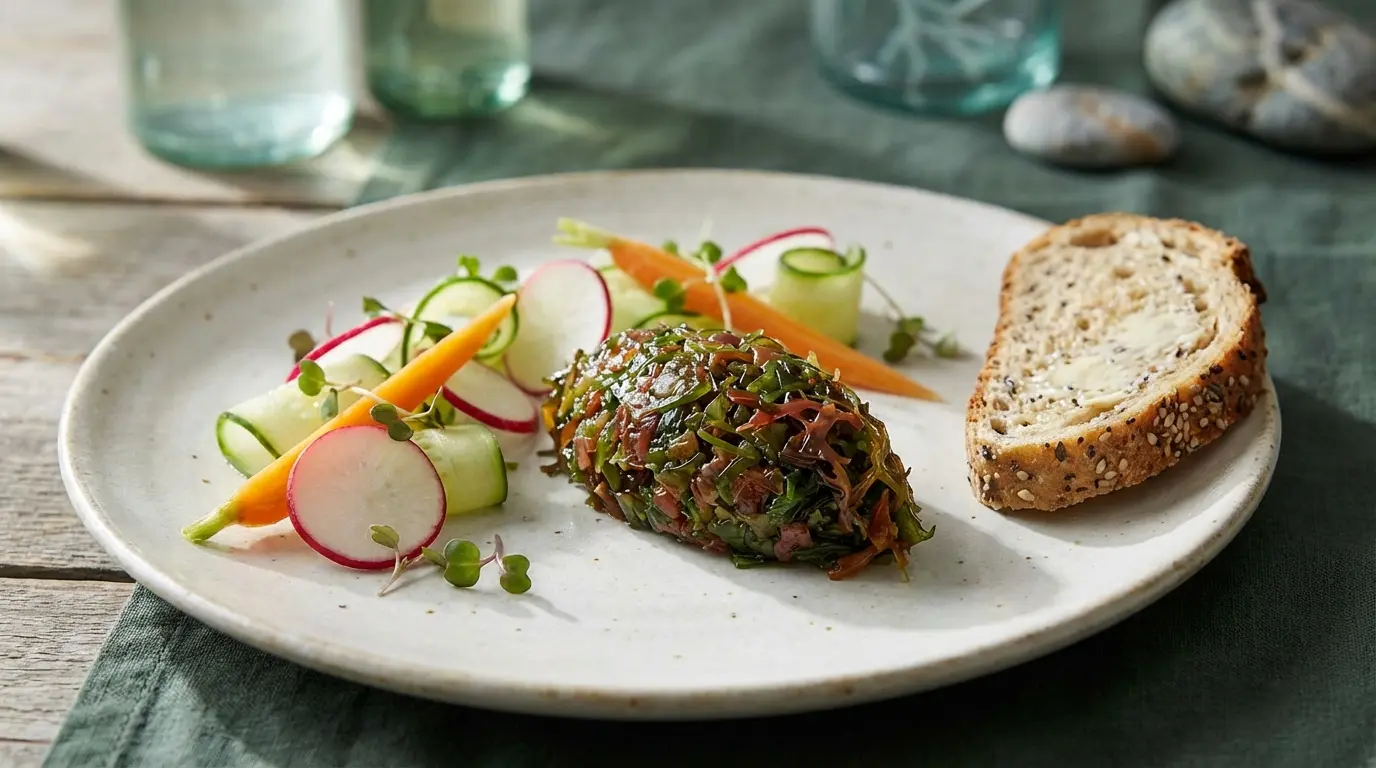
The 7 benefits of seaweed tartare for your health
When I say that seaweed tartare is an extraordinary condiment, I don't say it lightly. Here is what science and our own experience in the field teach us.
An exceptional source of minerals and trace elements
Imagine a single food that concentrates iodine, iron, calcium, magnesium, zinc, potassium... That is exactly what you find in seaweed tartare. Seaweed is among the most mineral-rich organisms on the planet, and for good reason: it literally lives immersed in a complete mineral solution.
In concrete terms, a spoonful of seaweed tartare provides a mineral intake that no classic condiment - mustard, ketchup, mayonnaise - can come close to. This is what makes it a genuinely functional condiment: it doesn't just add flavour, it nourishes your body. The centenarians of Okinawa understood this well: seaweed is an integral part of their daily diet, and it's no coincidence that their longevity is exceptional. To learn more about this fascinating topic, discover the longevity secret of Okinawa's centenarians.
A natural source of iodine for the thyroid
Iodine is an essential nutrient that many French people lack without knowing it. Yet the thyroid absolutely needs it to function properly and regulate your metabolism, your energy, your body temperature.
Seaweed is the richest natural dietary source of iodine. A daily spoonful of seaweed tartare helps cover your needs, gently and regularly. This is far more physiological than a capsule supplement. If the topic of iodine and the thyroid interests or concerns you, I invite you to read our detailed article seaweed and the thyroid: what science says, which breaks down the recent studies.
Complete plant proteins
This is a fact that always surprises people when I share it in talks: nori contains around 36% protein, which is more than meat or tofu. Dulse holds its own too, with 20 to 35% protein.
For people cutting back on meat - and there are more and more of them - seaweed tartare is an unsuspected ally. It won't replace a steak, obviously, but as a daily condiment, it contributes significantly to your protein intake. Learn more about seaweed, the superfoods of the sea.
Rich in antioxidants and omega-3
Seaweed contains powerful antioxidants (fucoxanthin, phycocyanin, carotenoids) as well as plant-based omega-3 fatty acids. These compounds help protect cells against oxidative stress and support healthy cardiovascular function.
What's interesting with the tartare is that the raw, unpasteurised format preserves the full range of these fragile compounds. Here again, the quality of how it's made makes all the difference.
Low in calories and filling
Around 80 to 120 kcal per 100 g depending on composition - remarkably little for such a flavourful condiment. By comparison, rillettes exceed 400 kcal, tarama sits around 500 kcal, and let's not even talk about butter.
The fibre naturally present in seaweed promotes satiety. Seaweed tartare therefore delivers flavour, nutrients, and very few calories. If you're curious about the slimming properties of seaweed, I recommend reading about the slimming virtues of wakame.
Digestive support thanks to soluble fibre
Seaweed contains specific soluble fibres - alginates, carrageenans, fucoidan - which play a prebiotic role in the gut. They feed the good bacteria in your microbiota and support regular transit.
And a tartare format, meaning seaweed that's already finely chopped and seasoned, is particularly easy to digest. That's an important point for people who are new to seaweed and wonder whether their stomach will take to it.
The green-red-brown trio: nutritional complementarity
I'm coming back to this point because it is central. By bringing together sea lettuce (green), dulse (red) and kombu (brown), seaweed tartare offers a nutritional profile that no single seaweed could provide on its own.
It's a bit like the difference between an isolated supplement and a whole food. The Biovie × BRETALG tartare was designed precisely on this principle of complementarity, with seaweed as the first ingredient. To go deeper into the benefits of each variety, you can consult everything about seaweed and microalgae.
As for the figures: dried wakame has 8 times more calcium than milk (source: ANSES, Ciqual table). And 8 g of dried kombu provides more iron than a 100 g steak. These are the orders of magnitude that show seaweed's exceptional nutritional density, and the tartare concentrates them into an accessible format. If seaweed as a source of plant-based iron interests you, discover our article seaweed, the best sources of plant-based iron.
Discover our fresh seaweed tartare
What to eat seaweed tartare with? 10 everyday ideas
This is the question I hear most often. "OK Eric, I bought a jar of tartare, now what do I do with it?" Frankly, the good news is that seaweed tartare goes with almost everything. Here are the uses Aurélie and I practise the most, and the ones our customers report most often.
On toast or bread (aperitif, brunch)
This is the most classic use, and the one I recommend starting with. A slice of sourdough toast, a thin layer of fresh cheese (or plant-based yoghurt), a spoonful of seaweed tartare on top, a few sprouted seeds for a living touch. In 2 minutes, you have an aperitif that impresses.
For those who want to stay fully raw, cucumber rounds work very well instead of bread. Add a dab of tartare, a pinch of sesame, and it's a healthy, delicious express aperitif.
As a sauce for pasta, rice and grains
Mix a generous spoonful of seaweed tartare into your hot pasta with a drizzle of olive oil. You get a minute sauce with marine flavours, rich in umami, a radical change from a simple tomato sauce. It also works with rice, quinoa, buckwheat.
As a dressing and in salads
Mix seaweed tartare with cider vinegar and flaxseed oil: you get an original iodised dressing that turns any green salad into something special. If you like unusual pairings, also try a salad that pairs dulse and beetroot.
In a sandwich or wrap
Replace mustard or mayonnaise with seaweed tartare in your sandwich. It's tastier, far more nutritious, and it brings that umami touch that lifts everything else. Try it with a buckwheat crêpe, raw vegetables and tartare: a quick, healthy wrap.
As a topping for pizza or savoury pancakes
A spoonful of tartare added after cooking on a pizza or a buckwheat galette brings incomparable freshness and savouriness.
The Biovie × BRETALG tartare lends itself to all these uses thanks to its perfectly balanced texture - neither too runny nor too thick - and its subtle seasoning, which doesn't mask the flavours of the other ingredients.
Minute plant-based yoghurt and tartare sauce
Mix seaweed tartare with plain plant-based yoghurt. In 30 seconds you get a creamy sauce to go with fish, dip vegetable sticks in, or fill a wrap. It has become a classic at our home aperitifs.
And if you'd like to explore other marine condiments, also discover seaweed salt, another marine condiment that we really enjoy.
How much seaweed tartare per day?
The recommended dose: the spoonful rule
1 tablespoon a day, around 15 to 20 g. This is a reasonable, sufficient daily dose to benefit from seaweed's nutritional contribution. This amount stays within the recommendations of the CEVA (Centre for the Study and Development of Seaweed), which advises around 7 g of dried seaweed a day, i.e. 50 to 70 g of fresh seaweed (Mac Artain et al., 2007).
What's good about the condiment format is that it naturally self-regulates. Nobody is going to eat a whole jar of tartare in a day. A spoonful here, a spoonful there - these are safe micro-doses that deliver benefits with no risk of overdoing it.
At this pace, a 350 g jar of tartare easily lasts 2 to 3 weeks. Compare that to the cost of a seaweed capsule supplement and you'll see the value for money is unbeatable. The Biovie × BRETALG tartare is, incidentally, among the most competitively priced on the market for an unpasteurised product of this quality.
Seaweed tartare and iodine: precautions to know
At condiment doses (1 spoonful a day), iodine intake stays well within WHO recommendations. This is precisely the advantage of the condiment format compared with eating large quantities of seaweed: your intake is easy to control.
One precaution, however, for people on thyroid treatment: in that case, I recommend consulting your doctor before adding seaweed to your daily diet. It's not that seaweed is dangerous, it's simply a matter of adjusting your treatment dosage.
Can you eat seaweed tartare while pregnant?
In moderate amounts (1 spoonful a day maximum), seaweed tartare presents no particular risk during pregnancy. Some seaweeds like kombu are richer in iodine than others, hence the value of watching your total intake. If in doubt, your doctor's or midwife's advice remains the best option.
There are more and more seaweed tartares on the market, and frankly, they are not all equal. Here are the criteria I recommend checking.
Organic vs conventional
Favour a tartare made from certified organic seaweed. Seaweed absorbs elements from its environment - that's what makes it so mineral-rich, but it's also why the quality of the harvesting water matters. Organic seaweed is harvested in controlled, certified areas.
Fresh unpasteurised vs pasteurised
I said it above, but it's really a key criterion. A fresh, unpasteurised tartare keeps its enzymes, probiotics and the full range of its micronutrients. The trade-off is a shorter shelf life - but frankly, if you eat a spoonful a day, the jar will be finished well before the best-before date.
Check the ingredient list (is seaweed listed first?)
This may be the most important piece of advice. Turn the jar over and read the ingredient list. If the first ingredient is "sunflower oil" or "rapeseed oil", you're buying an oil seasoned with seaweed, not a seaweed tartare. The first ingredient should be seaweed.
The Biovie × BRETALG tartare meets all these criteria: organic seaweed as the first ingredient, artisanal production in Brittany, unpasteurised for optimal nutritional quality. For the curious, you can also discover seaweed for beautiful skin, a bonus benefit many of our customers notice with regular seaweed consumption.
What our customers say
Because our own conviction isn't enough, here is what real customers share about their experience with our seaweed and our tartare:
Suzanne C. (Trustpilot, 5 stars): "I love the seaweed tartare: fresh, seasoned just the way I like, it goes with everything - cucumber, courgette, bread..."
Marinella C.K. (Trustpilot, 5 stars): "The seaweed tartare I hesitated to buy for a long time is a pure marvel, so good for the thyroid. Exceptional nutritional value."
Barbara W. (Trustpilot, 5 stars): "I also recommend the sea lettuce for excellent tartares with capers, olive oil and gherkins: a treat packed with protein."
Mickael B. (Google, 5 stars): "The seaweed tartare recipe is excellent... a treat with avocado and pomegranate."
Marie G.-B. (Google, 5 stars): "The fresh seaweed is beautiful... and my seaweed tartares are a real delight!"
Elodie B. (Google, 5 stars): "I'm thinking especially of the delicious seaweed tartare, thanks to which I'm no longer afraid of being vegetarian and missing out on anything."
Catherine (Trustpilot, 5 stars): "Fresh seaweed like sea lettuce or dulse is delicious as a tartare: desalt it, cut it finely, add walnuts, garlic and lemon, and marinate in olive oil. Delicious and rich in protein. I highly recommend it, especially to vegans!"
FAQ - Everything about seaweed tartare
Is seaweed tartare good for your health?
Yes. Rich in minerals (iodine, iron, calcium, magnesium), omega-3, antioxidants and plant protein, seaweed tartare is a nutritionally dense, low-calorie condiment (around 80 kcal per 100 g depending on composition). The condiment format allows for regular, measured consumption, which is exactly what studies recommend.
What can you eat seaweed tartare with?
On toasted bread, as a sauce with pasta or rice, as a seasoning for fish, in a salad, with scrambled eggs, in a sandwich, as a topping for pizza or a buckwheat galette, or mixed into a yoghurt for an aperitif sauce. The possibilities are very broad - and we detailed 10 of them in this article.
Can you eat seaweed tartare while pregnant?
In moderate amounts (1 spoonful a day maximum), seaweed tartare presents no particular risk. Some seaweeds like kombu are rich in iodine, so it's worth watching total intake. If in doubt, ask your doctor or midwife for advice.
What's the difference between fresh and pasteurised tartare?
Fresh, unpasteurised tartare keeps the full range of seaweed's natural nutrients, enzymes and probiotics. Pasteurised tartare has a longer shelf life but loses some of these heat-sensitive nutrients. The Biovie × BRETALG tartare is unpasteurised for optimal nutritional quality.
How much seaweed tartare per day?
1 tablespoon a day (around 15 to 20 g) is a reasonable, sufficient daily dose. This amount stays within iodine intake recommendations (CEVA reference). At this pace, a 350 g jar lasts 2 to 3 weeks.
How do you make homemade seaweed tartare?
Rehydrate dried seaweed (dulse, sea lettuce, nori) for 30 minutes in water, drain, chop finely, mix with olive oil, vinegar, capers, gherkins and shallot. For the full recipe, see our dedicated recipe article on the Biovie blog. A quicker alternative: the ready-to-eat Biovie × BRETALG tartare.
Does seaweed tartare make you gain weight?
No. Seaweed tartare is low in calories (around 80 to 120 kcal per 100 g depending on composition) and rich in fibre that promotes satiety. It's a much lighter alternative than classic spreads like rillettes, tarama or butter.
So there you go, I hope this article has made you want to discover - or rediscover - seaweed tartare. It's really the simplest and most enjoyable format for bringing the benefits of seaweed into your daily life. One spoonful a day is all it takes.
If you're ready to try it, you can discover our fresh Biovie × BRETALG seaweed tartare directly in our shop. And if you have any questions, feel free to write to us - Aurélie and I love discussing these topics with you.
You'll find our fresh seaweed tartare in our SEAWEED range.
Eric Viard, founder of Biovie
ISTOM engineer - Co-author of "Algues au Quotidien"
Updated: March 2026. Article reviewed by Éric Viard, founder of Biovie and ISTOM engineer, co-author of « Algues au quotidien » (Gallimard, 2024) - Best Cookbook in the World, Gourmand Cookbook Awards 2025, and Best Cookbook in France, Académie Nationale de Cuisine 2025.