



Seaweed is the unexpected ally of your salt shaker. Seaweeds give simple sea salt their iodized flavor and their color. In our book Seaweed in Everyday Life, we explored dozens of culinary uses for seaweed, and seaweed salt is one of the most accessible for beginners.
What is seaweed salt?
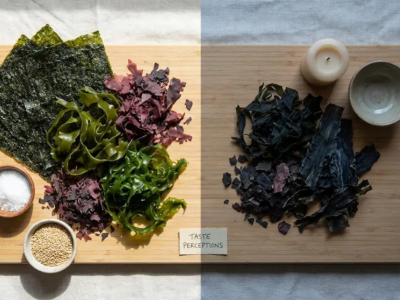
Seaweed salt is a natural condiment made from a mixture of sea salt and ground dried seaweed. It typically includes different varieties of edible seaweed: nori, dulse, wakame, kombu, or sea lettuce, depending on the recipes and producers.
It is distinct from seaweed fleur de sel (more refined, used as a finishing touch), seaweed sea salt (often coarser, for cooking), and Guérande seaweed salt (the classic Breton). In all cases, the principle is the same: seaweed naturally provides a salty and iodized flavor, allowing you to salt a little less.
According to the World Health Organization, salt consumption should not exceed 5g per day, which is about a teaspoon. However, modern diets push us well beyond that. Seaweed salt is a natural and flavorful way to salt a little less.
Why use seaweed salt?
Dried seaweed contains less sodium than table salt
According to data from the CEVA (Center for the Study and Valorization of Algae), dried seaweed contains between 20 and 36 mg of sodium per gram, compared to 381 mg per gram for table salt.
Result: by seasoning your dishes with a sea salt + seaweed flakes mixture, you maintain the salty taste with a little less sodium than salt alone, the sodium content depending on the proportion of seaweed. If you follow a low-salt diet, ask your doctor for advice: seaweed salt still contains sodium.
What the seaweeds in the blend contain
Unlike refined salt, seaweed sea salt contains in particular:
- Iodine : 1 g of dried wakame provides about 130% of the reference values (source: ANSES), hence the caution on quantities.
- Plant proteins: depending on the variety, between 15 and 35% of the dry matter
Brown algae such as kombu and wakame contain pigments (fucoxanthin) and polysaccharides (fucoidan); red algae (dulse, nori) owe their color to phycoerythrins.
Which seaweeds to choose for your salt? Comparison of varieties
Not all seaweeds are suitable for preparing seaweed salt. Here are the main differences to know to choose according to your tastes and needs:
Kombu and wakame: the most iodine-rich, umami flavor
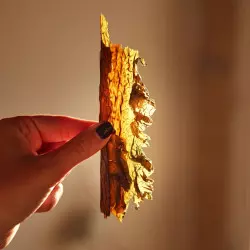
Kombu is the quintessential brown algae for seaweed salt. Its umami flavor (natural glutamate) is incomparable in broths, stews, and sauces. It naturally contains iodine and fucoidan. Learn more in our article dedicated to kombu .
Wakame offers a slightly milder flavor, ideal for beginners. It easily integrates into dressings and miso soups. Our Organic Dried Wakame Seaweed is available in-store in flake form, ready to mix.
Note: kombu and wakame are highly iodine-rich. In case of hyperthyroidism, consult your doctor before regular consumption.
Nori and dulse: mild flavor
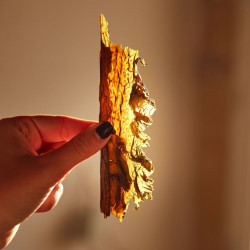
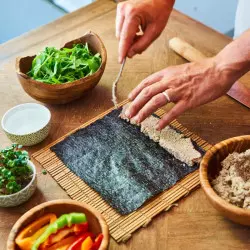
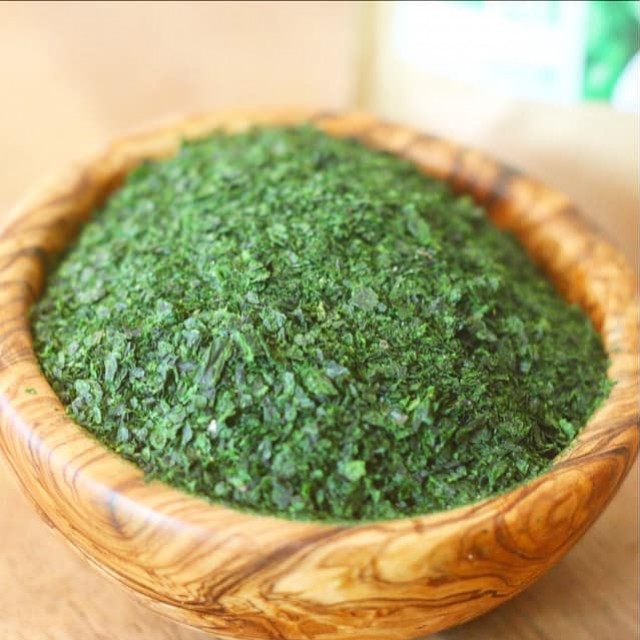
Nori (reddish-purple algae) is the seaweed used in Japanese makis. Ground into powder, it provides a subtle marine flavor and a beautiful green-black color to the salt.
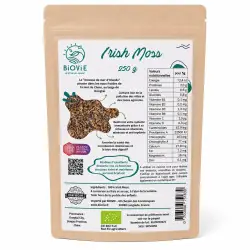
Dulse is our favorite for seaweed salt: mild and slightly smoky flavor, less iodine-rich than kombu and wakame. It is easily used in tartares, sauces, and pasta. Available in-store as Organic Dulse Seaweed.
Sea Lettuce: Delicate Flavor
Sea lettuce (Ulva lactuca) is the most commonly used green algae in French cuisine. Its vibrant color and delicate flavor make it an excellent introduction to algae for beginners. It blends discreetly into flavored salts and spice mixes. Our Organic Dehydrated Sea Lettuce is ideal for preparing your own homemade seaweed salt.
How to Use Seaweed Salt in Cooking?
Seaweed salt naturally integrates into all uses of classic salt, with an added marine flavor.
As a Finishing Seasoning
Use it after cooking, directly on the plate, to preserve the marine flavor of the algae. It particularly enhances:
- Grilled or raw fish (tataki, sashimi, tartare)
- Steamed or roasted vegetables (zucchini, carrots, broccoli)
- Avocados, hummus, plant-based tarama
- Salads and carpaccios
- Softened butter for homemade seaweed butter
In Marinades and Sauces
Incorporate seaweed salt into your vinaigrettes, pestos, homemade soy sauces, or marinades for meats and tofu. It provides a natural umami flavor that reduces the need for added flavor enhancers. Try it also for lacto-fermentation: some practitioners use finely ground algae in their lacto-ferments.
Recipe: Make Your Own Homemade Seaweed Salt
Making your own seaweed salt is child's play. Here is the basic recipe inspired by our practices at Biovie:
Ingredients (for a 75g jar):
- 60g of sea salt (coarse salt or fleur de sel, depending on use)
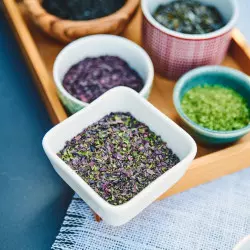
- 4g of nori seaweed flakes
- 4g of dulse seaweed flakes
- 4g of wakame seaweed flakes
- 3g of kombu seaweed flakes
Preparation (5 minutes):
- Grind the seaweed into a fine powder with a spice grinder or mixer
- Mix with the sea salt in a bowl
- Transfer to an airtight jar
- Store in a dry place, away from light and moisture
- Use as a finishing touch on all your dishes
Seaweed salt can be stored for several months without loss of quality if the jar is well sealed.
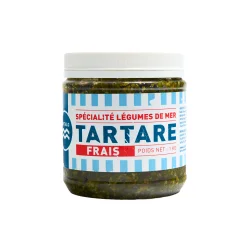
"I recommend sea lettuce for excellent tartares with capers, olive oil, and pickles: a delight."
- Barbara W., Biovie customer ⭐⭐⭐⭐⭐
For more, discover our recipe for dulse seaweed tartare with hazelnuts, a raw appetizer full of marine flavors.
Precautions and Contraindications
Seaweed salt is a natural condiment, generally well tolerated. However, some precautions should be taken:
- Hyperthyroidism or thyroid pathology: Brown algae (kombu, wakame) are very rich in iodine. Consult your doctor before consuming them regularly. For those sensitive to iodine, prefer blends based on dulse or sea lettuce, which are less iodized, see our article on algae and the thyroid.
- Iodine allergy: contraindicated without prior medical advice
- Pregnancy: Iodine intake should remain within the limits of the RDA (150µg/day). Avoid excessive kombu.
- Anticoagulant treatment: Green algae (sea lettuce) contain vitamin K, inform your doctor if you are taking anticoagulants.
- Strict low-sodium diet: Algae salt always contains sodium, reduce doses, do not use as a total replacement without medical supervision.
Frequently Asked Questions about Algae Salt
Which algae can replace salt?
Algae such as wakame, nori, and dulse can partially replace salt due to their naturally salty and iodized flavor. They contain significantly less sodium than table salt while providing an intense marine flavor. In flakes, they can be used directly as a condiment or integrated into homemade algae salt.
What is algae salt?
Algae salt (or salt with algae) is a mixture of sea salt and ground dried algae (nori, dulse, wakame, kombu, sea lettuce). It offers a more complex iodized and umami flavor than ordinary salt while reducing sodium content. It is available in coarse (cooking) or fine (finishing) versions, plain or flavored.
How to use algae salt daily?
Algae salt is used like regular salt, but preferably as a finishing touch (after cooking) to preserve its flavor. It pairs perfectly with fish, steamed vegetables, avocados, tartares, and salads. It can also be incorporated into dressings, sauces, and marinades. Prepare your own mix by combining 60g of sea salt with 15g of dried algae flakes.
What is the difference between algae salt and regular salt?
Algae salt has an iodized, marine flavor that refined salt does not have. It contains less sodium per serving if a mix rich in algae is used. It remains a seasoning to be consumed in moderation.
Where to buy quality organic algae salt?
To make your own organic algae salt, choose certified organic dried algae from controlled harvests in Brittany. At Biovie, you will find dehydrated organic kombu, dehydrated organic wakame, and dehydrated organic sea lettuce in flakes, ready to mix.