






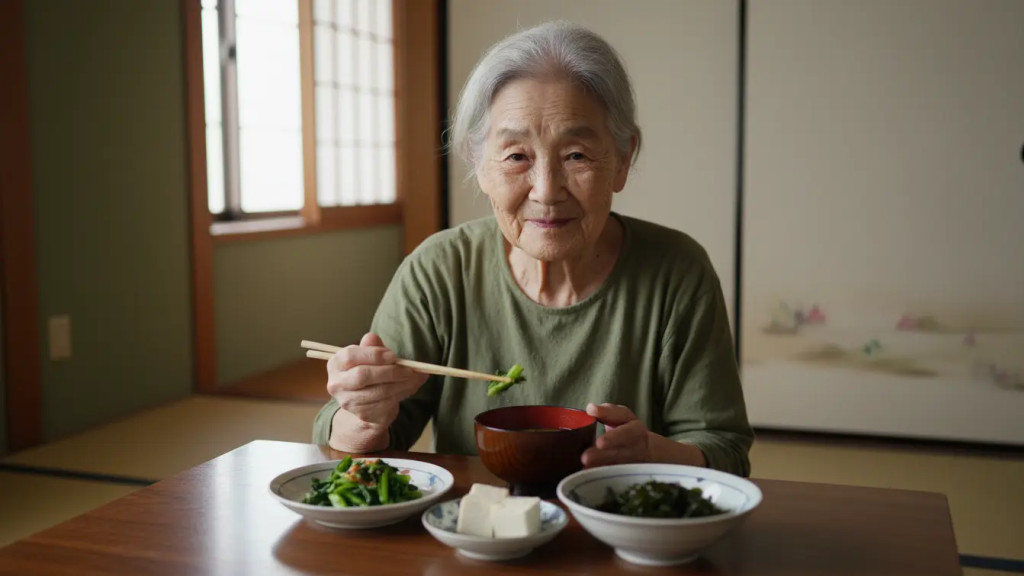
When one is interested in longevity and living food, it is impossible to overlook Okinawa, this Japanese archipelago where there are proportionally more centenarians than anywhere else on the planet. And guess what? Seaweed plays an absolutely central role in the Okinawa diet Traditional.
With Aurélie and also with David Tan, whose book "(Re) Vivre" we edited, we have extensively studied what researchers call the blue zones, these regions of the world where populations live longer and healthier lives. We even traveled to one of these blue zones in Costa Rica to meet with Viktoras Kusvlinkas, the founder of the famous Hippocrates Wellness Institute in 1956.
Okinawa is the most scientifically documented example. What struck us is that articles about the Okinawa diet often miss the essential points: the specific seaweeds consumed by these populations, their unique compounds like fucoidan, and especially how to practically integrate these practices into our Western daily life.
Frankly, when we see that Japan has 95,000 centenarians in 2024 and with Okinawa showing a record density of people over 100 years old, one might think there is something to understand. And that something is not simply "eating less" or "exercising." It's a comprehensive dietary approach where seaweed is much more than just a side dish. It is the true secret to the longevity of Japanese centenarians.
What the inhabitants of Okinawa really eat
The Okinawa diet traditional relies on a few fundamental principles that I would like to detail for you. First, there is this fascinating concept of "Hara hachi bu", which literally means "stomach at 80%". The Okinawans stop eating before they are completely full. It is a form of natural calorie restriction, without frustration, which according to studies, significantly contributes to their exceptional longevity.
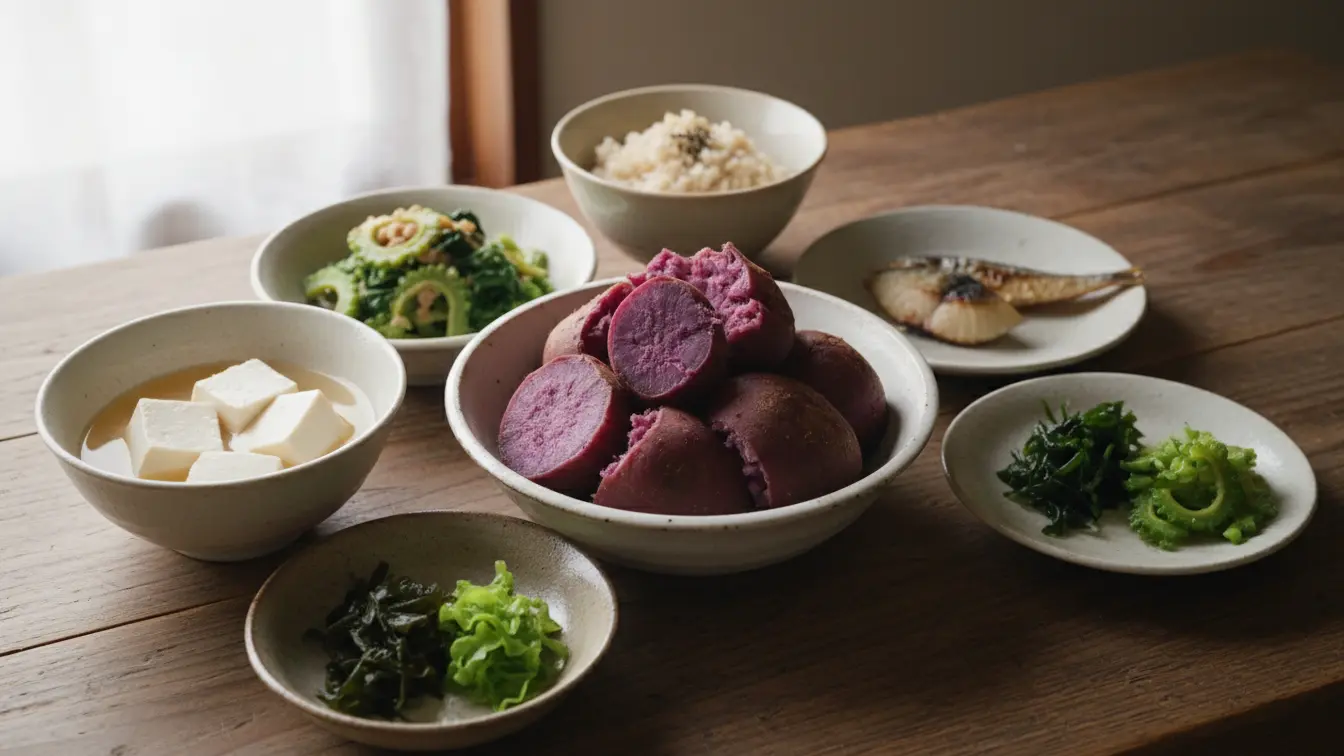
But what particularly interests me in the diet of Japanese centenarians is the composition of their plate. The Okinawa diet is characterized by a very high consumption of vegetables, notably the purple sweet potato, which historically accounted for up to 60% of caloric intake. Proteins mainly come from tofu, fish, and legumes. Red meat is absent or almost absent. And most importantly, seaweed is consumed daily, in small amounts of about 1 to 2 grams per day on average, which may seem really very little but represents remarkable consistency over decades and important nutritional contributions (notably trace elements), see the results !
Specifically, here are the typical proportions of the traditional Okinawa diet:
- Vegetables and tubers : approximately 60% of the contributions
- Whole grains : approximately 20%
- Legumes and soy : approximately 10%
- Fish and algae : approximately 5-10%
- Meat : < 1%
This plant/animal ratio is the exact opposite of what is observed in modern Western diets. And the results speak for themselves in terms of Okinawa longevity.
The six seaweeds of the Okinawa diet that no one introduces to you
Here is what frustrates me when I read articles about the Okinawa diet: they vaguely mention "seaweed" without ever specifying which ones. However, the inhabitants of Okinawa consume very specific varieties, some of which are endemic to their archipelago and have remarkable nutritional properties. Let's discover these together. Okinawa algae.
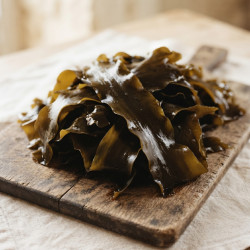
Kombu (Laminaria japonica)
It is the basic seaweed of dashi, the broth that serves as the foundation for almost all Japanese cuisine. The Kombu is particularly rich in iodine, natural glutamic acid (which gives it that characteristic umami flavor), and soluble fibers called alginates. A 10-gram serving of dried kombu provides approximately 2000% of the recommended daily intake of iodine. It is considerable, and that is why the Japanese consume small regular amounts rather than large occasional portions.
Wakame (Undaria pinnatifida)
The wakame is probably the most consumed seaweed in the daily miso soup of the Okinawa diet. What is fascinating about wakame is its exceptional content of fucoidan, a sulfated polysaccharide that is the subject of over 900 scientific studies. Fucoidan has remarkable properties that I will discuss in detail.
Nori (Porphyra)
You are certainly familiar with nori, it's the sheet that wraps around makis. But did you know that the nori contains up to 50% complete proteins ?It is one of the few plant sources that provides all essential amino acids in balanced proportions. Nori is also a notable source of bioavailable vitamin B12, which is exceptional in the plant kingdom.
Mozuku (Cladosiphon okamuranus)
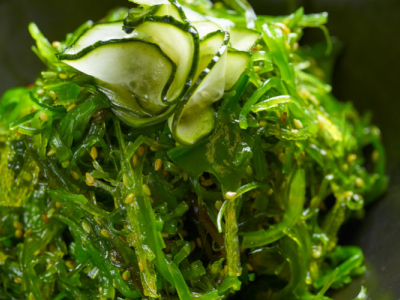
Here is an algae that you will hardly find anywhere outside of Okinawa. Mozuku is a filamentous brown algae that grows in the warm waters of the archipelago. It holds the record for the highest concentration of fucoidan among all known algae, with levels that can reach 20% of its dry weight. The Okinawans traditionally consume it in vinaigrette or in soups.
Umibudo (Caulerpa lentillifera)
Nicknamed "sea grape" due to its characteristic shape, umibudo is a green algae endemic to the tropical waters of Okinawa. It bursts in the mouth with a unique texture that releases a delicate iodized flavor. Umibudo is particularly rich in minerals and polyunsaturated fatty acids. It is an algae that is consumed fresh, making it difficult to export, but it is an integral part of the local diet.
Hijiki (Sargassum fusiforme)
Hijiki is a brown seaweed with a strong flavor, traditionally cooked with tofu or root vegetables. It is remarkably rich in iron, calcium, and fiber. A 10-gram serving of dried hijiki provides about 10 mg of iron, which is more than the same amount of red meat.
Fucoidan: The Compound That Science Is Starting to Take Seriously
I would like to dwell on the fucoidan, because it is truly the compound that distinguishes brown algae from other marine plants. Fucoidan is a sulfated polysaccharide primarily found in wakame, kombu, and especially mozuku, which are consumed in the Okinawa diet.
What makes the Benefits of fucoidan particularly interesting is the number of scientific studies dedicated to it. More than 900 publications in peer-reviewed journals have explored its properties. According to a meta-analysis published in Marine Drugs in 2020, fucoidan exhibits various biological activities, particularly on cellular metabolism and immune functions.
Researchers from Kyushu University have notably shown that regular consumption of fucoidan-rich seaweed was correlated with certain markers of metabolic health among the populations of Okinawa. Of course, correlation does not imply causation, and other factors such as overall lifestyle certainly play a role. However, this data is robust enough to warrant our attention.
Why the Okinawans age differently
What stands out when studying the Okinawa longevity, it's not only that they live longer, but they also age in better health. Epidemiological studies show significantly lower rates of cardiovascular diseases, type 2 diabetes, and cognitive decline compared to Western populations.
Several factors of the Okinawa diet seem to contribute to this "healthy longevity":
- Moderate caloric intake : the principle of hara hachi bu naturally maintains a slight calorie deficit
- The richness in antioxidants : colorful plants such as purple sweet potatoes and seaweed provide significant amounts of protective compounds
- The omega-3/omega-6 balance : the consumption of fish and seaweed promotes an anti-inflammatory ratio
- The intake of iodine and marine minerals : seaweed provides micronutrients that are often lacking in the Western diet
- Soluble fibers : the alginates and fucoidans from seaweeds nourish the intestinal microbiota
In 2024, the Okinawa Centenarian Study, which has been following this population since 1975, continues to produce fascinating data. Researchers have notably observed that Okinawa centenarians exhibit lower inflammatory markers and better insulin sensitivity than younger subjects in Western populations.
How to incorporate Okinawa seaweed into your daily life
Well, all of this is exciting, but concretely, how can one draw inspiration from this dietary model when living in France? It's a question I'm regularly asked, and I will try to answer it in a practical way.
First, we must be realistic: we are not going to exactly replicate the Okinawan lifestyle. The climate, traditions, pace of life, everything is different. However, we can incorporate certain principles of the Okinawa diet and some proven foods.
Start with the wakame in the miso soup.
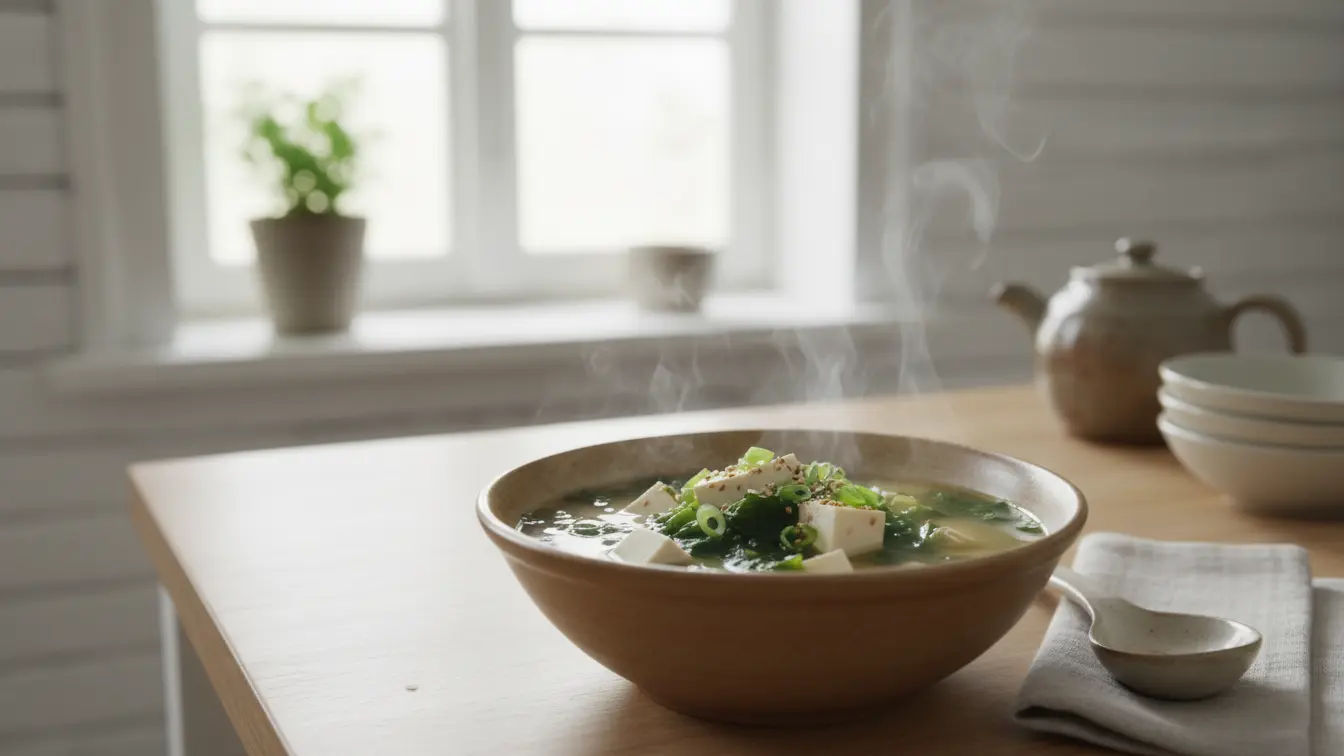
Miso soup is probably the easiest way to incorporate seaweed into your daily diet. A teaspoon of rehydrated wakame in your morning or evening miso bowl is already a great start. The wakame has a mild, slightly sweet taste that blends easily.
Use kombu for broths
The Kombu can infuse in the cooking water of your grains, legumes, or serve as a base for your soups. A 5 cm piece is enough for a liter of water. Kombu is not necessarily eaten; it can simply flavor and enrich your preparations.
Incorporate nori outside of sushi
The nori can be crumbled over a salad, on a bowl of rice, or nibbled on as a snack. It is an excellent source of protein and minerals with a pleasant taste that generally appeals even to those not accustomed to seaweed.
A typical day inspired by the Okinawa diet
Here is what a day of meals inspired by the principles of the Okinawa diet might look like:
- Breakfast : miso soup with wakame and tofu, brown rice, fermented vegetables
- Lunch : sweet potato or rice, sautéed green vegetables, fish or tofu, seaweed salad
- Dinner : vegetable broth with kombu, legumes, seasonal vegetables
The idea is not to revolutionize your diet overnight, but to gradually introduce these elements. Even a portion of seaweed two or three times a week already represents a significant contribution compared to a typical Western diet.