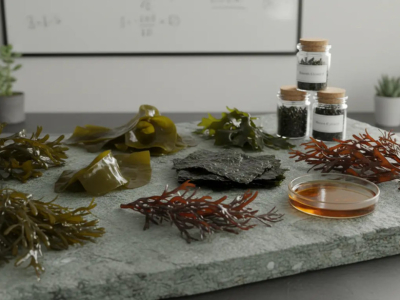



At Biovie, we have seen it since 2007: the Breton coast is full of a treasure still largely unknown in France, edible seaweed. These true "sea vegetables" can be cooked raw or cooked. Among the hundred or so species harvested in the Atlantic, four stand out for their taste and ease of use: dulse, wakame, sea lettuce and sea spaghetti. In our book Algues au Quotidien (Gallimard, 2024), we devoted several chapters to these four essentials, and here is a complete guide to getting to know them.
Sea lettuce, dulse, wakame and sea spaghetti are four edible Breton seaweeds, each with its own taste and texture. All can be eaten fresh or dried, as a condiment or in a recipe, as part of a varied and balanced diet.
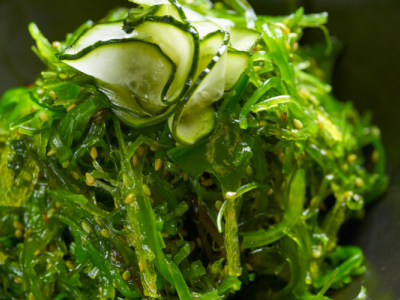
"I also recommend sea lettuce for excellent tartares with capers, olive oil and gherkins: a treat."
- Barbara Wencker ⭐⭐⭐⭐⭐
Why edible seaweed deserves a place on your plate
Edible seaweed is not just a gastronomic curiosity: it can be eaten raw or cooked, as a condiment or in a recipe.
Finally, edible seaweed has a major ecological asset: growing it requires no fresh water, no arable land and no fertilizer. It captures CO₂ and gives back oxygen. Discover sea spaghetti.
Dulse (Palmaria palmata): the red seaweed with a smoky taste
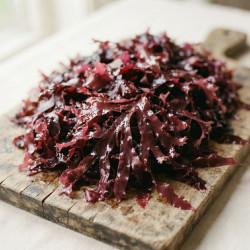
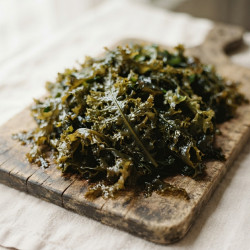
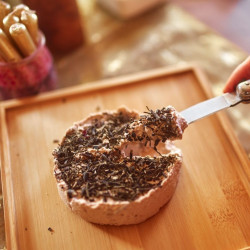
Dulse, or Palmaria palmata, is a red seaweed harvested mainly in Brittany, Ireland and Canada. Recognizable by its deep purple colour and its broad flat fronds, it has a slightly smoky taste, almost like vegetable bacon, hence its English nickname "vegan bacon".
Nutritional composition of dulse
The composition of dulse varies with the harvest; the details are on the product page.
Dulse in everyday life
Dulse has a smoky, iodine-rich taste; it is eaten raw after desalting, in a tartare or as chips.
Culinary ideas with dulse
Dulse is the most versatile seaweed in the kitchen, raw or cooked. Rehydrated for 5 minutes in cold water, it becomes:
- Dulse and hazelnut tartare: a Biovie signature recipe, see our dulse seaweed and hazelnut tartare
- Dulse and beetroot salad: a combination of freshness and minerality, discover the dulse and beetroot salad recipe
- Raw dulse chips: left in the dehydrator for a few hours, they become crunchy and smoky
- Condiment: as flakes, sprinkled on fish, salads, avocados, eggs or pasta
"Fresh seaweeds like sea lettuce or dulse are delicious in a tartare: desalt them, slice them thinly, add walnuts, garlic and lemon, and marinate in olive oil. Delicious. I highly recommend it, especially to vegans!"
- Catherine ⭐⭐⭐⭐⭐
⚠️ Dulse precaution: avoid in case of kidney failure (high potassium content) or unbalanced thyroid disorders.
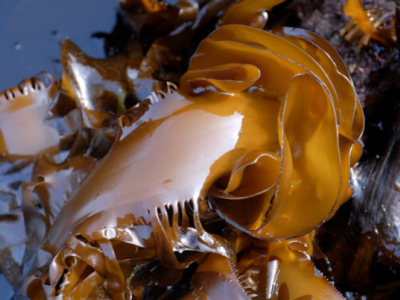
Wakame (Undaria pinnatifida): the seaweed of miso soups
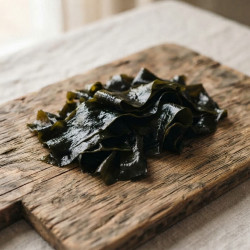
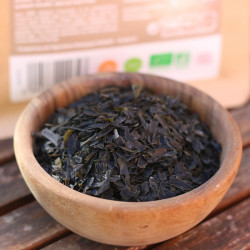
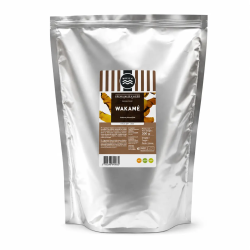
Wakame (Undaria pinnatifida) is a brown seaweed originally from Asia, now grown and harvested in Brittany. Very popular in Japanese cooking, it is the seaweed of miso soup and wakame salads, and stands out for its fine, silky texture and its mild, iodine-rich taste. To go further, see our complete guide to wakame.
Nutritional composition of wakame
- Fucoxanthin: a brown carotenoid specific to brown seaweeds
Wakame in everyday life
Wakame contains fucoxanthin, the pigment that gives it its brown colour.
Wakame is a brown seaweed that contains iodine: respect the doses (see the precautions section).
Culinary ideas with wakame
- Wakame miso soup: the classic Japanese recipe, a few flakes added at the end of cooking
- Japanese wakame salad: rehydrated wakame, soy sauce, rice vinegar, sesame, ginger
- Wakame marinade: sesame oil, lemon juice, garlic, over tofu, crunchy vegetables or raw fish
- As a daily condiment: 1 teaspoon of wakame flakes sprinkled on rice, an omelette, a vegetable stir-fry
Sea lettuce (Ulva lactuca): taste and uses in the kitchen
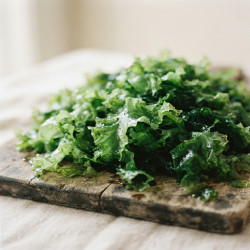
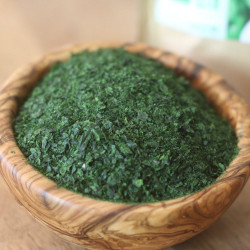
Sea lettuce (Ulva lactuca), also called ulva, is a green seaweed with fine translucent fronds that recall a lettuce leaf. Harvested at low tide on the Breton coast, it is appreciated for its fresh, grassy, slightly iodine-rich taste, and for its versatility in raw or cooked cooking.
Nutritional composition of sea lettuce
- Iron: up to 80 mg per 100 g of dried seaweed depending on the analyses
- Chlorophyll: the pigment that gives the seaweed its green colour
Absorption tip: vitamin C increases iron absorption: combine sea lettuce with a source of vitamin C (lemon, kiwi, parsley, raw pepper). Conversely, avoid coffee or tea during the meal, which inhibit absorption.
Sea lettuce and iron
Sea lettuce contains iron (up to 80 mg per 100 g depending on the analyses); combine it with a source of vitamin C, which increases iron absorption. Dried at low temperature, sea lettuce is practical for daily use as flakes.
Culinary ideas with sea lettuce
- Sea lettuce tartare with capers, olive oil and gherkins (Barbara's recipe, quoted above)
- Green sea lettuce pesto: rehydrated sea lettuce, pine nuts, garlic, olive oil, lemon, over raw zucchini spaghetti
- Raw sea lettuce wraps: replace the lettuce leaf with a large frond of fresh sea lettuce
- Green smoothie: 1 teaspoon of sea lettuce flakes in an apple-spinach-lemon smoothie
- Kombu and sea lettuce duo: see our organic kombu and sea lettuce duo recipe
At Biovie you will find organic fresh sea lettuce and organic dried sea lettuce as flakes or whole fronds.
To compare the formats and discover the rest of the range, browse our Fresh Seaweed range.
Sea spaghetti (Himanthalia elongata): the Atlantic seaweed in long strips
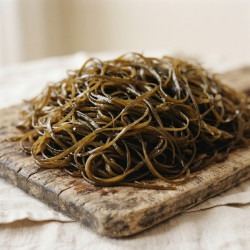
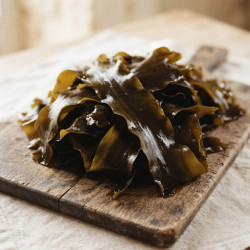
Sea spaghetti (Himanthalia elongata), also known as sea spaghetti or thongweed, is a brown seaweed with long supple strips that visually recall green beans or spaghetti. Harvested on the Atlantic coast, it is the most practical seaweed to bring into familiar dishes thanks to its shape and mild taste.
Nutritional composition of sea spaghetti
- Sea spaghetti contains iodine: respect the doses (see the precautions section).
Sea spaghetti in everyday life
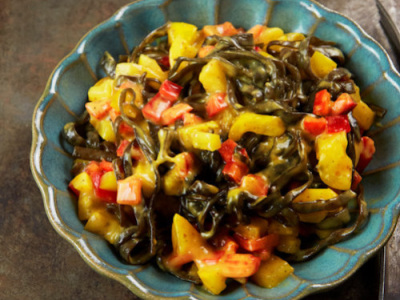
Sea spaghetti is cooked like a vegetable, pan-fried or as tagliatelle.
Culinary ideas with sea spaghetti
- Celeriac and sea spaghetti salad: see the celeriac and sea spaghetti recipe
- Quick stir-fry: rehydrated sea spaghetti + garlic + olive oil + lemon, served warm
- Asian marinade: soy sauce, sesame, ginger, rice vinegar
- Rehydrated raw: 10 minutes in cold water, lemon, parsley, shallot, as a fresh side
- Pasta substitute: its strips pleasantly replace spaghetti in a light recipe
Fresh seaweed or dried seaweed: how to choose?
The choice between fresh seaweed and dried seaweed depends mostly on how you use it and how often you eat it.
Fresh seaweed (generally sold vacuum-packed after a light brining) offers a firm texture and a more pronounced taste. It is perfect for tartares, wraps and raw salads. However, it keeps only a short time (a few weeks in the refrigerator once opened).
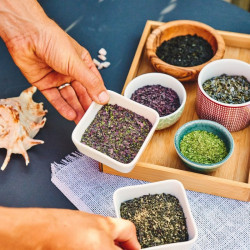
Seaweed dehydrated at low temperature (≤ 40 °C, as at Biovie) keeps for several months away from light and humidity, and suits every use: quick rehydration for cooked dishes, flakes as a daily condiment, added to bread doughs, granolas, raw cookies.
? The Biovie rule: favour low-temperature dehydration, which keeps the food's raw status. Discover our full range of organic dried seaweed.
"Thank you so much for this wonderful basket of seaweeds, very varied and arrived in perfect condition."
- Panyi Christ'Aile ⭐⭐⭐⭐⭐
Precautions and dosage: how to eat seaweed safely
Edible seaweed is safe for the great majority of people, provided a few common-sense rules are followed.
The French reference on the subject is the CEVA (Centre d'Étude et de Valorisation des Algues). According to its recommendations, 7 g of dried seaweed per day, or about 50 to 70 g of fresh seaweed, is a reasonable daily dose for a healthy adult. To go further, see the official CEVA sheet, Should we be afraid of the iodine in seaweed?.
Here are the main groups to watch:
- Thyroid disorders (hyper- or hypothyroidism): limit or avoid the very iodine-rich brown seaweeds (kombu, wakame, sea spaghetti). Prefer dulse and sea lettuce, which contain less iodine. Consult your doctor.
- Kidney failure: dulse is very rich in potassium, limit intake.
- Anticoagulant treatment: seaweed contains vitamin K, inform your doctor.
- Pregnancy and breastfeeding: do not exceed 150 µg of iodine/day. Limit strongly iodine-rich seaweeds and favour low, regular doses.
- Shellfish allergy: test small amounts at first and consult an allergist if in doubt.
To discover other seaweed preparations, also see our fresh seaweed tartare recipe.
Frequently asked questions about edible seaweed
What does edible seaweed contain?
Edible seaweeds (dulse, wakame, sea lettuce, sea spaghetti) provide protein, minerals and fibre; their composition varies by species, and the details are on each product page.
How much seaweed per day is recommended?
The CEVA (Centre d'Étude et de Valorisation des Algues) considers that 7 g of dried seaweed per day, or about 50 to 70 g of fresh seaweed, is a reasonable daily dose for a healthy adult. This dose may vary depending on the seaweed and its iodine content. People with thyroid disorders should consult their doctor.
Can you eat seaweed every day?
Yes, it is possible to eat seaweed daily, provided the recommended doses are respected (about 7 g dried/day). Excessive and regular consumption can lead to excessive iodine intake, which can disturb thyroid function. People on anticoagulant treatment or with kidney failure should also be careful.
What is the difference between dulse and wakame?
Dulse (Palmaria palmata) is a red seaweed with a slightly smoky taste. Wakame (Undaria pinnatifida) is a brown seaweed with a mild flavour, widely used in Japanese cooking (miso soup, salad). Sea lettuce is green, and sea spaghetti is brown, in long strips.
Who should not eat edible seaweed?
People with thyroid disorders (hyper- or hypothyroidism) should limit their consumption of iodine-rich seaweeds (kombu, wakame, sea spaghetti) and consult their doctor. People on anticoagulants should watch seaweeds rich in vitamin K. In case of kidney failure, the high potassium content of dulse can be a problem. Pregnant women can eat seaweed in moderation.
What does sea lettuce contain?
Sea lettuce contains iron (up to 80 mg per 100 g of dried seaweed depending on the analyses). Combine it with a source of vitamin C, which increases iron absorption, as part of a varied and balanced diet.
What does dulse contain?
Dulse is a red seaweed with a smoky, iodine-rich taste; it is eaten raw after desalting, in a tartare or as chips.
Dehydrated or fresh seaweed: which to choose?
Fresh seaweed offers a firm texture and a more pronounced taste, ideal in a tartare or raw salad, but keeps only a short time. Seaweed dried at low temperature, like the ones Biovie offers, keeps a long time and suits every use. The choice depends mostly on how often you eat it and the culinary use you have in mind.
Wakame, dulse or sea lettuce: which to choose to start?
To start, sea lettuce and dulse have a milder taste and a texture that is easy to get used to in a tartare or as a condiment, while wakame takes some getting used to for its silky texture typical of Japanese cooking. At Biovie, we advise starting with a small amount of dried seaweed flakes, whichever seaweed you choose, and increasing gradually according to your taste.
€18.90
In stock
€17.30
Last items in stock
€9.50
In stock
€9.50
In stock
€10.50
Back in stock expected on 10 May 2027
€17.30
In stock
€9.50
In stock
€16.90
In stock
€16.10
In stock
€16.10
In stock
€17.10
In stock
€17.42
€26.80
In stock
Nori seaweed sheets, raw quality
Organic Fresh Sea Lettuce Algae
Organic Fresh Dulse Seaweed
Organic Fresh Sea Bean Algae
Organic Fresh Nori Seaweed
Organic Fresh Wakame Seaweed
Organic Fresh Kombu Seaweed
Organic Dehydrated Dulse Seaweed
Organic Dehydrated Sea Bean Algae
Organic Dehydrated Sea Lettuce Algae
Organic Dehydrated Wakame Seaweed
Dehydrated Curly Wakame Seaweed
In practice: the view of Eric Viard, ISTOM engineer
"Dulse, wakame, sea lettuce, sea spaghetti: these four seaweeds have been my everyday essentials for more than twenty years. Each has its own taste and texture: smoky dulse, mild wakame, fresh sea lettuce, sea spaghetti in strips. It is precisely to pass on this know-how that we wrote 'Algues au Quotidien' with Aurélie: a book that received both the Gourmand World Cookbook Award and the Prize of the Académie Nationale de Cuisine, a historic double honour for a 100% vegan work. My advice: start with 1 teaspoon of dried seaweed a day, as flakes, and let your palate get used to this new palette of marine flavours.", Eric Viard, founder of Biovie.
Going further
Updated: November 2026. Article validated by Éric Viard, founder of Biovie and ISTOM engineer, co-author of "Algues au quotidien" (Gallimard, 2024), Best Cookbook in the World, Gourmand Cookbook Awards 2025, and Best Cookbook in France, Académie Nationale de Cuisine 2025.
Disclaimer: The information presented in this article is provided for information purposes only and does not constitute medical advice. Consult a qualified health professional before making any significant change to your diet or supplementation. As part of a varied and balanced diet and a healthy lifestyle.