



🎧 Seaweed in Everyday Life, the Podcast
The voice of seaweed, by those who live with it every day.
*****
🔸26. Fucoidan: Unveiling the Benefits of Brown Seaweed for a Longevity Inspired by Japan
↪️ In this episode, we set off to discover fucoidan, this unique sulphated polysaccharide found in brown seaweed that may well be one of the longevity secrets of the centenarians of Okinawa. The inhabitants of this Japanese island, among the longest-lived in the world, eat seaweed rich in this compound every day - and science is starting to understand why.
↪️ We explore the remarkable properties of fucoidan: its antioxidant action against cellular ageing, its anti-inflammatory effects, its role in supporting the immune system by stimulating natural killer cells, and its promising anticancer potential - with studies showing its ability to slow the growth of breast, colon and liver cancer cells. We also talk about its cardiovascular benefits: better blood fluidity, cholesterol regulation and protection against clots.
↪️ On the practical side, we review the best sources of fucoidan - wakame at the top, followed by kombu, nori and dulse - and we share simple raw recipes: wakame-avocado salad, green smoothie with kombu, nori rolls with vegetables and dulse chips.
↪️ Not forgetting the important precautions, particularly for people with thyroid disorders or on anticoagulants. Fucoidan is not a miracle remedy, but a natural compound with scientifically studied properties. By regularly including brown seaweed in your diet - 5 to 10 g per day - you draw on a model of longevity that has proven itself for centuries in Okinawa.
*****
🔸 27. Chlorella: The Super-Algae with Multiple Benefits for Your Health
↪️ In this episode, we dive into the fascinating world of chlorella, this freshwater micro-algae, 2 billion years old, that fully deserves its title as a superfood. With 50 to 60% protein, an exceptional richness in chlorophyll, B vitamins and minerals, it concentrates a nutritional density that is hard to match.
↪️ We explore its benefits most studied by science: its role in preventing hypertension, its powerful antioxidant properties, its ability to help regulate cholesterol, and even its promising effects on fibromyalgia. But it's above all its detoxifying power that draws attention - chlorella is able to bind to heavy metals such as mercury and lead to help the body eliminate them.
↪️ We also cover the practical aspects: powder or tablets, recommended dosages (2 to 5 g per day), precautions for use, and simple recipe ideas - from green smoothies to homemade energy bars. Not forgetting an overview of its surprising applications in cosmetics and agriculture.
Chlorella is much more than a dietary supplement - it's a concentrate of life that combines detoxification, nutrition and cellular protection. Start with small doses and increase gradually to let your body adapt to its purifying effects.
*****
🔸 28. Seaweed in Everyday Life: What If We Reinvented Friday?
↪️ In this episode, we question a deeply rooted tradition in France: Friday fish. Where does it really come from? And above all, does it still make sense at a time when the oceans are weakened by overfishing and marine pollution?
We introduce the "Seaweed in Everyday Life: let's start with Friday" movement, launched by Éric and Aurélie Viard, authors of the book voted best cookbook in the world at the Gourmand Awards 2025. The idea isn't to remove fish, but to add a choice: offering a seaweed dish on Fridays, at home, at the restaurant or in the canteen. A simple, gradual gesture, with no guilt.
↪️ We remind you why seaweed is such a relevant marine alternative: rich in iodine, minerals, assimilable iron, marine polyphenols and vitamins, it supports immunity, vitality and gut health. For the planet, it requires no fresh water, no land, no fertilizer, no pesticides - and it captures CO₂. Fish, on the other hand, concentrate pollutants all along the food chain: mercury, PCBs, dioxins, microplastics. Seaweed grows by osmosis and doesn't accumulate these contaminants in the same way.
↪️ And in practice? A seaweed tartare as a starter, a seaweed pesto on pasta, flakes in a salad - reinventing Friday doesn't call for a revolution, just a first gesture.
Friday stays a day of the sea, but with a modern, safe and ecological alternative. Keep the ritual, enrich the plate - a gentle transition, deeply aligned with our times.
*****
🔸 29. Wakame Fucoidan: What Science Teaches Us
↪️ In this episode, we dive deep into the science of fucoidan - this sulphated polysaccharide found in brown seaweed that is the subject of more than 1,400 scientific publications on PubMed. We break down, without miracle promises, what research actually demonstrates.
↪️ We start by explaining what fucoidan concretely is: a long chain of sulphured sugars that seaweed produces to protect itself from aggressions - UV, bacteria, desiccation. And we reveal a secret few people know: the part richest in fucoidan isn't the frond of wakame that we usually eat, but the mekabu, the reproductive base of the seaweed, with concentrations up to 10 times higher.
↪️ We then detail the four mechanisms of action documented by research: stimulation of the immune system (with clinical data showing an increase in NK cells), anti-inflammatory action via the modulation of COX-2 and NF-κB, the role in angiogenesis, and the effect on apoptosis - with a remarkable selectivity that spares healthy cells. We stay honest: these are mostly preclinical data, not therapeutic promises.
The Okinawa model runs through the episode as a common thread: 5 to 7 g of seaweed per day, centenarians with exceptional biological markers - preserved telomeres, reduced inflammation, immunity maintained with age.
↪️ And on the practical side, we recommend 3 to 5 g of dehydrated wakame per day, betting on regularity rather than quantity. We also cover the important precautions: iodine and thyroid, interactions with anticoagulants, and why whole food remains preferable to isolated supplements.
Fucoidan is a fascinating compound whose potential science is gradually validating. But it's regularity that counts - a tablespoon of wakame per day, like in Okinawa for centuries, rather than an occasional supplement. Science is catching up with what empirical wisdom had already identified.
*****
🔸 30. Chronic Fatigue and Low Energy: How Spirulina Can Help You
↪️ In this episode, we tackle a problem affecting nearly 20% of French people: chronic fatigue. You sleep your 7-8 hours and yet you wake up exhausted? We start by decoding the causes you may not be aware of - iron deficiency (25% of women affected), magnesium (70% of French people!), B12, protein, but also the oxidative stress that literally makes your cells "rust" from the inside and sabotages your energy production.
↪️ Then we dive into spirulina, this blue-green micro-algae recognized by the WHO as one of the most complete superfoods in the world. We detail what makes it so effective against fatigue: 60 to 70% complete protein (more than any other food), 50 to 100 mg of iron per 100 g, and above all phycocyanin - this star blue pigment that stimulates EPO production and therefore oxygen transport to your cells. We also explain how it regulates blood sugar to avoid the famous afternoon slumps, and how it boosts the immune system by 40% in just 6 weeks.
↪️ On the practical side, we guide you on everything: which form to choose (fresh, frozen, powder), which dose for your profile (3 to 15 g per day), why to take it in the morning with vitamin C and never with coffee, and why a minimum 3-month course is necessary for lasting results. We're also honest about the limits: the B12 in spirulina isn't usable by the body, and some contraindications exist for people with phenylketonuria, autoimmune diseases or haemochromatosis.
↪️ Spirulina isn't a quick fix like coffee - it's a deep correction of your nutritional imbalances. Start small (1-2 g/day), increase gradually, and give your body 2 to 4 weeks to feel the difference. Regularity is everything.
*****
🔸 31. Complete Plant Proteins Exist Beyond Rice and Lentils!
↪️ In this episode, we tackle a 50-year-old myth that complicated the lives of millions of vegetarians: the obligation to combine rice and lentils at every meal to get complete proteins. This rule comes from a 1971 book whose author, Frances Moore Lappé, retracted it herself ten years later, acknowledging she had reinforced a false myth. Modern science confirms it: our body stores amino acids over 24 hours, no combination at the same meal is necessary.
But above all, we introduce the real champions of complete plant proteins: microalgae. Spirulina, with 60 to 70% protein, a PDCAAS digestibility score of 84% and the 8 essential amino acids, surpasses all other plant sources. Chlorella follows with 55% protein and its unique growth factor. And marine seaweed - nori at 40%, dulse, wakame - round out the picture with balanced amino acid profiles.
↪️ We also cover a rarely mentioned subject: the antinutrients in legumes. Phytic acid, lectins, trypsin inhibitors - these compounds reduce protein absorption by 30 to 50%. Soaking and germination only partially fix this. Seaweed, on the other hand, simply doesn't contain any, which explains its superior digestibility.
↪️ On the practical side: a teaspoon of spirulina per day (5 g) provides the protein equivalent of 15 g of red meat, with an incomparably lower environmental footprint. We also share simple recipes - protein smoothie, seaweed pesto - and recommendations by goal.
Forget the rice-and-lentils chore. With a spoonful of spirulina per day, you get complete proteins, highly digestible, with no antinutrients and no combination needed. Science has settled it - it's time to update our habits.
*****
🔸 32. Spirulina and Microcystins: Check the Quality!
↪️ In this episode, we cover a subject rarely addressed but essential: microcystins, these toxins produced by certain cyanobacteria that can contaminate spirulina if production conditions aren't rigorous. A question from a customer prompted us to be fully transparent on this topic.
↪️ We start by recalling what microcystins are and where they come from: contaminated fresh water, fish and seafood that bioaccumulate them in their tissues, vegetables irrigated with polluted water. Spirulina can also be affected if the water source and production method aren't controlled. But an important point: unlike fish and shellfish that concentrate pollutants as they move up the food chain, microalgae like spirulina cannot accumulate microcystins in the same way. Contamination levels generally remain much lower.
↪️ We then explain the behind-the-scenes of quality control at Biovie: every imported batch undergoes physical, chemical, microbiological and heavy-metal analyses. Public authorities - ANSES, the Directorate for the Protection of Populations - carry out surprise sampling at import. And organic certification by Ecocert adds yet another layer of unannounced controls. Paradoxically, importing imposes stricter controls than for French production.
↪️ We end with a key piece of advice: be wary of productions that are too small or too artisanal, less well controlled, and never hesitate to ask your supplier for the results of microbiological and microcystin analyses.
Spirulina is a safe superfood provided you choose a supplier who is transparent about their controls. Organic certification, batch analyses and traceability of the water source are your best guarantees. Never buy blindly - ask for the proof.
*****
🔸33. What Is the Price of Spirulina?
↪️ In this episode, we break down a very concrete subject: how much does spirulina cost, and above all, why do prices vary so much from one product to another? From 8 to 170 euros per kilo depending on the form, the gap is huge - and it can be explained.
We review the four factors that determine the price: the origin (the United States produces 50% of the world's spirulina but with questionable methods), the quality (colour, smell, low-temperature drying to preserve phycocyanin), the production methods (control of light, temperature, water) and the organic certifications that guarantee the absence of pesticides and chemical fertilizers.
↪️ We then compare prices by form: powder remains the most affordable (30 to 70 €/kg), flakes go a notch above (40 to 80 €/kg), the liquid form concentrated in phycocyanin sits between 50 and 90 €/kg, and fresh spirulina - the most bioavailable but also the most fragile - reaches 120 to 170 €/kg. We also cover the case of pharmacy spirulina, where a higher price doesn't necessarily guarantee better quality.
↪️ And above all, we explain why buying cheap spirulina is a bad calculation: poor processing conditions, loss of nutrients, sometimes even mixing with other substances to inflate volumes. But beware, expensive doesn't mean good either - it's the origin, the certification and the producer's transparency that count.
Price is neither a guarantee of quality nor a criterion to ignore. Look for organic spirulina, dried at low temperature, with a traceable origin - and be as wary of prices that are too low as of prices inflated without justification.
*****
🔸34. Hypothyroidism and Diet: The Key Role of Iodine and Marine Seaweed
↪️ In this episode, we tackle a subject that constantly comes up in our exchanges with you: the link between iodine, the thyroid and seaweed. Your thyroid works like an engine - and iodine is the fuel. Without it, it's impossible to produce the T3 and T4 hormones that regulate your metabolism, your energy, your body temperature and even your mood.
And the picture is worrying: the WHO sounded the alarm in 2024, iodine deficiency is making a comeback in Europe. Nearly 30% of women of childbearing age are deficient in several European countries. Iodized salt? It covers only half the salt sold in France, and processed foods use non-iodized salt. Relying on it alone is not enough.
↪️ This is where marine seaweed comes into play - no land food rivals its iodine content. We guide you seaweed by seaweed: nori to start gently (30-50 µg/g), wakame for regular consumption (1 g already covers your daily needs), dulse as an intermediate option, and kombu to be reserved for occasional use given its extreme concentration. We detail the safe dosages to avoid exceeding the limit of 600 µg/day set by the EFSA.
But iodine doesn't work alone. We explore its essential partners: selenium for the T4-to-T3 conversion (one to two Brazil nuts per day is enough), zinc, iron, B vitamins. We also talk about goitrogenic foods - cabbage, broccoli, soy - to limit without banning, and the little-known role of the gut microbiome in hormone conversion. All with clear precautions for people on thyroid treatment.
Seaweed is the most concentrated and most bioavailable natural source of iodine, but dosage is the key. Start with nori, adjust to your needs, and in case of diagnosed hypothyroidism, your doctor always remains your first point of contact. Diet supports, it doesn't replace.
*****
🔸35. Spirulina for Hair: A Complete Guide to a Radiantly Healthy Mane
↪️ In this episode, we explore in depth a little-known benefit of spirulina: its impact on hair health. After nearly 20 years working with seaweed at Biovie and dozens of customer testimonials whose hairdresser even noticed the difference, it was time to take stock - science in hand.
↪️ We start with the why: your hair is made up of 95% keratin, a protein. And spirulina, with its 60 to 70% complete protein and its 18 amino acids including cysteine and methionine (essential for making keratin), provides exactly the building blocks your hair needs. We then detail the five key nutrients that make the difference: protein for structure, iron for follicle oxygenation (28.5 mg/100 g, three times more than beef liver), B vitamins for cellular metabolism, gamma-linolenic acid for shine and scalp health, and phycocyanin - this star antioxidant that prolongs the hair's growth phase.
The study results are concrete: a 34% reduction in daily hair loss, 16% more hair density after 90 days at 3 g per day, and an 11% increase in hair diameter after 6 months. But we stay honest - it takes 3 to 6 months of patience, and spirulina won't replace a medical treatment in cases of hormonal alopecia.
↪️ On the practical side, we review all the forms (powder, flakes, fresh, frozen), the progressive dosages from 1 to 5 g per day, the best time to take it (in the morning with vitamin C, never with coffee), and even a homemade hair mask recipe with spirulina and coconut oil. We also insist on the essential quality criteria: low-temperature drying, organic certification, traceability of origin, and why spirulina at 20 €/kg should set off alarm bells.
Spirulina acts on every front of hair health - loss, growth, thickness, shine and antioxidant protection. But it's a marathon, not a sprint: 3 g per day for at least 3 months, with a balanced diet and quality spirulina. At 20 cents a day, it's one of the most cost-effective beauty investments out there.
*****
🔸36. Porphyran: The Antioxidant Exclusive to Nori That Science Is Rediscovering
↪️ In this episode, we reveal what really happens in your body when you eat nori - and it's far more than just a sushi wrapper. A 2017 Korean study published in the Journal of Medicinal Food demonstrated something fascinating: nori extracts directly activate your macrophages, those sentinel cells that patrol your body to neutralize viruses, bacteria and abnormal cells.
↪️ We explain the mechanism simply: the porphyran in nori acts like a molecular switch on the NF-κB pathway of your immune cells. Once activated, this mechanism triggers the production of cytokines - IL-6, TNF-α, interferon gamma - that coordinate your entire defense response. And the most remarkable thing: no toxicity observed at the doses tested. Nori activates your defenses without aggressing the body.
Beyond porphyran, we review the nutritional treasure chest of nori: vitamin A at 650% of the recommended intake per 100 g, vitamin C, bioavailable B12 (a treasure for vegans), zinc, omega-3 EPA and glutamine - knowing that 70% of our immune system is located in the gut. We also explore the complementarity with spirulina: nori supports innate immunity via the macrophages, spirulina acts on adaptive immunity via the T and B lymphocytes. Combining the two means covering both sides of your defenses.
↪️ On the practical side: 1 to 2 sheets per day, in a 4-to-6-week course ideally starting in autumn, as snacks, in soups, as flakes on your dishes or in a seaweed tartare. And always dried at low temperature to preserve the porphyran.
Nori is the only food in the world containing porphyran, a compound that directly activates your macrophages. Combined with spirulina to cover both lines of immune defense, it's a natural prevention strategy that the Japanese have practiced for centuries - and modern science is finally explaining why.
*****
🔸37. Kathleen Drew-Baker, the Woman Who Revolutionized the World of Nori
↪️ In this episode, we tell you an incredible story that almost no one knows in the West. In the 1950s, nori- this seaweed the Japanese have cultivated for over 300 years - was on the brink of disappearing. Harvests were collapsing, growers were powerless, and no one understood why. The fundamental problem: no one knew at all how nori reproduced in nature.
That's when Kathleen Drew-Baker stepped in, a British botanist working in a small laboratory in Manchester. In 1949, she made an astonishing discovery: nori has a life cycle with two completely different phases. The visible phase, the one we know - the red seaweed on the nets. And a hidden phase, never suspected: tiny pink filaments living inside shells. It was like discovering that a butterfly can also live underground.
↪️ This discovery changed everything. Japanese growers were able to master the entire reproduction cycle in the laboratory, turning a hit-or-miss activity into a modern industry. Production exploded from a few hundred tonnes to several hundred thousand tonnes, making nori one of the most important aquaculture productions in the world, representing today a market worth several billion dollars.
The most moving part: Kathleen Drew-Baker never set foot in Japan, never tasted nori, and died in 1957 without seeing the fruits of her work. Yet the Japanese call her "Haha-no-umi" - Mother of the Sea. A memorial was erected in Sumiyoshi Bay, and every 14 April, nori growers honour her memory.
We end the episode by recalling that this cultivation remains a model of sustainable aquaculture: zero pesticides, zero fertilizer, and nori farms even purify the water by absorbing excess nutrients. Every time you bite into a sheet of nori, you owe that pleasure to a little-known British scientist who solved a biological mystery several centuries old. Her story is a reminder that fundamental science, pursued with passion, can transform the world in unexpected ways.
*****
🔸38. Seaweed: Why Do the Japanese Live Longer with This Food?
↪️ In this episode, we explore the fascinating link between seaweed consumption and the exceptional longevity of the Japanese - 84.6 years average life expectancy, and in Okinawa, 68 centenarians per 100,000 inhabitants, more than double that of France. Their secret? Seaweed makes up about 10% of their diet, with 4 to 7 g per day naturally included in every meal since the 5th century.
↪️ We break down the three major health properties validated by science. First, the contribution to a normal inflammatory response: 63% of the seaweed extracts tested modulate inflammation markers, with the fucoidan from wakame leading the way. Next, support for natural defenses: 86% of seaweed extracts show activity against at least one pathogenic bacterium - E. coli, Staphylococcus, Salmonella - thanks to the sulphated polysaccharides that block pathogen adhesion and stimulate immune cells. And finally, support for the gut microbiome: seaweed fibers arrive intact in the colon where they selectively feed Bifidobacteria and Lactobacilli, producing butyrate, an essential fuel for intestinal cells. A European project, Algae4IBD, is in fact studying their potential in chronic inflammatory bowel disorders.
↪️ We also review the incomparable nutritional composition of seaweed: up to 35% complete protein, a stunning concentration of minerals (13 times more calcium than milk for wakame, more iron than red meat for dulse), zinc, iodine - all without sugar, without fat and for just 20 to 30 calories per 100 g. And good news: Breton seaweed offers qualities equivalent to the Japanese ones.
↪️ On the practical side, we guide you step by step the Japanese way: wakame miso soup in the morning, nori flakes as a condiment on all your dishes, kombu dashi, dulse salads. Start with 2-3 g per day and increase gradually.
A few grams of seaweed per day - a pinch of flakes, a sheet of nori, a spoonful of wakame - is enough to benefit from what the Japanese have practiced for centuries. It's not a culinary revolution, it's a simple adjustment that could make all the difference to your health in the long run.
*****
🔸39. Seaweed Tartare: The Marine Condiment That Changes Everything on Your Plate
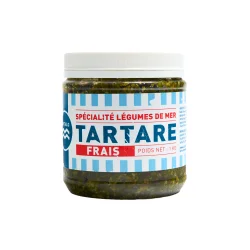
↪️ In this episode, we talk about a product that has been part of our daily life for years and that systematically converts the sceptics at our workshops: seaweed tartare. If you're looking for the simplest and tastiest way to bring seaweed into your diet, this is where to start. One spoonful a day, no preparation - it's the ideal gateway to sea vegetables. We start by explaining what a seaweed tartare exactly is: a fresh condiment made from chopped and seasoned seaweed - like a pesto, but the sea version. We decode the famous green-red-brown trio that makes all the nutritional difference: sea lettuce for its mildness and its magnesium, dulse for its protein comparable to soy, and kombu for its umami flavour and its richness in minerals. Together, they offer a nutritional spectrum that no single seaweed can provide.
↪️ We then detail the seven key benefits: an exceptional concentration of minerals and trace elements, a natural iodine intake for the thyroid, complete plant proteins, antioxidants and omega-3 preserved by the absence of pasteurization, an ultra-light profile (80 to 120 kcal per 100 g versus 400+ for rillettes), soluble prebiotic fibers for the microbiome, and this unique complementarity between seaweed families.
↪️ On the practical side, we share ten concrete ways to use it day to day: spread on sourdough bread or cucumber slices, mixed into pasta for an instant sauce, in an iodized vinaigrette, in a wrap instead of mayonnaise, as a topping after cooking on a pizza or a galette. And we insist on the essential selection criteria: organic, fresh and unpasteurized, and above all seaweed as the first ingredient - not oil.
Seaweed tartare is the most accessible way to enjoy the benefits of seaweed without knowing how to cook it. A tablespoon a day is enough, a 350 g jar lasts 2 to 3 weeks, and it's infinitely more nutritious than any classic condiment. Try it, you'll love it - our customers have confirmed it for over 20 years.
*****
🔸40. Iodine: Deficiency or Excess - What's the Real Danger in France?
↪️ In this episode, we settle a debate that causes confusion for many of you: should you be afraid of getting too little iodine or too much? After compiling the scientific data and 18 years of field experience with seaweed, the answer is clear: in France, the real problem, the one silently affecting millions of people, is deficiency.
The figures are striking: according to ANSES, 43% of women of childbearing age have insufficient iodine intake - almost one in two. The WHO sounded the alarm in 2024 about the return of this deficiency in Europe. On the other side, dietary excess? Only 4 cases documented by French nutrivigilance. Almost all cases of excess are linked to overdosed supplements or medication, not to diet.
↪️ We explain why this deficiency is exploding: reduced salt consumption, French soils naturally poor in iodine, dairy products that contain less and less of it. And a little-known trap: you can be deficient with a perfectly normal TSH - your thyroid compensates until the day it can't anymore.
We also welcome the insight of Dr Vincent Reliquet, who argues for the superiority of seaweed iodine over iodized salt and synthetic supplements - an iodine accompanied by a whole array of natural cofactors that modulate its absorption.
↪️ We then detail the iodine content seaweed by seaweed: kombu the absolute champion to use in micro-doses, wakame and dulse perfect for regular consumption, nori ideal to start with. And we offer you a progressive four-week protocol to incorporate seaweed safely, staying under the limit of 600 µg/day set by the EFSA.
We stay transparent about the precautions: medical consultation essential for thyroid conditions, Levothyrox treatments, pregnancy and breastfeeding. Seaweed supports, it never replaces medical monitoring.
↪️ In France, the balance tips overwhelmingly towards iodine deficiency as a public health problem. Marine seaweed is the most concentrated and most bioavailable natural source to remedy it. Start with wakame and nori, vary the species, respect the dosages - and if you have any doubt about your thyroid, ask your doctor for a urinary iodine test.
*****
🔸41. Memory Loss After 45: How to Stop It Naturally with Klamath
↪️ In this episode, we tackle a subject affecting one in three French people after 50: memory disorders. And a surprising fact to begin with - according to INSERM and the British Medical Journal, cognitive decline can begin as early as 45. Not at 70, not at retirement. At 45.
We first decode what really happens in your brain: beyond the classic "poor blood circulation", researchers at Virginia Tech identified in 2025 a central mechanism responsible for more than 80% of cases of cognitive decline - neuroinflammation. This silent inflammation, fuelled by chronic stress, lack of sleep, ultra-processed food and a sedentary lifestyle, gradually erodes your neural connections without you realising it.
We also review the five aggravating everyday factors, from cortisol that attacks the hippocampus to alcohol that is directly toxic to neurons.
↪️ Then we explain why the classic solutions - Ginkgo biloba, Bacopa, Ginseng - often remain insufficient: they act on circulation or neurotransmission, but not on neuroinflammation. This is where Klamath stands out. This wild freshwater algae, harvested in Upper Klamath Lake in Oregon, acts on three simultaneous mechanisms thanks to its active trio: PEA (a dopamine precursor for focus and working memory), phycocyanin (documented anti-neuroinflammation action), and specific polysaccharides that contribute to the mobilization of adult stem cells. A 2022 meta-analysis pooling six clinical studies confirms a significant improvement in cognitive functions - progressive, over several weeks to several months.
↪️ On the practical side, we detail a 3-month protocol: from 0.5 g the first week up to 3 g per day in the third month, in the morning on an empty stomach or in a cold smoothie. We share our daily recipe - frozen banana, blueberries, almond butter and Klamath - and explain why the fresh frozen form better preserves PEA, which is heat-sensitive above 42°C. Clear precautions: watch out for anticoagulants (vitamin K), thyroid treatments, and always start gently.
↪️ Memory loss after 45 is not inevitable - it's often the signal of a brain in chronic neuroinflammation. Klamath acts where the classic plants can't, on three levers at once. Count on 2-3 weeks for mental clarity, 6-12 weeks for lasting memory effects. And if your lapses become frequent or sudden, see a doctor - this episode is a prevention tool, not a diagnostic one.
*****
🔸42. Thinning, Brittle or Falling Hair: The Natural Marine Protocol That Changes Everything
↪️ In this episode, we tackle a frustration that 33% of women experience: hair loss. You've tried everything - masks, serums, sulphate-free shampoos - and yet every morning it's the same sight on the brush. What if the problem wasn't at the surface, but on the inside?
We start with the real causes no one explains clearly to you: four mineral deficiencies that silently weaken your hair. Iron, the number one nutritional cause of hair loss in women. Zinc, essential to the cell division of the hair follicle. Iodine, regulator of the hair cycle via the thyroid. And silica, which gives hair its strength and elasticity. As long as these deficiencies aren't corrected, no external care can compensate for what's missing at the root.
↪️ Then we get to the heart of the matter: marine seaweed concentrates 10 to 50 times more hair minerals than land vegetables. Spirulina with its 28 mg of iron and 57% protein per 100 g - versus 2.7 mg for spinach. Dulse with 6.8 mg of zinc, rivalling red meat. Wakame with its natural iodine to support the thyroid. And marine plasma, with its 78 minerals and trace elements in proportions close to those of blood plasma, which completes the spectrum for a global remineralization that no synthetic supplement can reproduce.
↪️ We then detail the 8-week protocol developed over 20 years of experience at Biovie: weeks 1-2 gently with isotonic marine plasma and a spoonful of spirulina, weeks 3-6 building up with the switch to hypertonic and the addition of dulse and wakame, then weeks 7-8 of consolidation.
We're honest about the timeline: less hair on the brush from weeks 2-4, first visible results between weeks 8 and 12, since a complete hair cycle lasts about 3 months. All for 1.5 to 2 euros per day - comparable to classic supplements, but with an incomparably higher nutritional density.
↪️ Your hair is the mirror of your inner nutritional state. Marine seaweed + marine plasma form a unique remineralization duo that acts from the inside out. It's a global approach that also benefits your energy, your skin and your nails - the hair is only the visible part of the iceberg. Count on 3 months for lasting results.
*****
🔸43. Iron Deficiency: The Spirulina, Chlorella and Marine Plasma Trio to the Rescue
↪️ In this episode, we tackle the number one nutritional deficiency in the world according to the WHO: iron. In France, one woman in four of childbearing age is affected, and among teenage girls, it climbs to 44%. The most worrying part? The majority slips under the radar, because a normal TSH or haemoglobin isn't enough to detect the early stages of depletion.
We detail the ten symptoms that should alert you - from persistent fatigue to brittle nails to brain fog - and the three progressive stages of deficiency, from silent to severe.
↪️ We then explain why classic iron tablets pose a problem: unpleasant side effects (constipation, nausea, metallic taste), poor absorption of metallic salts, and above all a one-dimensional approach that ignores the essential cofactors. Then we get to the heart of the matter: the natural trio spirulina + chlorella + marine plasma.
↪️ Spirulina first, with its 28.5 mg of iron per 100 g - 15 times more than spinach. Its secret: the iron is chelated to phycocyanin, which keeps it in the directly absorbable ferrous form, with ferritin formation 27% higher than other sources according to studies.
↪️ Chlorella next, which prepares the ground by supporting intestinal detoxification, feeding the microbiome and providing B12 and chlorophyll - whose molecular structure is strikingly close to haemoglobin.
And marine plasma finally, with its 78 minerals and trace elements that provide the essential cofactors for iron metabolism: copper for transport, zinc for stomach acid, magnesium for intestinal pH.
↪️ We share the concrete 8-week protocol: gradual introduction in the first week (1 g of each), building up to 3-5 g of spirulina and 2-3 g of chlorella with hypertonic plasma, then long-term maintenance. Always in the morning, always with vitamin C, and never with tea or coffee within two hours.
First effects on energy within 2-3 weeks, measurable rise in ferritin within 6-8 weeks. All for 1.5 to 2 euros per day - comparable to classic supplements, but with an incomparably broader nutritional spectrum.
↪️ Iron doesn't work alone - it needs cofactors to be absorbed and metabolized. The trio spirulina (bioavailable iron) + chlorella (intestinal preparation + B12) + marine plasma (78 catalyst trace elements) offers a synergy that no isolated tablet can reproduce. For mild to moderate deficiencies, it's a natural alternative validated by science. For severe anaemia, consult your doctor - the trio can take over once the reserves are stabilized.
*****
🔸44. If You Don't Like Seaweed, It Might Be in Your Genes!
↪️ In this episode, we tackle a question many people ask without daring to put it into words: why do some people viscerally hate seaweed? What if it were neither a whim nor a lack of goodwill, but pure biology?
We start with a revelation that surprises everyone: iodine has no taste. Nor smell. What you perceive as "iodized" in seaweed are volatile organic compounds - mainly dimethyl sulphide (DMS), terpenes and phenols. The same chemistry as "the smell of the sea" on a beach. And this distinction has a major practical consequence: since these are specific compounds, some seaweeds contain very little of them.
Then we dive into the genetics of taste, starting with the famous OR6A2 gene of coriander - the one that turns this herb into soap for 10 to 15% of the population. For seaweed, no single gene has been identified, but several families of receptors play a similar role. The TAS2R bitter taste receptors divide the population into three groups: 25% of "non-tasters" who simply find seaweed tasty, 50% of "medium-tasters" who get used to it easily, and 25% of "supertasters" who perceive marine flavours 2 to 3 times more intensely. If you find black coffee undrinkable and 85% chocolate downright bitter, you're probably in this last group.
↪️ We then offer a ranking of seaweed taste from mildest to most intense: nori at the top with its umami profile of dried mushroom, ideal for beginners. Then dulse and its hazelnut note, sea lettuce herbaceous, wakame moderately marine, sea spaghetti more pronounced, and kombu for the converts. And for the true supertasters, a pinch of seaweed salt on your usual dishes is the gentlest gateway.
The good news: taste receptors are plastic. A 3-week protocol - micro-exposure as flakes the first week, the first mild seaweed the second, gradual increase the third - lets you reprogramme your sensitivity thresholds. The Japanese, who eat 10 kg of seaweed per person per year, developed this adaptation over generations.
↪️ Your aversion to seaweed probably has a real genetic basis - 25% of the population is hypersensitive to bitter and sulphured compounds. But your genes don't condemn you: start with nori or a seaweed salt, progress in micro-doses over 3 weeks, and you might well join the thousands of people who thought they could never enjoy these marine superfoods.
*****
🔸45. Green Seaweed in Brittany: The Double Life of Ulva, from Scourge to Superfood
↪️ In this episode, we finally untangle a misunderstanding that has lasted for decades: the sea lettuce we eat and the green seaweed that washes up by the hundreds of tonnes in the bay of Saint-Brieuc are exactly the same species - Ulva armoricana. The prefecture of Brittany acknowledges it itself. What changes everything isn't the seaweed. It's the environment.
We start by explaining how a green tide is born: three factors, never the seaweed alone. Enclosed, shallow bays. A massive excess of nitrates - more than 90% of agricultural origin according to the Court of Auditors. And an opportunistic seaweed that responds to what it's offered. France has been condemned twice by the European courts for failing to comply with the Nitrates Directive, and in June 2025, a court recognized the State as partly responsible for a death - thirty-six years after the first documented death. Three people have died since 1989, not because of the seaweed, but from the hydrogen sulphide released by its putrefaction beneath a dry crust.
↪️ Then we switch to the other side: edible sea lettuce, harvested alive on foot in the preserved waters of Roscoff. Rich in iron, calcium, magnesium, iodine and B vitamins - a remarkable nutritional profile. We explain a fundamental biological mechanism that no one popularizes: seaweed grows by osmosis, it is the instant mirror of its environment. Healthy water, healthy seaweed. Polluted water, polluted seaweed. And unlike fish or shellfish, it doesn't bioaccumulate pollutants over the long term.
We detail the three simple tests to tell a living seaweed from a stranded one - visual (bright green vs yellowish patches), olfactory (fresh iodine vs rotten egg), and the absolute golden rule: never pick up a stranded seaweed, even if it looks fresh. And we present the Breton organic supply chain - Bretalg, the oldest organic harvester in France, manual harvest, low-temperature drying, batch controls with cadmium thresholds ten times stricter than the European average.
↪️ The problem of green tides isn't the seaweed - it's the intensive agricultural system that dumps nitrates into the bays. Choosing a sea lettuce from the Breton organic supply chain means choosing the exact opposite of this system. It's the same seaweed, but it's not the same relationship to the living world. And it's one of the most accessible marine superfoods to start with -a spoonful of flakes on your dishes, and there you are.
*****
🔸 46. Phycocyanin: Benefits, Dangers and Complete Guide 2026
↪️ In this episode, we dive into the heart of spirulina to isolate its most studied active principle: phycocyanin. This natural blue pigment, which represents 10 to 20% of the dry weight of spirulina, isn't just another antioxidant - it's a modulator of your own cellular defense system, able to activate the Nrf2 pathway. And its molecular structure, close to the biliverdin naturally present in our body, explains why it's so well tolerated.
We review its benefits, classified by level of evidence. The best documented: its selective anti-inflammatory action. Cherng's study (2007) showed that it inhibits COX-2 - the inflammation enzyme - without touching COX-1 which protects the stomach. A mechanism similar to classic anti-inflammatories, but without the gastric effects. Then its antioxidant power, superior in vitro to vitamins C and E. Its immunomodulatory role, with stimulation of T lymphocytes and NK cells. Its help against fatigue via the iron in spirulina. And encouraging results in sports recovery and liver protection.
↪️ We frankly address the question of dangers - because it's the number 1 search on Google. The molecule itself is very well tolerated at dietary doses. The real risks: phenylketonuria, autoimmune diseases under immunosuppressants, and above all product quality. Heavy metals, microcystins, contamination - the danger comes from what accompanies the phycocyanin in a poor-quality product, not from the molecule itself. Hence the repeated advice: demand the certificates of analysis for each batch.
On the practical side, we compare the available forms: blue spirulina powder (3-5 g/day, best price-effectiveness compromise), liquid phycocyanin (slightly higher bioavailability but 3-5 times more expensive and fragile), and capsules (convenient but watch the real dosages). We always recommend starting with a half-dose the first week, with first noticeable effects within 2 to 4 weeks.
↪️ Phycocyanin is the hidden jewel of spirulina - a selective COX-2 anti-inflammatory, powerful antioxidant and immunomodulator, all without gastric effects. The real danger isn't the molecule but the quality of the product. Take 3 to 5 g of blue spirulina powder per day, check the phycocyanin level on the label (minimum 10% in dry matter), and demand the batch analyses. It's the supplier's transparency that makes the difference, not the price of the bottle.
*****
🔸47. The Intelligence of the Octopus: Why Are Bans Multiplying Worldwide?
↪️ In this episode, we explore a fascinating case that blends biology, ethics and law: the octopus, this animal with nine brains, three hearts and blue blood, is becoming the first invertebrate to benefit from massive legal protections around the world. And this shift, in barely five years, says something profound about our relationship to marine life.
We start with the biology, which is genuinely disorienting. 500 million neurons, two thirds of which are spread across the eight arms - each able to "decide" independently of the central brain. An animal that opens jars, solves mazes, memorizes human faces, uses coconut shells as tools. And in 2021, Robyn Crook's study published in iScience tipped the debate: the octopus doesn't just have a mechanical reflex to pain - it experiences affective pain, with an emotional dimension. It remembers having been hurt.
It's this discovery that triggered the legislative avalanche. The report from the London School of Economics (2021), commissioned by the British government, examines more than 300 studies and concludes: cephalopods are sentient beings. The United Kingdom passed the Animal Welfare Act 2022. California voted the OCTO Act in 2024. Washington, Oregon follow. At the US federal level, a bipartisan text was tabled in Congress. And in Spain, the Nueva Pescanova project - the world's first industrial octopus farm, one million animals a year, slaughtered in ice baths at -3°C - was suspended after an unfavourable opinion from the Ministry of Ecological Transition.
↪️ We also break down the ecological paradox of octopus farming: a strict carnivore, it takes three kilos of wild fish to produce one kilo of farmed octopus in tanks. It's not a solution to overfishing - it's an accelerant. And we address the notion of the "domino animal": if we recognize that the octopus shouldn't be farmed industrially because it suffers, what do we say about the chicken in a shed or the salmon in a sea cage?
The episode ends on the path of seaweed- a marine alternative that has existed for centuries in Japan, Korea and Brittany. Proteins, minerals, phytonutrients, with an incomparable ecological footprint.
↪️ In five years, we've moved from "we don't know yet" to "science has settled it". The octopus feels, remembers and suffers - and the law is starting to draw the consequences. This case isn't only about the octopus: it's a mirror held up to our whole relationship to marine life. The alternatives exist - they've been on our plates for centuries, in the form of seaweed.
*****
🔸48. Phycocyanin: Proven Benefits, Dosages and What You're Rarely Told
↪️ In this episode, we come back to phycocyanin from a different angle: what most websites don't tell you. After 18 years of rigorous selection of organic spirulina at Biovie, Eric shares the reading keys that few brands give you - without exaggeration, without hiding what we still know poorly.
↪️ We start by clearing up a major confusion: spirulina and phycocyanin are not the same thing. Spirulina is the whole organism. Phycocyanin is its main active - between 10 and 20% of the dry weight - but one component among others. And your real intake depends on factors that few brands explain: the quality of the spirulina, the drying method, the galenic form. A low-end spirulina dried at high temperature may have lost most of its active phycocyanin. This is where the E6 index comes in - this measure of absorbance at 620 nm that is the only objective indicator of concentration. Below 0.7, the content is too low to have a real impact. And yet, very few brands communicate it.
↪️ We then detail the six benefits classified by level of evidence. The antioxidant action, with a power 5 to 20 times higher than classic plant antioxidants, confirmed in vivo by a 2022 meta-analysis. The inflammatory balance via the selective modulation of COX-2 - with a measured reduction in IL-6, TNF-α and CRP. Immune support, with a study showing a 30% reduction in respiratory infections in athletes supplemented for 8 weeks. Neuroprotection - a fascinating but still preliminary avenue in humans. Support for haematopoiesis, which earned phycocyanin the nickname "natural EPO" in professional cycling. And liver protection, with encouraging preliminary results.
↪️ On dosages, we finally give clear benchmarks by goal: 10-15 mg/day for antioxidant maintenance, 20-25 mg for immunity and fatigue, 30-50 mg for sports recovery. Always in the morning, ideally with vitamin C, in a 3-to-8-week course followed by a break. And we frankly address the question of cancer: real in vitro mechanisms, but no robust human clinical study to date. Phycocyanin is not a cancer treatment - it's an indirect antioxidant support, well documented but not to be oversold.
↪️ Phycocyanin is the most studied active of spirulina, but not all spirulinas are equal. Demand the E6 index (minimum 0.7), the batch analyses and the organic certification. First effects on energy within 1-2 weeks, on immunity within 4-8 weeks. And remember this essential distinction: whole spirulina nourishes globally, phycocyanin acts in a targeted way - the two are complementary.