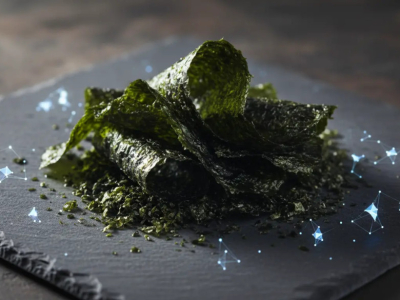





Porphyran is a unique sulfated polysaccharide found exclusively in nori algae (Porphyra). This compound has properties that contribute to cellular protection against oxidative stress, validated by recent scientific studies conducted notably at Nagasaki University in 2015 and published in iScience in 2025.
Frankly, when you have been interested in algae for nearly 20 years as we have at Biovie, you realize that some discoveries completely fly under the radar. Porphyran is one of them. While everyone talks about spirulina and chlorella, this fascinating molecule remains in the shadows. However, what research has revealed to us in recent years truly deserves our attention.
What exactly is porphyran ?
A unique polysaccharide in the world
Porphyran belongs to the family of sulfated polysaccharides, these complex sugars found in certain marine algae. Specifically, it is a long chain of sugars (mainly galactose) linked together and bearing sulfate groups. This particular structure gives it remarkable biological properties.
What makes porphyran truly special is its exclusivity. Unlike other compounds found in various food sources, porphyran exists only in algae of the genus Porphyra, which is nori¹. You won't find it in spirulina, chlorella, or any other food.
Why is nori the only source
This exclusivity is explained by the very biology of the algae. Nori produces porphyran as a structural component of its cell wall, somewhat like cellulose in terrestrial plants. But whereas cellulose is ubiquitous in the plant kingdom, porphyran is a specificity of the genus Porphyra.
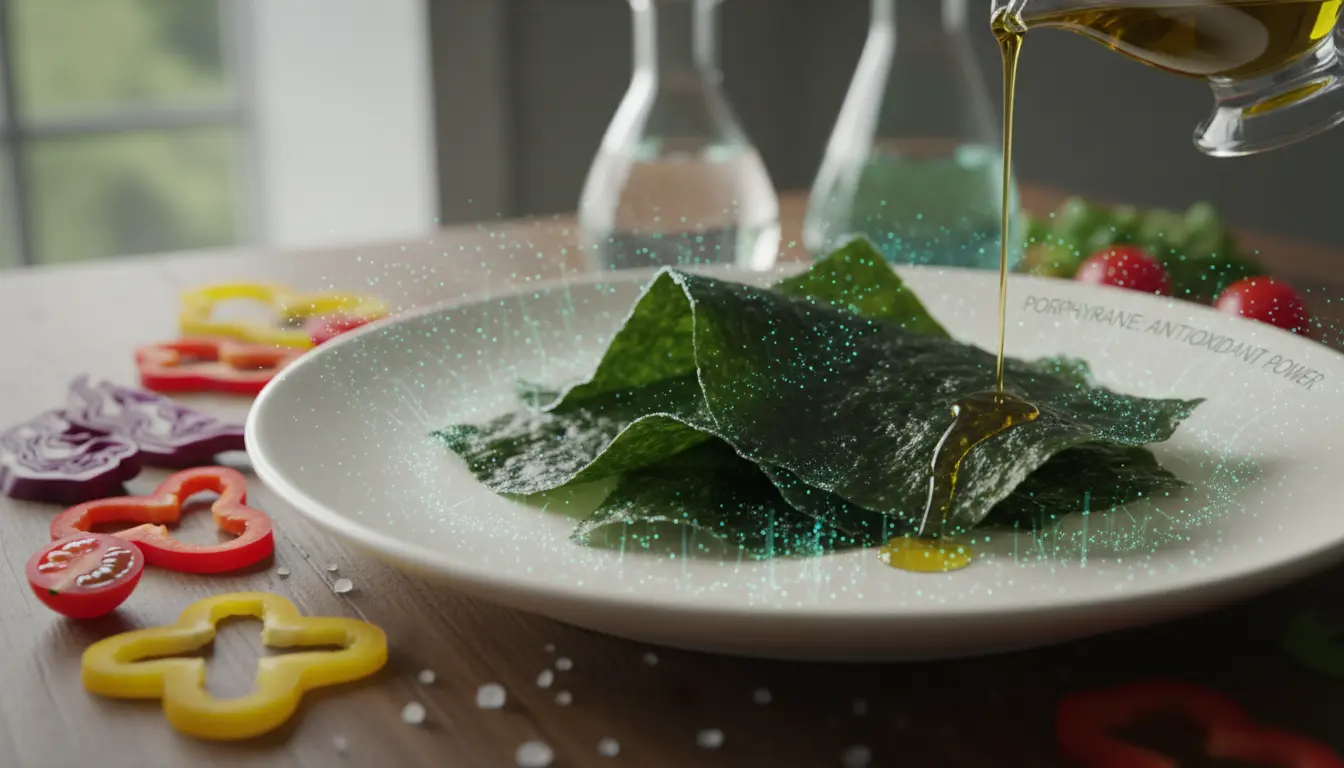
In reality, when you consume fresh nori or dried nori sheets, you access a compound that you simply cannot obtain otherwise. This is what makes nori a unique seaweed in the large family of marine plants.
The bioactive properties of porphyran according to science
Contribution to cellular protection
Studies conducted by Professor Isaka's team at Nagasaki University have demonstrated that porphyran has significant antioxidant activity. The researchers observed that this polysaccharide helps to trap free radicals, those unstable molecules that damage our cells on a daily basis.
What is particularly interesting is the mechanism of action. Porphyran acts differently from traditional antioxidants like vitamin C or E. Its sulfated structure allows it to interact with free radicals in a unique way, thus providing a complement to the antioxidants you are already familiar with.
Participation in the normal functioning of the immune system
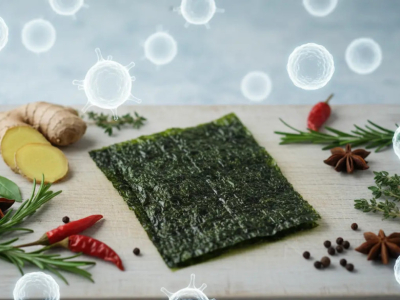
A study published in Carbohydrate Polymers in 2022 highlighted the immunomodulatory properties of porphyran³. The researchers observed that this compound is involved in the activation of macrophages, the sentinel cells of our immune system.
Concretely, porphyran seems to contribute to the normal functioning of the body's defenses. Stimulated macrophages become more effective in their role of monitoring and responding to external threats. It is a natural support that fits perfectly into a holistic approach to health.
Role in joint comfort
The Nagasaki study also revealed that porphyran helps modulate the body's inflammatory response². The researchers observed an inhibition of the NF-κB factor, a key protein in inflammatory processes.
Attention, this is not to claim that nori "cures" anything. However, these findings suggest that regular consumption of nori, which is rich in porphyran, may contribute to maintaining joint comfort and the overall well-being of the body.
An ally for the gut microbiota
Here is perhaps the most fascinating discovery of recent years. In 2010, the CNRS team in Roscoff made a stunning discovery: certain bacteria in our gut microbiota possess an enzyme called porphyranase, capable of digesting porphyran.
The most astonishing part? This enzyme originally existed only in marine bacteria. It was genetically transferred to human gut bacteria, likely due to the ancestral consumption of seaweed in Japan. This gene transfer between marine and gut bacteria is a remarkable example of how our microbiome adapts to our diet.
In practice, this means that porphyran acts as a natural prebiotic. It specifically nourishes certain beneficial bacterial strains in our gut, thus contributing to the balance of our intestinal flora.
The recent discoveries of 2025
A study published in iScience (Cell Press) in January 2025 sheds new light on porphyran⁵. The researchers observed that the consumption of nori contributes to the regulation of lipid metabolism through a complex interaction between the gut microbiota and bile acids.
This work opens exciting prospects on the role that nori could play in maintaining a normal metabolism. Of course, we are still in the early stages of observation and further studies will be needed to confirm these results. But it shows that nori still has surprises in store for us.
Porphyrane vs. traditional antioxidants: a comparison
Vitamin C, vitamin E... and then what ?
When we talk about antioxidants, everyone immediately thinks of vitamins C and E, beta-carotene, or the polyphenols in red wine. These compounds are indeed well-documented and contribute to the protection of cells against oxidative stress.
But here is the problem: these antioxidants are present in many foods. You find them in citrus fruits, green vegetables, vegetable oils, red fruits... In other words, with a varied diet, you are already consuming them regularly.
What makes porphyran different
Porphyran offers something truly unique. Firstly, due to its exclusivity: it exists only in nori. Secondly, due to its mechanism of action: its sulfated structure gives it properties that vitamins do not possess.
The Nagasaki study showed that treated (blanched) nori exhibited antioxidant activity 3 to 5 times higher than untreated nori, suggesting an increased release of porphyran². This result is particularly interesting for understanding how to optimize the intake of this compound.
Finally, porphyran accumulates several properties: antioxidant, immunomodulatory, and prebiotic. This versatility makes it a truly unique compound in the world of bioactive molecules.
Comparison of modes of action:
- Vitamin C : Water-soluble antioxidant, contributes to the protection of cells
- Vitamin E : Liposoluble antioxidant, helps protect cell membranes
- Porphyran : Exclusive sulfated polysaccharide, contributes to cell protection + supports the microbiome + participates in immune function
How to benefit from porphyran daily
How much nori to consume ?
There is no official recommendation yet regarding porphyran intake. However, in Japan, where the consumption of nori has been part of dietary habits for centuries, it is estimated that the average consumption is around 5 to 10 grams per day.
To benefit from the properties of porphyran, regular consumption seems more relevant than a large one-time intake. Incorporating nori into your daily diet, even in small amounts, allows you to provide your body with this unique compound continuously.
Leaves or flakes: which form to choose ?
At Biovie, we offer nori in different forms, and each has its advantages:
-
The fresh seaweed retain all the nutritional richness of the algae. They are ideal if you want to make the most of the nutrients in their natural state.
-
The dried seaweed (Leaves or flakes) are more practical on a daily basis. They have a long shelf life and easily integrate into your culinary preparations.
-
The dulse seaweed tartare combine several algae rich in bioactive compounds. It's a tasty way to introduce algae into your diet.
The importance of low-temperature drying
This point is fundamental and it is something we are particularly vigilant about at Biovie. Polysaccharides like porphyran can be degraded by excessive heat. Low-temperature drying (below 42°C) helps to best preserve these fragile compounds.
This is actually one of the reasons why we work exclusively with suppliers who meet these quality criteria. When you buy nori, always check that it has been dried at a low temperature to fully benefit from the properties of the seaweed.