Seaweed in the Japanese diet: uses, quantities and precautions
Seaweed in the Japanese diet
A millennia-old tradition
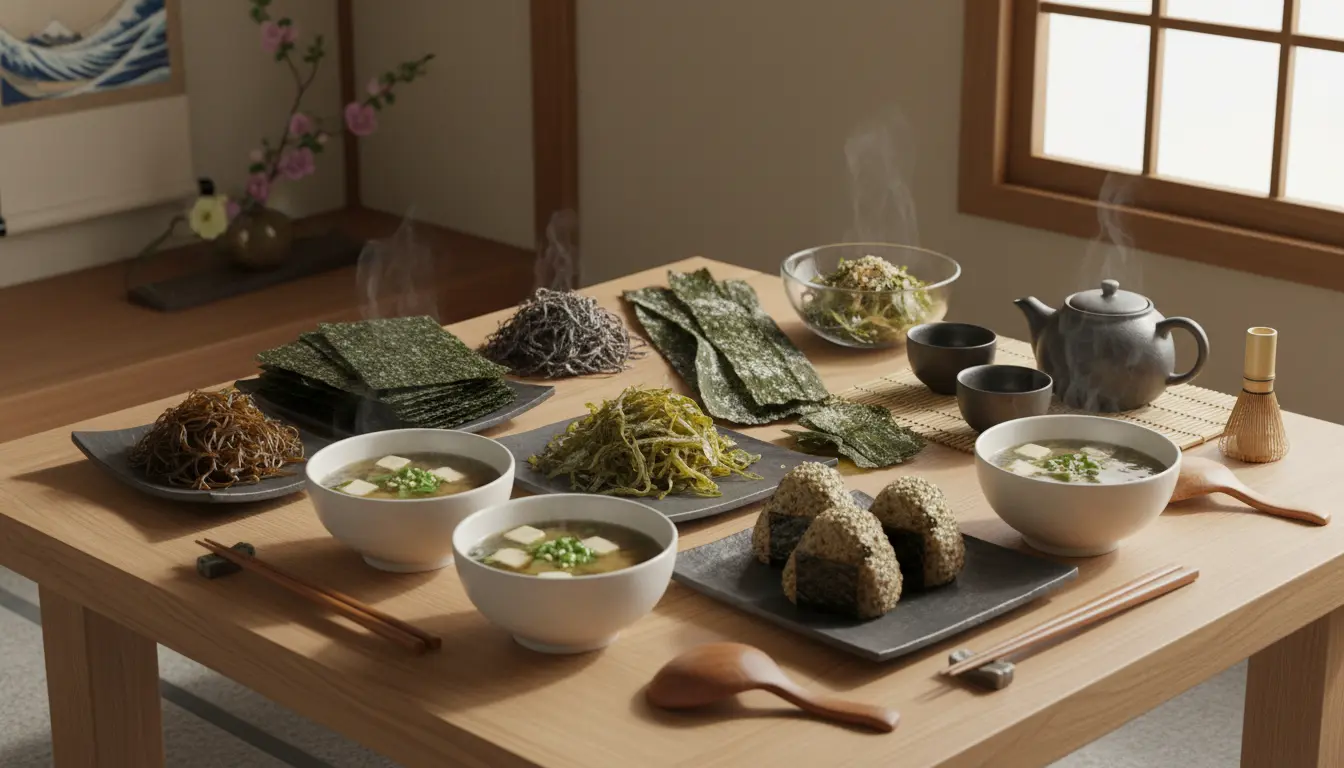
Japan has had an intimate relationship with seaweed since the 5th century. It is not a recent trend or a marketing effect. It is an ancient dietary practice, deeply rooted in the culinary culture of the archipelago. Specifically, a Japanese person consumes on average between 4 and 7 grams ofdried seaweed each day (Mouritsen et al., 2013).
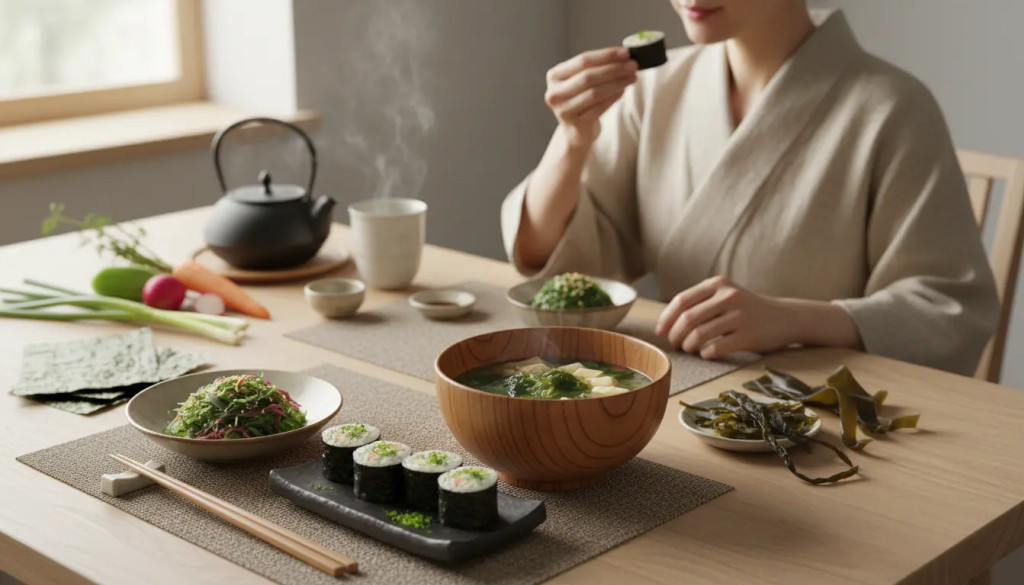
This daily consumption is not insignificant. It naturally integrates into meals: the traditional breakfast includes a miso soup with wakame, lunch often includes nori around sushi or onigiri, and dinner can be accompanied by fresh seaweed salads or kombu broths. Seaweed is not considered a dietary supplement but a staple ingredient, just like rice or vegetables.
More than 100 varieties of edible seaweed
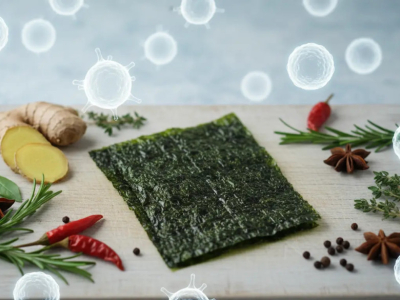
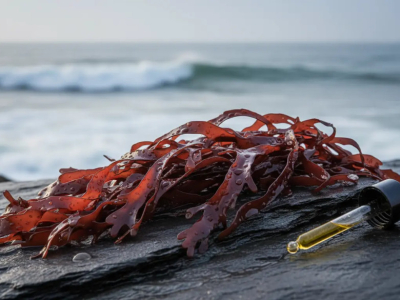
What stands out when one takes an interest in Japanese cuisine is the incredible diversity of seaweeds used. There are more than 100 varieties of edible seaweeds in Japan, each with its own unique taste and nutritional characteristics (Holdt & Kraan, 2011). The most well-known to us are nori (those thin and crispy sheets that wrap makis), wakame (those tender strips found in miso soup), kombu (the thick seaweed used as a base for dashi, the traditional broth), and dulse (with its subtle nutty and iodized flavor).
But the Japanese also use hijiki, mozuku, aonori, tosaka-nori, and many others. This variety helps avoid dietary monotony. This is, in fact, a fundamental principle of Japanese cuisine: varying the ingredients.
Okinawa: seaweed in daily life
Seaweed is part of the traditional Okinawan diet. The inhabitants regularly consume kombu, mozuku and various green seaweeds, as part of a lifestyle very different from ours (moderate physical activity, strong social ties, low-calorie diet).
At Biovie, we offer a complete range of organic seaweeds, both Breton and Japanese, allowing you to easily incorporate them into your daily life.
Biovie's fresh seaweed is hand-harvested in Roscoff by Bretalg, France's first historic seaweed harvester (since 1991). Kombu, wakame, nori, dulse, sea lettuce and sea spaghetti are sold as a ready-to-eat tartare or in 500 g to 1 kg packs, with a texture and taste closer to the sea than dried versions. At €16.80 per kilo, our price is among the most competitive on the market for fresh seaweed harvested in France. To try, choose our discovery assortment of 4 organic seaweeds in 4 x 250 g; for regular cooking, the kilo works out much cheaper., 8
products
Alginate and carrageenan are two types of soluble fibers abundant in seaweed. Alginate is extracted mainly from brown algae such as kombu, and carrageenan from red algae.
The composition of seaweed
Protein content: up to 35% for certain algae
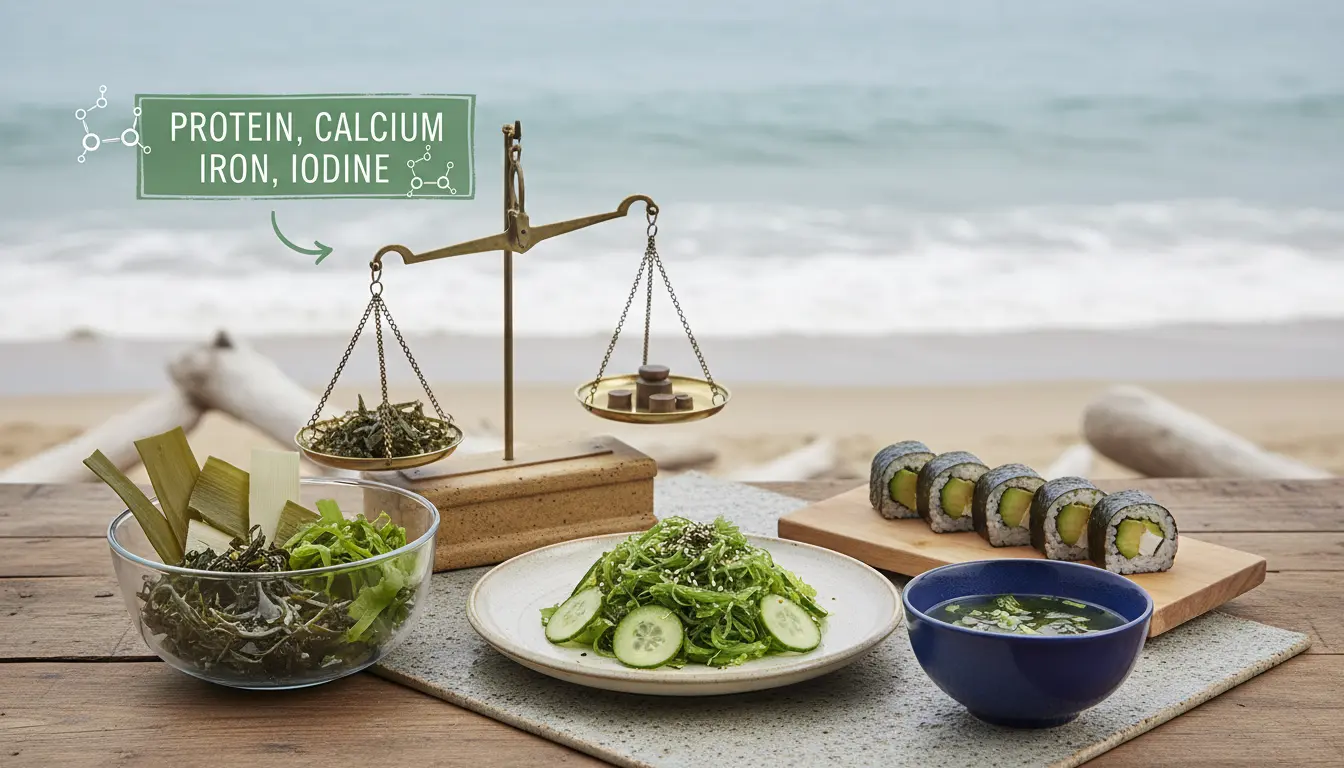
When I present seaweed at conferences or training sessions, people are always surprised by their protein content. Dulse, for example, contains between 20 and 35% protein depending on the cultivation and harvesting conditions (Holdt & Kraan, 2011).
And what is even more interesting is the quality of these proteins. An analysis published in Trends in Food Science & Technology showed that algae proteins contain all the essential amino acids, those that our body cannot synthesize and that we must necessarily obtain from our diet (Fleurence, 1999).
Much more concentrated in minerals than seawater
This data, derived from the work of CEVA (Centre for the Study and Promotion of Algae), based in Brittany, perfectly illustrates the concentration power of algae (CEVA, 2023). These organisms have developed over the course of their evolution an extraordinary ability to extract and store minerals from their marine environment.
Iodine: seaweed naturally contains iodine, in widely varying amounts depending on the species; it should be eaten in moderation.
Little sugar and little fat
Here is an aspect that deserves to be highlighted. Algae contain virtually no sugar (less than 1% for most) and very little fat (between 1 and 5% depending on the species). Their caloric content is therefore extremely low: about 20 to 30 calories per 100g of rehydrated dried algae.
Seaweed is used in small quantities, like a condiment, and brings a lot of flavor for very few calories.
How to incorporate seaweed into daily life (the Japanese way)
Breakfast: miso soup and wakame
The traditional Japanese breakfast consistently includes miso soup. This soup is prepared with dashi (a broth made from kombu and dried bonito), fermented miso, and pieces of wakame.
In practice, preparing this soup is very simple. Soak a small handful of dried wakame in water for 5 minutes. Heat 250ml of water with a small piece of kombu. Remove the kombu before boiling (otherwise the broth becomes bitter). Add a tablespoon of miso diluted in a little warm water. Stir in the drained wakame. There you go, your soup is ready in less than 10 minutes.
If you're not a fan of savory breakfasts, you can add nori flakes to your morning smoothie or sprinkle your avocado toast with seaweed gomasio. There are many possibilities. Of course, you can also use spirulina or chlorella !
Condiments: nori flakes, seaweed gomasio
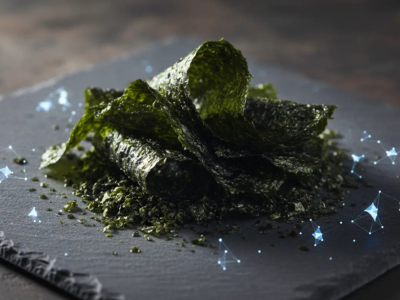
The simplest trick to incorporate seaweed into your daily routine is to use it as a condiment. Nori flakes can be sprinkled on almost any dish: salads, soups, pasta, rice, grilled vegetables, omelets. Their subtle and slightly iodized taste enhances flavors without overpowering them.
Seaweed gomasio is another remarkable condiment. It is a mixture of roasted sesame seeds, sea salt, and dried seaweed ground into a powder. It has a very pleasant umami taste.
At Biovie, we offer organic nori flakes and seaweed gomasio ready to use. It's the most accessible way to start incorporating seaweed into your diet.
The dishes: kombu dashi, dulse salads
Once you are familiar with the condiments, you can move on to dishes where seaweed plays a more central role. Dashi, the Japanese broth made with kombu, is an outstanding base for soups, sauces, and stews. It provides a deep and natural umami flavor without resorting to industrial flavor enhancers.
Dulse, with its nutty, iodine-rich flavor, is perfect for salads. Rehydrated for a few minutes in warm water, it becomes tender and slightly crunchy. Combined with raw vegetables, a lemony vinaigrette, and a few seeds, it makes a delicious and nutritious starter or light dish.
The sea bean, which we particularly enjoy with Aurélie, has a firm and crunchy texture reminiscent of green beans. It can be eaten in a salad or lightly sautéed with garlic and a drizzle of olive oil.
How much seaweed should be consumed?
A frequently asked question: how much seaweed should one eat daily? The Japanese consume on average between 4 and 7 grams of dried seaweed per day. This amount seems modest, but it matches the usual use in Japan.
Concretely, this represents about one sheet of nori (for sushi), a tablespoon of rehydrated wakame, or a generous pinch of seaweed flakes. It's not a culinary revolution, just a simple adjustment to your habits.
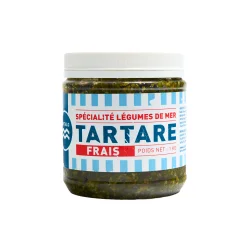
I recommend starting gradually, with 2 to 3 grams per day, then increasing according to your taste and digestive tolerance. The seaweed tartare As a condiment on your dining table, it remains the simplest way to consume small regular amounts.
Precautions for use and contraindications
The issue of iodine and the thyroid
Seaweed naturally contains iodine, in widely varying amounts depending on the species. It should be eaten in moderation.
However, in the case of hyperthyroidism (thyroid If you are already hyperactive or undergoing thyroid treatment, it is recommended to consult your doctor before regularly incorporating seaweed into your diet. It's not that seaweed is dangerous, but a high intake of iodine can interfere with certain treatments or exacerbate existing hyperthyroidism.
For people with healthy thyroid function, eating a few grams of dried seaweed a day in cooking is generally not a problem.
Other precautions
Certain algae, particularly brown algae like kombu, contain significant amounts of vitamin K. People undergoing anticoagulant treatment (vitamin K antagonists) should maintain a stable consumption of these algae to avoid disrupting the balance of their treatment.
In the case of a confirmed allergy to iodine or seafood, the consumption of seaweed is, of course, not recommended.
Finally, as with any food, quality is essential. Seaweed cultivated or harvested in polluted areas can accumulate heavy metals or contaminants. That is why at Biovie, we exclusively select organic seaweed from controlled cultivation and harvesting areas, with full traceability.
Breton seaweeds and Japanese seaweeds
A question I am regularly asked: is it necessary to buy Japanese seaweed to cook the Japanese way? Not necessarily: Breton seaweeds (wakame, dulse, sea lettuce) are used in the same way in cooking.
Brittany has an exceptional marine ecosystem, with cold, clean, and nutrient-rich waters.
Furthermore, consuming Breton seaweed reduces the carbon footprint of your diet and supports a rapidly developing local industry. This is a consistent approach with the values we have been advocating at Biovie since 2007.
Our range includes both Breton seaweeds (wakame, dulse, sea lettuce, sea beans) and traditional Japanese seaweeds (nori, kombu) to offer you the full diversity of this fascinating world.
In summary: seaweed in the Japanese diet
Here we are, reaching the end of this overview of the place of seaweed in the Japanese diet. What should we take away from all of this ?
Seaweeds are varied marine foods, used in Japan in soups, as condiments, in salads or in broths.
In Okinawa, seaweed is part of everyday meals, alongside many other foods and a lifestyle very different from ours.
Incorporating seaweed into your daily diet is simple. Just a few grams are enough. Start with nori flakes or wakame in soup, then gradually explore the diversity of these extraordinary marine foods.
Try it, and you'll love it !
FAQ: Your Questions About Algae
How much seaweed should be consumed per day?
The Japanese consume 4 to 7 grams of dried seaweed per day. Start with 2-3 grams and gradually increase according to your taste.
Are seaweeds suitable for people with thyroid problems ?
Seaweed naturally contains iodine. In cases of hyperthyroidism or thyroid treatment, consult your doctor before eating it regularly; for others, a few grams a day are enough in cooking.
Which algae to choose to start with ?
Flaked nori is ideal for beginners: subtle taste, easy to use (sprinkle on rice, salads, soups). Dulse offers a more pronounced nutty and iodized flavor. Wakame, soft and tender, integrates perfectly into soups.
Are there any contraindications to consuming seaweed ?
Seaweed is not recommended in cases of iodine allergy, uncontrolled hyperthyroidism, or when taking anticoagulant medications (some seaweeds contain vitamin K). If in doubt, consult a healthcare professional.
Can Breton seaweeds be used instead of Japanese seaweeds?
Yes, in cooking, Breton seaweeds are used like Japanese seaweeds. Brittany has an exceptional marine ecosystem with cold and clean waters.
How to store dried seaweed ?
Dried seaweed can be stored for several months in an airtight container, away from light and moisture. Once rehydrated, consume them within 2-3 days and keep them in the refrigerator.
Scientific bibliography
Cited references
ANSES, Agence nationale de sécurité sanitaire de l'alimentation, de l'environnement et du travail. (2022). Avis relatif à l'actualisation des références nutritionnelles en iode. Maisons-Alfort : ANSES. https://www.anses.fr/
CEVA, Centre d'Étude et de Valorisation des Algues. (2023). Les algues alimentaires : composition nutritionnelle et intérêts. Pleubian : CEVA. https://www.ceva-algues.com/
Fleurence, J. (1999). Seaweed proteins: biochemical, nutritional aspects and potential uses. Trends in Food Science & Technology, 10(1), 25-28. https://doi.org/10.1016/S0924-2244(99)00015-1
Holdt, S.L., & Kraan, S. (2011). Bioactive compounds in seaweed: functional food applications and legislation. Journal of Applied Phycology, 23(3), 543-597. https://doi.org/10.1007/s10811-010-9632-5
Mouritsen, O.G., Dawczynski, C., Duelund, L., Jahreis, G., Vetter, W., & Schröder, M. (2013). On the human consumption of the red seaweed dulse (Palmaria palmata). Journal of Applied Phycology, 25(6), 1777-1791. https://doi.org/10.1007/s10811-013-0014-7
Une alimentation variée et équilibrée et un mode de vie sain sont importants. Les compléments alimentaires ne doivent pas être utilisés comme substituts d'un régime alimentaire varié.