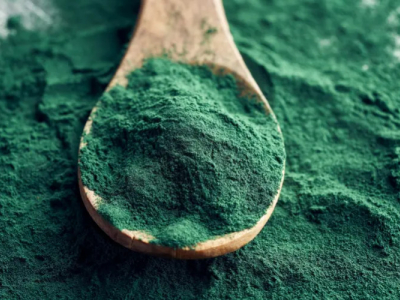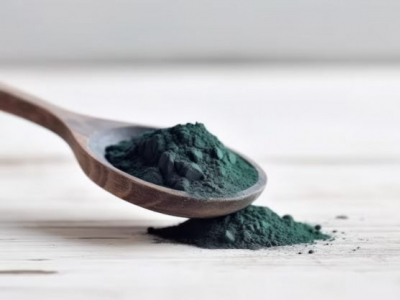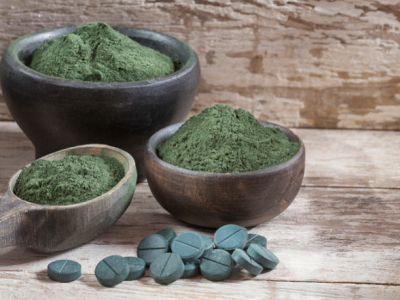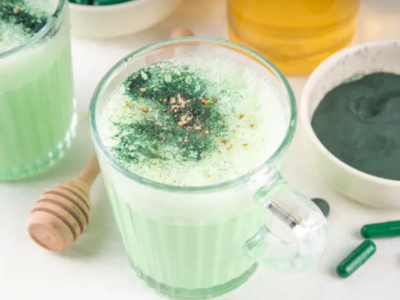


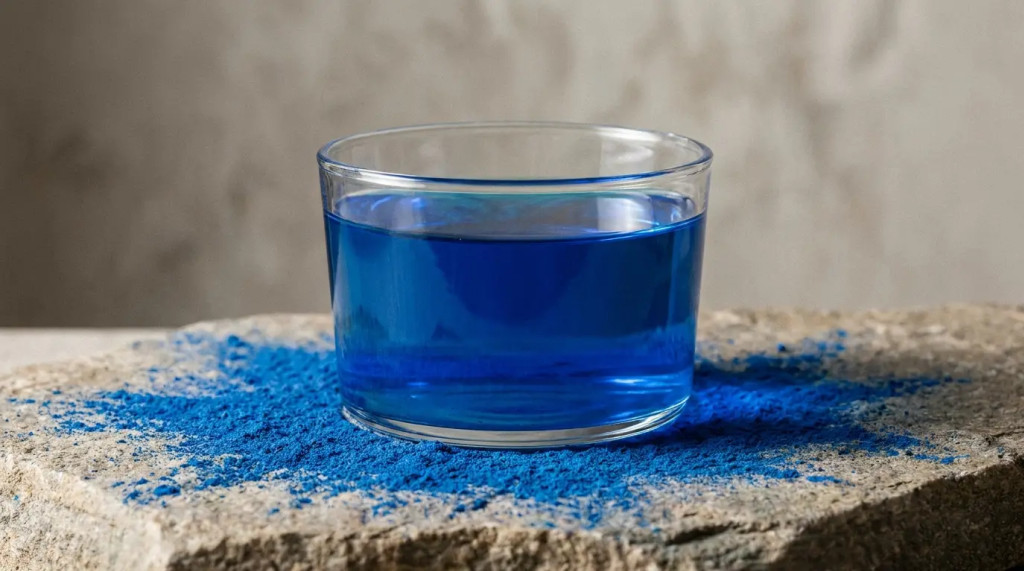

Phycocyanin is the natural blue pigment of spirulina.Arthrospira platensis), and it is primarily its active ingredient that is most studied by science. It accounts for 10 to 20% of the dry weight of spirulina, has a documented antioxidant power (activation of the Nrf2 pathway), and a selective mechanism on the COX-2 enzyme - without affecting COX-1.
What exactly is phycocyanin ?
Where does this natural blue pigment come from ?
You may have seen these electric blue smoothie bowls on Instagram. Behind this spectacular color lies a compound that the scientific community takes very seriously. Phycocyanin belongs to the family of phycobiliproteins - naturally pigmented proteins capable of capturing light to convert it into energy. It is mainly found in cyanobacteria, the most well-known and widely consumed of which is spirulina.
What still strikes me after all these years is that it is also found in Klamath algae.Aphanizomenon flos-aquae), harvested from Klamath Lake in Oregon. These two freshwater microalgae are the richest natural sources of phycocyanin available today.
Why is its molecular structure unique ?
Phycocyanin has a chemical structure similar to biliverdin - a bile pigment naturally present in our body. This similarity is not insignificant: it partly explains why this molecule is so well tolerated by the human body and why it interacts with our biological systems in such a coherent manner.
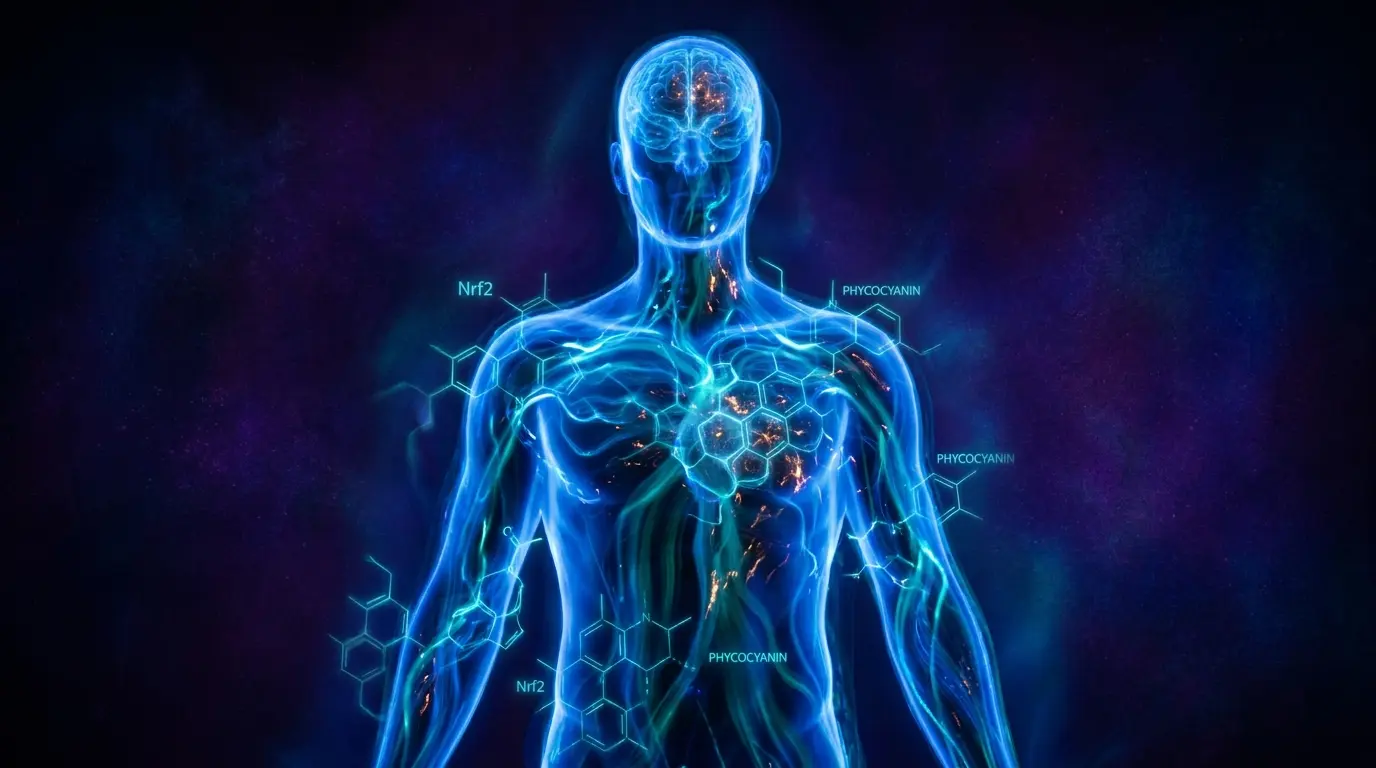
Specifically, its structure allows it to bind to free radicals and neutralize them. But more importantly, it activates the Nrf2 pathway, a key regulator of the cellular antioxidant response. It's not just another antioxidant - it's a modulator of our own defense system. That's why researchers are so interested in it.
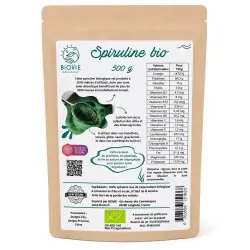
At Biovie, our organic spirulina powder displays a phycocyanin content of 12.3 g per 100 g - a direct quality indicator that you can verify on our batch analyses.
What are the real benefits of phycocyanin ?
I will be honest with you: not all the properties attributed to phycocyanin are documented with the same level of evidence. And most sites don't tell you that. Here is a detailed point, benefit by benefit.
Antioxidant: is it really more powerful than vitamin C ?
Yes, in vitro, phycocyanin shows a free radical neutralization capacity superior to that of vitamin C and vitamin E. This has been documented since the review by Romay et al. published in 2003 in Current Protein & Peptide Science. But be careful - "in vitro" means in the laboratory, not necessarily in your body, and extensive studies are still lacking.
What can be said with certainty: phycocyanin contributes to the protection of cells against oxidative stress, as part of a varied and balanced diet and a healthy lifestyle. And that is already significant.
Is phycocyanin an effective natural anti-inflammatory ?
This is probably the best-supported benefit. The study by Cherng et al. (2007), published in Life Sciences, showed that phycocyanin selectively inhibits COX-2 - the enzyme responsible for inflammation - without affecting COX-1, which protects the gastric mucosa. In short: a mechanism similar to that of some traditional anti-inflammatory drugs, but without the usual gastric side effects.
Honestly, when I read this study for the first time, I understood why so many athletes and people suffering from joint discomfort were interested in this molecule. The research is encouraging.
How does phycocyanin support the immune system ?
Phycocyanin can contribute to the normal functioning of the immune system, thanks to spirulina, which is its natural source. Studies observe a stimulation of T lymphocytes and NK (natural killer) cells. The systematic review by Liu et al. (2016), published in Médecine Complémentaire et Alternative Fondée sur des Preuves, confirms this immunomodulatory profile.
To delve deeper into this topic, I have dedicated a full article to the Benefits of spirulina and immunity.
Can it really help against fatigue and improve energy ?
A teaspoon of spirulina in your morning smoothie - about 3 g - covers a good portion of your daily iron needs. Iron helps reduce fatigue (EFSA-approved claim). And phycocyanin, as an antioxidant, contributes to a smoother energy metabolism.
That 3 PM slump you're familiar with? With Aurélie, we noticed that a regular intake of spirulina (and therefore phycocyanin) really smooths out this dip. It's not an instant "boost" effect - it's a consistency that develops over the weeks. Our clients regularly confirm this to us.
➡ Fatigue and spirulina: how it can help you
Phycocyanin and sports recovery: what do the studies say ?
Level of evidence: moderate but encouraging. Several pilot studies show a reduction in post-exercise inflammatory markers and an improvement in recovery in athletes supplemented with phycocyanin. The mechanism? The selective inhibition of COX-2 mentioned earlier, combined with an antioxidant action that reduces muscle damage related to intense exercise.
Hepatic protection and support for elimination functions
Preliminary studies (mainly in animals) suggest that phycocyanin may support the body's natural elimination functions, particularly at the liver level. Spirulina contains nutrients that contribute to the normal functioning of the liver, as part of a varied and balanced diet and a healthy lifestyle.
What we know is that certain compounds in spirulina contribute to a favorable cellular environment. That's already a lot.
Neuron protection: where does the research stand?
This is the most closely followed lead right now, and it deserves an honest presentation. Work on cells and animal models shows that phycocyanin limits the damage oxidative stress causes to nerve cells, a mechanism consistent with its general antioxidant activity. It is also worth saying what this work does not show: nothing has been demonstrated in humans to date, and no practical conclusion for brain health can be drawn from it. This is a promising research avenue, not an established result.
Blood cell production: why it matters for endurance athletes
Haematopoiesis is the process by which bone marrow produces our blood cells. Several studies suggest that phycocyanin helps support this production, which explains the long-standing interest endurance athletes have had in it: better muscle oxygenation translates, in practice, into more comfortable recovery between sessions. The doses used in this research range between 25 and 50 mg of phycocyanin per day, as part of a varied and balanced diet and a healthy lifestyle. Here too, the level of evidence remains modest: preliminary work, not large-scale clinical trials.
Is phycocyanin dangerous? Side effects and contraindications
This question is asked 1,000 times a month in Google searches in France. And the answers found are often either too alarmist or too reassuring. Here is the reality.
What side effects can be observed at the beginning of a treatment ?
At the beginning of consumption, some people report mild digestive issues (bloating, accelerated transit) or temporary headaches. This is usually related to an increase in dosage too quickly. Start with a half-dose the first week - your body adapts better gradually.
At standard doses (1 to 3 g of powder per day), the safety profile of phycocyanin is excellent. No serious effects have been reported in the scientific literature at the recommended dietary doses.
The four situations that call for medical advice
Haemochromatosis - the only formal contraindication
Haemochromatosis is a genetic condition characterised by an excess of iron in the blood and organs. Phycocyanin helps improve iron uptake and absorption in the body* - which is precisely one of its strengths for people who lack iron. But for people with haemochromatosis, this effect works against them: it risks worsening the existing overload.
This is the only formal contraindication of phycocyanin. One important nuance, though: purified liquid phycocyanin contains only 0.8 mg of iron per 100g, versus 28.5 mg for whole spirulina. The impact on iron load therefore differs greatly depending on the form chosen. In every case, a medical consultation is essential before starting any supplementation if haemochromatosis concerns you.
*The beneficial effect is obtained at the recommended dose shown on the product packaging. A varied and balanced diet and a healthy lifestyle are important.
Phenylketonuria and gout - precautions linked to whole spirulina
Phenylketonuria is a rare metabolic disease in which the body cannot properly metabolise phenylalanine, an amino acid. Whole spirulina contains significant amounts of it - phycocyanin powder or capsules (often a spirulina extract) are therefore not advised. For purified liquid phycocyanin, which contains no phenylalanine, the situation is different - but caution and medical advice remain recommended.
Gout (and hyperuricaemia more generally) is another situation that calls for vigilance. Spirulina is rich in nucleic acids, which turn into uric acid during digestion. For people prone to gout attacks, the precaution applies more to whole spirulina than to purified liquid phycocyanin. Our article on plant-based iron and algae sheds useful light on the nutritional interactions specific to microalgae.
Pregnancy and breastfeeding - precaution by default
This is one of the questions we hear most often. The honest answer is this: no specific study has shown any danger from phycocyanin during pregnancy or breastfeeding. But no study has established the absence of risk for these profiles either.
In the absence of sufficient data, the default precaution applies - this is the rule in pharmacology for any supplementation in pregnant or breastfeeding women. Phycocyanin helps the body use iron more efficiently and may help reduce fatigue*, which makes it, in principle, an interesting supplement for pregnant women - but this "in principle" is not enough to justify a recommendation without medical guidance.
My concrete recommendation: consult your doctor or midwife before starting a course. This is not an absolute contraindication, it is a common-sense precaution.
*The beneficial effect on fatigue is obtained at the recommended dose shown on the product packaging. A varied and balanced diet and a healthy lifestyle are important.
Children under 6 and active autoimmune diseases
For children under 6, metabolism is still developing and the available studies do not allow a dose suited to this age group to be defined. Prior medical guidance is therefore advised, even though no specific danger has been identified.
For people with active autoimmune disease on immunosuppressive treatment, the question deserves thought. Phycocyanin is described as immunomodulatory - meaning it can help balance the immune system*, not that it blindly stimulates it in the strict sense. No specific risk has been identified in the literature, but watchful caution is warranted in the case of active drug treatment. Medical advice is recommended.
*The effect contributes to the normal function of the immune system. A varied and balanced diet and a healthy lifestyle are important.
Summary: who can take phycocyanin?
- Healthy adult → can consume it without particular precaution
- Athlete → particularly well suited, to help support recovery*
- Pregnant or breastfeeding woman → consult your doctor or midwife as a precaution, as few studies are available for this population
- Haemochromatosis → medical consultation is essential - iron uptake is increased
- Phenylketonuria → avoid phycocyanin powder/capsules; consult for the liquid form
- Active autoimmune disease on immunosuppressants → consult a doctor for monitoring
- Child under 6 → medical guidance advised
- Severe atopic profile → start with small doses and monitor reactions
*The beneficial effect is obtained with regular intake at the recommended doses.
What drug interactions should be monitored ?
People on anticoagulants or immunosuppressive treatment need to be particularly cautious. Phycocyanin can modulate the immune response and certain coagulation parameters. If in doubt, consult your doctor or pharmacist - it's a common-sense reflex, not a warning sign.
The real danger: the quality of the product
And this is where one needs to be direct. The danger of phycocyanin is not the molecule itself - it's what accompanies it in a low-quality product. Heavy metals, microcystins (toxins produced by certain cyanobacteria), bacterial contamination: all of this depends on the quality of the source spirulina and the manufacturing process.
A piece of advice I have been giving for years: demand certificates of analysis from an independent laboratory. At Biovie, we provide the complete analyses of each batch. It's a commitment to transparency that few sellers make. ➡ Organic spirulina of quality: how to choose it
Phycocyanin in powder, liquid, or capsules: which form to choose ?
Why does the powder (blue spirulina) offer the best compromise ?
Phycocyanin powder - also known as blue spirulina - offers several advantages: stability at room temperature, versatile use (smoothies, recipes, sprinkling), affordable price, and most importantly, long shelf life without significant loss of activity if stored away from light.
Personally, I prefer the powder form over any other. With Aurélie, we use it both in our morning smoothies and as a natural coloring in raw desserts - a spectacular cyan blue, completely natural, with no strong taste. Our clients are often surprised by this neutral taste, compared to the classic green spirulina with its pronounced flavor.
Liquid phycocyanin: advantages and limitations
The liquid form would offer slightly higher bioavailability - phycocyanin would be directly available. Usual dosage: 5 to 15 ml per day depending on the concentration (aim for a minimum of 5,000 mg/L).
But it has two drawbacks: fragility (it is extremely sensitive to light and heat, which complicates storage) and the price, often 3 to 5 times higher than powder for an equivalent supply of active phycocyanin.
And the other forms ?
You will also find capsule or ampoule forms on the market. These formats may suit some people who are looking for convenience. However, be sure to check the actual concentration of phycocyanin - some products display flattering dosages on the packaging that do not correspond to the amount of truly active phycocyanin.
At Biovie, we have chosen powdered phycocyanin, which is much more economical, because it preserves the full nutritional profile in an accessible and versatile format.
How to choose a quality phycocyanin ?
What criteria to check before buying ?
Five criteria, in order of priority:
- Phycocyanin concentration : minimum 25% in extract powder, or minimum 5,000 mg/L in liquid. For whole spirulina powder, aim for a phycocyanin content greater than 10% on a dry matter basis.
- Batch analyses available : heavy metals (lead, mercury, cadmium, arsenic), microcystins, bacteriology. If the seller does not provide them, walk away.
- Drying method : Spray drying (nebulization) preserves phycocyanin better than long convection drying.
- Complete traceability : you must be able to trace back to the production farm.
Why quality analyses matter more than an organic label ?
An organic label certifies the cultivation conditions. However, it does not tell you about the phycocyanin content of the batch you are purchasing, nor about the possible presence of contaminants. That's why at Biovie, we publish the complete analyses of each batch - not just a logo on the packaging. Every month, 9,900 people search for "phycocyanin" in France. And the trend is on the rise. All the more reason to demand transparency.
➡ Seaweed: Superfoods of the Sea
How to calculate your real phycocyanin intake
This is the point labels most often skip over. Three factors determine what actually reaches your body:
- The quality of the starting spirulina. Phycocyanin is a fragile molecule: spirulina dried at high temperature loses a large share of it. This is precisely what the E6 index measures (see below).
- The form. In spirulina powder, the pigment stays locked inside the cell wall and is only partly absorbed. In liquid form or as a concentrated extract, it is more directly available.
- The extract's titration. An extract titrated at 25% provides 25 mg of active phycocyanin per 100 mg of product. Compare that with the 10 to 20 mg - at best - contained in 100 mg of spirulina powder, with variable absorption.
In other words, "taking spirulina" and "taking phycocyanin" are not quite the same thing - which takes nothing away from whole spirulina, which remains an excellent way to consume it naturally, together with all its other nutrients.
The E6 index: the purity indicator almost no one publishes
The E6 index measures absorbance at 620 nm: it is the only objective indicator of a spirulina's active phycocyanin concentration. The benchmark is simple: a quality spirulina shows an E6 of 0.7 or above. Below that, the content becomes too low to make a real difference.
This measurement is nonetheless simple to carry out, and very few brands report it. It is one of the first criteria we check when selecting a spirulina, along with the batch's full certificate of analysis - a document you can request from any serious seller.