Fine, brittle, or falling hair: the natural marine protocol that changes everything
Summary
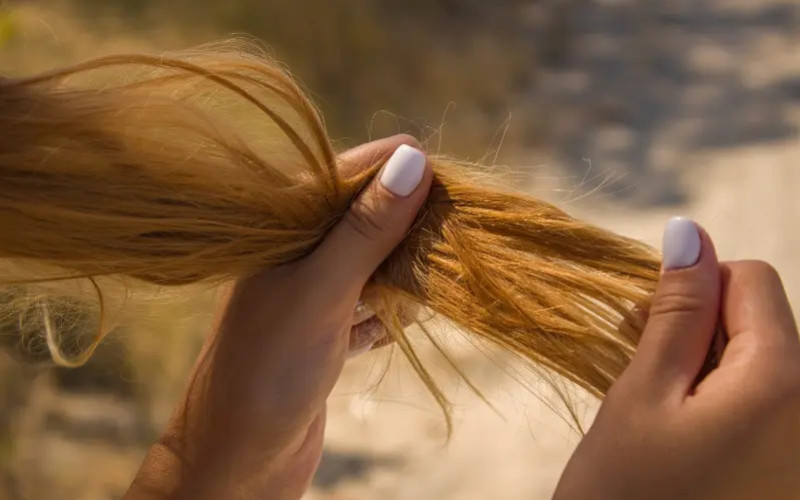
You have tried everything. Coconut oil masks, sulfate-free shampoos, "repair" serums at 40 euros a bottle. And yet, every morning, it's the same observation on your brush: hair that breaks, falls out, and thins. Honestly, I understand this frustration.
What if the problem wasn't on the surface, but inside ?
This is precisely what we have discovered in almost 20 years of experience at Biovie in the field of living foods and marine superfoods. Hair is a direct reflection of your nutritional state. As long as deficiencies are not addressed, no mask, serum, or lotion can compensate for what is lacking at the root - both literally and figuratively.
In this article, I share with you the marine protocol we have developed over the years, which combines seaweed exceptionally rich in hair nutrients with marine plasma (seawater)For a complete remineralization. This is an approach that no one else offers you, because it comes from within. And the results, I tell you frankly, have surprised even us.
Why Your Hair is Brittle and Falling Out: The Real Causes
The 4 mineral deficiencies that weaken your hair (iron, zinc, iodine, silica)
Before discussing solutions, it is important to understand the problem. In France, 33% of women report experiencing hair loss at some point in their lives (IFOP). This is not insignificant. And in the vast majority of cases, the culprit is not genetic, it is nutritional.
Iron deficiency is the number one nutritional cause of hair loss in women, as documented by the American Journal of Clinical Dermatology. Iron is essential for the production of keratin, the protein that makes up 95% of the hair fiber. When iron is lacking, hair grows more slowly, becomes thin, brittle, and eventually falls out.
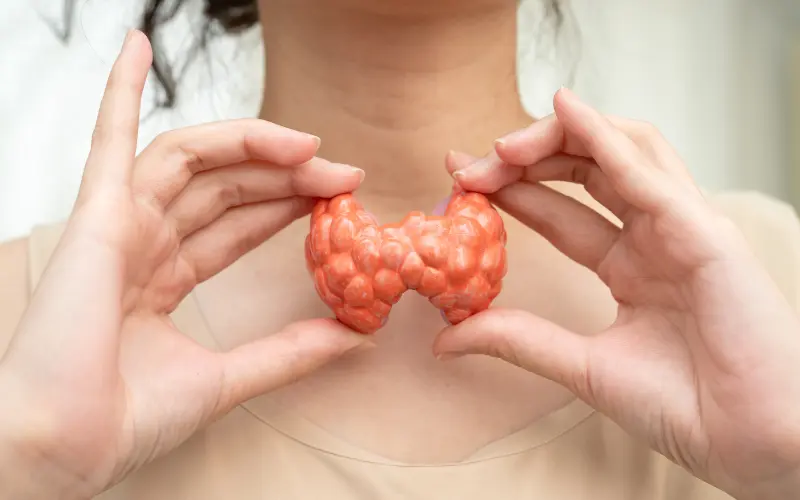
But iron is not the only factor involved. Zinc plays a fundamental role in protein synthesis and cell division at the hair follicle level. A zinc deficiency can disrupt the entire hair cycle. Iodine, on the other hand, is essential for the functioning of the thyroid, which is itself a major regulator of the hair growth cycle. Even a slight thyroid imbalance can cause diffuse hair loss, which often takes months to identify. Then there is silica, less known but equally important, which contributes to the very structure of the hair by giving it strength and elasticity.
Specifically, when you look at your hair on the brush in the morning, what you see is the visible expression of what has been happening-or not happening-in your diet for several weeks.
Why external hair care is not enough: the key is in the diet
I am not saying that external hair care is useless. They have their place. But here is the fundamental problem that all competitors are avoiding: a hair that grows from a deficient follicle will be structurally fragile, no matter what you apply to it afterward.
It's a bit like wanting to paint a wall with cracked foundations. No matter how good the paint is, the wall will continue to crack.
The global hair supplement market exceeded 3 billion euros in 2024 according to Grand View Research. It's a huge market. And yet, the vast majority of these supplements focus on isolating a single nutrient - some biotin here, some synthetic zinc there - without addressing the underlying issue: a comprehensive remineralization of the body.
For my part, after years of research and personal experimentation with Aurélie, I am convinced that the answer lies in marine algae and marine plasma. And I will explain why.
Seaweed for hair: the concentrated hair nutrients that nature intended
Iron, zinc, iodine content - seaweed vs spinach vs traditional supplements
That's where the numbers speak for themselves, and frankly, they are quite spectacular.
Let's take the essential nutrients for hair, per 100 grams:
Iron : spirulina contains about 28 mg, wakame around 10 mg, dulse 7 mg. Compared to Popeye's famous spinach? Only 2.7 mg. And a standard hair supplement capsule? About 14 mg, but in synthetic form, with much lower bioavailability (sources: ANSES, USDA Food Data Central, CEVA).
Zinc : Dulse is the champion with about 6.8 mg per 100 g, which is comparable to red meat. Spirulina provides 2 mg, wakame 1.5 mg. Spinach? 0.5 mg. It's safe to say that's negligible.
Iodine : Wakame is extraordinary with about 1,600 µg per 100 g. Dulse has around 72 µg, spirulina 32 µg. Spinach does not contain any at all. And a standard capsule contains only 150 µg.
Proteins : Spirulina peaks at 57 g of protein per 100 g, making it one of the most protein-dense foods on the planet. Dulse provides 20 g, wakame 3 g. And traditional synthetic supplements? Zero protein.
Here. These data come from the Center for the Study and Promotion of Algae (CEVA), ANSES, and the USDA. Brown algae such as wakame and kombu contain up to 10 mg of iron per 100 g, which is 5 times more than spinach. To delve deeper into the subject of Nutritional benefits of edible seaweed, we dedicated a full article on the blog.
In reality, seaweed contains between 10 and 50 times more hair minerals than land vegetables. This is the marine nutritional density. And it is this density that makes all the difference when it comes to nourishing the hair from the inside.
Wakame, dulse, nori, spirulina: which seaweed for which hair ?
I will be specific because it's often the question that comes up: "OK Eric, I understand that algae are good, but which one should I choose?"
The answer is that ideally, you take several. Each algae has its own nutritional profile, and it's precisely their complementarity that is interesting. To learn all about the subject, Aurélie and I have actually published a book entirely dedicated to algae at Gallimard, awarded at the Gourmand Cookbook Awards 2025.
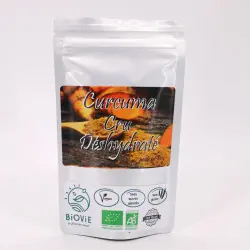
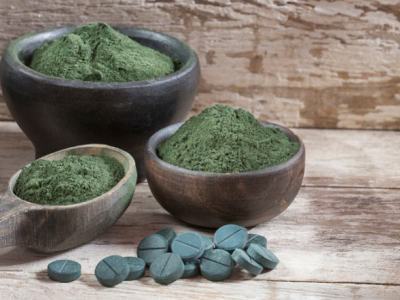
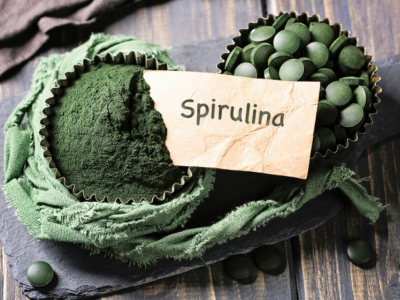
The spirulina is your number one ally if you suffer from hair loss related to iron deficiency. With its 28 mg of iron and 57% protein per 100 g, it is a true concentrate of what hair needs for its structure. The organic spirulina Biovie in flakes easily integrates into a smoothie or juice in the morning. It also has the advantage of being low in iodine, making it compatible with most thyroid conditions. To better understand all the ways to consume spirulina daily, consult our practical guide.
The Dulse is remarkable for its zinc content. With 6.8 mg of zinc per 100 g, it rivals red meat. Organic Breton dulse can be sprinkled on your salads, it's simple and delicious. Its taste is mild and slightly iodized, much less pronounced than people imagine.
The wakame is essential for iodine. Thyroid function, which regulates the hair cycle, directly depends on iodine. Organic wakame provides a natural dose of iodine that helps support thyroid function. It blends wonderfully into soups, broths, and salads.
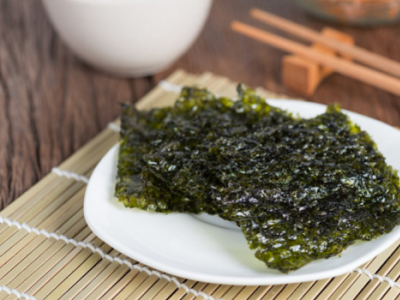
Thenori seaweed, which you probably know from makis, is ideal for varying sources. Milder in taste, it is rich in proteins and B vitamins. The organic nori seaweed from Biovie is perfect for wraps, homemade makis, or simply to snack on. To discover all the Varieties of macroalgae and microalgae with their respective benefits, visit our comprehensive guide.
Marine plasma and hair: remineralize from the inside
What is marine plasma and how does it affect hair ?
Marine plasma is a topic that has fascinated me for years. In fact, I have dedicated several videos and detailed articles to this subject on the Biovie blog, including a comprehensive dossier on it. The 10 benefits of seawater.
In a few words: marine plasma (sometimes called Quinton plasma, but this is a trademark that cannot be used freely) is seawater collected from specific areas, cold microfiltered to preserve its full mineral richness. Analyses show that it contains 78 minerals and trace elements in proportions remarkably close to those of blood plasma (CSIC studies, Spain).
Concretely, what marine plasma brings to your hair is a global remineralization of the body. Not one isolated nutrient, not two, not three: the entire mineral spectrum that your cells need to function optimally. And since hair is one of the first tissues to "suffer" in case of deficiency - the body prioritizes its resources to vital organs - a global remineralization has a direct and often rapid impact on hair quality.
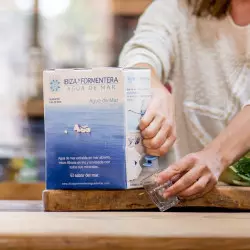
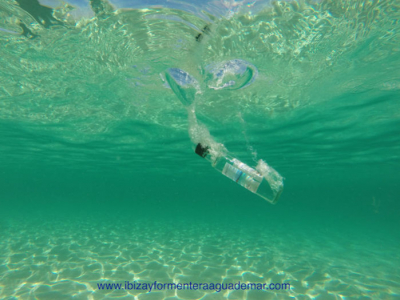
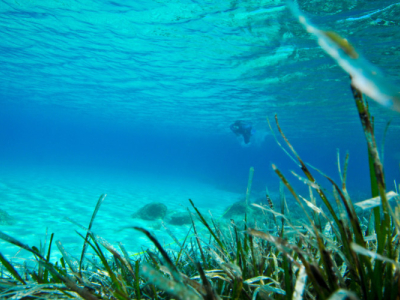
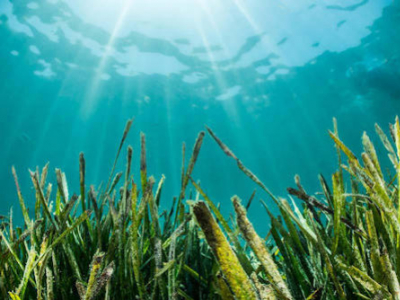
At Biovie, we offer the Ibiza sea plasma, harvested in the protected waters of the Freus Marine Reserve, a UNESCO World Heritage site. The posidonia meadows surrounding the harvesting area act as a large-scale natural biological filtration system, contributing to the exceptional purity of this water. To gain a deeper understanding of why we chose this origin, I invite you to read our detailed article on the marine plasma: Mediterranean or Atlantic.
Hypertonic or isotonic: which one to choose for your hair ?
This is a question that our clients ask us very regularly, and it is relevant.
The isotonic marine plasma is diluted to reach a mineral concentration similar to that of our internal environment. It is gentle, easily assimilable, and ideal for starting a gradual remineralization smoothly. This is the one I recommend for the first weeks of the protocol.
The hypertonic marine plasma is undiluted, therefore more concentrated in minerals. It provides a more intense mineral "boost." I recommend it starting from the third week of the protocol, when the body is already in the active remineralization phase.
The complete marine protocol for hair: your 8-week program
Weeks 1-2: the remineralization phase
The first step is to lay the groundwork. We don't do things in a rush.
In the morning, start with an ampoule of isotonic marine plasma on an empty stomach, 15 minutes before breakfast. It's simple, it's quick, and your body will absorb these minerals optimally.
At lunch, incorporate a teaspoon of spirulina flakes into a smoothie, a vegetable juice, or even sprinkled on a salad. Spirulina has a rather strong taste at first, I won't lie to you. But you quickly get used to it, and above all, the benefits are well worth it. There are also plenty of tips for easily incorporating it into cooking.
That's all for the first two weeks. We're taking it gradually.
Weeks 3-6: the strengthening phase
Starting from the third week, the intake is gradually increased.
In the morning, we switch to hypertonic marine plasma for a more intense mineral boost. At lunch, we increase to 2 teaspoons of spirulina and sprinkle organic dulse flakes on the salad. In the evening, we add a teaspoon of wakame to the soup or broth.
This phase is when the body truly enters a deep remineralization phase. The algae provide targeted nutrients - iron, zinc, iodine, proteins - while the marine plasma completes the spectrum with its 78 bioavailable trace elements. It is this synergy between algae and marine plasma that is unique and cannot be reproduced by any synthetic supplement.
Weeks 7-8: the consolidation phase
We return to isotonic marine plasma to stabilize the gains. We maintain spirulina and rotate with different seaweeds - dulse, wakame, nori - to vary the intake. This is the maintenance phase, the one that anchors the results over time.
After these 8 weeks, many of our clients choose to maintain a lighter maintenance protocol, with daily spirulina and marine plasma a few times a week. It has become a dietary habit, like having a coffee in the morning - except here, you're deeply nourishing your hair.
I want to be transparent with you because I hate miracle promises. You won't find "results in 7 days" or "guaranteed regrowth" at Biovie. Biology doesn't work like that.
Here is what we are observing concretely, and what 70% of French women who have tested natural hair supplements confirm according to the 2024 consumer surveys:
Weeks 1 to 4 : it is the phase of internal remineralization. The changes are not yet visible on the hair itself, because the hair currently growing was "programmed" several weeks ago. However, many people notice an improvement in their overall energy, the quality of their sleep, and especially, a decrease in the number of hairs on the brush. This is the first encouraging sign.
Weeks 4 to 8 : the initial results are becoming tangible. The regrown hair is thicker and stronger. Breakage is significantly reduced. Several of our clients have reported that their hairdresser spontaneously commented on it. It's often at that moment that one realizes something has truly changed.
Weeks 8 to 12 : this is the window where the results become truly visible. More volume, more shine, a significantly improved texture. A complete hair cycle lasts about 3 months, so it makes sense that the most noticeable results appear in this window. A treatment of 2 to 3 months is recommended for lasting results.
Testimonials and customer feedback Biovie
It is not my words that matter the most, it is yours. Here is what our clients tell us:
Julie F., regular customer of Biovie: "I mainly order seaweed, but also marine plasma. I am completely satisfied with the quality of the seaweed and always impressed by the speed of delivery. Excellent value for money that makes me order regularly." (Trustpilot, 5/5)
Jacquot Christian, a Biovie client for several years: "I have been a regular customer for several years: fresh vacuum-packed seaweed and quality marine plasma at very affordable prices." (Trustpilot, 5/5)
Pascale B.: "Biovie is the site for products to buy with your eyes closed. I have been ordering Quinton, sprouting seeds, and algae for several years. Everything is of exceptional quality. I have complete trust in their products." (Trustpilot, 5/5)
Barbara W.: "Spirulina powder is exceptional. I also recommend sea lettuce for excellent tartares." (Trustpilot, 5/5)
A word on the cost: is the marine protocol for hair accessible ?
I know that it's a legitimate question, and I prefer to talk about it openly. A complete marine protocol - spirulina, dulse, marine plasma - costs about 45 to 60 euros per month at Biovie, which is 1.5 to 2 euros per day.
To put this into perspective: the Luxéol hair supplement costs around 40 euros per month, HYGÉE costs 79 euros for 3 months, which is about 26 euros per month. The Biovie marine protocol falls within this price range, but with a fundamental difference: the nutritional density of algae is incomparably superior to that of synthetic capsules. You don't get one or two isolated nutrients; you get a full spectrum of minerals, proteins, vitamins, and trace elements in a natural and bioavailable form. To learn more about the Price of spirulina and quality criteria to check, consult our detailed analysis.
Concretely, it is an investment in your overall health that goes far beyond your hair. Seaweed and marine plasma contribute to your general vitality, energy, and the quality of your skin and nails. Hair is just the visible part of the iceberg. And if the beauty aspect of seaweed interests you, we have also prepared a report on the secrets of algae for radiant skin.
Seaweed and thyroid: what if you have a thyroid problem ?
This is a topic that competitors carefully avoid, and I understand why: it's delicate. But at Biovie, we prefer transparency.
Marine plasma, or seawater, contains traces of natural iodine in quantities much lower than that found in seaweed. In the case of thyroid treatment, it is recommended to consult your doctor before starting a protocol that includes iodine-rich seaweed, such as wakame. Spirulina, on the other hand, is low in iodine and can be integrated with fewer precautions in this context. To ensure that your spirulina is of impeccable quality, we have published an article on the subject of spirulina and microcystins in order to help you make the right choices.
In summary
Your hair is a reflection of your internal nutritional state. As long as you only address the surface - masks, shampoos, serums - you are treating the symptoms without addressing the causes. Seaweed provides an unparalleled nutritional density in iron, zinc, iodine, and proteins. Marine plasma completes the picture with a full spectrum of 78 bioavailable trace elements. Together, they form a unique and natural remineralization protocol that no synthetic supplement can replicate.
It is an inside-out approach. This is the one we have been practicing at Biovie for almost 19 years. And it is the one that, according to our experience and feedback from our clients, provides the most lasting results.
Want to try the marine protocol ? Discover our bio algae and our marine plasma on the Biovie store.
And as always, if you have a question, our team is here to assist you. Don't hesitate.
A varied and balanced diet and a healthy lifestyle are important. Dietary supplements do not replace a varied and balanced diet.
Frequently Asked Questions About Seaweed and Hair
Do seaweeds really make hair grow ?
Seaweed does not "grow" hair in the sense of a medication. However, it provides an exceptional nutritional density in iron, zinc, iodine, and proteins - the four essential nutrients for the hair cycle. By addressing the nutritional deficiencies responsible for hair loss and fragility, seaweed helps support normal hair growth. A course of 2 to 3 months is recommended to observe tangible results.
Which algae should be prioritized to combat hair loss ?
Spirulina is primarily recommended to combat hair loss due to its exceptional richness in iron (28 mg/100 g) and proteins (57%). Iron deficiency is the leading nutritional cause of hair loss in women, and spirulina directly addresses this issue. For a complete protocol, combine it with dulse (rich in zinc) and wakame (rich in iodine).
How long does it take to see results from the marine protocol on hair ?
The first signs of improvement (fewer hairs on the brush, better energy) generally appear between the 2nd and 4th week. Visible results in hair texture, thickness, and shine manifest between the 8th and 12th week, which corresponds to a complete hair cycle of about 3 months.
Is marine plasma effective for hair ?
Marine plasma contains 78 minerals and trace elements in proportions similar to blood plasma. It contributes to the overall remineralization of the body, which indirectly supports hair health. Combined with seaweeds that provide targeted nutrients (iron, zinc, iodine), marine plasma completes the mineral spectrum for a synergistic action.
Can one consume seaweed if they have a thyroid problem ?
It is an important precaution. Seaweeds like wakame are very rich in iodine and can interfere with thyroid treatment. In case of thyroid disorder, consult your doctor before consuming iodine-rich seaweeds. Spirulina, on the other hand, is low in iodine and can generally be incorporated without special precautions in this context.
Is the Biovie marine protocol more effective than traditional hair supplements ?
Traditional hair supplements typically isolate one or two nutrients (such as biotin or synthetic zinc). The Biovie marine protocol combines seaweeds, which concentrate 10 to 50 times more minerals than land vegetables in a natural and bioavailable form, with marine plasma offering the full spectrum of 78 trace elements. This comprehensive approach addresses the deep nutritional causes of hair fragility, not just the symptoms.
What is the cost of the complete marine protocol for hair ?
The complete protocol - spirulina, dulse, marine plasma - costs about 45 to 60 euros per month at Biovie, or 1.5 to 2 euros per day. This is comparable to traditional hair supplements (Luxéol: ~40 €/month, HYGÉE: ~26 €/month), but with an incomparably higher nutritional density and benefits that go beyond just hair (energy, skin, nails, overall vitality).