Spirulina and hair: what we know, how to consume it, which precautions to take
Introduction: My journey with spirulina
Is spirulina effective for hair? No health claim is authorised in Europe for spirulina and hair, so I will not promise you any effect. The subject is being researched, but this work does not make it possible to attribute an effect to a food. If you are losing your hair, the right step is to talk to your doctor; spirulina remains a food to include in a varied and balanced diet, at 3 g a day at most.
If someone had told me 20 years ago that I would spend so much time talking aboutalgae, I would have laughed! But here we are: the question of spirulina for hair comes up so often that it deserves an honest answer.
Like many people, I discovered spirulina by chance, during a workshop onliving food with Dr Brian Clement. At the time, I was mainly interested in its nutritional profile, and it is still from that angle, as a food, that I am talking to you about it here.
I have eaten spirulina every day for years. In this article, I share what I know about this micro-algae (its composition, its forms, how to consume it and how to choose it), drawing on our almost 20 years of experience in living food and superfoods.
What exactly is spirulina?
Right, let's start at the beginning. What exactly is spirulina? Technically, it is a cyanobacterium. Yes, a bacterium. But not just any bacterium: one that has existed for 3.5 billion years and has survived every mass extinction. That says a lot about its resilience, doesn't it?
Its scientific name is Arthrospira platensis, but everyone calls it spirulina because of its spiral shape when observed under a microscope. It grows naturally in the alkaline lakes of warm regions, notably in Chad, Mexico and India.
Its nutritional composition
Here, for information, is what you find in 100 g of dried spirulina (values vary from one batch to another):
Protein : 55-70% (yes, you read that right!)
Iron : 28.5 mg
Beta-carotene : 342 mg
Essential fatty acids : including gamma-linolenic acid (GLA)
Phycocyanin : the blue pigment of spirulina
Hair loss: first, medical advice
Hair loss can have many causes: deficiencies, hormonal changes (postpartum, menopause, stopping a contraceptive, thyroid disorder), restrictive diets, prolonged stress. No food corrects it on its own. If it lasts beyond a few months, consult your doctor, who can suggest tests.
A note on vitamin B12: the B12 found in spirulina is reportedly largely an inactive form (an analogue) that the body cannot use. If you are vegetarian or vegan, do not rely on spirulina for your B12 intake and ask your doctor for advice.
How to consume spirulina
In practical terms, how much, in what form, at what time of day? I often get these questions, so here are my guidelines, drawn from our experience at Biovie.
How much spirulina per day?
My personal recommendation:
To start : 1 g a day for one week, to get used to its taste. Some people report digestive discomfort when they start too strongly.
Day to day : 3 g a day at most. This is the recommended daily dose, not to be exceeded.
To give you an idea, 3 g of spirulina is:
About 1 level teaspoon of powder
About 6 tablets of 500 mg
About 3 tablespoons of flakes
Personally, I take 3 g every morning, and have done for years. Aurélie takes 2 g. We adjust according to our needs and how we feel.
In what form should you consume spirulina?
Here are the different forms of spirulina:
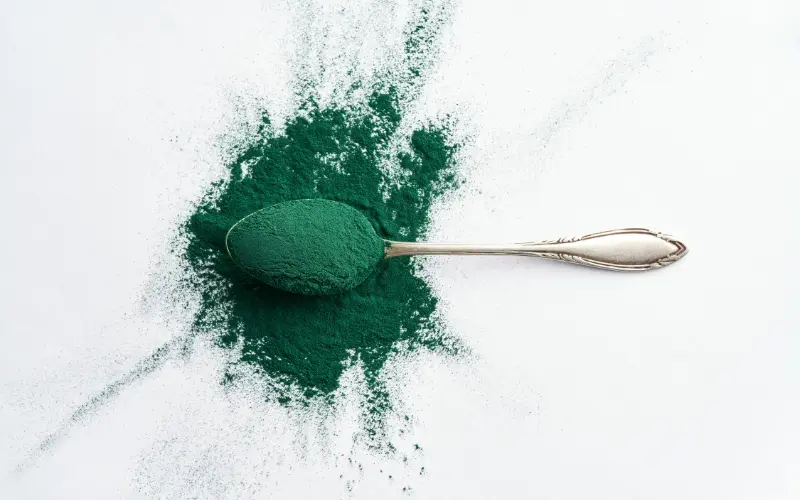
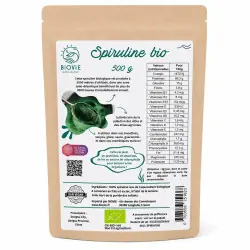
1. Powder
Advantages:
Handy for smoothies and juices
Generally cheaper per kilo
Disadvantages:
Pronounced taste (not to everyone's liking)
Can be hard to measure precisely
Keeps for a shorter time once the bag is opened
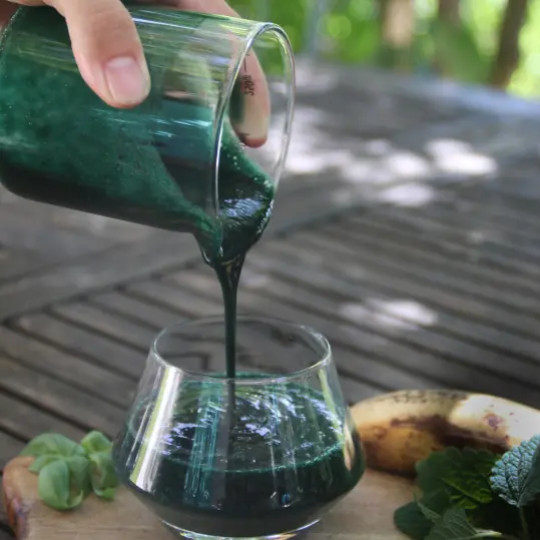
How to use it: In a green smoothie in the morning (banana, spinach, plant-based milk, spirulina), in a fresh fruit juice, or simply diluted in a little water with lemon to mask the taste.
Can be sprinkled directly on food (salads, soups, wraps, etc.)
Keeps its nutrients well thanks to low-temperature drying
Disadvantages:
A little more expensive than powder
Noticeable taste (even if less pronounced than the powder)
How to use it: Sprinkled on a salad, mixed into a vinaigrette, worked into a plant-based cheese, added to a bowl of soup at the end of cooking.
3. Tablets
Advantages:
No taste
Easy and precise dosing
Handy for travel
Long shelf life
Disadvantages:
Slightly more expensive than powder by weight
Some tablets contain binders or excipients (check the composition)
How to use it: Simply swallow with a large glass of water, preferably during a meal.
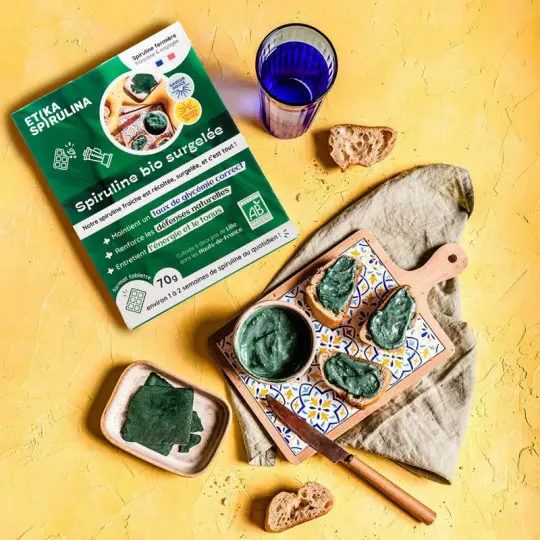
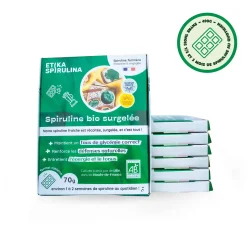
4. Frozen spirulina (pucks), Spiruline de France
Advantages:
No drying, no oxidation
Very mild flavour, almost imperceptible
Puck format that is very easy to dose
Ideal for people who are sensitive to the taste of spirulina
Disadvantages:
Needs a freezer for storage
Particular delivery time (24 h frozen delivery)
Cannot be added to hot preparations (risk of degrading the nutrients)
How to use it:
Add 1 to 2 pucks to a morning smoothie, a fresh juice, lemon water, or a cold plant-based cream. Perfect for raw preparations: nice cream, chia pudding, smoothie bowls, morning elixirs.
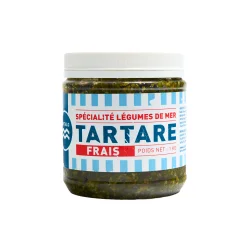
5. Fresh spirulina (not frozen), Spiruline de France 400 g
Advantages:
The most living and rawest product: unrivalled freshness
Creamy, pleasant texture
Extremely mild taste (nothing like the powder)
Ideal for people looking for a premium, living spirulina
No treatment: neither drying nor freezing → nutrients preserved
Disadvantages:
Keeps for only a few days in the refrigerator
Must be consumed quickly
Refrigerated delivery is mandatory
How to use it:
1 teaspoon in a compote, a plant-based yoghurt, a spread, a pesto, a guacamole, a smoothie. Perfect for cold, creative preparations.
When should you take spirulina?
In the morning or at midday, with a meal: this is the simplest way to include it in a smoothie, a juice or a salad.
As a course or continuously?
Both approaches have their advantages:
As a course (3 months of consumption, 1 month off): some people prefer to alternate periods of consumption and breaks.
Continuously : spirulina is a food, so you can consume it all year round, without exceeding 3 g a day. This is what I do personally.
My advice: choose the approach that fits best with your habits and your budget.
External use: spirulina hair masks
In addition to taking it orally, you can also use spirulina externally as a hair mask.
2 tablespoons of virgin coconut oil (or castor oil)
1 tablespoon of aloe vera gel
A few drops of rosemary or lavender essential oil (optional)
Mix everything until you get a smooth paste. Apply to damp hair, from the roots to the tips. Leave on for 30 minutes to 1 hour under a warm towel, then rinse thoroughly and shampoo as usual.
You can do this once a week, if you like the texture.
Aurélie uses this mask regularly: it is part of her routine, along with other habits (such as not using conventional shampoo and favouring Ayurvedic powders).
Which spirulina to choose
Not all spirulinas are equal. Really not. I have seen spirulinas produced in dubious conditions, contaminated with heavy metals, or so badly dried that they had lost a large part of their nutrients.
Here are the criteria you absolutely must check:
1. Origin and growing conditions
Favour:
Spirulina grown in controlled ponds (rather than in the wild, where the risk of contamination is higher)
Origins known for their quality: Hawaii, France, India, Chile
Producers who use pure spring water (not recycled or polluted water)
Avoid:
Spirulina of unknown or untraced origin
Spirulina grown in countries with weak environmental standards
"Budget" spirulinas sold in supermarkets (often of poor quality)
2. Organic certification
This is an important guarantee of quality. Organic certification guarantees:
No pesticides, herbicides or chemical fertilisers
No GMOs
Regular analyses to check for the absence of contaminants
Strict specifications for growing and processing methods
Be careful, though: there are excellent spirulinas that are not organic certified (notably in India, where the organic label is very expensive for small producers). The absence of an organic label does not necessarily mean poor quality, but it is an indicator to take into account.
3. Colour and smell
Colour : a quality spirulina is dark green tending towards blue-green. If it is too pale or greyish, that is a bad sign (oxidation, poor storage, or drying at too high a temperature).
Smell : spirulina naturally smells of seaweed, slightly iodine-like and vegetal. That is normal. If, on the other hand, it smells of rotten fish or mould, steer clear! Either it is contaminated or it has been poorly stored.
4. Price
Let's not kid ourselves: quality spirulina has a cost. Expect around €60-80 a kilo for a good quality organic spirulina. If you find spirulina at €20 a kilo, it is suspicious. Either it is low-end spirulina, or there is a problem in the production or storage chain.
I know it can seem expensive, but when you work it out as the price of the daily dose (3 g = about 20 cents a day for a spirulina at €60/kg), it is actually very reasonable.
My personal recommendation
As you will have understood, at Biovie we are particularly demanding about the quality of spirulina.
Our spirulina is grown in ponds of pure spring water, in a protected environment far from any pollution. It is systematically analysed to check for the absence of heavy metals, pesticides and microcystins (toxins produced by certain cyanobacteria).
Frankly, if I had to recommend just one spirulina, it would be this one. Not because we are the ones selling it, but because I know exactly what it contains and how it is produced. And above all, because it is the one I eat myself every day.
Frequently asked questions about spirulina and hair
How long before I see results on my hair?
I cannot promise you any result on your hair: no health claim is authorised for spirulina in this area. If your hair loss persists, the right reflex is to consult your doctor.
Can spirulina slow down greying hair?
There are no data that would allow an effect of spirulina on hair greying to be attributed to it. I will therefore not promise you anything on this point.
Can you give spirulina to children to improve their hair?
For a child, first ask your doctor or paediatrician for advice. And if your child has hair problems (hair loss, brittle hair), consult a doctor to rule out a medical cause (severe deficiency, hormonal problem, autoimmune alopecia, etc.).
Can spirulina cause hair loss?
I am not aware of any link between spirulina and hair loss. If you notice unusual hair loss, whatever its suspected cause, talk to your doctor.
Should you take breaks from taking spirulina?
It is not compulsory. Spirulina is a food: you can consume it continuously, without exceeding 3 g a day. Personally, I have never taken a break in 15 years. Some people prefer to do 3-month courses with a 1-month break; both approaches are valid.
Can spirulina interact with medication?
A few precautions: if you take anticoagulants (warfarin, etc.), be aware that spirulina contains vitamin K, and talk to your doctor. In the case of an autoimmune disease or immunosuppressive treatment (after a transplant, for example), ask your doctor's advice before consuming it. The same applies in case of pregnancy, breastfeeding or ongoing treatment.
What is the difference between spirulina and chlorella for hair?
They are two micro-algae with different profiles: spirulina contains more protein (60 to 70% versus 50 to 60% for chlorella), and their taste and colour differ. Neither is the subject of an authorised health claim on hair.
Can I grow my own spirulina at home?
Technically it is possible, but frankly, I do not recommend it. Spirulina needs very specific conditions to grow (alkaline pH around 10, stable temperature between 30-35°C, intense light, etc.). If these conditions are not perfectly controlled, you risk growing other micro-organisms at the same time, some of which can be toxic. Producing spirulina is a profession in its own right. It is better to buy quality spirulina from reliable producers.
Is there a spirulina oil for hair?
No, spirulina itself is not an oil: it is a powder, not a fat. The closest use is the homemade mask described above, which mixes spirulina powder with coconut or castor oil.
Are there visible "before/after" results with spirulina?
I do not present "before/after" results: no health claim is authorised for spirulina on hair, and testimonials cannot stand in for one.
What do customer reviews say about spirulina for hair loss?
We do not publish testimonials on this subject: an individual account does not make it possible to attribute an effect to a food. If your hair loss worries you, consult your doctor.
Biovie organic spirulina comes in 4 formats: fresh, grown in a greenhouse by Etika; frozen fresh, produced in northern France by Etika Spirulina; powder, from organic aquaculture; and phycocyanin, the concentrated extract of the blue pigment, almost tasteless but intensely colorful. To start a regular routine, powder is the most economical and the easiest to dose; for freshness, choose fresh or frozen spirulina of French origin, closer to the harvest. Phycocyanin suits anyone looking for a concentrated extract with a discreet taste, to add to a preparation without changing its flavor., 4
products
Well, we have come to the end of this guide on spirulina for hair. I hope I have answered your questions honestly.
To sum up:
Spirulina contains protein, iron, B vitamins, fatty acids and phycocyanin, but no health claim is authorised for it on hair.
If hair loss persists, the right person to talk to is your doctor.
Quality is paramount: favour an organic spirulina, dried at low temperature, of traceable origin.
The daily dose not to be exceeded is 3 g, preferably in the morning, with a meal.
But let's be clear: spirulina is not a miracle solution. It is a food, which is not a substitute for a varied and balanced diet and a healthy lifestyle.
At Biovie, we often talk about living food, superfoods, sprouting... Spirulina is part of that, as one food among others in a varied diet.
If you decide to include spirulina in your diet:
Choose a quality spirulina
Do not exceed 3 g a day
Combine it with a diet rich in fresh fruit and vegetables
Drink enough water
Manage your stress
Get enough sleep
And if you have any questions, do not hesitate to visit our forum!







How to consume spirulina
In practical terms, how much, in what form, at what time of day? I often get these questions, so here are my guidelines, drawn from our experience at Biovie.
How much spirulina per day?
My personal recommendation:
To give you an idea, 3 g of spirulina is:
Personally, I take 3 g every morning, and have done for years. Aurélie takes 2 g. We adjust according to our needs and how we feel.
In what form should you consume spirulina?
Here are the different forms of spirulina:
1. Powder
Advantages:
Disadvantages:
How to use it: In a green smoothie in the morning (banana, spinach, plant-based milk, spirulina), in a fresh fruit juice, or simply diluted in a little water with lemon to mask the taste.