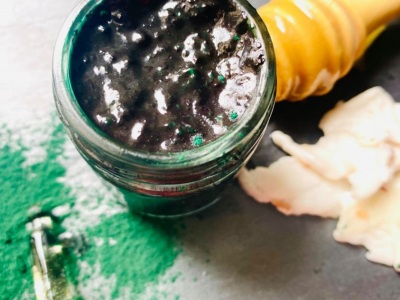





These little dark, melting chocolates hide a blend of green powders, for a snack that is both indulgent and original. Quick to make, they only need a spell in the freezer to be ready to eat. A lovely way to work spirulina and ginger into a sweet bite without noticing them.
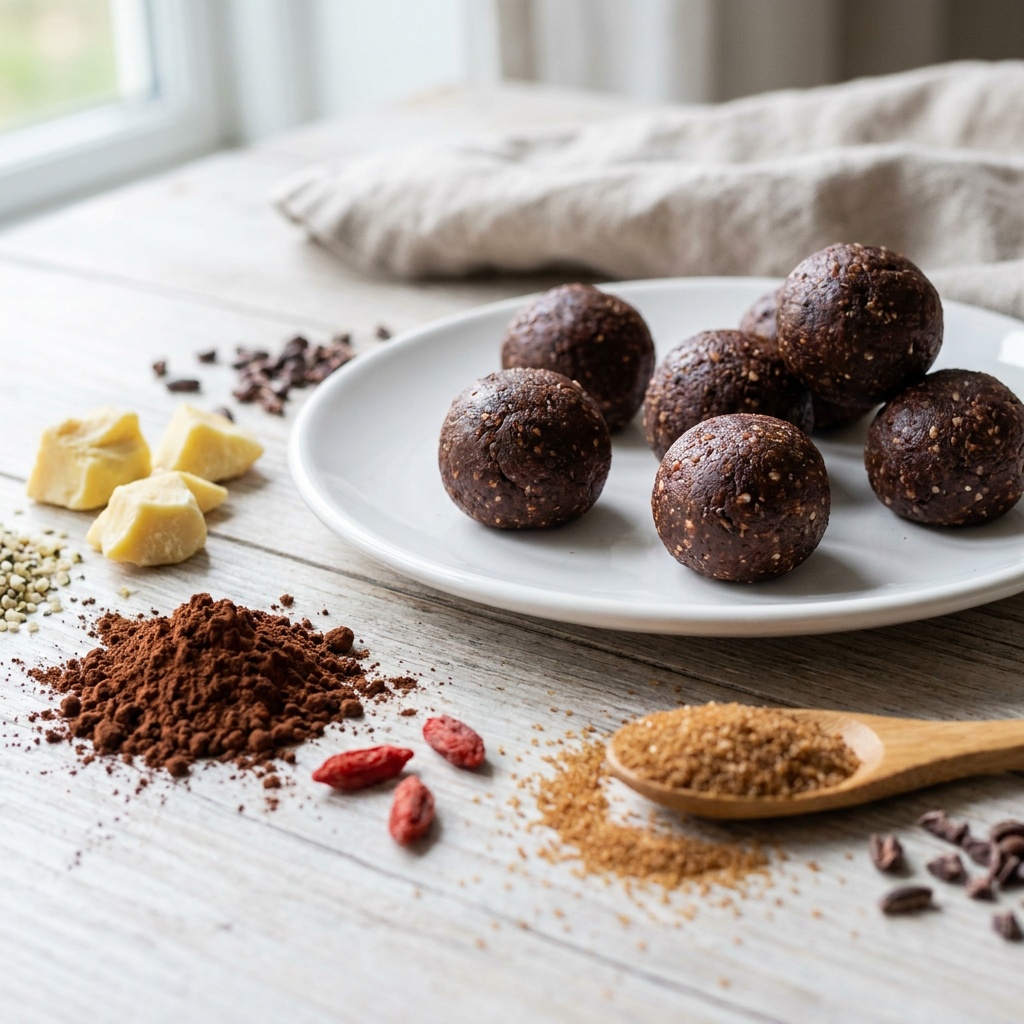
Raw spirulina and tahini chocolates
Share this article

Ingredients
- 1/3 cup cacao powder (or carob)
- 1/4 cup cacao butter (or coconut oil)
- 2 tbsp coconut sugar (or honey)
- 2 tbsp tahini (or almond butter)
- 1/2 tsp vanilla powder (or vanilla extract)
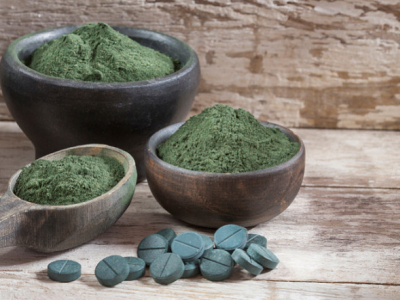
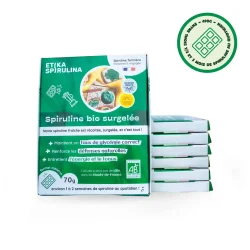
- 1 sachet of green superfood blend (or: 1 tsp spirulina, 1/2 tsp ground ginger, 1/4 tsp sea salt and, if you have some, 1/2 tsp mushroom powder such as reishi or chaga)
Preparation
- Melt the cacao butter over a very gentle bain-marie, never letting it get hotter than your fingertip.
- Take it off the heat and gently whisk in the remaining ingredients.
- Pour the mixture into chocolate moulds or paper cases.
- Freeze until the chocolates are properly firm.
Tip
Serve them straight from the freezer, dipped in a little almond butter: the cold-against-melting contrast is especially good.
The full range Spirulina
4 products
FAQ: your questions about raw superfood chocolates
What does cacao butter do in chocolate?
It is what gives chocolate its texture: it is the fat extracted from the bean, the part that melts in the mouth at around 35 °C and sets again when cold. Without it, a cacao paste stays dull and sticky; with it, chocolate shines, snaps cleanly and melts properly. It also carries the aromas, many of which are fat-soluble. In this recipe, the amount you use directly determines how firm the bites are: less butter means a softer chocolate that will only hold up when cold.
What can you do with tahini?
Far more than hummus. On the savoury side, it makes creamy sauces in seconds, loosened with water, lemon and garlic, and coats roasted vegetables or grains beautifully. On the sweet side, it replaces butter in cookies, blends with dates for improvised bars and, as here, rounds off the bitterness of cacao. A spoonful in a smoothie or on toast with a little honey works too. It is one of the rare condiments that moves from savoury to sweet effortlessly.
How do you store tahini once opened?
An opened jar keeps for several months, as long as you protect it from heat and light. A cupboard is fine if your kitchen stays cool, but the fridge extends its life considerably and prevents rancidity, which is very noticeable in sesame pastes. It does harden in the cold: take it out half an hour beforehand, or stir it vigorously. The oil that rises to the surface is normal, not a fault: stir the jar as soon as you open it, using a fork or a broad-bladed knife.
How do you eat tahini?
Rarely neat, because its bitterness is pronounced. It is almost always loosened with a liquid, and that is where it surprises: add water and it suddenly turns pale, thickening instead of thinning, before becoming smooth again if you keep going. Allow one tablespoon to two of water, a squeeze of lemon and a pinch of salt, and you have a sauce ready. In sweet dishes it pairs very well with cacao, dates and banana, with that salty edge that lifts the whole thing.
Share this article
Related articles