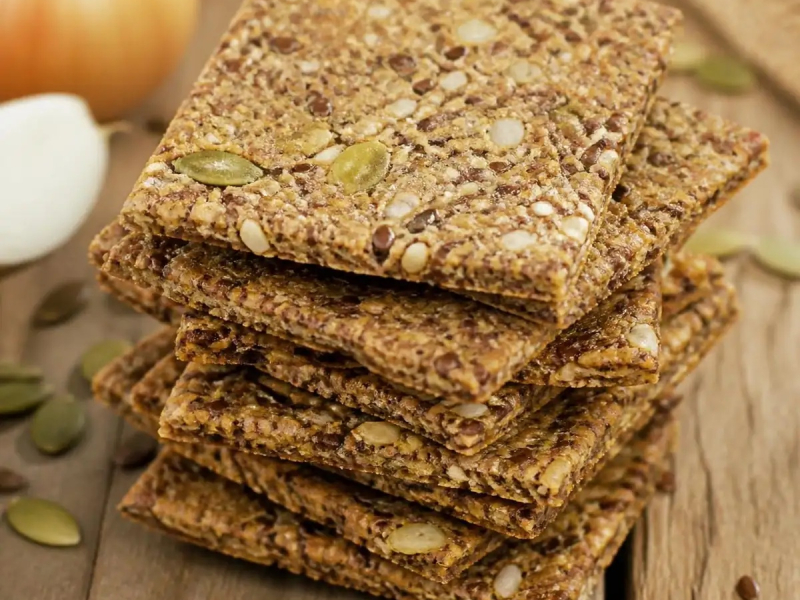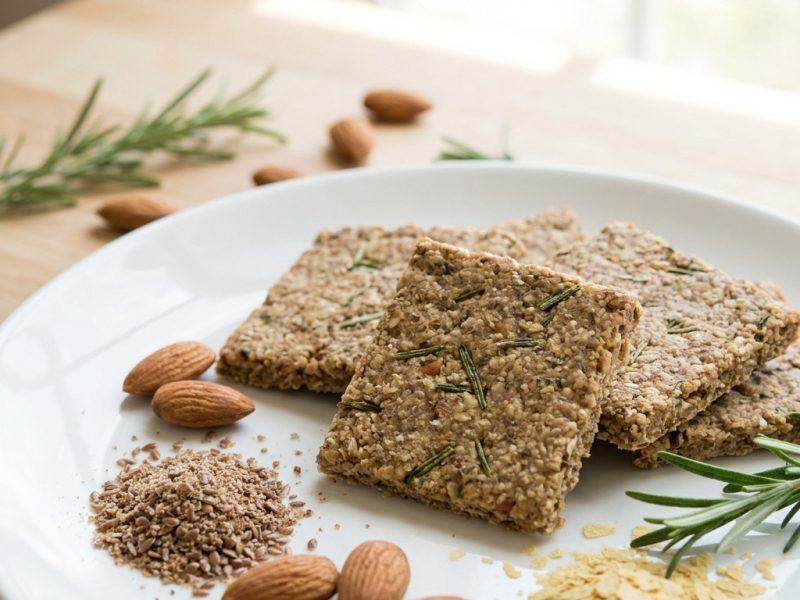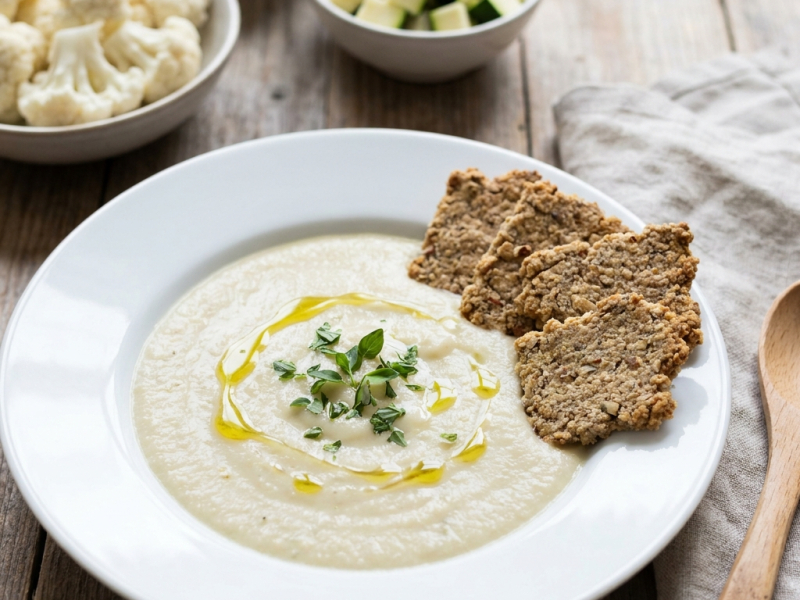



Crunch without the guilt: these crackers rely on sprouted buckwheat rather than flour, for a fibre-rich, gluten-free snack that really fills you up. Carrot and courgette bring the softness, the spices (cumin, turmeric, chilli) wake everything up. A little patience in the dehydrator, and you get crackers that hold their own.
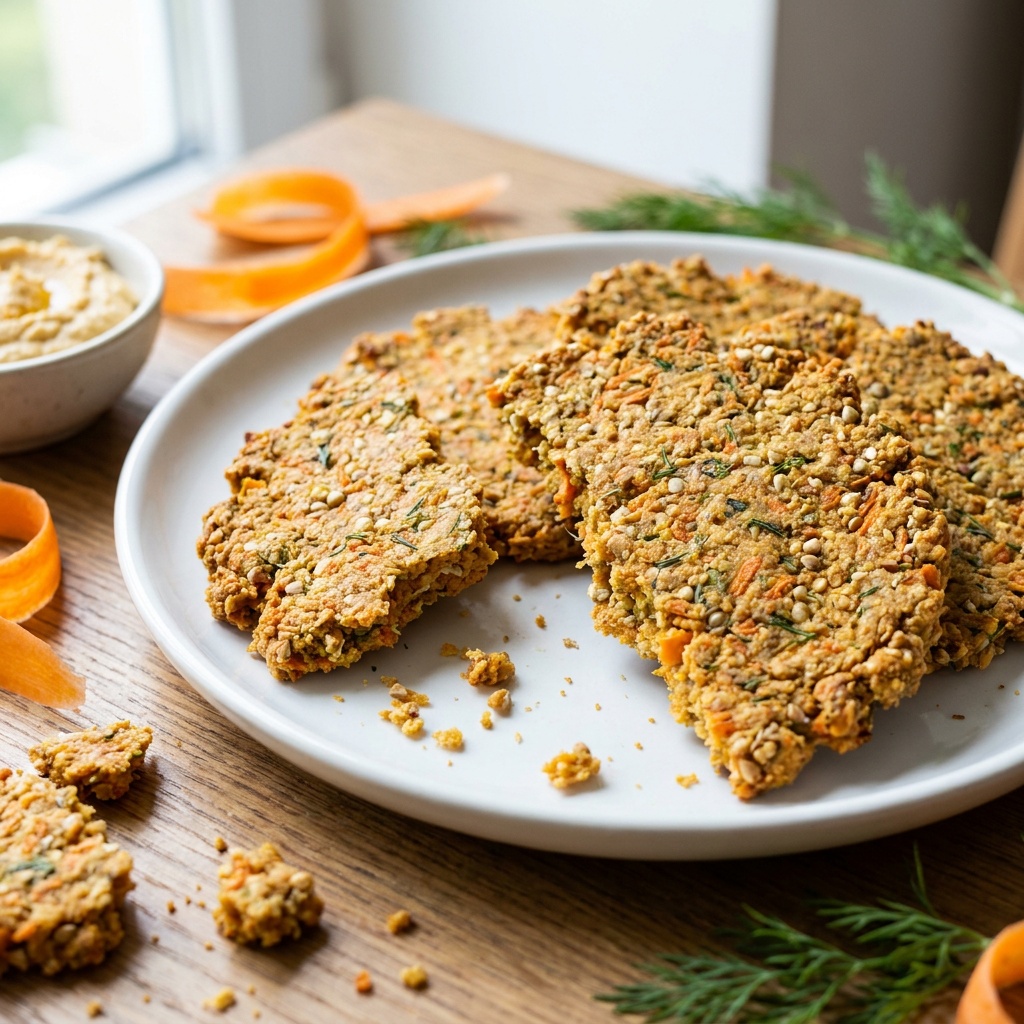
Raw Carrot and Sprouted Buckwheat Crackers (Dehydrator)
Share this article
Organic Unhulled Buckwheat Seeds
€3.95 Restocking in progress
Ingredients
- 10 carrots, peeled and diced
- 1 courgette (zucchini), diced
- 300 g sprouted buckwheat groats, rinsed (about 1½ cups)
- 2 tbsp nutritional yeast
- 2 tbsp ground flaxseed
- 1 tsp cumin
- ½ tsp turmeric powder
- ½ tsp cayenne pepper
- ½ tsp black pepper
- 1½ tsp Himalayan salt
- 2 tbsp filtered and hydrogenated water, if needed
Preparation
- Blend the carrots and courgette in a food processor until you get a grainy, almost puréed texture, then pour into a large bowl.
- Blend the sprouted buckwheat until it turns into a purée, then add all the other ingredients (except the vegetables) and blend again.
- Fold the buckwheat mixture into the vegetable purée and stir until even; process again in small batches if needed, adding a little water if the batter is too thick.
- Spread the mixture about 0.5 cm thick over 2 to 3 dehydrator trays.
- Dehydrate at 63°C for 1 hour, then lower to 44°C; this is the moment to pre-score the crackers with a knife or pizza cutter.
- Continue dehydrating for about 8 hours, flip the crackers onto the mesh, then dehydrate for another 8 hours, until they are fully dry and crisp.
Tip
Buckwheat, despite its name, isn't a cereal grain but a seed - a valuable ally if you avoid gluten. Allow plenty of time for dehydrating: the thickness of your batter changes the duration.
The full range Sprouted seeds
46 products
Discover the full range
FAQ: your questions about sprouted buckwheat and raw crackers
Can buckwheat groats be eaten raw?
Yes, as long as you start with hulled but untoasted buckwheat, then soak and sprout it. Soaking followed by sprouting reduces the compounds that make the dry seed hard to digest, and kick-starts enzyme activity. So-called kasha buckwheat, on the other hand, is toasted: it will never sprout. So check the label before buying - that's really the only thing that matters.
Why do buckwheat groats need to be soaked?
Soaking rehydrates the seed and triggers the process that leads to sprouting. It also removes the mucilage, that slightly slimy, gelatinous substance buckwheat releases abundantly into the water: rinse generously until the water runs clear, otherwise your crackers will turn sticky. Allow one to four hours of soaking depending on the source, then 12 to 24 hours of sprouting with regular rinses.
Which seeds work best in crackers?
Ground flaxseed is almost essential: it swells on contact with water and forms the gel that holds the batter together in place of gluten. Sprouted buckwheat gives body and crunch, sunflower and pumpkin seeds give some chew, sesame and chia give fine crispness. In practice, it's better to combine a binding base (flax or chia) with a structuring base (buckwheat, sunflower) than to throw in ten random seeds.
How long can buckwheat crisps be kept?
It all depends on the drying: truly dry crackers, which snap cleanly without bending, keep for three to four weeks in an airtight container away from light. Any remaining moisture at the core drastically shortens that time and can cause mould. If in doubt, run them through the dehydrator for another hour or two before storing, and add a desiccant packet if your kitchen is humid.
Share this article
Related articles