Organic Chia Seeds
Chia seeds for sprouting in doypack of 15g or 300g or bag of 5kg
No queries yet, leave the first!
Price:
€1.90
Tax included
- Temporary out of stock


Organic Chia Seeds images


Organic Chia seeds for sprouting
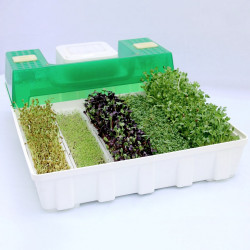
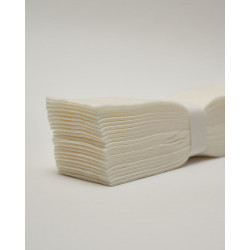
🌱 Organic chia seeds for sprouting give you, in 7 days, fresh, nutritious young shoots, to be eaten raw alongside a varied diet. In concrete terms, these seeds are sprouted on a cellulose mat - because they are mucilaginous seeds which cannot sprout on a flat surface. Honestly, it is one of the most spectacular germinations to watch: in a few days, you have a dense green mat, ready to be cut with scissors and sprinkled over a salad.
And of course, chia seeds can also be used in the classic way, unsprouted, in chia pudding, in smoothies or sprinkled over your dishes.
Soaking: The seeds must not be soaked. They should be rinsed and moistened twice a day with a spray or mister, so as to keep them just damp without drowning them.
Germination: 7 days. Chia seeds are mucilaginous seeds and cannot sprout directly on a flat, sealed surface. They need a substrate, and cannot sprout properly without the germination support that stabilises the gel they produce.
🌱 To make sprouting mucilaginous seeds easier, Biovie has developed small cellulose germination mats specifically designed for this type of seed, compatible with the automatic Easygreen Light sprouter. These mats can also be used in a suitable rectangular container.
> Here is the link to order them from our shop: Germination mats
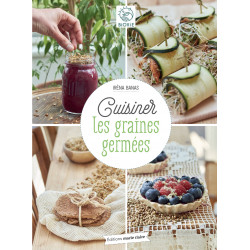
🌱 Want to go further with sprouting? Our blog articles explore this practice: the point of sprouted seeds and how to choose your sprouter. For chia seeds used in the classic way, a strawberry pudding recipe will give you concrete ideas.
🌱 Below is a video showing you behind the scenes at our supplier Bavicchi:
🌱 A special sprouted seeds FAQ video:
🌱 As well as a video of an interview we had the pleasure of filming with Dario Bavicchi:
🌱 What do chia seeds contain?
• Gluten-free, chia seeds contain per 100 g (values from the table in the Practical info tab): calcium 631 mg (79% of the NRV), phosphorus 860 mg (123%), magnesium 335 mg (89%), iron 7.7 mg (55%), zinc 4.6 mg (46%), copper 0.92 mg (92%), manganese 2.72 mg (136%), vitamin B1 0.62 mg (56%), vitamin B3 8.83 mg (55%) and vitamin B9 49 µg (24.5%), as well as 0.04 g of salt.
• Calcium and phosphorus contribute to the maintenance of normal bones*. In concrete terms, a 15 g portion of chia provides 129 mg of phosphorus (18% of the NRV), 95 mg of calcium (12%) and 50 mg of magnesium (13%).
• Iron contributes to the normal function of the immune system and to the reduction of tiredness and fatigue* - chia seeds contain 7.7 mg per 100 g (55% of the NRV), in plant form.
• They contain 19.5 g of protein per 100 g, including all the essential amino acids.
• Chia contains 34.4 g of fibre per 100 g, mostly soluble, and also contains insoluble fibre.
• Chia seeds are high in omega-3, in the form of alpha-linolenic acid or ALA (15 to 20 g per 100 g). They also provide 5 to 8 g of omega-6 per 100 g.
• They can absorb up to 14 times their weight in water. Used as a gel, after soaking for just 10 minutes, they become an excellent asset in cooking and baking.
*Calcium and phosphorus contribute to the maintenance of normal bones. Iron contributes to the normal function of the immune system and to the reduction of tiredness and fatigue. The beneficial effect is obtained as part of a varied, balanced diet and a healthy lifestyle.
🌱 To find out more about sprouting, read our blog articles on the subject:
🌱 As well as this interview with Eric in which he tells you everything about sprouted seeds!
- Ingredients : 100% chia seeds (Salvia hispanica), from organic farming
- Packaging : Available in a 15 g or 300 g doypack or a 5 kg bag
- Storage : In a cool, dry place, preferably in an airtight jar.
- Best before : 3 years after the production date
- Recommended daily intake : 15 g per day.
Average nutrition declaration per 100 g
| Nutrition declaration | per 100 g (% RI*) |
| Energy | 1880 kJ / 454 kcal (22.4%) |
| Fat | 30.7 g (43%) |
| of which saturates | 3.3 g (16.5%) |
| Carbohydrate | 7.7 g (2.9%) |
| of which sugars | 2.3 g (2.6%) |
| Dietary fibre | 34.4 g |
| Protein | 19.5 g (39%) |
| Salt | 0.04 g (0.7%) |
*RI = Reference Intake for a typical adult (8,400 kJ / 2,000 kcal), in accordance with Article 32 of Regulation (EU) No 1169/2011.
Vitamins and minerals per 100 g
| Vitamins & minerals | per 100 g (% NRV*) |
| Thiamine (B1) | 0.62 mg (56.4%) |
| Niacin (B3) | 8.83 mg (55%) |
| Folic acid (B9) | 49 µg (24.5%) |
| Calcium | 631 mg (79%) |
| Potassium | 407 mg (20%) |
| Phosphorus | 860 mg (123%) |
| Magnesium | 335 mg (89%) |
| Iron | 7.7 mg (55%) |
| Zinc | 4.6 mg (46%) |
| Copper | 0.92 mg (92%) |
| Manganese | 2.72 mg (136%) |
*NRV = Nutrient Reference Values in accordance with Regulation (EU) No 1169/2011.
Updated: April 2026. Product page approved by Éric Viard, founder of Biovie and ISTOM, co-author of " Algues au quotidien " (Gallimard, 2024) - Best Cookbook in the World, Gourmand Cookbook Awards 2025, and Best Cookbook in France, Académie Nationale de Cuisine 2025.
Disclaimer: the information presented on this product page is provided for information purposes only and does not constitute medical advice. Consult a qualified healthcare professional before making any change to your diet or supplementation, particularly in case of ongoing medical treatment, pregnancy or breastfeeding. As part of a varied, balanced diet and a healthy lifestyle.
Wondering… ?
Everything you need to know before ordering.
Be the first to ask a question about this product!
Question about the product
Ask a question