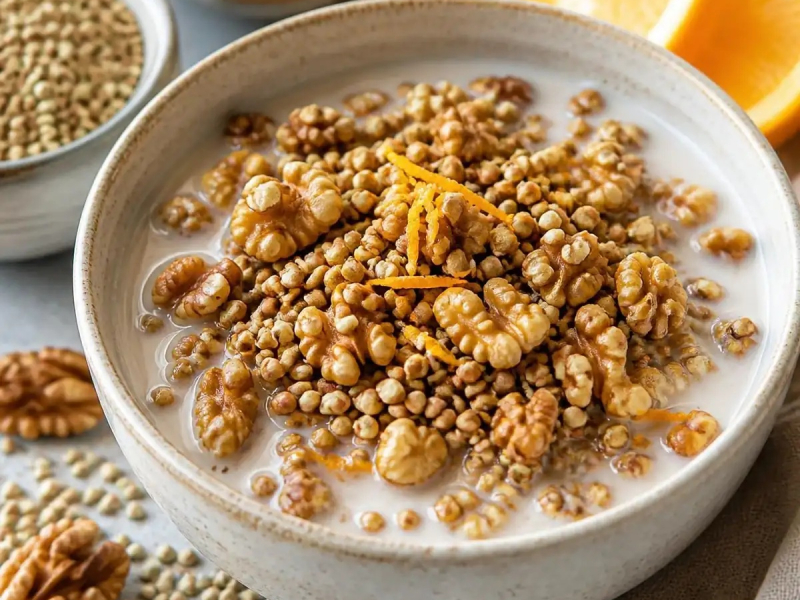



Often one of the first recipes people try in raw cuisine, this crunchy granola holds its own against the classic baked versions. It combines sprouted, dehydrated buckwheat with a mix of seeds, dried fruit and gentle spices, all bound by a light syrup. An excellent transition recipe for discovering living food without feeling lost.
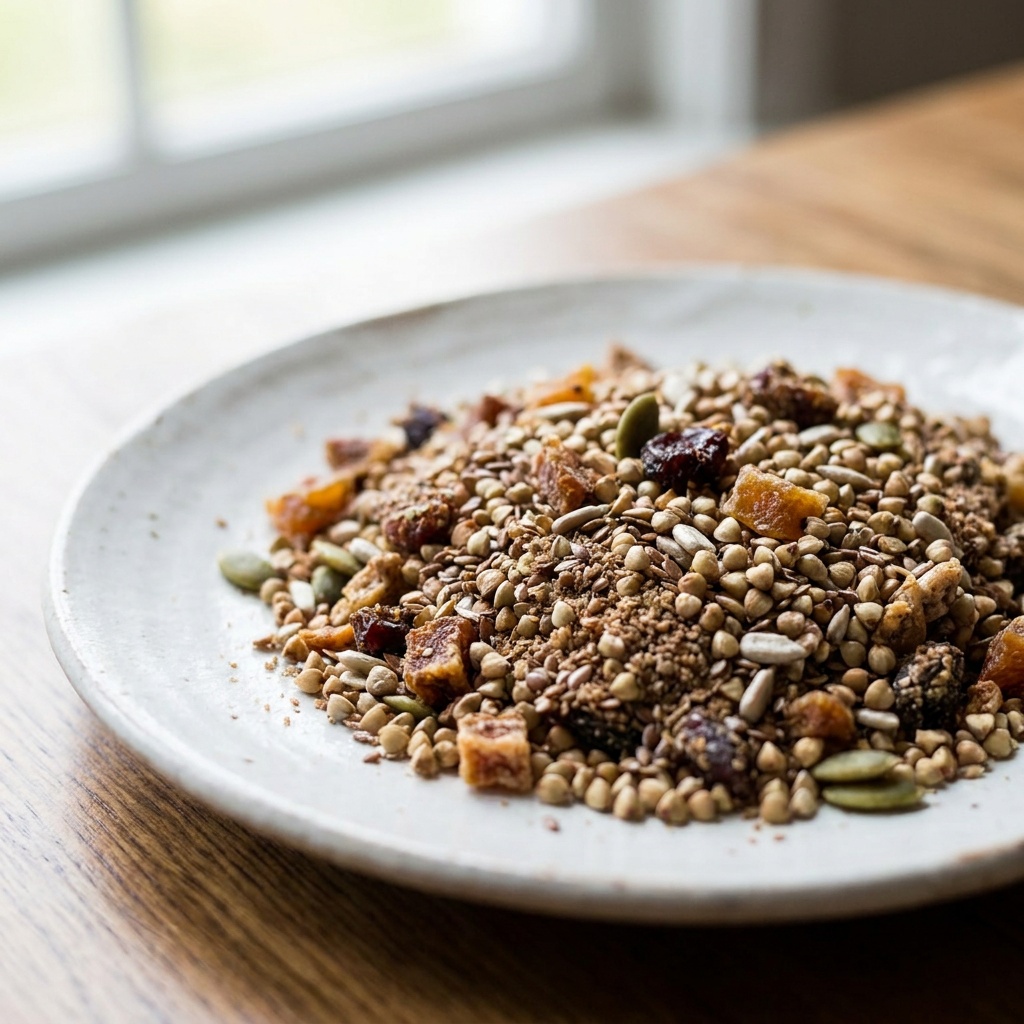
Raw vegan granola, gluten and soy free
Share this article
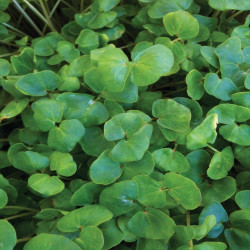
Organic Unhulled Buckwheat Seeds
€3.95 Restocking in progress
Ingredients
- 1 cup soaked and dehydrated buckwheat
- 2 tbsp ground flaxseed
- 1/3 cup sunflower seeds
- 1/3 cup pumpkin seeds
- 1/3 cup raisins
- 1/3 cup dried apple, cut into pieces
- 1/3 cup honey (agave works too)
- 1 tbsp coconut or flax oil
- 2 tbsp filtered and hydrogenated water
- 1 tsp cinnamon
- 1 pinch of nutmeg
- 1 pinch of salt (equivalent to 1 tablespoon - 15 ml - of seawater)
Preparation
- Mix all the dry ingredients in a large bowl.
- Whisk together the honey, water, coconut oil, cinnamon, nutmeg and salt.
- Pour this liquid mixture over the dry ingredients and combine thoroughly by hand.
- For a sweeter granola, add an extra spoonful of honey or a few drops of stevia; the quantity given is only there to bind the mixture and sweeten it lightly.
- Dehydrate at 46 °C for 10 to 12 hours, until the granola is tacky but holds together well.
- Keep it in the fridge until serving to preserve the crunch.
Tip
Keeping it cold is not cosmetic: the fridge genuinely helps this granola stay crunchy longer than it would at room temperature.
The full range Sprouted seeds
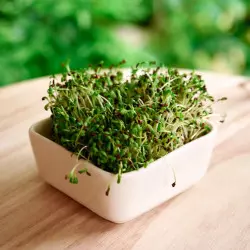
Biovie offers 24 varieties of organic sprouting seeds, produced since 1896 by our Italian supplier Geo Bavicchi, and every batch is tested before it goes on sale (germination rate above 95% required). Radish, fenugreek, sunflower and alfalfa sprout the fastest and most easily for beginners, in 3 to 5 days on a windowsill. To discover several varieties without making a mistake, the packs (The 3 Radishes, The Essentials, The Pep's Seeds...) are a good starting point, before choosing your varieties individually. The range also covers microgreen seeds to grow on a substrate, and sprouters to get started without unnecessary equipment., 46 products
Discover the full range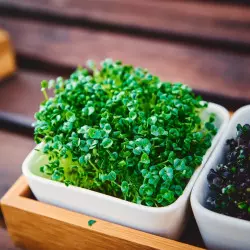
FAQ: your questions about raw granola
What is the difference between muesli and granola?
Muesli is a raw mixture: flakes, seeds and dried fruit combined cold, with no binder and no time in the oven. Granola, on the other hand, is coated in a sweet, fatty mixture before being dried or baked, which makes it clump into crunchy little clusters. That coating and drying step makes all the difference, and it is exactly what this recipe reproduces in raw form: the syrup and oil bind, the dehydrator sets.
Why put apple purée in homemade granola?
It is a very common trick in baked versions: unsweetened apple purée replaces some of the oil and syrup while providing the moisture and pectin that help the flakes clump together. You get more generous clusters with less fat. In a raw version, apple purée works too, but it lengthens the dehydrating time considerably: allow several extra hours, and expect a granola that stays a little softer.
How do you get crunchy granola?
Three rules are enough. First, do not overload the trays: spread a thin layer, or the middle will stay damp. Second, see the drying through, even if that means two or three extra hours: granola taken out too early feels dry on the surface but softens as it cools. Finally, let it cool completely in the open air before jarring it, because trapped steam makes it soggy. Here, the cold of the fridge extends that crunch even further.
Is homemade granola high in calories?
Yes, like all preparations based on seeds and dried fruit: around 400 to 450 kcal per 100 g, varying with the amount of syrup and oil. But the real portion is small, forty to fifty grams is enough to fill a bowl, and that density comes mainly from the good fats in the seeds. The advantage of making it yourself is choosing the sugar: the quantity of syrup given here is above all there to bind, not to sweeten.
Share this article
Related articles