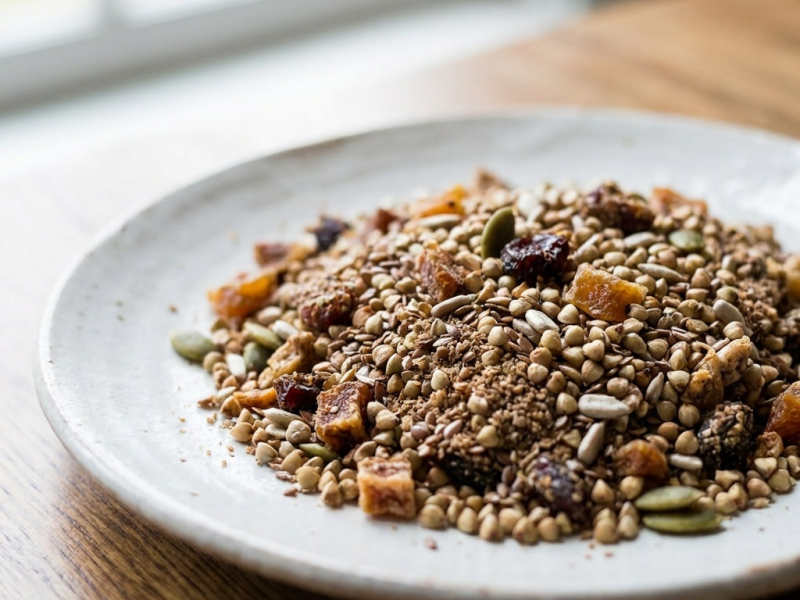



Freshly squeezed orange juice stands in here for the usual dried-fruit sugar, working alongside honey to keep the batch bright rather than heavy. Buckwheat and oats make up the bulk of it, with the oats first ground into a coarse flour so the mixture holds together better once dried. Soaked walnuts add richness and a bit of fat, while the halved cranberries create little pockets of tartness that cut through the sweetness of the orange and maple. Since everything dries slowly at low temperature instead of baking in an oven, the crunch builds gradually over several hours rather than coming from quick browning. The result has a lighter, more citrusy character than a classic cinnamon-honey batch, closer to something that calls for fresh fruit and a splash of plant milk than a granola to snack on dry by the handful. It keeps well once fully dried, making it a handy staple for a quick breakfast or to top a bowl of fruit.
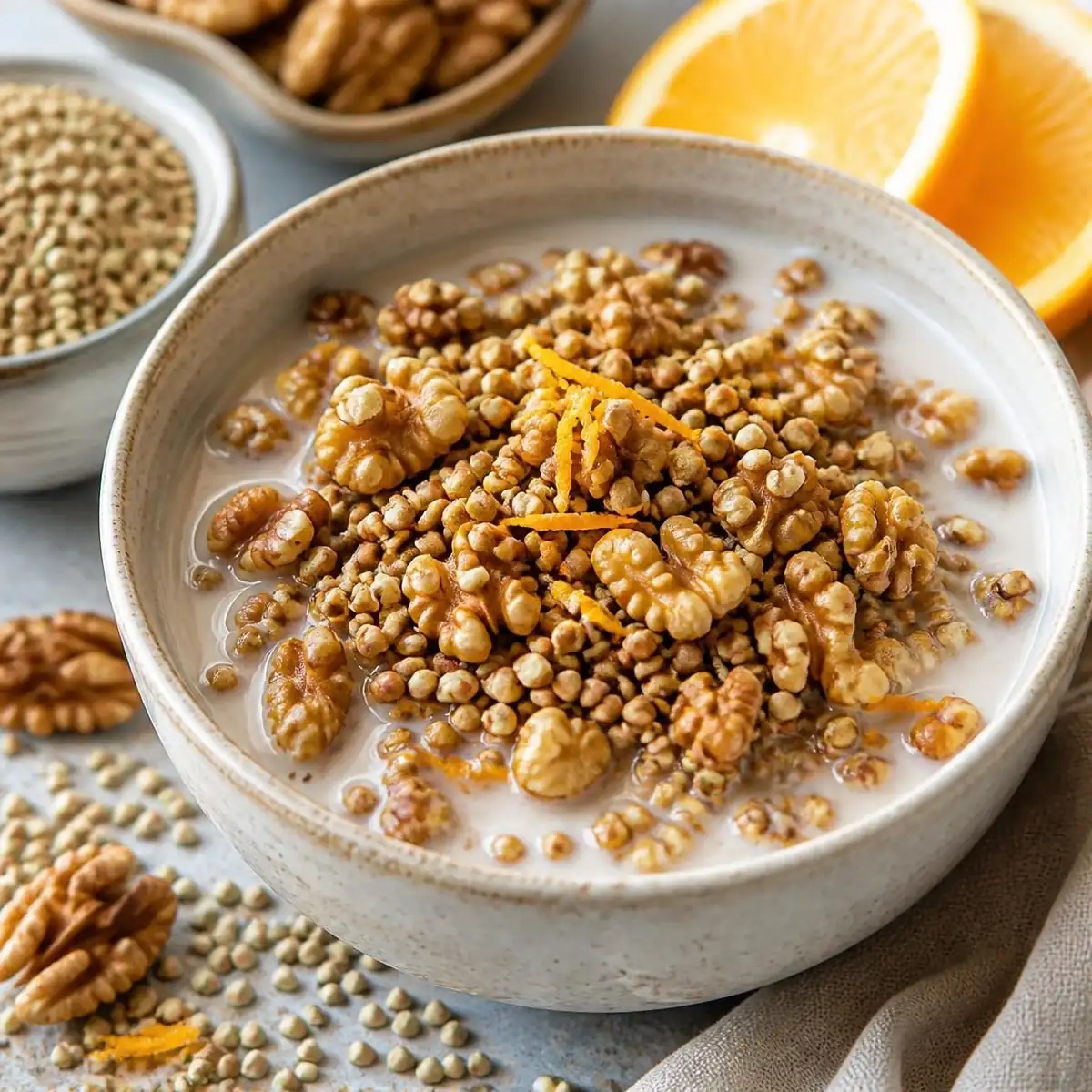
Raw Orange, Maple and Walnut Granola
Share this article
Organic activated buckwheat seeds
€21.90 In stock
Ingredients
- 4 cups buckwheat groats, soaked then dehydrated
- 2 cups whole rolled oats, soaked then dehydrated
- 350 ml freshly squeezed orange juice
- 1 1/2 cups chopped walnuts, soaked
- 250 ml honey
- 1 cup cranberries
- 1 teaspoon vanilla extract
- 1 teaspoon sea salt
Method
- Grind the oats into a coarse flour.
- Cut the cranberries in half.
- Combine everything in a large bowl: the ground oats, buckwheat, orange juice, walnuts, honey, halved cranberries, vanilla and salt. Mix until evenly combined.
- Spread the mixture over several dehydrator trays lined with baking paper, in a thin, even layer.
- Dehydrate at 40°C, checking regularly, until the granola is crisp all the way through.
Tip
Spread the mixture in a thin, even layer on the trays: thick clumps take much longer to dry through and can stay chewy in the middle instead of turning crisp. Store the finished granola in an airtight jar once fully cooled, since even a trace of residual moisture will soften it very quickly.
The full range Oilseeds, nuts, seeds
20 products
Discover the full range

FAQ: your questions about raw dehydrator granola
Why isn't my granola crispy?
It's almost always one of three reasons: the layer is too thick and the centre stays damp, drying was stopped too early, or the granola was stored while still warm in a jar, where the residual steam softened it. Spread it thin, dry it all the way through, and let it cool completely in the open air.
How do you dehydrate food without a dehydrator?
An oven that can go as low as 40-50°C, door slightly ajar with a wooden spoon to let the moisture escape, does the job. The result is less even and the timing harder to control, but it works. Below that temperature, a very dry, well-ventilated spot can be enough for small quantities.
How long does it take to dry fruit in a dehydrator?
It depends entirely on the water content and the thickness of the slices. Count on 6 to 12 hours for thinly sliced apples, longer for juicy fruit like peaches or pineapple. The only reliable test is touch: the fruit should feel pliable but no longer release any moisture when pressed.
Is it good to eat granola every day?
Even homemade and uncooked, granola remains a sweet, energy-dense food: this one contains honey, orange juice and cranberries. There's nothing wrong with eating it regularly in a reasonable portion, over a bowl of fresh fruit rather than by the handful.
Share this article
Related articles