




This generous Asian-inspired bowl plays on textures and colours: courgette noodles, the crunch of red cabbage and daikon, the softness of avocado. Sauerkraut or kimchi brings a tangy touch, while the tahini and tamari sauce ties everything together. A complete dish, just as pleasant at lunch as at dinner. Make the sauce in a larger batch: you can use it all week long.
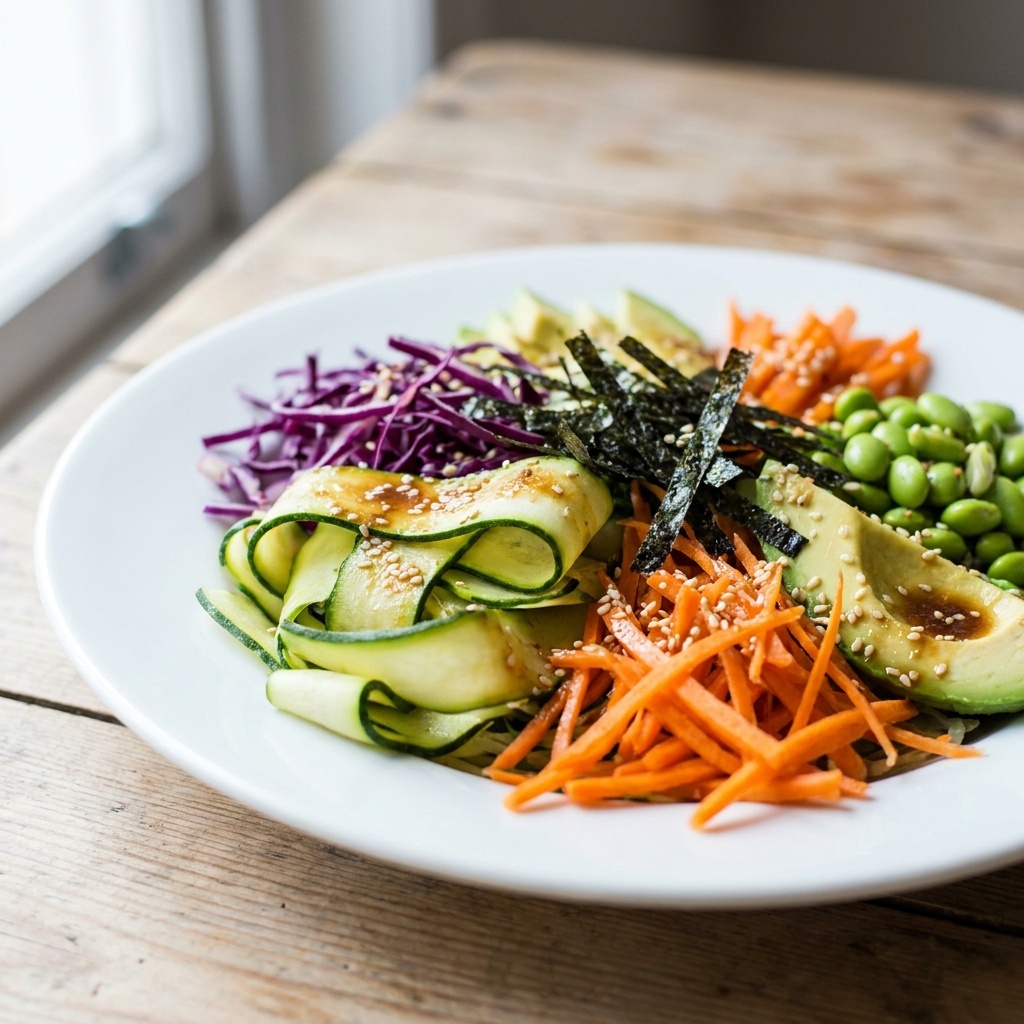
Asian-inspired raw bowl with tahini and tamari sauce

Share this article

Organic mung bean seeds
€9.90
Ingredients
Bowl
- 2 courgettes, spiralised
- 2 carrots, grated
- 90 g red cabbage, thinly sliced
- 1 large daikon (white radish), finely sliced
- 1 ripe avocado
- 70 g raw sauerkraut or kimchi
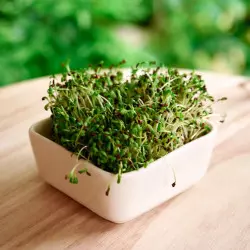
- 30 g mung bean or sunflower sprouts
Sauce
- 2 tablespoons olive oil
- 1 teaspoon coconut nectar
- 2 tablespoons tamari
- 2 1/2 tablespoons tahini
- 1 tablespoon sesame oil
- 1 tablespoon nutritional yeast flakes
- 1/2 teaspoon freshly grated ginger
- 2 tablespoons water, or more depending on the consistency you want
Method
- Spiralise the courgettes and place them in the centre of the bowl.
- Arrange the other vegetables all around, in clearly separate sections of colour.
- Top with the sprouts, then set aside while you make the sauce.
- Blend all the sauce ingredients until smooth and creamy, adjusting the amount of water.
- Drizzle the sauce over the bowl just before serving.
Tip
The sauce keeps for 3 to 5 days in the fridge in a closed jar: it works as well as a salad dressing as it does as a dip. To sprout your own mung beans, allow three to four days of regular rinsing, and harvest them when the shoot reaches one centimetre.
The full range Sprouted seeds
46 products
Discover the full range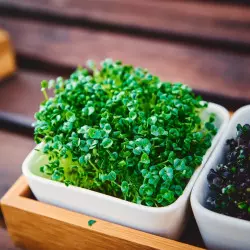
FAQ: your questions about the Asian-inspired raw bowl
What is the difference between a poke bowl and a buddha bowl?
The poke bowl comes from Hawaii and is built around a base of vinegared rice and marinated raw fish. The buddha bowl is plant-based by definition: raw and cooked vegetables, grains or pulses, seeds and a sauce. The version in this recipe takes the idea further, since courgette noodles replace the starchy base and nothing goes near the stove.
How do you make a buddha bowl?
Think in four families: a base (here courgette noodles), vegetables in different colours, a rich, soft element such as avocado, and a sauce that brings it all together. Add a fermented touch and a few sprouts for freshness. Arrange each ingredient in its own section rather than mixing everything: the bowl looks more appetising and everyone builds their own mouthful.
What is tamari sauce?
Tamari is a Japanese sauce made by fermenting soya, traditionally with little or no wheat. Its taste is rounder and less salty on the palate than a classic soy sauce. In a raw tahini sauce like this one, it brings the savoury depth that balances the richness of the sesame.
What is the difference between tamari and soy sauce?
Everyday soy sauce combines soya and wheat in similar proportions, which gives it a sharper taste. Tamari is mostly made from soya, with a slightly thicker texture and a milder flavour. Check the label if you avoid gluten: not all tamaris are completely wheat-free.
Share this article