



A recipe that keeps coming back into our kitchens because it's so simple and packed with crunchy vegetables: large collard green leaves standing in for the wrapper, filled with thinly sliced vegetables and marinated shiitakes, all served with a ginger-tamari sauce that works as both marinade and dip. One leaf is usually enough for two small rolls.
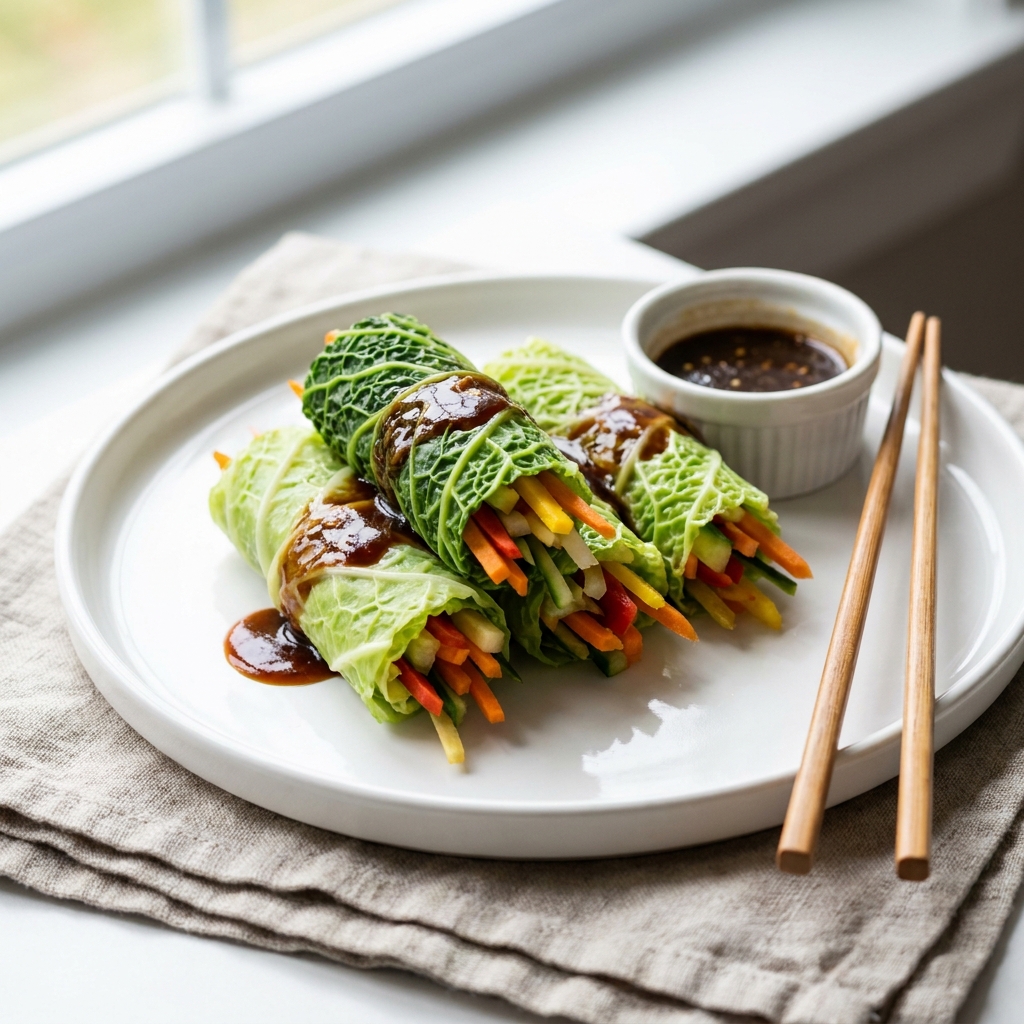
Raw Collard Green Wraps with Ginger-Tamari Sauce
Share this article
Nori seaweed sheets, raw quality
€18.90 In stock
Ingredients
For the rolls
- Collard green leaves, stems removed
- Seaweed (nori or wakame, in strips)
- Shiitake mushroom caps, sliced and marinated
- Snow peas, cut into strips
- Carrots, cut into julienne
- Napa cabbage, cut into strips
- Cucumber, cut into strips
For the marinade / dipping sauce
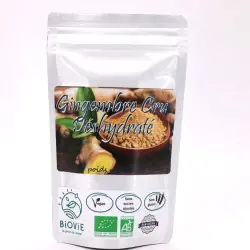
- 1 tbsp fresh ginger, minced (or the equivalent raw ginger)
- 2 garlic cloves, peeled and minced
- 2 tbsp tamari
- 2 tbsp lemon juice
- 2 tbsp sesame oil
Preparation
- Remove the stems from the collard green leaves and cut all your vegetables into thin strips.
- Mix the marinade ingredients and marinate the sliced shiitakes in it for 15 to 30 minutes.
- Drain the mushrooms, pressing well to recover the marinade liquid, and set it aside for the dipping sauce.
- Arrange the vegetables and marinated mushrooms in the center of each collard leaf, roll it up, then secure the roll with a strip of seaweed.
- Serve with the reserved marinade as a dip - for a creamier sauce, stir in a spoonful of almond butter or tahini.
Tip
One large collard green leaf usually makes two smaller rolls once the stem is removed.
The full range ALGAE
26 products
Discover the full range


FAQ: your questions about nori sheets
How do you use nori sheets?
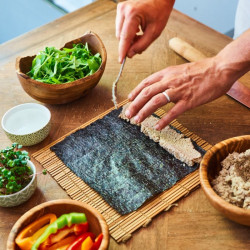
Beyond maki rolls, nori sheets can be cut into strips to sprinkle over a salad, a soup, or a grain bowl, where they add iodine and a briny flavor. They also work as a flexible wrap for raw vegetables, or can be crumbled by hand as a condiment. Here, a simple dampened strip closes the roll: the moisture in the sheet is enough to make it stick. Store it somewhere dry, as it softens very quickly in open air.
Which side of the nori sheet should face out?
The sheet has one shiny, smooth side and one matte, slightly rough side. The rule is to place the shiny side against your work surface and add the filling on the matte side: the filling grips better, and the finished roll shows its nicest side on the outside. For simple closing strips like in this recipe, it makes no difference at all.
What can you do with nori seaweed?
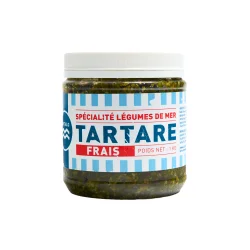
Plenty of things beyond sushi: chips, by brushing it with sesame oil and running it through the dehydrator; a condiment, by grinding it into a powder in the blender; a topping for miso soup; a seaweed tartare mixed with other varieties. It also works well stirred into hummus or mashed avocado for a briny flavor. And on a simple slice of avocado toast, a few flakes make all the difference.
How can I cook fresh seaweed?
Fresh seaweed sold in brine should first be rinsed thoroughly under clean water to remove excess salt, then desalted for a few minutes in a bowl of cold water depending on the variety. After that, it can be eaten as is, sliced into a salad or a vinaigrette, or briefly heated. Sea lettuce and dulse are the easiest to start with; sea bean needs a bit more desalting. Always taste before seasoning, since it already carries salt.
Share this article
Related articles