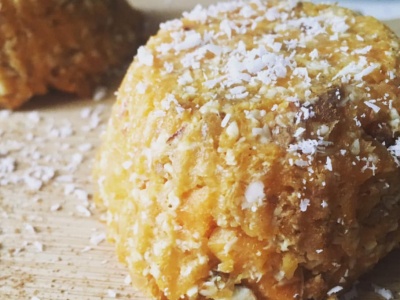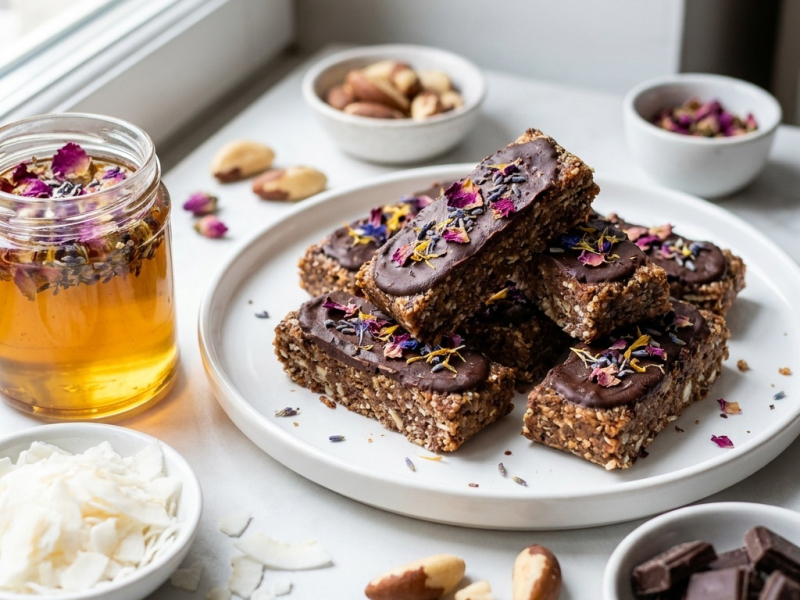



Persimmon and young coconut make a pairing as unusual as it is successful, the creaminess of the coconut balancing the fruit's natural sweetness. These bars are built in four successive layers - a chocolate base, a coconut cream, a persimmon cream and a chocolate sauce - each blended separately before being stacked. An original dessert that breaks with the classics, best saved for the height of persimmon season.
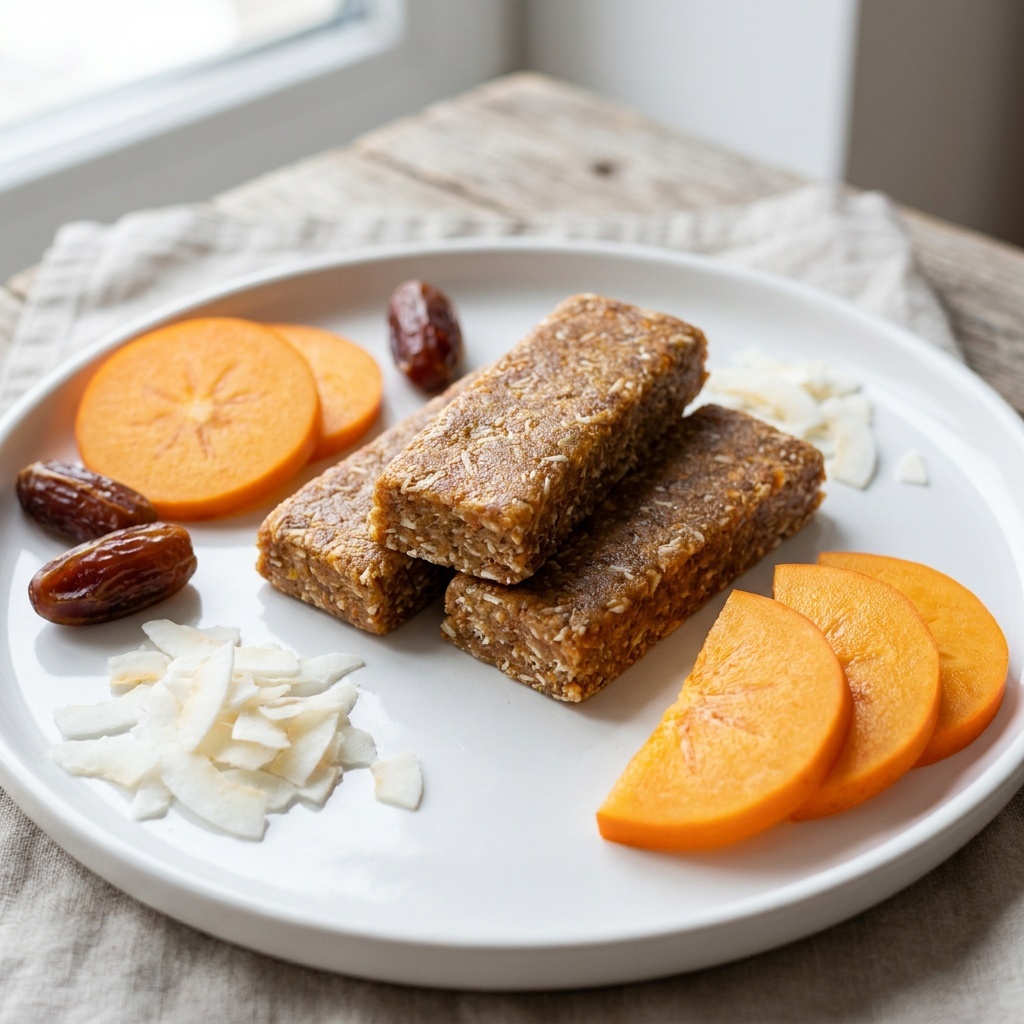
Persimmon and Coconut Bars
Share this article
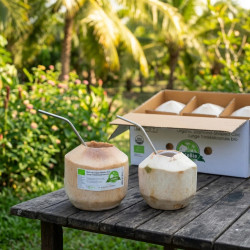
Certified organic fresh coconuts
€33.90 PRE-ORDER - NEXT DELIVERY 19 OF OCTOBER
Ingredients
For the chocolate base
- 1 cup dates
- ½ cup coconut flakes
- 1 teaspoon carob or cocoa powder
For the coconut cream
- 1.5 cups young coconut flesh
- 5 medjool dates
- ½ teaspoon vanilla powder
- ¼ cup filtered and hydrogenated water
For the persimmon cream
- 1¾ cups (240 g) persimmon, seeds and skin removed
For the chocolate sauce
- ½ cup dates
- ¾ cup filtered and hydrogenated water
- ⅛ cup almonds
- 2 tablespoons cocoa powder
- ¼ teaspoon vanilla powder
Preparation
- For the chocolate base, blend the dates in a food processor until they just begin to clump together. Add the coconut flakes and the carob or cocoa, then blend again until the mixture is even. Press this base into a mould.
- For the coconut cream, blend all the ingredients in a high-speed blender until creamy. Spread over the base.
- For the persimmon cream, blend the persimmon for about 30 seconds: it quickly takes on a thick, pudding-like consistency. Add this layer on top of the coconut cream.
- For the chocolate sauce, blend all the ingredients in a high-speed blender until smooth, then pour it over the bars before chilling and slicing.
Tip
The creamy texture of young coconut flesh balances the natural sweetness of persimmon beautifully: avoid replacing it with ordinary dried coconut, as the texture would no longer be the same.
The full range Fresh coconut
Enjoy a gourmet and nutritious coconut flesh thanks to these Thai organic green coconuts, proposed with its machete for easy opening, 5 products
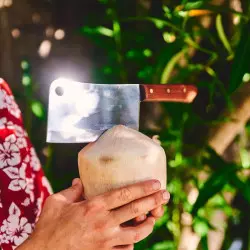
Coconut machete CoCoBio
€20.95
-10%

Organic fresh coconut pallet (18 cartons of 9 coconuts)
€24.90 €27.66
FAQ: your questions about persimmon and coconut bars
How do you know when a persimmon is ripe?
It depends on the variety. A classic astringent persimmon should be distinctly soft to the touch, almost translucent, with taut skin slightly wrinkled at the base: only at that stage does the astringency disappear. A Fuyu persimmon, on the other hand, is eaten firm like an apple. When in doubt, taste it: if your mouth puckers, leave it to ripen for a few more days.
What is the best time of day to eat a persimmon?
There is no forbidden hour. Many people enjoy it in the morning or as a snack, because it is a sweet and filling fruit. If fruit sits badly with you at the end of a meal, eat it away from other dishes instead. For this recipe, what matters is the ripeness of the fruit, not the time at which you serve it.
Is persimmon a fruit or a vegetable?
It is a fruit, botanically and in the kitchen alike: the berry of the persimmon tree, Diospyros kaki, native to East Asia. In Europe it is mostly found from October to January, Spain being today the leading producer in the Mediterranean basin.
Does persimmon ripen after picking?
Yes, and that is the norm: it is picked firm and continues to ripen at room temperature. To speed things up, place it in a bowl next to apples or bananas, whose ethylene triggers ripening. Twenty-four hours in the freezer followed by slow thawing also removes the astringency of a fruit that is too firm: the flesh becomes very runny, which suits this recipe perfectly.
Share this article
Related articles