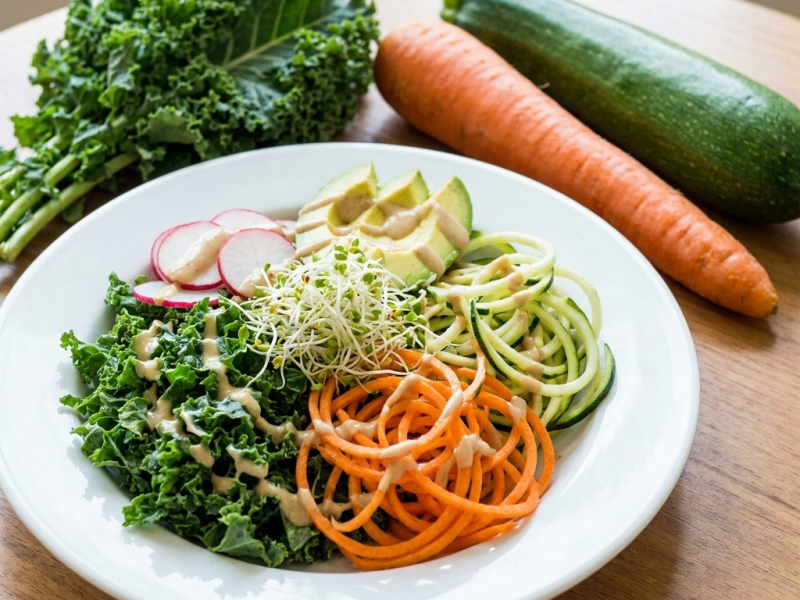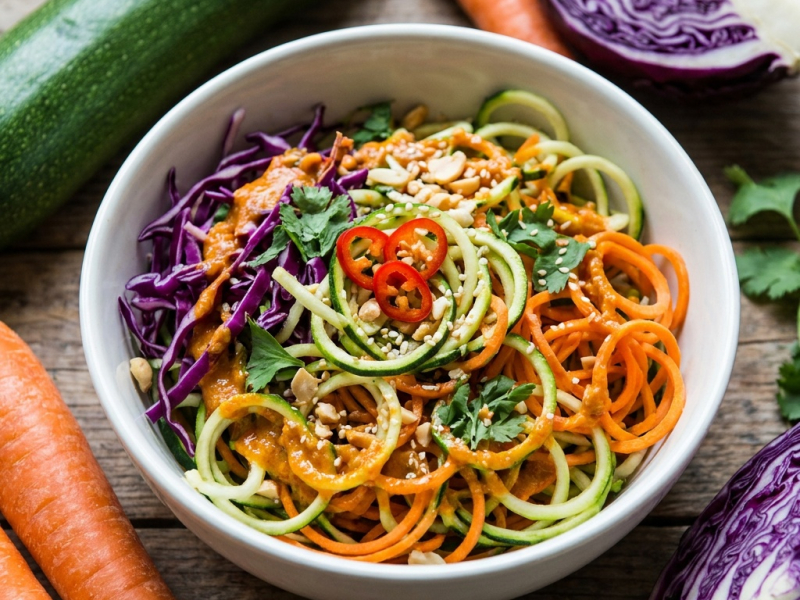







Inspired by a dish from a well-known plant-based restaurant, this build-your-own bowl arranges crunchy julienned vegetables, raw sauerkraut and softened wakame around a nest of zucchini noodles. Wakame is a ruffled-leaf seaweed, most often sold dried: dropped into water, it unfurls and turns silky in about ten minutes, with a mild, faintly sweet marine flavour that pairs well with raw vegetables and a bold sauce. The real star of the bowl, though, is the sauce, a bold, sweet-and-savoury blend of nutritional yeast, tamari and tahini, worth making even if you skip the bowl. Assembling it is mostly a matter of preparing each element separately and arranging them together at the end, so the crunch of the fresh vegetables stays distinct from the tender wakame and noodles instead of blending into a single texture. A wide, shallow bowl works best for serving: each element stays visible and separate instead of disappearing under the sauce from the first bite.
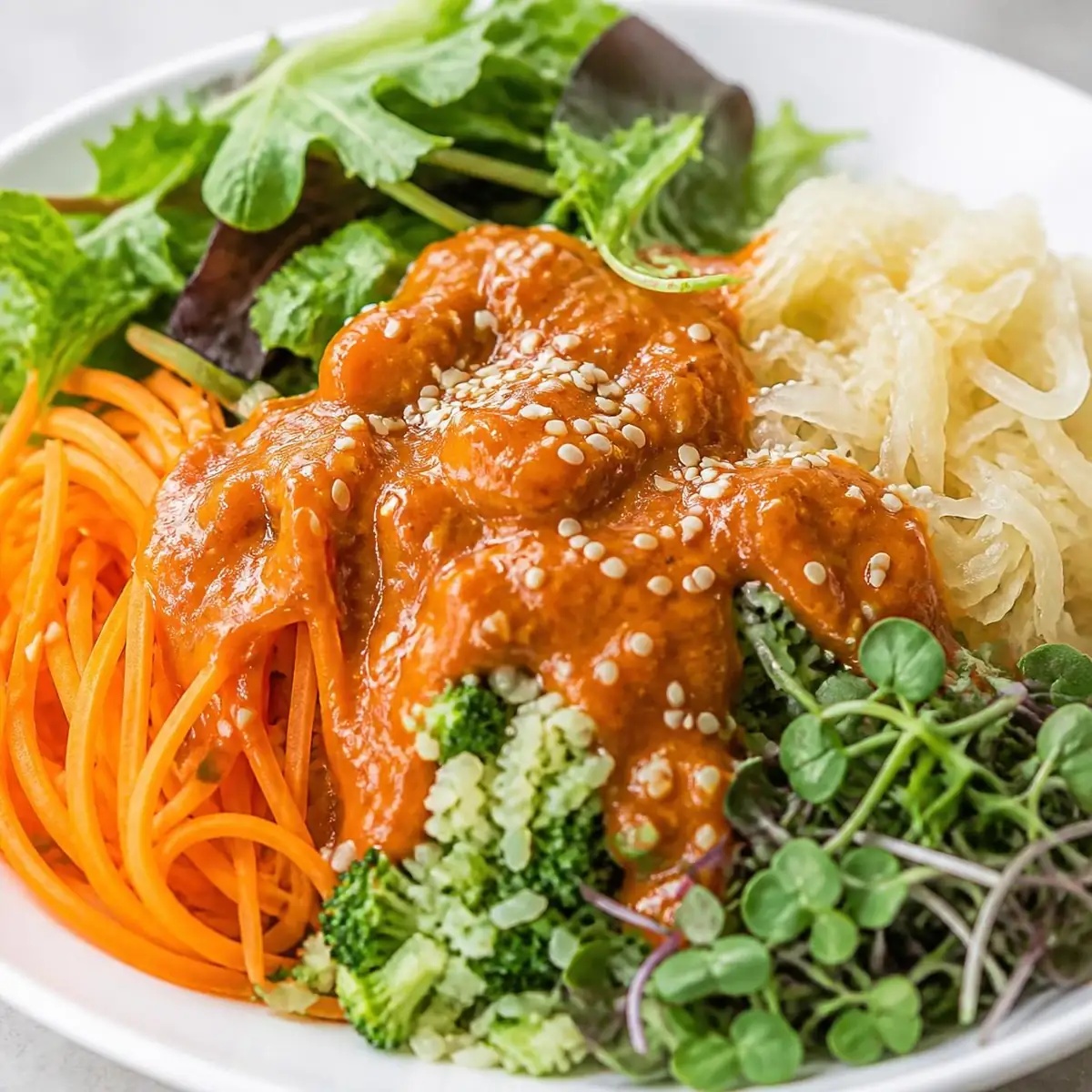
Raw Macro Bowl with Dragon Sauce
Share this article
Dehydrated Curly Wakame Seaweed
€17.42 €26.80 In stock
Ingredients
For the bowl
- Julienned carrots
- Julienned zucchini, briefly marinated in a little sea salt to soften (equivalent to 1 tablespoon - 15 ml - of seawater)
- Raw sauerkraut
- Wakame, soaked and rinsed (rinse longer for a milder marine flavour)
- Sprouts of your choice (clover works very well)
- Grated red cabbage
For the dragon sauce
- 120 ml nutritional yeast
- 80 ml olive oil
- 60 ml honey
- 60 ml tamari
- 60 ml filtered and hydrogenated water
- 60 ml tahini
- 1 clove garlic
Method
- Arrange the marinated zucchini noodles in the centre of a large bowl, then place the julienned carrot, sauerkraut, wakame, sprouts and red cabbage all around.
- Top generously with dragon sauce.
- For the sauce, blend together the nutritional yeast, olive oil, honey, tamari, water, tahini and garlic until smooth.
- Keep the remaining sauce in a sealed glass jar in the fridge for 4 to 5 days.
Tip
Make the sauce first: it benefits from resting in the fridge for a quarter of an hour, giving the garlic time to blend into the whole. And rinse the wakame longer if you're new to it, the marine flavour fades noticeably with rinsing.
The full range Dry algae
10 products

FAQ: your questions about the raw macro bowl and dragon sauce
What's the best sauce for a Buddha Bowl?
A bowl sauce should be more concentrated than a vinaigrette, because it seasons a lot of volume. Bases that work: tahini plus lemon, nut butter plus tamari, or, as here, nutritional yeast plus tamari and tahini. Always aim for a balance of fat, salt, acid and a touch of sweetness.
How do you build a Buddha Bowl?
In layers: a base (here, zucchini noodles), raw or marinated vegetables for crunch, a fermented element for acidity (sauerkraut), something tender for contrast (wakame), sprouts for freshness, and a generous sauce. Prepare each element separately and only assemble at the last moment.
What is the principle behind a Buddha Bowl?
Bringing together a variety of complementary ingredients in a single bowl, arranged side by side rather than mixed, so as to keep textures and colours distinct. It's a free-form format: there's no fixed ingredient list, only a logic of balance between registers.
What recipes can you make with wakame seaweed?
Once rehydrated, wakame slips into a cucumber salad, a bowl like this one, a miso soup, or is simply snipped over raw vegetables with a drizzle of sesame oil. Its soft texture and mild marine flavour make it one of the easiest seaweeds to work with when starting out.
Share this article
Related articles