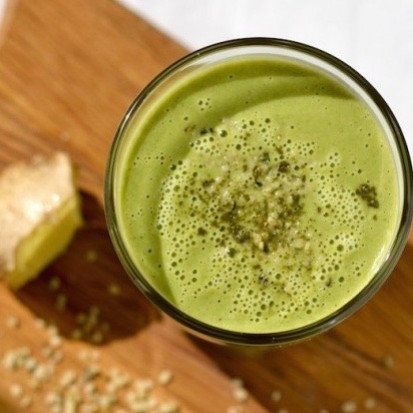
In spring, I crave greenery and freshness. This barley grass, lemon and ginger smoothie is one of my favourite drinks to start the day: three minutes of preparation, a glass of deep green, and a lively flavour that combines the chlorophyll of young barley shoots, the vitamin C of lemon and the gingerols of fresh ginger. A vitamin-rich trio I have been making for more than twenty years.
Why these three ingredients
The lemon-ginger duo, a traditional classic
Lemon provides vitamin C (about 53 mg per 100 g according to the Ciqual table of ANSES) and, beneath its acidity on the palate, minerals such as potassium. Fresh ginger, for its part, is rich in gingerols and shogaols, compounds studied by researchers, particularly in relation to digestion and inflammation. Together, on an empty stomach, they bring a lively note to the start of the day. For a version that is simpler to make every day, also try our ginger and lemon water, a very simple recipe.
Barley grass, a highly concentrated chlorophyll-rich young shoot
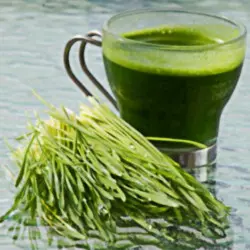
Barley grass (Hordeum vulgare) is harvested about 10 days after germination, before the grain forms. At this stage, the leaves concentrate chlorophyll, superoxide dismutase (SOD), GABA, flavonoids (saponarin, lutonarin), vitamins A, B1, B6, C and E, and around thirty minerals. A scientific review published in 2018 in Oxidative Medicine and Cellular Longevity takes stock of the research, largely carried out in vitro or in animals, on its effects on immunity, oxidation, inflammation and blood lipids.
The point of combining them in a smoothie lies in the complementarity of the nutrients. The vitamin C in lemon increases iron absorption, notably the iron in barley grass and green leafy vegetables. Ginger adds its spicy note, which many people enjoy when starting a chlorophyll course. And if you are interested in the liver in spring, I talk about it at greater length in our guide 8 tips for taking care of your liver.
The barley grass, lemon and ginger smoothie recipe
Ingredients for 1 large glass (500 ml)
1 very ripe banana or 1 juicy pear
1 handful of kale or fresh spinach leaves (about 30 g)
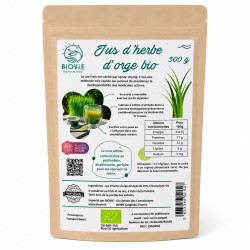
1 level teaspoon of barley grass powder (or 1/2 teaspoon of dehydrated barley grass juice, which is more concentrated)
The juice of 1/2 lemon, organic and untreated
1 cm of peeled fresh ginger (about 3 g)
1 teaspoon of chia seeds
200 ml of filtered spring water or unsweetened plant milk (tiger nut, almond)
Optional: 2 or 3 ice cubes for freshness
Preparation in 3 minutes
Peel the ginger and cut it into small pieces.
Squeeze the half lemon.
Pour all the ingredients into the blender jug, adding the barley grass powder last so it does not stick to the sides.
Blend for 45 seconds at full power until smooth and frothy.
Serve immediately to enjoy the living enzymes.
Eric's variations
When I want a creamier version, I add half an avocado instead of the banana and finish with a drizzle of unrefined maple syrup. For a more iodine-rich version that I make by the sea, I replace the water with 150 ml of diluted isotonic seawater and add a pinch of dulse seaweed flakes. Fancy another green smoothie? Try our green barley grass smoothie or the barley, citrus and coriander smoothie.
"I discovered Biovie more than 15 years ago. The sprouting seeds, seawater, barley grass juice, spirulina and Nori sheets are must-haves, of exceptional raw quality. Thank you to Eric and Aurélie Viard for everything." - Gael V., Google customer review (5★)
Barley grass powder contains superoxide dismutase (SOD), an antioxidant enzyme found in most living organisms. According to the review by Zeng et al. (2018), young barley shoots also concentrate GABA, saponarin (a flavonoid) and up to 45% fibre. The studies reviewed, largely carried out in vitro or in animals, look at immunity, the liver, blood sugar, transit and antioxidant activity.
Lemon: vitamin C and minerals
Half a lemon provides about 25 mg of vitamin C, nearly a third of the recommended daily intake. Despite its acidity on the palate, it also provides mineral salts (potassium, magnesium), and its vitamin C contributes to the normal function of the immune system. It is the ideal partner for the morning green smoothie.
Ginger: gingerols and shogaols
The gingerols and shogaols in fresh ginger are the subject of studies on bloating, nausea and inflammation. If you are wondering what time of day to have it, our article can you drink ginger in the evening? answers the question.
Chia and green leafy vegetables: nutritional reinforcements
Chia seeds provide plant omega-3 (ALA) and mucilaginous fibre that thickens the texture. Kale and spinach add iron, calcium and carotenoids. For more variety: 8 ideas for enjoying the benefits of chia seeds.
When and how to drink this smoothie
The best time of day
In the morning on an empty stomach, or 30 minutes before breakfast, is the slot I prefer: that is when it is most pleasant to drink. Avoid drinking it right after a heavy meal so as not to slow digestion. As a 4 pm snack, it makes a good replacement for a coffee.
As a course or every day?
Two approaches work. The seasonal course of 21 to 28 days (spring, autumn) is the one I recommend to most beginners. The daily ritual, 1 glass a day 5 to 6 days a week, suits regular users who tolerate chlorophyll well. Always start with small amounts (1/2 teaspoon of barley grass) to test your digestive tolerance. For an overall programme, see our guide natural probiotics every day.
Precautions and contraindications
Gluten: green barley shoots harvested before heading do not contain gluten, which only forms in the mature grain. People with coeliac disease can consume them if the raw material is certified free from cross-contamination.
Anticoagulants: the vitamin K in barley grass may interact with vitamin K antagonist treatments - ask your doctor for advice.
Diabetes treatment: some studies suggest an effect of barley grass on blood sugar; ask your doctor's opinion if you are taking blood-sugar-lowering medication.
Pregnancy and breastfeeding: medical advice recommended for concentrated courses.
Initial adjustment: mild headaches, nausea or more frequent stools are possible in the first few days. Reduce the amount and stay hydrated.
"I ordered dehydrated barley grass, very good quality and a very attractive price compared with what you find in organic shops." - Estelle R., Google customer review (5★)
FAQ: your questions about the barley grass smoothie
What are the benefits of barley grass juice?
Barley grass juice is rich in chlorophyll, SOD, flavonoids and minerals. The review by Zeng et al. (2018) brings together studies, largely carried out in vitro or in animals, on immunity, antioxidant activity, blood sugar and digestion. Consumed daily in small amounts, it easily finds its place in a varied diet.
Can you drink barley grass every day?
Yes, provided you stick to a reasonable amount (1 teaspoon of powder a day). Specialists nevertheless recommend alternating with other green superfoods (spirulina, chlorella, wheatgrass) to diversify your intake and avoid getting used to it.
Does barley grass contain gluten?
No. The green barley shoot is harvested before the grain forms, and therefore before gluten is synthesised. It is suitable for intolerant people if the raw material is certified free from cross-contamination during processing.
What are the possible side effects of barley grass?
At normal amounts, barley grass is very well tolerated. If you take too much, temporary digestive upsets may appear: nausea, diarrhoea, headaches. These signs often reflect a transitional adjustment. Reduce the amount, drink more water and increase gradually.
Can you replace barley grass powder with dehydrated barley grass juice?
Yes, it is even an excellent option for a more concentrated version. Dehydrated barley grass juice contains only the filtered sap, and therefore a higher density of chlorophyll and enzymes than the whole ground plant. Halve the amount (about 1/2 teaspoon).
Does the lemon-ginger smoothie have a place when you are watching your weight?
Taken instead of a sugary breakfast or a processed snack, yes, it is a light option. But no food makes you lose weight on its own: it fits into an overall balanced diet and an active lifestyle.
What time should you drink this smoothie?
In the morning on an empty stomach, 15 to 30 minutes before breakfast. That is when I enjoy it most. The evening is not recommended because of the invigorating effect of ginger.
This article is for information purposes only and is in no way a substitute for medical advice. If in doubt or if you are undergoing treatment, consult a healthcare professional.