Japan has had an intimate relationship with seaweed since the 5th century. It is not a recent trend or a marketing effect. It is an ancient dietary practice, deeply rooted in the culinary culture of the archipelago. Specifically, a Japanese person consumes on average between 4 and 7 grams ofdried seaweed each day (Mouritsen et al., 2013).
This daily consumption is not insignificant. It naturally integrates into meals: the traditional breakfast includes a miso soup with wakame, lunch often includes nori around sushi or onigiri, and dinner can be accompanied by fresh seaweed salads or kombu broths. Seaweed is not considered a dietary supplement but a staple ingredient, just like rice or vegetables.
More than 100 varieties of edible seaweed
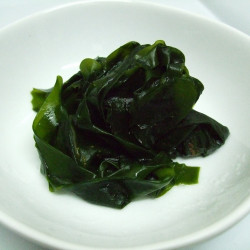
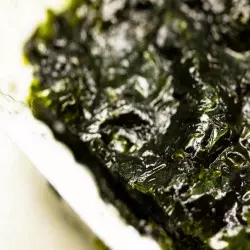
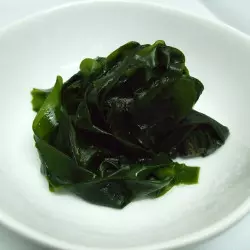
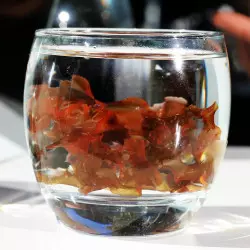
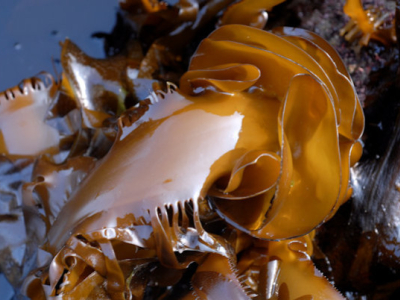
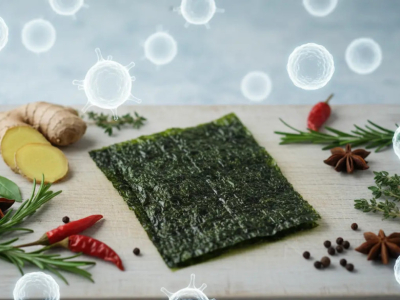
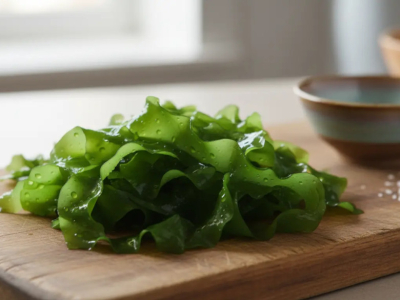
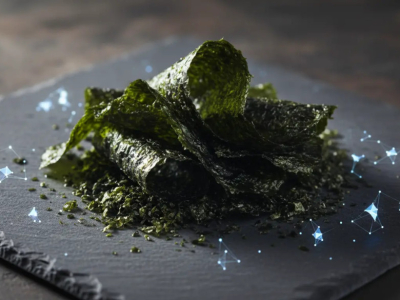
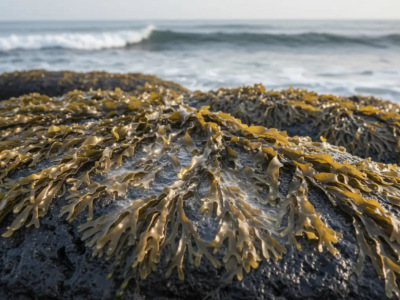
What stands out when one takes an interest in Japanese cuisine is the incredible diversity of seaweeds used. There are more than 100 varieties of edible seaweeds in Japan, each with its own unique taste and nutritional characteristics (Holdt & Kraan, 2011). The most well-known to us are nori (those thin and crispy sheets that wrap makis), wakame (those tender strips found in miso soup), kombu (the thick seaweed used as a base for dashi, the traditional broth), and dulse (with its subtle nutty and iodized flavor).
But the Japanese also use hijiki, mozuku, aonori, tosaka-nori, and many others. This variety ensures a diverse intake of nutrients and helps avoid dietary monotony. This is, in fact, a fundamental principle of their nutritional approach: varying sources to optimize intake.
Okinawa: 68 centenarians per 100,000 inhabitants
Let's now talk about Okinawa, this region of Japan that fascinates researchers worldwide. According to epidemiological data published in the Journal of the American Geriatrics Society, there are 68 centenarians per 100,000 inhabitants (Willcox et al., 2001). This is considerable. For comparison, the French average is around 30 centenarians per 100,000 inhabitants.
But it is not only the number of centenarians that is impressive, it is their quality of life. Epidemiological studies conducted at Okinawa show that the inhabitants have significantly lower rates of cardiovascular diseases, type 2 diabetes, and certain cancers compared to Western populations (Willcox et al., 2001; Suzuki et al., 2010). These individuals remain autonomous, active, and cognitively healthy well beyond the age of 80.
And guess what? Seaweed plays a central role in the traditional Okinawan diet. The inhabitants regularly consume kombu, mozuku (a local brown seaweed particularly rich in fucoidan), and various green seaweeds. This daily consumption, combined with other aspects of the Okinawan lifestyle (moderate physical activity, strong social ties, low-calorie diet), contributes to their exceptional longevity.
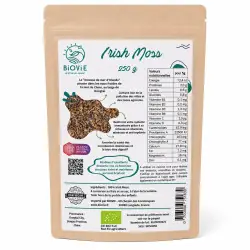
At Biovie, we offer a complete range of organic seaweeds, both Breton and Japanese, allowing you to easily incorporate these superfoods into your daily life.
Property #1: Contribution to a normal inflammatory response
Scientific data is impressive.
In 2011, a team of Tunisian researchers published a major study evaluating the biological activity of 24 species of Mediterranean algae. The results are remarkable: 63% of the algae extracts tested demonstrated a significant ability to modulate inflammation markers in the experimental models used (Ben Nasr et al., 2011).
This is not an anecdotal property. Low-grade chronic inflammation is now recognized by the scientific community as an underlying factor in many imbalances in the body. By incorporating algae into your diet, you provide your body with compounds that help maintain a normal inflammatory response.
The algae Laurencia: remarkable results in studies
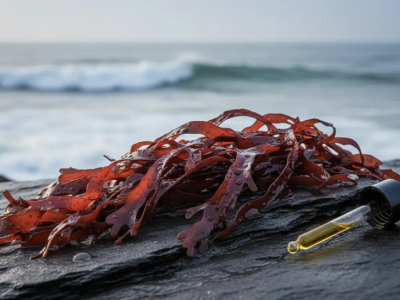
Among the algae tested, one particularly caught the researchers' attention: Laurencia glandulifera. This Mediterranean red algae has demonstrated an 80% inhibition capacity of edema in experimental models, compared to 50% for indomethacin, a reference molecule used as a comparator (Ben Nasr et al., 2011).
I clarify immediately: this is not about replacing medical treatment with algae. These studies in vitro and on animal models show the potential of algae, but they do not constitute clinical evidence in humans. What these results suggest is that algae contain bioactive compounds that may help support the body's natural functions.
Fucoidan: A Polysaccharide with Studied Properties
The fucoidan is a sulfated polysaccharide primarily found in brown algae such as wakame, kombu, and mozuku. For about twenty years, this compound has been the subject of intensive research. A meta-analysis published in 2015 in the journal Marine Drugs has reviewed more than 100 studies on the biological properties of fucoidan (Fitton, 2015).
Research indicates that this polysaccharide can help modulate the cellular response by acting on multiple signaling pathways. A study published in the Journal of Agricultural and Food Chemistry showed that fucoidan extracted from wakame helped reduce certain biological markers in cell models (Park et al., 2011).
The organic wakame we offer at Biovie is particularly rich in fucoidan. This is one of the reasons why this seaweed holds such an important place in traditional Japanese cuisine.
Property #2: Support for the body's natural defenses
86% of the active seaweed extracts on pathogenic bacteria
The properties of algae on microorganisms have been documented for several decades. A systematic review published in the Journal of Applied Phycology analyzed all available studies on the activity of marine algae against bacteria (Pérez et al., 2016). The conclusion is clear: 86% of the algae extracts tested in the various studies show significant activity against at least one pathogenic bacterium.
Algae have developed these properties over millions of years of evolution. Living in a marine environment rich in microorganisms, they have developed sophisticated chemical defense systems to protect themselves. When we consume algae, we benefit from these bioactive compounds that can contribute to the normal functioning of our immune system.
Documented action on E. coli, Staphylococcus, and Salmonella
Studies show that seaweed extracts are particularly active against certain bacteria that are problematic for humans. Research published in Comparative Biochemistry and Physiology have demonstrated the activity of brown algae extracts against Escherichia coli (responsible for numerous intestinal infections), Staphylococcus aureus (involved in skin infections) and Salmonella (agent of foodborne salmonellosis) (Mayer et al., 2011).
A 2016 study published in Frontiers in Microbiology identified that the polyphenols present in brown algae such as dulse and kombu exhibited significant activity (Shannon & Abu-Ghannam, 2016). These compounds act by disrupting the membrane of pathogenic bacteria.
Once again, I want to be precise: consuming seaweed does not immunize you against bacterial infections. However, regularly incorporating seaweed into your diet provides your body with compounds that help support your natural defenses.
Sulfated polysaccharides: a natural shield
The sulfated polysaccharides from algae (fucoidan, carrageenan, alginate, ulvan) constitute a family of compounds with remarkable biological properties. A study published in 2019 in the journal Marine Drugs reviewed the activity of these polysaccharides (Álvarez-Viñas et al., 2019). The researchers documented activity against 42 different strains of microorganisms.
These polysaccharides act through several mechanisms: they can block the adhesion of pathogens to cells, stimulate the activity of immune cells, or modulate the production of cytokines (the messengers of the immune system). It is this multiplicity of actions that makes algae so interesting from a nutritional standpoint.
The Dulse and the nori, which we offer in an organic version at Biovie, are particularly rich in these polysaccharides.
Here is an aspect of algae that fascinates me. Algae are exceptional prebiotics. This means that they selectively nourish the good bacteria in our gut, particularly the Bifidobacterium and Lactobacillus.
A study published in 2010 in the journal Food & Function demonstrated that brown algae polysaccharides significantly stimulated the growth of Bifidobacteria and of the Lactobacilliin vitro (O'Sullivan et al., 2010). These beneficial bacteria play a crucial role in our digestive health: they contribute to digestion, nutrient absorption, the synthesis of certain vitamins, and the maintenance of the integrity of the intestinal barrier.
What is remarkable about algae is that our digestive enzymes do not break down their fibers. These fibers therefore reach our colon intact, where they are fermented by our microbiota. This fermentation produces short-chain fatty acids (notably butyrate), which are the main energy source for the cells in our colon and contribute to maintaining intestinal health.
The European project Algae4IBD
The European Commission has funded an ambitious research project called Algae4IBD (Algae for Inflammatory Bowel Disease), coordinated by the CORDIS program (European Commission, 2023). This project aims to evaluate the potential of algae compounds in the context of chronic inflammatory bowel disorders.
Researchers have observed that populations regularly consuming seaweed have a lower incidence of these disorders. The project studies the mechanisms by which seaweed polysaccharides could help modulate intestinal balance and restore microbiota equilibrium.
Although this project is still ongoing, the preliminary results are encouraging. They confirm what the Japanese have empirically known for centuries: seaweed contributes to the proper functioning of our digestive system.
Alginate and carrageenan: valuable soluble fibers
Alginate and carrageenan are two types of soluble fibers particularly abundant in seaweed. Alginate, primarily extracted from brown algae like kombu, has a remarkable ability to form a gel in the stomach. A study published in Appetite showed that this gelling property helped to prolong the feeling of satiety (Paxman et al., 2008).
Carrageenan, found in red algae such as nori and dulse, has documented prebiotic properties. Research published in the Journal of Functional Foods demonstrated that κ-carrageenan (kappa-carrageenan) stimulated the growth of beneficial colon bacteria and contributed to the production of short-chain fatty acids (Shang et al., 2018).
The sea lettuce and the sea bean, available in our range, are excellent sources of these soluble fibers beneficial for your intestinal health.
An incomparable nutritional composition
Protein richness: up to 35% for certain algae
When I present seaweed at conferences or training sessions, people are always surprised by their protein content. Dulse, for example, contains between 20 and 35% protein depending on the cultivation and harvesting conditions (Holdt & Kraan, 2011). This is comparable to soy and much higher than most land vegetables.
And what is even more interesting is the quality of these proteins. An analysis published in Trends in Food Science & Technology showed that algae proteins contain all the essential amino acids, those that our body cannot synthesize and that we must necessarily obtain from our diet (Fleurence, 1999). The amino acid profile of algae is similar to that of eggs, which are considered the reference protein.
For people looking to reduce their consumption of animal proteins or who follow a vegan diet, algae represent a particularly interesting source of complete plant-based proteins.
Much more concentrated in minerals than seawater
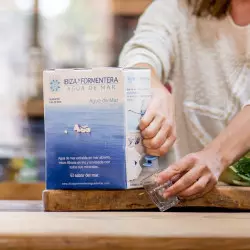
This data, derived from the work of CEVA (Centre for the Study and Promotion of Algae), based in Brittany, perfectly illustrates the concentration power of algae (CEVA, 2023). These organisms have developed over the course of their evolution an extraordinary ability to extract and store minerals from their marine environment.
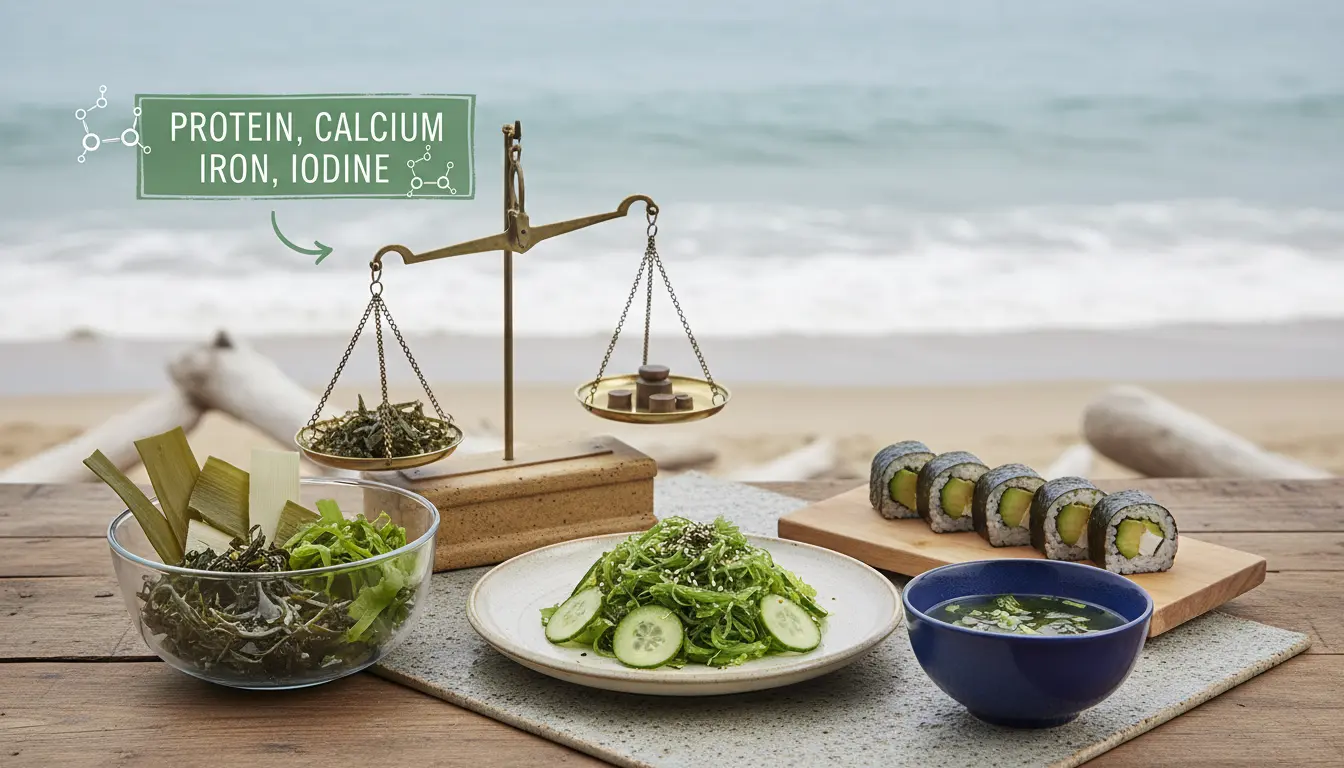
Concretely, what does this mean for you? That a small amount of algae provides a significant amount of minerals. Wakame, for example, contains 13 times more calcium than milk. Dulse provides more iron than red meat. Kombu is an exceptional source of magnesium.
This mineral concentration explains why the Japanese, despite a much lower dairy consumption compared to Westerners, do not have issues with osteoporosis. Seaweed contributes to their calcium needs and other minerals necessary for bone health.
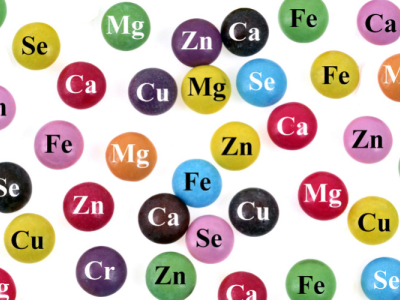
Zinc, iodine, iron, calcium: the essential mineral quartet
Let's review the main minerals provided by seaweed:
Iodine : Seaweed is the richest natural source of dietary iodine. This trace element is essential for the normal functioning of the thyroid. According to ANSES, a large portion of the French population has insufficient iodine intake (ANSES, 2022). Seaweed can help contribute to this intake. A 5g portion of dried seaweed generally covers the recommended daily needs.
Zinc : This mineral contributes to the normal functioning of the immune system and the maintenance of normal skin. Seaweeds, particularly nori and dulse, are excellent sources of it. A study published in Food Chemistry confirmed the bioavailability of zinc present in algae (Rupérez, 2002).
Iron Red algae such as dulse and nori are particularly rich in iron. This iron is associated with vitamin C naturally present in the algae, which promotes its absorption. For people prone to iron deficiencies (women during menstruation, athletes, vegetarians), algae provide a natural and effective source.
Calcium As mentioned above, some algae contain more calcium than dairy products. This calcium is accompanied by magnesium and vitamins D and K, which promote its absorption into the bones. Studies show excellent bioavailability of calcium from algae (Bocanegra et al., 2009).
Absence of sugar and fat: an optimal nutritional profile
Here is an aspect that deserves to be highlighted. Algae contain virtually no sugar (less than 1% for most) and very little fat (between 1 and 5% depending on the species). Their caloric content is therefore extremely low: about 20 to 30 calories per 100g of rehydrated dried algae.
This nutritional profile is remarkable: a lot of nutrients (proteins, minerals, vitamins, fibers) for very few calories and none of the problematic components (added sugars, saturated fats, refined salt). This is exactly what nutritionists are looking for when they talk about nutritional density.
Algae are therefore the ideal health food for people who are monitoring their weight or blood sugar levels, while wanting to optimize their intake of essential nutrients.
How to incorporate seaweed into daily life (the Japanese way)
Breakfast: miso soup and wakame
The traditional Japanese breakfast consistently includes miso soup. This soup is prepared with dashi (a broth made from kombu and dried bonito), fermented miso, and pieces of wakame. It is an ideal start to the day: hydrating, remineralizing, and digestive.
In practice, preparing this soup is very simple. Soak a small handful of dried wakame in water for 5 minutes. Heat 250ml of water with a small piece of kombu. Remove the kombu before boiling (otherwise the broth becomes bitter). Add a tablespoon of miso diluted in a little warm water. Stir in the drained wakame. There you go, your soup is ready in less than 10 minutes.
If you're not a fan of savory breakfasts, you can add nori flakes to your morning smoothie or sprinkle your avocado toast with seaweed gomasio. There are many possibilities. Of course, you can also use spirulina or chlorella !
Condiments: nori flakes, seaweed gomasio
The simplest trick to incorporate seaweed into your daily routine is to use it as a condiment. Nori flakes can be sprinkled on almost any dish: salads, soups, pasta, rice, grilled vegetables, omelets. Their subtle and slightly iodized taste enhances flavors without overpowering them.
Seaweed gomasio is another remarkable condiment. It is a mixture of roasted sesame seeds, sea salt, and dried seaweed ground into a powder. This condiment is a great substitute for table salt: it provides less sodium, more minerals, and a very pleasant umami taste.
At Biovie, we offer organic nori flakes and seaweed gomasio ready to use. It's the most accessible way to start incorporating seaweed into your diet.
The dishes: kombu dashi, dulse salads
Once you are familiar with the condiments, you can move on to dishes where seaweed plays a more central role. Dashi, the Japanese broth made with kombu, is an outstanding base for soups, sauces, and stews. It provides a deep and natural umami flavor without resorting to industrial flavor enhancers.
Dulse, with its nutty, iodine-rich flavor, is perfect for salads. Rehydrated for a few minutes in warm water, it becomes tender and slightly crunchy. Combined with raw vegetables, a lemony vinaigrette, and a few seeds, it makes a delicious and nutritious starter or light dish.
The sea bean, which we particularly enjoy with Aurélie, has a firm and crunchy texture reminiscent of green beans. It can be eaten in a salad or lightly sautéed with garlic and a drizzle of olive oil.
How much seaweed should be consumed to gain the benefits ?
A frequently asked question: how much seaweed should one eat to benefit from its properties? The Japanese consume on average between 4 and 7 grams of dried seaweed per day. This amount, which seems modest, is actually quite sufficient to enjoy the nutritional benefits of seaweed.
Concretely, this represents about one sheet of nori (for sushi), a tablespoon of rehydrated wakame, or a generous pinch of seaweed flakes. It's not a culinary revolution, just a simple adjustment to your habits.
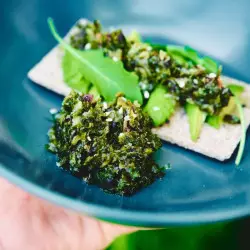
I recommend starting gradually, with 2 to 3 grams per day, then increasing according to your taste and digestive tolerance. Some people may experience slight bloating at first, as their microbiota adapts to these new fibers. This is normal and temporary. The seaweed tartare As a condiment on your dining table, it remains the simplest way to consume small regular amounts.
Precautions for use and contraindications
The issue of iodine and the thyroid
Seaweed naturally contains iodine, a trace element essential for the normal functioning of the thyroid. For the vast majority of people, this richness in iodine is an advantage: it helps to correct the common deficiencies in the French population.
However, in the case of hyperthyroidism (thyroid If you are already hyperactive or undergoing thyroid treatment, it is recommended to consult your doctor before regularly incorporating seaweed into your diet. It's not that seaweed is dangerous, but a high intake of iodine can interfere with certain treatments or exacerbate existing hyperthyroidism.
For individuals with healthy thyroid function, a moderate consumption of seaweed (5 to 10g per day of dried seaweed) poses no problem and, on the contrary, contributes to an optimal iodine intake.
Other precautions
Certain algae, particularly brown algae like kombu, contain significant amounts of vitamin K. People undergoing anticoagulant treatment (vitamin K antagonists) should maintain a stable consumption of these algae to avoid disrupting the balance of their treatment.
In the case of a confirmed allergy to iodine or seafood, the consumption of seaweed is, of course, not recommended.
Finally, as with any food, quality is essential. Seaweed cultivated or harvested in polluted areas can accumulate heavy metals or contaminants. That is why at Biovie, we exclusively select organic seaweed from controlled cultivation and harvesting areas, with full traceability.
Breton seaweeds: properties equivalent to Japanese seaweeds
A question I am regularly asked: is it necessary to buy Japanese seaweed to benefit from their properties? The answer is no. Breton seaweed has equivalent, or even superior, nutritional qualities for certain species.
Brittany has an exceptional marine ecosystem, with cold, clean, and nutrient-rich waters. The seaweeds that grow there develop the same defense and storage mechanisms as their Japanese counterparts. Breton wakame is as rich in fucoidan as Japanese wakame. The dulse from our coasts contains as much protein and iron as that harvested in Japan.
Furthermore, consuming Breton seaweed reduces the carbon footprint of your diet and supports a rapidly developing local industry. This is a consistent approach with the values we have been advocating at Biovie since 2007.
Our range includes both Breton seaweeds (wakame, dulse, sea lettuce, sea beans) and traditional Japanese seaweeds (nori, kombu) to offer you the full diversity of this fascinating world.
In summary: seaweed, a superfood validated by science and history
Here we are, reaching the end of this overview of the health properties of algae. What should we take away from all of this ?
Seaweed is probably the most complete and underestimated food in our Western diet. Rich in high-quality proteins, bioavailable minerals (iodine, zinc, iron, calcium), prebiotic fibers, and bioactive compounds (fucoidan, polyphenols, sulfated polysaccharides), they contribute to the normal functioning of many bodily functions.
Scientific studies, which are increasingly numerous, confirm what Asian populations have empirically known for centuries: regular consumption of seaweed contributes to overall health support. The epidemiological data from Okinawa, with its 68 centenarians per 100,000 inhabitants and significantly lower rates of chronic diseases compared to ours, are not a coincidence.
Incorporating seaweed into your daily diet is simple. Just a few grams are enough. Start with nori flakes or wakame in soup, then gradually explore the diversity of these extraordinary marine foods.
Try it, and you'll love it !
FAQ: Your Questions About Algae and Health
How much seaweed should be consumed per day to benefit from its properties ?
The Japanese consume 4 to 7 grams of dried seaweed per day. This amount is sufficient to enjoy the nutritional benefits of seaweed. Start with 2-3 grams and gradually increase according to your taste.
Are seaweeds suitable for people with thyroid problems ?
Seaweed naturally contains iodine, which contributes to the normal functioning of the thyroid. In cases of hyperthyroidism or thyroid treatment, consult your doctor. For most people, moderate consumption of seaweed (5-10g/day) supports healthy thyroid function.
Which algae to choose to start with ?
Flaked nori is ideal for beginners: subtle taste, easy to use (sprinkle on rice, salads, soups). Dulse offers a more pronounced nutty and iodized flavor. Wakame, soft and tender, integrates perfectly into soups.
Can algae replace dietary supplements ?
Algae are complete foods that naturally provide vitamins (B12, A, C, E), minerals (iodine, iron, zinc, calcium), and proteins. For a varied diet, they can help reduce the need for synthetic supplements.
Are there any contraindications to consuming seaweed ?
Seaweed is not recommended in cases of iodine allergy, uncontrolled hyperthyroidism, or when taking anticoagulant medications (some seaweeds contain vitamin K). If in doubt, consult a healthcare professional.
Are Breton seaweeds as beneficial as Japanese seaweeds ?
Yes, Breton seaweeds have nutritional qualities equivalent to Japanese seaweeds. Brittany has an exceptional marine ecosystem with cold and clean waters. Breton wakame is as rich in fucoidan as Japanese wakame.
How to store dried seaweed ?
Dried seaweed can be stored for several months in an airtight container, away from light and moisture. Once rehydrated, consume them within 2-3 days and keep them in the refrigerator.
Scientific bibliography
Cited references
Álvarez-Viñas, M., Flórez-Fernández, N., Torres, M.D., & Domínguez, H. (2019). Successful approaches for a red seaweed biorefinery. Marine Drugs, 17(12), 620. https://doi.org/10.3390/md17110620
ANSES - Agence nationale de sécurité sanitaire de l'alimentation, de l'environnement et du travail. (2022). Avis relatif à l'actualisation des références nutritionnelles en iode. Maisons-Alfort : ANSES. https://www.anses.fr/
Ben Nasr, S., Essid, R., & Hamdi, M. (2011). Anti-inflammatory activity of some Mediterranean algae. Archives de l'Institut Pasteur de Tunis, 88(1-4), 19-28. https://www.ncbi.nlm.nih.gov/pubmed/
Bocanegra, A., Bastida, S., Benedí, J., Ródenas, S., & Sánchez-Muniz, F.J. (2009). Characteristics and nutritional and cardiovascular-health properties of seaweeds. Journal of Medicinal Food, 12(2), 236-258. https://doi.org/10.1089/jmf.2008.0151
CEVA - Centre d'Étude et de Valorisation des Algues. (2023). Les algues alimentaires : composition nutritionnelle et intérêts. Pleubian : CEVA. https://www.ceva-algues.com/
European Commission - CORDIS. (2023). Algae4IBD - Novel algae-based solutions for inflammatory bowel disease. Luxembourg : Publications Office of the European Union. https://cordis.europa.eu/project/id/101095614
Fleurence, J. (1999). Seaweed proteins: biochemical, nutritional aspects and potential uses. Trends in Food Science & Technology, 10(1), 25-28. https://doi.org/10.1016/S0924-2244(99)00015-1
Holdt, S.L., & Kraan, S. (2011). Bioactive compounds in seaweed: functional food applications and legislation. Journal of Applied Phycology, 23(3), 543-597. https://doi.org/10.1007/s10811-010-9632-5
Mayer, A.M.S., Rodríguez, A.D., Berlinck, R.G.S., & Fusetani, N. (2011). Marine pharmacology in 2007–8: Marine compounds with antibacterial, anticoagulant, antifungal, anti-inflammatory, antimalarial, antiprotozoal, antituberculosis, and antiviral activities. Comparative Biochemistry and Physiology Part C: Toxicology & Pharmacology, 153(2), 191-222. https://doi.org/10.1016/j.cbpc.2010.08.008
Mouritsen, O.G., Dawczynski, C., Duelund, L., Jahreis, G., Vetter, W., & Schröder, M. (2013). On the human consumption of the red seaweed dulse (Palmaria palmata). Journal of Applied Phycology, 25(6), 1777-1791. https://doi.org/10.1007/s10811-013-0014-7
O'Sullivan, L., Murphy, B., McLoughlin, P., Duggan, P., Lawlor, P.G., Hughes, H., & Gardiner, G.E. (2010). Prebiotics from marine macroalgae for human and animal health applications. Food & Function, 1(3), 262-270. https://doi.org/10.1039/c0fo00064g
Park, H.Y., Han, M.H., Park, C., Jin, C.Y., Kim, G.Y., Choi, I.W., Kim, N.D., Nam, T.J., Kwon, T.K., & Choi, Y.H. (2011). Anti-inflammatory effects of fucoidan through inhibition of NF-κB, MAPK and Akt activation in lipopolysaccharide-induced BV2 microglia cells. Journal of Agricultural and Food Chemistry, 59(11), 6189-6198. https://doi.org/10.1021/jf104541a
Paxman, J.R., Richardson, J.C., Dettmar, P.W., & Corfe, B.M. (2008). Daily ingestion of alginate reduces energy intake in free-living subjects. Appetite, 51(3), 713-719. https://doi.org/10.1016/j.appet.2008.06.013
Pérez, M.J., Falqué, E., & Domínguez, H. (2016). Antimicrobial action of compounds from marine seaweed. Journal of Applied Phycology, 28(3), 1611-1621. https://doi.org/10.1007/s10811-015-0699-9
Shang, Q., Jiang, H., Cai, C., Hao, J., Li, G., & Yu, G. (2018). Gut microbiota fermentation of marine polysaccharides and its effects on intestinal ecology: An overview. Journal of Functional Foods, 50, 60-71. https://doi.org/10.1016/j.jff.2018.09.023
Shannon, E., & Abu-Ghannam, N. (2016). Antibacterial derivatives of marine algae: An overview of pharmacological mechanisms and applications. Frontiers in Microbiology, 7, 1-18. https://doi.org/10.3389/fmicb.2016.00231
Suzuki, M., Wilcox, B.J., & Wilcox, C.D. (2010). Implications from and for food cultures for cardiovascular disease: longevity. Asia Pacific Journal of Clinical Nutrition, 10(2), 165-171. https://doi.org/10.1046/j.1440-6047.2001.00219.x
Willcox, B.J., Willcox, D.C., & Suzuki, M. (2001). The Okinawa Program: How the World's Longest-Lived People Achieve Everlasting Health—And How You Can Too. New York : Clarkson Potter Publishers.
Une alimentation variée et équilibrée et un mode de vie sain sont importants. Les compléments alimentaires ne doivent pas être utilisés comme substituts d'un régime alimentaire varié.