Nori and Your Immune Defenses: Scientific Revelations About This Algae
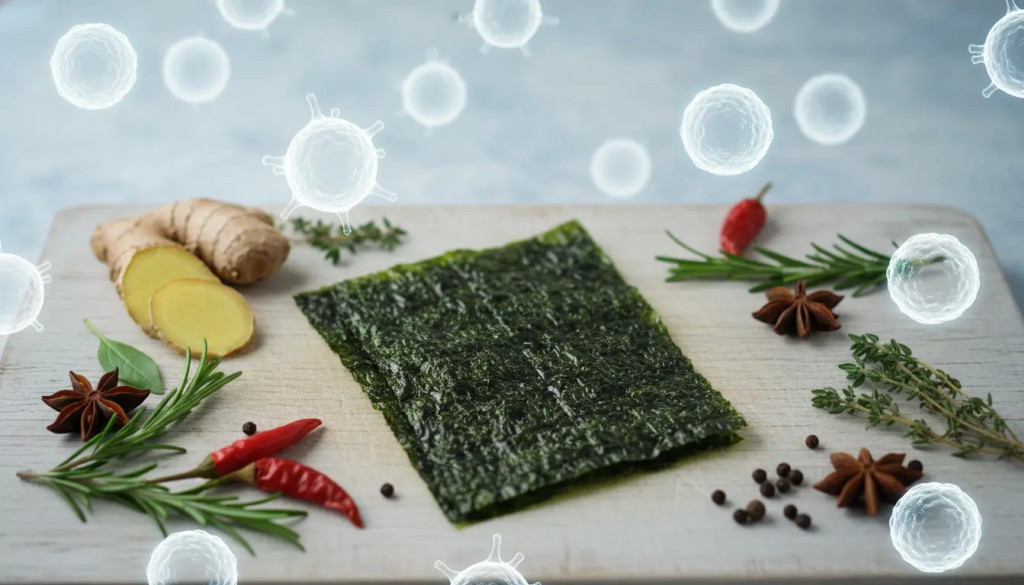
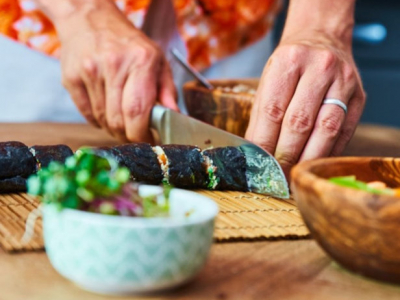
We often talk about living food on Biovie, sprouted seeds, superfoods... but today, I wanted to share with you a fascinating scientific discovery about an algae we all know: the Nori. You know, those dark green (even black when toasted) sheets that wrap your makis? Well, something remarkable happens in your body when you consume them. And honestly, when I discovered the recent studies on the subject, I understood why the Japanese consider this red algae as a treasure of their diet for centuries, and I am intimately convinced that it plays a role in their longevity and health.
We have been incorporating nori into our diet for years, long before understanding all the mechanisms behind its benefits. I was literally taken aback when I discovered these scientific aspects, while for us, it was the culinary interest that prevailed! Today, I invite you to dive together into the science that explains how this seaweed contributes to the normal functioning of your immune system. And believe me, it's exciting.
What is a macrophage and why should you be interested in it ?
Before getting to the heart of the matter, allow me to simply explain what the macrophages. It is fundamental to understand what follows.
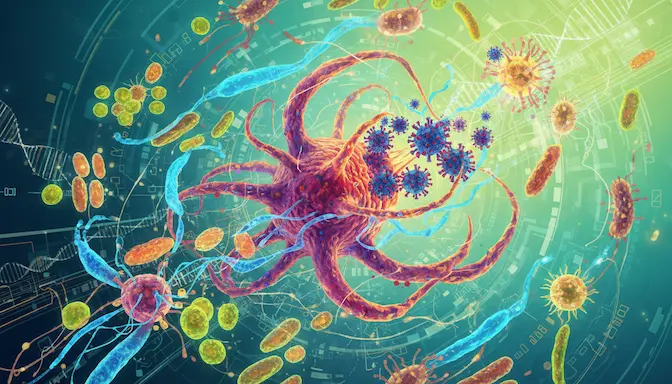
Imagine your immune system as a sophisticated army. In this army, macrophages play the role of frontline sentinels. These are large cells (their name comes from the Greek macros = big and phagein = to eat) whose mission is to patrol your body to identify and neutralize intruders: bacteria, viruses, abnormal cells, cellular debris...
As demonstrated by Wynn, Chawla, and Pollard in their review published in Nature In 2013, macrophages are remarkably plastic cells that constantly adapt to their tissue environment (Wynn and others., 2013). Specifically, when a macrophage detects a foreign element, it literally engulfs and digests it. But that's not all. It also sends alert signals to other immune cells to coordinate the defense response. These signals are the famous Cytokines which you may have heard of.
This is why the activity of your macrophages is so important: they are the ones that trigger and orchestrate a large part of your innate immune response, which acts immediately without needing to have previously encountered the aggressor.
And that's where the Nori and immunity enter the scene in a remarkable way.
What research teaches us about nori and immunity
In December 2017, a team of Korean researchers from the University of Ulsan published a study that truly changed our perspective on this. red algae. The study, published in the Journal of Medicinal Food, focused on the effects of extracts from Porphyra tenera (the scientific name of nori) on macrophages (Song and others., 2017).
The results are fascinating. The researchers have demonstrated that nori extract activates the immune response of the macrophages by stimulating a signaling pathway called NF-κB. I'll explain that to you simply.
The NF-κB mechanism explained in simple terms
Imagine NF-κB as a molecular switch present in your immune cells. Normally, this switch is in the "off" position. When the Porphyran When nori comes into contact with macrophages, it triggers a series of cascading reactions that switch this toggle to the "on" position.
Lawrence, in his review published in Cold Spring Harbor Perspectives in Biology, demonstrated that the NF-κB pathway is central to the regulation of inflammation and immunity (Lawrence, 2009). This signaling pathway controls the expression of hundreds of genes involved in the immune response.
Once activated, this mechanism stimulates the production of several types of cytokines:
IL-6 : it acts as a warning signal that mobilizes other immune cells
TNF-α : it contributes to the defense against pathogens
IFN-γ : it participates in the activation of the antiviral response
IL-10 : it helps regulate inflammation to prevent it from becoming excessive
What is particularly interesting in the study by Song and collaborators is that the researchers observed no toxicity at the tested doses. The Nori activates the defenses. without harming the body. This is exactly what we are looking for when we talk about natural immunomodulation.
Porphyran: the key compound of nori seaweed
The main factor responsible for these effects is the Porphyran. This sulfated polysaccharide is present only in red algae of the genus Porphyra. It is found nowhere else in the plant kingdom, which makes the truly unique nori to support your natural defenses.
Additional studies have confirmed the remarkable properties of porphyran. In 2015, Isaka and collaborators demonstrated its antioxidant and anti-inflammatory activities in a study published in theInternational Journal of Biological Macromolecules (Isaka and others., 2015). Jiang and his team had already demonstrated in 2012 that this compound regulates the production of nitric oxide in macrophages, a key mediator of inflammation (Jiang and others., 2012).
Most recently, in 2025, a comprehensive scientific review published by Kaur and colleagues synthesized all the data on immunomodulation and intestinal barrier support by porphyran (Kaur and others., 2025). This review confirms that porphyran has well-documented immunomodulatory, antioxidant, and prebiotic properties.
Frankly, when we put together all this research, we understand why populations that traditionally consume nori, like the Japanese, have particularly robust immune profiles.
Nori: A Concentrated Source of Nutrients that Support Immunity
Beyond porphyran, the NoriIs a true nutritional treasure chest. And many of these nutrients contribute precisely to the normal functioning of the immune system. MacArtain and his collaborators, in their review published in Nutrition Reviews, highlighted the exceptional nutritional value of edible seaweeds (MacArtain and others., 2007).
Complete proteins Dried nori contains between 30 and 50% protein, with a remarkable essential amino acid profile (Fleurence, 1999). These proteins provide the building blocks necessary for the synthesis of your immune cells.
Vitamin A : with more than 5,200 µg per 100g of dried nori, or more than 650% of the recommended daily intake, the Nori is an exceptional source of this vitamin that contributes to the normal functioning of the immune system and the maintenance of mucous membranes, your first barrier against external aggressions.
Vitamin C : present at a level of 39 mg per 100g, it also contributes to the normal functioning of the immune system and protects cells against oxidative stress. As demonstrated by Carr and Maggini in their meta-analysis published in Nutrients, Vitamin C plays a central role in supporting innate and adaptive immune functions (Carr & Maggini, 2017).
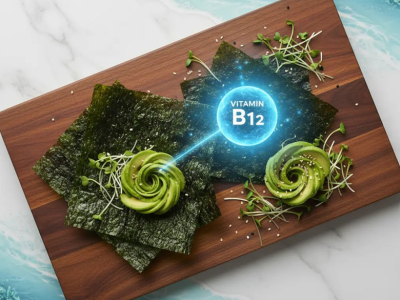
Vitamin B12 : it may be the most astonishing. The Nori contains approximately 29 µg of B12 for 100g, which is more than 1,000% of the recommended intake. This vitamin contributes to the normal functioning of the immune system and is involved in the formation of red blood cells. Watanabe and his collaborators have confirmed that nori is one of the few significant plant-based sources of biologically active B12 (Watanabe and others., 2014). It is a valuable ally for people following a plant-based diet.
Zinc : present in modest quantities (about 1 mg per 100g), it nevertheless contributes to the normal functioning of the immune system. Prasad, in his review published in Molecular Medicine, demonstrated that zinc is essential for the development and function of immune cells (Prasad, 2008).
Omega-3s : Nori contains EPA, a fatty acid that contributes to the normal functioning of the heart and has documented anti-inflammatory properties (Kumari and others., 2010).
There is also the Glutamine, an amino acid particularly important since it is estimated that 70% of our immune system is located in the intestinal area. Vighi and his collaborators confirmed in their review published in Clinical & Experimental Immunology that the gut plays a central role in immune homeostasis (Vighi and others., 2008). Glutamine contributes to the integrity of this intestinal barrier, the first line of defense of our body.
How to incorporate nori to support your natural defenses
Now that you understand the mechanisms, you are probably wondering how to concretely benefit from these. benefits of nori for immunity. Here is what experience and science teach us.
Quantities and frequency
Studies suggest that regular consumption is preferable to occasional and massive consumption. Specifically, 1 to 2 sheets of nori per day (approximately 8 to 15g of dried nori) allow for the regular intake of bioactive compounds into your body.
For a treatment approach, we generally recommend a period of 4 to 6 weeks, particularly relevant as autumn approaches and during winter, when our defenses are naturally more challenged.
The different forms of nori
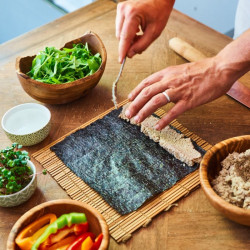
Dried nori sheets : it is the most well-known form, that of sushi. Choose sheets dried at low temperatures to preserve porphyran and vitamins as much as possible. This is a really important criterion that many consumers overlook. Our nori is dehydrated at low temperatures.
Fresh nori : It is stored in the refrigerator and offers an incomparable texture and flavor. It's my favorite form.
Nori flakes : very practical to sprinkle on your dishes, salads, soups, or even your toasts.
At Biovie, we offer organic nori sheets and the fresh organic nori, both from controlled sources. We work with producers who adhere to low-temperature drying, which preserves the integrity of the bioactive compounds.
Ideas for everyday life
Beyond makis, there are a thousand ways to incorporate nori in your diet :
A snack : Lightly toasted nori sheets make a crispy and nutritious snack.
In the soups : a few pieces of nori added to a miso soup or even a Western vegetable soup
As seasoning : nori flakes are an excellent substitute for salt on your dishes
In the salads : the crumbled nori adds an iodized touch and an interesting texture
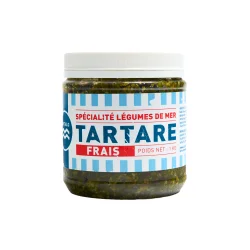
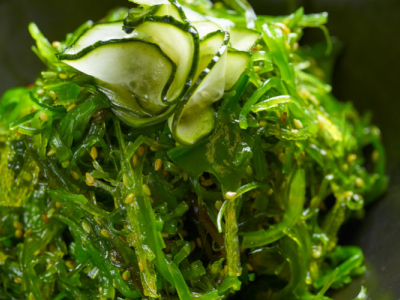
In the spreads : we love the dulse seaweed tartare, which can be enriched with crumbled nori to multiply the benefits
Complementarity with other algae
A question often comes up: the Is nori more interesting than spirulina? or chlorella to support immunity ?
The answer is that they are complementary. And this is what we have been recommending at Biovie for years: diversify your sources of algae rather than relying on just one.
Nori, through its Porphyran, primarily acts on theinnate immunity by activating the macrophages. It is the first line of defense, the one that acts immediately.
The spirulina, she has shown effects on theadaptive immunity, particularly on T and B lymphocytes. Hirahashi and his collaborators demonstrated in the Journal of Clinical Immunology that spirulina stimulates the production of antibodies and the activation of NK (Natural Killer) cells (Hirahashi and others., 2002). It is the second line of defense, the one that develops a memory of the aggressors.
By combining the two, you support both aspects of your immune system. This is an approach that we personally practice with Aurélie, and that we recommend to those who want to optimize their health.
As with any bioactive food, it is important to mention a few precautions.
The Nori contains iodine., an essential element for thyroid function but which can pose a problem in the case of pre-existing thyroid disorders (notably hyperthyroidism). Teas and his collaborators have shown that the iodine content of seaweed varies considerably depending on the species and cultivation conditions (Teas and others., 2004). If you are concerned, talk to your doctor before regularly incorporating nori into your diet.
Similarly, in the case of kidney failure or taking anticoagulants, it is advisable to consult a healthcare professional.
For pregnant or breastfeeding women, although nori is traditionally consumed without issue in many cultures, a prior medical consultation is recommended as a precautionary measure.
Finally, as with all seafood products, quality is paramount. Always prioritize Nori from controlled harvesting areas. Holdt and Kraan emphasized in their review the importance of controlling the origin and quality of the algae consumed (Holdt & Kraan, 2011).
The seaweed market: an underlying trend
For those interested in the context, the global edible seaweed market represented 19.09 billion dollars in 2024 and is expected to reach 28.29 billion in 2029, with an annual growth of over 8% (Mordor Intelligence, 2024). In France, 74% of seaweed consumption is intended for human food, and we remain in deficit in imports.
This growth can be explained by several underlying trends: the shift towards plant-based diets (algae are excellent alternatives to animal proteins), the pursuit of sustainability (algae have a very low environmental footprint), and of course, the growing interest in preventive and natural health.
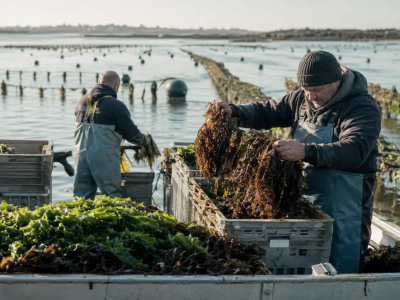
Brittany remains our region of excellence with hundreds of species recorded and 75,000 to 80,000 tons harvested each year. It is also in Brittany that we source all our fresh seaweed.
In summary
The Nori is not just a simple sushi sheet. It is a functional food whose full potential modern science is only beginning to uncover. Its Porphyran unique contributes to supporting the activity of your macrophages via the NF-κB pathway (Song and others., (2017). Its richness in vitamins A, C, B12, and zinc makes it a natural ally for the normal functioning of your immune system.
Immune systems are more vulnerable. natural defenses are the most in demand.
Here you go, I hope this article has shed light on this little-known superfood for you. If you wish to delve deeper into the topic of algae, I invite you to consult our complete guide on edible seaweed or our article on the 7 benefits of nori seaweed.
A varied and balanced diet and a healthy lifestyle are important.
Frequently Asked Questions
Does nori really contribute to the functioning of the immune system ?
Yes, scientific studies published notably in 2017 in the Journal of Medicinal Food have demonstrated that nori extracts activate macrophages via the NF-κB signaling pathway, thereby stimulating the production of cytokines involved in the immune response (Song and others., 2017). Additionally, nori contains several nutrients (vitamins A, C, zinc) that contribute to the normal functioning of the immune system.
How does nori porphyran affect macrophages ?
Porphyran, a sulfated polysaccharide found only in red algae of the genus Porphyra, triggers a cascade of cellular signaling. It stimulates the phosphorylation of specific proteins that activate the NF-κB pathway, which induces the production of cytokines such as IL-6, TNF-α, and IFN-γ, all involved in coordinating the immune response (Jiang and others., 2012).
How much nori to consume to support your defenses ?
The available data suggests that consuming 1 to 2 sheets of nori per day (8-15g) regularly provides the body with bioactive compounds. A course of 4 to 6 weeks at the approach of autumn or during winter is particularly relevant.
Is nori more beneficial than spirulina for immunity ?
The two are complementary rather than competitive. Nori, through its porphyran, primarily acts on innate immunity (macrophages), while spirulina more supports adaptive immunity (T and B lymphocytes) (Hirahashi). and others., Combining the two supports both aspects of the immune system.
When is it preferable to consume nori ?
As a preventive measure, consumption can begin in the fall to prepare the body for the winter season. Nori can be incorporated daily into the diet: as a snack, in soups, as a seasoning, or in spreads like seaweed tartare.
Is organic nori preferable for preserving its properties ?
Organic nori, especially when dried at low temperatures, better preserves porphyran and heat-sensitive vitamins. The quality of drying is a crucial criterion: overly aggressive drying degrades the bioactive compounds we are interested in. Holdt and Kraan emphasize the importance of controlling the origin and processing conditions of the seaweed (Holdt & Kraan, 2011).
Are there people who should avoid nori ?
Yes, certain precautions are necessary. People with thyroid disorders (particularly hyperthyroidism), kidney failure, or those taking anticoagulants should consult their doctor before regular consumption. For pregnant or breastfeeding women, a prior consultation is also recommended.
Biovie has been selling organic seaweed online since 2007: fresh or dried sea algae, hand-harvested in Roscoff with Bretalg, and freshwater microalgae (spirulina, chlorella, klamath) grown under controlled conditions. We are one of the few companies in France offering fresh seaweed in generous quantities, alongside dried formats that are easier to store and to dose day to day. To get started, go for dried seaweed, easy to add to everyday dishes in small amounts; for regular cooking and an unmatched taste, fresh seaweed in 1 kg packs works out cheaper per kilo. Discover the full range here, from kombu flakes to fresh spirulina in block form., 26
products
Song, J.H., Kang, H.B., Park, S.H., et al. (2017). Extracts of Porphyra tenera (Nori Seaweed) Activate the Immune Response in Mouse RAW264.7 Macrophages via NF-κB Signaling. Journal of Medicinal Food, 20(12), 1152-1159. DOI: 10.1089/jmf.2017.3939. PMID: 29243967. Disponible sur : https://pubmed.ncbi.nlm.nih.gov/29243967/
Isaka, S., Cho, K., Nakazono, S., et al. (2015). Antioxidant and anti-inflammatory activities of porphyran isolated from discolored nori (Porphyra yezoensis). International Journal of Biological Macromolecules, 74, 68-75. DOI: 10.1016/j.ijbiomac.2014.11.043. PMID: 25490731. Disponible sur : https://pubmed.ncbi.nlm.nih.gov/25490731/
Jiang, Z., Hama, Y., Yamaguchi, K. & Oda, T. (2012). Inhibitory effect of sulphated polysaccharide porphyran on nitric oxide production in lipopolysaccharide-stimulated RAW264.7 macrophages. Journal of Biochemistry, 151(1), 65-74. DOI: 10.1093/jb/mvr115. PMID: 21908549. Disponible sur : https://pubmed.ncbi.nlm.nih.gov/21908549/
Kaur, M., Kumar, M., Punia Bangar, S., et al. (2025). Porphyran from Porphyra spp.: A comprehensive review on extraction, characterization, biological properties and health-promoting applications. International Journal of Biological Macromolecules, 285, 138278. DOI: 10.1016/j.ijbiomac.2024.138278. PMID: 39645095. Disponible sur : https://pubmed.ncbi.nlm.nih.gov/39645095/
Hirahashi, T., Matsumoto, M., Hazeki, K., Saeki, Y., Ui, M. & Seya, T. (2002). Activation of the human innate immune system by Spirulina: augmentation of interferon production and NK cytotoxicity by oral administration of hot water extract of Spirulina platensis. International Immunopharmacology, 2(4), 423-434. DOI: 10.1016/S1567-5769(01)00166-700166-7). PMID: 11962722. Disponible sur : https://pubmed.ncbi.nlm.nih.gov/11962722/
Studies on iodine and the thyroid
Teas, J., Pino, S., Critchley, A. & Braverman, L.E. (2004). Variability of iodine content in common commercially available edible seaweeds. Thyroid, 14(10), 836-841. DOI: 10.1089/thy.2004.14.836. PMID: 15588380. Disponible sur : https://pubmed.ncbi.nlm.nih.gov/15588380/