







Summary
- Why iodine is essential for your thyroid and metabolism
- Wakame vs other seaweeds: comparison of iodine content
- Iodine deficiency in France: an underestimated reality
- How to use wakame to support your thyroid
- Important precautions and contraindications
- The health benefits of wakame beyond the thyroid
- Frequently Asked Questions
Wakame provides 130% of the recommended daily intake of iodine with just 1 gram of dehydrated seaweed, making it the ideal natural source of iodine to support the thyroid without the risk of excess. Unlike kombu, which can contain up to 10 times more iodine, wakame offers a balanced, safe intake that is easily integrated into daily life.
Honestly, when one is interested in thyroid health, one quickly encounters a paradox. On one hand, iodine is absolutely essential for the proper functioning of this small butterfly-shaped gland located at the base of the neck. On the other hand, too much iodine can become problematic. So, which seaweed should be chosen for the thyroid without taking risks? With Aurélie, after years of exploring the Scientific studies on algae and the thyroid, we have a clear answer: wakame.
In this article, I explain why this brown algae has become our daily ally, how to use it practically, and what precautions to take. You'll see, it's much simpler than you might think.
Why iodine is essential for your thyroid and metabolism
The role of iodine in the production of T3 and T4 hormones
Iodine is literally the fuel for your thyroid. Without this essential trace element, your thyroid gland simply cannot produce its hormones.
Here's how it works: your thyroid absorbs the iodine present in your blood to synthesize two fundamental hormones, thyroxine (T4) and triiodothyronine (T3). These complex names conceal extraordinary molecules that regulate a multitude of functions in your body. T4 contains four iodine atoms, while T3 contains three. No iodine, no thyroid hormones. It's as simple as that.
ANSES (National Agency for Food, Environmental and Occupational Health & Safety) recommends a daily intake of 150 µg of iodine for adults, and up to 200 µg for pregnant or breastfeeding women. These figures are not arbitrary: they correspond to what your thyroid needs to function normally.
The 8 metabolic functions regulated by the thyroid
Your thyroid is truly the conductor of your metabolism. When it functions well, everything goes well. When it slows down due to a lack of iodine, a cascade of inconveniences sets in.
Here are the main functions that your thyroid hormones help regulate:
-
Energy metabolism The thyroid is involved in the transformation of nutrients into energy that can be used by your cells. It partly determines whether you are more "sensitive to cold" or a "walking furnace."
-
Weight regulation T3 and T4 hormones play a role in the rate at which your body burns calories. A slowdown in thyroid function can contribute to weight gain despite having the same diet.
-
Cardiac function The heart is particularly sensitive to thyroid hormones, which play a role in regulating its rhythm.
-
Bone health The thyroid is involved in bone renewal and calcium metabolism.
-
Cognitive function : Concentration, memory, mental clarity... Thyroid hormones support brain functions.
-
Mood regulation : A link exists between thyroid function and emotional balance.
-
Skin and hair health : The quality of your skin, nails, and hair partly depends on your thyroid function.
-
Digestive function : Intestinal transit is also influenced by thyroid hormones.
This is why an adequate intake of natural iodine is so important. And this is why, at Biovie, we pay special attention to seaweeds like wakame, which represent a balanced and natural source of iodine.
Recognize the signs of iodine deficiency
How to know if your thyroid is lacking iodine? In reality, the symptoms of iodine deficiency are often vague and easily attributed to something else: stress, lack of sleep, "getting older"...
Signs that may suggest an iodine deficiency include:
- Persistent fatigue, even after a good night's sleep
- An unusual chill
- A difficult-to-explain weight gain
- Dry skin and brittle hair
- Difficulties with concentration and "mental fogs"
- A slowed transit
- A depressive trend
Obviously, these symptoms can have many other causes. But if you recognize yourself in several of them and your diet is low in natural sources of iodine (fish, seafood, seaweed), it might be worth discussing it with your doctor.

Wakame vs other seaweeds: comparison of iodine content
Comparison: wakame, kombu, dulse, nori, sea lettuce
Not all seaweeds are equal in terms of iodine content. This is crucial information that many people are unaware of. Some seaweeds are so concentrated that they can pose a problem if consumed without caution.
Here is a comparison of the main edible seaweeds (data from CEVA, the Center for the Study and Valorization of Seaweeds) (4):
- Kombu (Laminaria) : 1,500 to 3,500 µg of iodine per dry gram — or 1,000 to 2,300% of the RDI with 1g
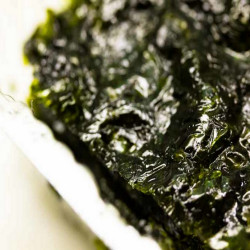
- Wakame (Undaria pinnatifida) : 350 to 500 µg per dry gram — or 130% of the RDA with 1g
€17.30
Organic Fresh Wakame Seaweed
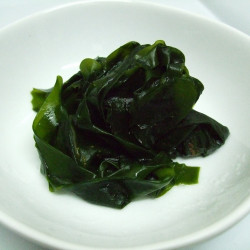
- Dulse (Palmaria palmata) : 150 to 300 µg per dry gram — or 100% of the RDI with 1g
€9.50
Back in stock on September 15
Organic Fresh Dulse Seaweed
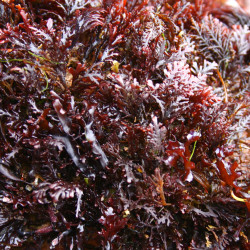
- Nori (Porphyra) : 30 to 50 µg per dry gram — or 25% of the RDA with 1g
€10.50
Organic Fresh Nori Seaweed
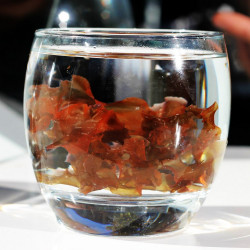
- Sea lettuce (Ulva lactuca) : 10 to 30 µg per dry gram — or 13% of the RDI with 1g
[p2b_142 ]
You immediately see the problem with kombu: a single small portion can easily exceed the safety limit set by the EFSA at 600 µg per day. Wakame, on the other hand, is in an ideal zone: rich enough to meet your needs, but not concentrated enough to risk excess.
Why wakame is the most balanced seaweed for the thyroid
If you are looking for a seaweed balanced in iodine to support your thyroid, wakame ticks all the boxes.
Firstly, its dosage is naturally calibrated. With approximately 420 µg of iodine per gram, a daily portion of 1g more than adequately meets your needs without ever reaching the upper safety limit. This is what I call an "iodine-rich seaweed without excess."
Secondly, wakame has a subtle and pleasant taste, quite different from the strong marine flavor of kombu. Many people who "don't like seaweed" are actually pleasantly surprised by the mildness of wakame. It is, in fact, the most consumed seaweed in Japan, particularly in the famous miso soup.
Thirdly, its bioavailability is excellent. The iodine contained in wakame is well absorbed by the body, unlike some dietary supplements whose absorption can be variable.
At Biovie, we offer certified organic wakame, responsibly harvested in Roscoff. It's truly our number one choice when asked which seaweed is best for the thyroid.
The Kombu Trap: When Too Much Iodine Becomes Problematic
Kombu deserves a moment of attention because it is the typical example of "too much of a good thing can be harmful."
This kombu seaweed very high in iodine owns many Benefits of kombu : richness in umami, mineral content, remarkable culinary properties. However, its iodine content, which can reach 3500 µg per gram in certain varieties, can be problematic for very regular use.
A study published in ScienceDirect in 2021 documented cases of thyroid dysfunction related to long-term excessive consumption of highly iodized seaweed (6). The individuals involved regularly consumed kombu-type seaweed without being aware of its exceptional iodine concentration.
Specifically, here is the iodine content of wakame vs kombu: kombu contains on average 8 to 10 times more iodine than wakame. This significant difference explains why wakame can be consumed regularly (3 to 4 times a week) while kombu should be reserved for occasional use and in very small quantities.

Iodine deficiency in France: a truly underestimated reality
The alarming figures of the WHO 2024
It is often thought that iodine deficiency is a problem of developing countries. In reality, this is far from being the case.
According to the latest data from the World Health Organization published in 2024, Nearly 2 billion people worldwide have an insufficient iodine intake (7).. And Europe is not spared: the WHO classifies France among the countries with a moderate iodine deficiency.
Even more concerning: 77% of pregnant French women are reportedly iodine deficient according to some national studies. Yet, iodine is absolutely crucial for the neurological development of the fetus. Even a slight deficiency during pregnancy can have consequences on the child's cognitive development.
These figures really caught my attention when I discovered them. How is it possible in a developed country like ours, with access to a varied diet ?
Who are the populations most at risk ?
Certain population groups are particularly at risk of iodine deficiency:
-
Vegetarians and vegans The main dietary sources of iodine are seaweed, fish, seafood, and dairy products. Without these foods, obtaining natural iodine on a vegan diet becomes problematic if not compensated with seaweed - however, vegans do not necessarily have this habit.
-
Pregnant and breastfeeding women Their iodine needs are increased by 30 to 50% to ensure the proper development of the baby.
-
People who limit salt The iodization of table salt is a public health measure, but those who reduce their salt intake for cardiovascular reasons lose this source of iodine.
-
Inhabitants of regions far from the sea Historically, mountain populations were the most affected by goiter, this enlargement of the thyroid gland linked to iodine deficiency.
-
People consuming a lot of goitrogenic foods Certain foods like cabbage, broccoli, or soy can interfere with the thyroid's use of iodine if consumed in large quantities.
Why iodized salt is no longer enough
Iodized salt was a major public health advancement in the 20th century. The addition of iodine to table salt significantly reduced cases of goiter and cretinism in Western countries.
But today, this strategy is showing its limitations. Several factors explain why iodized salt is no longer a sufficient natural iodized salt alternative:
-
Reducing salt consumption Public health recommendations rightly encourage us to reduce our salt intake. Less salt = less iodine.
-
The use of non-iodized salt : Sea salt, fleur de sel, Himalayan pink salt... These "trendy" alternatives are generally not iodized.
-
Food transformation : Industrial dishes rarely use iodized salt.
-
Bioavailability Iodine added to salt can partially volatilize during storage and cooking.
In light of these findings, seaweeds like wakame represent a particularly relevant supplement solution. This is indeed what we have been recommending at Biovie for years.
How to use wakame to support your thyroid (practical protocol)
Recommended dosages according to your situation
Let's get to the concrete details now. How much wakame per day is needed to effectively support your thyroid ?
Here are the dosages we recommend, based on the reference nutritional intakes (3):
-
General maintenance (adult) : 1g of dehydrated wakame, 3 to 4 times a week. This covers about 130% of the RDI in iodine with each intake, providing an excellent supply to maintain normal thyroid function.
-
Increased needs (pregnancy, breastfeeding) : 1 to 1.5g of wakame, 4 times a week. Important: always inform your doctor or midwife.
-
Strict vegan diet : 1g of wakame, 4 to 5 times a week, to compensate for the absence of animal sources of iodine.
-
Salt reduction : If you limit iodized salt for health reasons, wakame can become your main source of iodine. Same dosage as general maintenance.
This seaweed iodine dosage may seem low, and that's precisely the point. A teaspoon of wakame flakes or a small portion of rehydrated wakame is more than enough.
Ideal frequency: 3 to 5 times per week
Why 3 to 5 times a week rather than every day ?
Firstly, iodine is stored in the thyroid. Your body maintains a reserve that allows it to cope with variations in intake. Regular but not daily consumption is more than enough to maintain these reserves.
Secondly, this frequency gives you flexibility in your culinary organization. You don't have to eat wakame at every meal. Three, four, or five times a week is easy to incorporate without it becoming a constraint.
Thirdly, as a precautionary measure, this avoids any risk of overload. Even with a balanced seaweed like wakame, it is preferable not to saturate your body with iodine on a daily basis.
Preparation methods: salad, soup, flakes
Wakame lends itself to many preparations. Here are the three simplest ways to incorporate it into your diet:
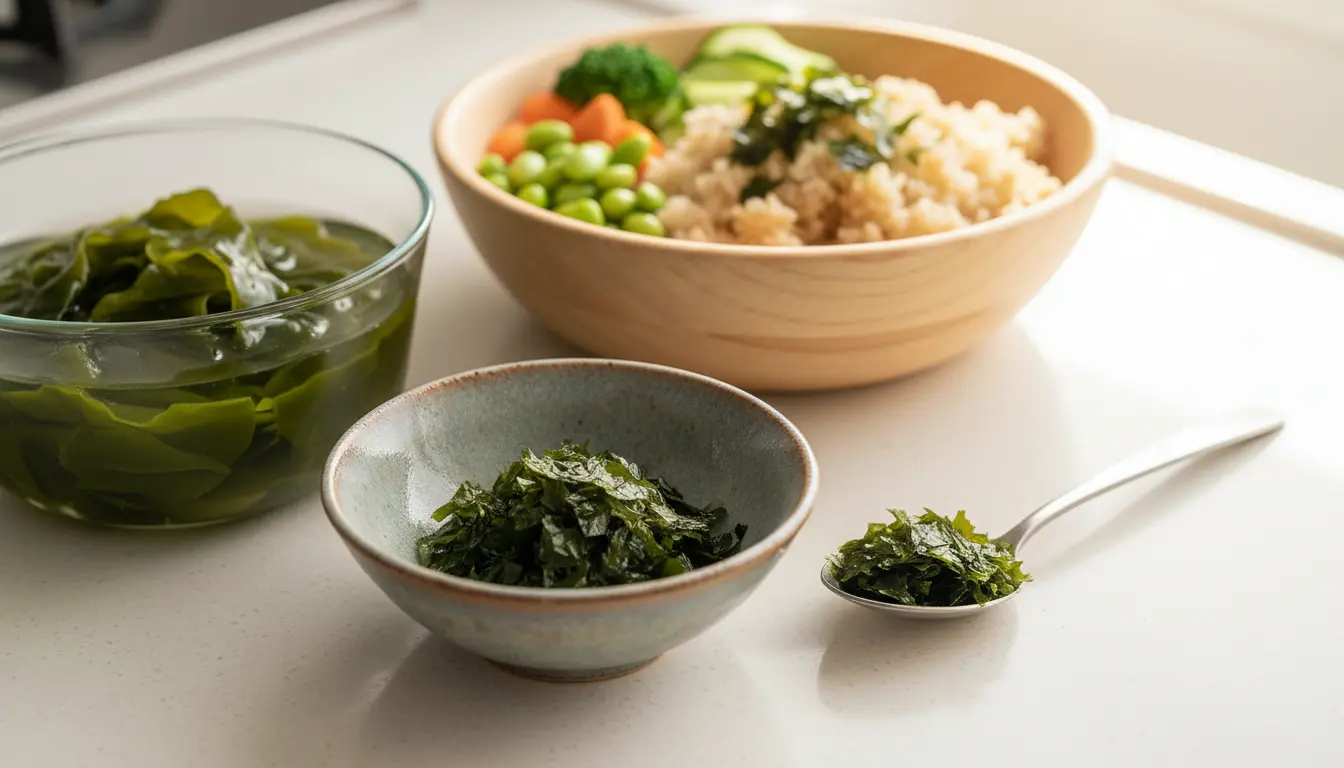
1. In salad (the classic) Soak 5g of dehydrated wakame in cold water for 5 minutes. It will triple in volume and regain its tender texture. Drain, season with a bit of soy sauce, sesame oil, and rice vinegar. Add sesame seeds. It's the famous "wakame salad" from Japanese restaurants, but fresher and less sweet !
2. In your soups and broths Add a pinch of dehydrated wakame directly into your soup at the end of cooking. It will rehydrate on its own. It's excellent in a miso soup, but also in a classic vegetable broth or a fish soup.
3. In sprinkle glitter (the most practical) It is truly the simplest solution for everyday use. Wakame flakes can be sprinkled on any dish: rice, pasta, vegetables, salads, eggs... The taste is subtle and adds a pleasant umami touch without overpowering the dish.
At Biovie, we offer these different formats so that everyone can find the one that suits them. Personally, I mainly use the flakes daily for their convenience.
Tip: how to adjust iodine content if necessary
Here is a tip that few people know: the soaking water of wakame contains some of the iodine. If you wish to slightly reduce the iodine intake (for example, if you are already consuming other sources of iodine), you can:
- Extend the soaking time to 5-10 minutes.
- Discard the soaking water rather than using it.
- Quickly blanch the wakame in boiling water
Conversely, if you want to maximize iodine intake, use wakame without prior soaking (directly in flakes) or incorporate the soaking water into your preparation.
Important precautions and contraindications
I value this section greatly because transparency is part of our values at Biovie. Regular consumption of wakame is excellent for most people, but there are situations where caution is necessary. The thyroid contraindications of wakame are real and should be known.
Hyperthyroidism and autoimmune thyroid diseases
If you suffer from hyperthyroidism (overactive thyroid), the consumption of wakame or any other source of iodine is generally not recommended. Additional iodine intake could worsen the situation.
For autoimmune thyroid diseases such as Hashimoto's thyroiditis or Graves' disease, the issue is more nuanced. Some studies suggest that an excess of iodine could stimulate thyroid autoimmunity in predisposed individuals (6). In these cases, it is imperative to seek the advice of your endocrinologist before any regular consumption of seaweed.
Note: The situation is different for hypothyroidism (underactive thyroid). If your hypothyroidism is related to an iodine deficiency, wakame can be beneficial. However, if it is of autoimmune origin (which is the most common case), caution is advised.
Interactions with treatments (Levothyrox®, amiodarone)
Some medications interact with iodine and require special precautions:
-
Levothyrox® and other thyroid hormone replacements : If you are undergoing this type of treatment, your iodine intake should remain stable. A sudden increase (for example, starting to regularly consume wakame) might require an adjustment to your treatment. Talk to your doctor about it.
-
Amiodarone : This medication used for certain cardiac arrhythmias contains a large amount of iodine itself. The addition of dietary sources of iodine is generally not recommended during this treatment.
-
Lithium : This medication used in psychiatry can affect thyroid function. The consumption of seaweed should be discussed with the prescribing doctor.
Pregnancy, breastfeeding, and special cases
Pregnancy and breastfeeding are periods when iodine needs are increased. Wakame can be an excellent dietary supplement during these times, BUT:
- Always inform your doctor or midwife about your consumption of seaweed.
- Respect the recommended dosages (1 to 1.5g, up to 4 times a week maximum)
- Absolutely avoid seaweeds that are very high in iodine, such as kombu.
For children, wakame can be gradually introduced from the age of 3, in small quantities (0.5g, twice a week).
Pre-operative period: why stop 15 days before
Here is a precaution that is often overlooked: if you need to undergo surgery, particularly on the thyroid or parathyroids, it is recommended to stop consuming iodine-rich seaweed at least 15 days before the operation.
Iodine can indeed interfere with certain preoperative examinations (notably scintigraphy) and temporarily alter thyroid function, which complicates the procedure.
The health benefits of wakame beyond the thyroid
Wakame is not limited to its iodine content. This seaweed has other remarkable nutritional benefits. For more details, I invite you to consult our Complete guide to edible seaweeds.
Fucoxanthin: the fat-burning antioxidant
Wakame contains a unique carotenoid pigment called fucoxanthin. This compound is the subject of numerous studies for its potential effects on fat metabolism (8).
Preliminary studies suggest that fucoxanthin may contribute to weight management by acting on adipose tissue. If the subject interests you, we have written a comprehensive article on the Fucoxanthin and weight loss.
This slimming aspect of wakame is in addition to its effect on thyroid metabolism. This is what we discuss in our article on the slimming properties of wakame. The wakame energy fatigue is therefore a sought-after double effect.
13 times more calcium than milk
Wakame is a remarkable source of calcium, with about 1300 mg per 100g of dried seaweed, which is 13 times more than milk. For people who do not consume dairy products, this is important information.
Of course, we don't eat 100g of wakame per day! But even with the recommended portions (1 to 2g), the calcium intake remains significant and helps diversify the sources of this essential mineral for bones.
Wakame also provides other minerals: magnesium, iron, zinc... It is truly a concentrate of marine micronutrients.
Fucoidans: Protective Polysaccharides
Fucoidans are sulfated polysaccharides found in brown algae such as wakame. These compounds are the subject of promising research for their antioxidant properties and their potential role in supporting the body's natural defenses (10).
Without making exaggerated promises (we remain cautious about health claims), let's simply say that wakame offers much more than iodine. It is a complete food that deserves its place in a varied and balanced diet.
To understand how these nutrients interact with our metabolism, our article on the Enzymes and energy metabolism provides additional insight.
Frequently Asked Questions
Which seaweed to choose for the thyroid ?
Wakame is the ideal seaweed for supporting the thyroid. With approximately 420 µg of iodine per gram (130% of the RDI), it provides a balanced intake without the risk of excess, unlike kombu which can contain up to 10 times more. For regular and safe consumption, wakame remains the best choice.
Does wakame help with weight loss ?
Wakame can contribute to weight management in two ways: its iodine supports thyroid metabolism (which helps regulate energy expenditure), and its fucoxanthin is being studied for its metabolic properties. Combined with a balanced diet and regular physical activity, it can be an ally in a weight management approach.
Are algae dangerous for the thyroid ?
Seaweed is not dangerous if consumed in moderation and with common sense. The main risk involves excess iodine with highly concentrated seaweeds like kombu. Wakame, with its moderate content, is safe for regular consumption (3-5 times a week) for individuals without pre-existing thyroid issues.
How much wakame per day ?
1 to 2g of dehydrated wakame, 3 to 4 times a week, is enough to meet iodine needs. This amounts to about a teaspoon of flakes or a small portion of wakame salad. There is no need to consume more.
Can iodine from seaweed be dangerous ?
The EFSA (European Food Safety Authority) sets the upper safety limit at 600 µg of iodine per day (5). With 1g of wakame providing about 420 µg, you remain well below this limit. The danger mainly concerns kombu (1500-3500 µg/g) or the overconsumption of concentrated iodine supplements.
How to easily eat wakame ?
Three simple ways: (1) In a classic salad after 5 minutes of rehydration, with a soy-sesame sauce. (2) Added at the end of cooking in your soups and broths. (3) As flakes to sprinkle directly on all your dishes, rice, pasta, vegetables... The flakes are truly the most convenient solution for everyday use.
What is the food richest in iodine ?
Brown laminar algae (kombu) are the richest foods in iodine, with 1500 to 3500 µg per gram. However, this concentration can be excessive for regular use. For a safe and balanced intake, prefer wakame (420 µg/g) or supplement with sea fish and seafood.
In summary
Wakame is truly the ideal seaweed to naturally support your thyroid. Its balanced iodine content, neither too low like nori nor excessive like kombu, makes it a safe choice for regular consumption.
With 1g of wakame a few times a week, you provide your thyroid with the fuel it needs to function normally, without ever risking excess. Additionally, you benefit from fucoxanthin, calcium, and fucoidans, compounds that make wakame much more than just a simple source of iodine.
At Biovie, we offer certified organic wakame, available in different formats to suit all uses: dehydrated for salads, in flakes to sprinkle on your daily dishes. It's truly one of our favorite seaweeds, which we have been using ourselves with Aurélie for years.
Discover our organic wakame →
A varied and balanced diet and a healthy lifestyle are important for your health.
Bibliographic references
(1) CIQUAL - Nutritional Composition Tables of Foods. ANSES, 2024. Available at: https://ciqual.anses.fr/
(2) Zimmermann MB, Boelaert K. Iodine deficiency and thyroid disorders. Lancet Diabetes Endocrinol. 2015;3(4):286-295.
(3) ANSES - Nutritional references for vitamins and minerals. Opinion of the French Agency for Food, Environmental and Occupational Health & Safety, 2021.
(4) CEVA - Center for the Study and Valorization of Algae. Data on the nutritional composition of edible algae, 2023.
(5) EFSA Panel on Dietetic Products, Nutrition and Allergies. Scientific Opinion on Dietary Reference Values for iodine. EFSA Journal. 2014;12(5):3660.
(6) Farebrother J, Zimmermann MB, Andersson M. Excess iodine intake: sources, assessment, and effects on thyroid function. Ann N Y Acad Sci. 2019;1446(1):44-65.
(7) World Health Organization. Iodine Deficiency - Global Status Report 2024. WHO Europe, 2024.
(8) Miyashita K, Nishikawa S, Beppu F, et al. The allenic carotenoid fucoxanthin, a novel marine nutraceutical from brown seaweeds. J Sci Food Agric. 2011;91(7):1166-1174.
(9) MacArtain P, Gill CI, Brooks M, Campbell R, Rowland IR. Nutritional value of edible seaweeds. Nutr Rev. 2007;65(12 Pt 1):535-543.
(10) Fitton JH, Stringer DN, Karpiniec SS. Therapies from Fucoidan: An Update. Mar Drugs. 2015;13(9):5920-5946.