




Here is an article that was very dear to me! With Aurélie, we consume wakame for years, and frankly, it's one of the easiest seaweeds to incorporate into daily life. You might already know it: it's the tender green seaweed found in the miso soup at Japanese restaurants. But did you know that the Benefits of wakame go far beyond just accompanying soup ?
Between its exceptional richness in calcium (13 times more than milk according to ANSES data), its documented effect on fat metabolism, and its remarkable content of natural iodine, this wakame seaweed is truly worth taking a closer look at. Specifically, I will explain why this algae has become a staple in our diet, how to choose it, prepare it, and most importantly, how to enjoy all its benefits safely.
What is wakame ?
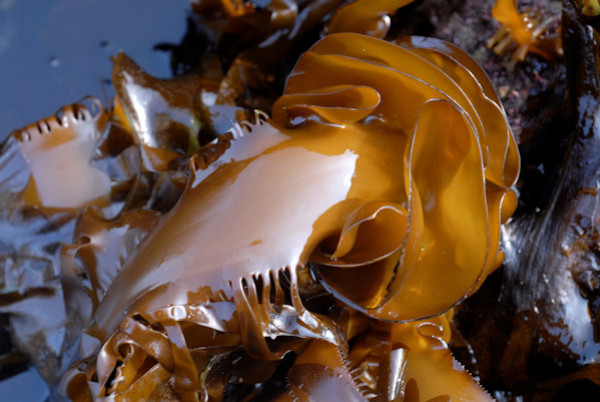
WakameUndaria pinnatifida) is an edible brown seaweed native to the cold seas of Asia. Don't be misled by its scientific name of "brown" seaweed: once on the plate, it displays a beautiful green color, tender and slightly translucent. This is what makes it so visually appealing.
In Japan, this wakame seaweed has been consumed for over 1,300 years. The earliest writings mentioning its use date back to the Nara period (710-794), where it was already considered a valuable food, reserved for the nobility and offered as a tribute to the emperor. Even today, Japan remains the world's largest consumer of wakame, with a central place in daily diet.
What is fascinating is that the inhabitants of Okinawa—one of the famous "blue zones" where there is an exceptional concentration of centenarians—traditionally consume seaweed, including wakame, almost daily. Obviously, longevity cannot be explained by a single food, but this observation has motivated numerous studies on the Benefits of wakame and algae in general.
In Europe, and particularly in Brittany, the cultivation of wakame has developed since the 1980s. The cold, nutrient-rich waters of the Breton coast provide ideal conditions for producing high-quality wakame, with the advantage of rigorous traceability and health control. To learn more about the different edible seaweeds available, we have written a comprehensive guide.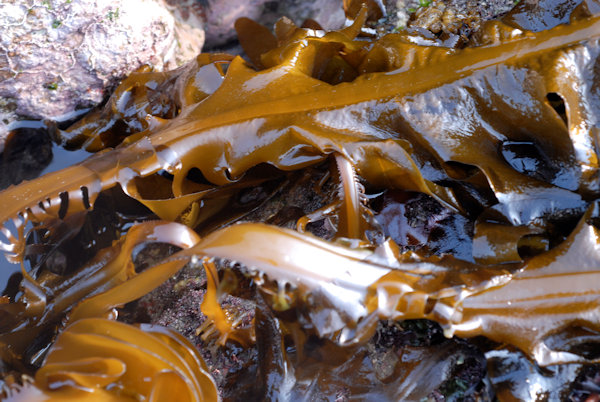
The 7 Proven Benefits of Wakame
1. An ally for the thyroid thanks to natural iodine
Wakame is naturally rich in iodine, a trace element essential for the proper functioning of the gland. thyroid. This regulates our metabolism, our energy, our body temperature, and many other vital functions. According to the Ciqual Table data (ANSES), dried wakame contains approximately 1,800 µg of iodine per 100g, making it one of the most concentrated natural sources.
In France, mild iodine deficiencies remain common, particularly among women of childbearing age. A moderate and regular consumption of wakame can help meet daily requirements (150 µg for an adult according to the EFSA), provided that the recommended quantities are respected.
2. An exceptional bone remineralization
Here is a figure that particularly struck me: wakame contains 13 times more calcium than milk with equal weight. Specifically, 100g of dried wakame provides about 1,300 mg of calcium, compared to 120 mg for cow's milk. Obviously, one does not consume 100g of wakame at once, but even a 5g portion significantly contributes to daily intake.
This calcium is accompanied by magnesium and vitamin K, two nutrients that promote its proper absorption and utilization by the body. This is known as nutritional synergy, and it is what makes whole foods more effective compared to isolated supplements.
3. Documented cardiovascular support
Research on wakame and cardiovascular health is promising. A study from the University of Tokyo (2023) observed that regular consumption of brown seaweed was associated with a 24% increase in resting energy expenditure among the participants. This metabolic activation could help maintain a healthy weight and, indirectly, preserve heart health.
Wakame also contains specific peptides and polysaccharides studied for their effects on blood pressure. Fucoidans, in particular, are soluble fibers unique to brown algae that are the subject of active research.
4. A wealth of protective antioxidants
Fucoxanthin, the pigment that gives wakame its characteristic hue, is a powerful antioxidant. Unlike traditional antioxidants like vitamin C or E, fucoxanthin has a unique chemical structure that allows it to act on multiple cellular mechanisms simultaneously.
Wakame also contains polyphenols and chlorophyll, creating a complete antioxidant cocktail. These compounds help neutralize free radicals responsible for cellular aging and numerous imbalances.
5. An asset for digestive health
The fibers of wakame, particularly alginates and fucoidans, have a unique characteristic: they form a gel upon contact with water. This gel coats the intestinal wall, promotes transit, and nourishes the good bacteria in the microbiota. If you are interested in intestinal health, you know that it is a fundamental pillar of overall well-being.
These soluble fibers also help slow down the absorption of sugars, which can aid in maintaining stable blood sugar levels after meals. A significant advantage for those who monitor their diet. To delve deeper into this topic, also discover the benefits of Kombu, another brown algae with similar properties.
6. A supply of quality plant-based proteins
With approximately 15 to 20% protein (on a dry matter basis), wakame is an interesting source of plant-based amino acids. Its protein profile is relatively complete, which is rare in the plant kingdom. For people reducing their consumption of animal proteins, it is a valuable supplement – to be combined with other sources such as legumes or spirulina.
7. A natural detox thanks to alginates
The alginates present in wakame have a fascinating ability: they can bind to certain heavy metals in the digestive tract and facilitate their elimination. This is why seaweeds are studied in the context of natural detoxification. However, caution is advised: this property requires choosing high-quality seaweeds from non-polluted areas to avoid achieving the opposite effect !
Wakame and Weight Loss: What Science Really Says
Let's talk frankly about this topic that interests many people: the wakame slimming, myth or reality ?
Fucoxanthin, the famous pigment in wakame, has been the subject of numerous studies in recent years. A particularly interesting study conducted by Hokkaido University (2023) followed participants for 16 weeks. The results showed a average reduction of 12% in visceral fat mass in the group regularly consuming brown algae rich in fucoxanthin, compared to the control group.
How does it work? Fucoxanthin appears to activate a protein called UCP1, which is present in brown adipose tissue. This activation increases thermogenesis – in other words, the body's ability to burn calories to produce heat. This mechanism would explain the 24% increase in resting energy expenditure observed in other studies.
Important: These results are promising, but wakame is not a miracle pill. Its effect on metabolism is part of a holistic approach: balanced diet, regular physical activity, quality sleep. Consider it an ally, not a standalone solution.
What is also interesting is the effect of wakame fibers on satiety. By swelling in the stomach, they provide a feeling of fullness that can naturally reduce portion sizes. Add to that a very low caloric density (about 45 kcal for 100g rehydrated) and you understand why wakame has its place in a weight management approach. weight loss.
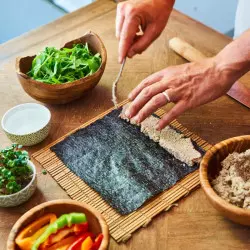
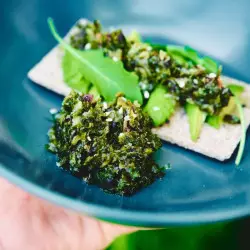
Photo extracted from our work "Cooking with seaweed"
Detailed nutritional composition
Here are the nutritional values of dried wakame, according to the Ciqual Table of ANSES (per 100g):
Macronutrients
- Energy: 306 kcal (but we consume only 5-10g maximum)
- Proteins: 16.7 g
- Carbohydrates: 39.6 g (including fibers: 32.7 g)
- Lipids: 2.6 g (including omega-3: 0.9 g)
Minerals (the stars of wakame)
- Calcium: 1,300 mg (162% of the RDI)
- Magnesium: 770 mg (205% of the RDI)
- Iron: 13.6 mg (97% of the RDI)
- Iodine: 1,800 µg (1,200% of the RDI – hence the importance of moderation)
- Potassium: 6 100 mg
Vitamins
- Vitamin A: 360 µg
- Vitamin K: 66 µg
- B vitamins: B1, B2, B9 (folates)
Specific bioactive compounds
- Fucoxanthin: Antioxidant pigment, studied for its action on metabolism
- Fucans: sulfated polysaccharides with immune properties
- Alginates: Gelling fibers, heavy metal chelating
These figures are impressive, but let's remember that a realistic portion of wakame is 5 to 10g of dried product. Nevertheless, it remains a remarkable nutritional concentrate, comparable to other superfoods like Dulse or the Nori.
Breton wakame: an industry born in the 1980s
Here's something few people know: Breton wakame is considered by many specialists, Japanese included, to be among the best in the world. That's not a marketing line, it's a matter of geography and rigour.
Roscoff, the north coast of Finistère
Wakame cultivation in France began in the late 1980s, around Roscoff. Conditions there are remarkably favourable: cold, nutrient-rich waters, stirred by powerful currents — exactly what the seaweed needs to develop firm, flavourful fronds. Harvesting takes place from March to June, when it reaches maturity.
We have worked for years with Breton producers, including Bretalg in Roscoff, whose facilities Aurélie and I have visited on several occasions. This is what allows us to guarantee complete traceability, from the growing rope to the plate.
Classified water, verified analyses
Breton wakame grows in waters classified A or B — the purest categories under European regulation — at depths of one to fifteen metres. Analyses show heavy metal levels well below regulatory thresholds, which is far from a minor detail: seaweed harvested in a polluted area accumulates them instead.
Organic certification adds four requirements: an uncontaminated harvesting area, no chemical treatment, full traceability, and regular checks by an independent body. These are the four points you should be able to verify when you buy wakame — the country of origin alone says nothing about water quality.
How to consume wakame daily
Dried wakame: the most convenient
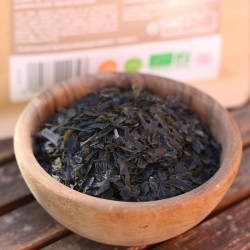
It is the most common and easiest form to preserve. The dehydrated wakame is presented in glitter. To prepare it:
- Pour the desired amount into a bowl (count 5g per person)
- Cover with cold or lukewarm water
- Let it rehydrate for 5 to 10 minutes – the wakame will triple in volume.
- Drain well and gently press to remove excess water.
- It's ready! Integrate it into your preparations.
Conservation: Dried wakame can be stored for several months (or even more than a year) in an airtight container, away from light and moisture. Once rehydrated, consume it within 2-3 days in the refrigerator.