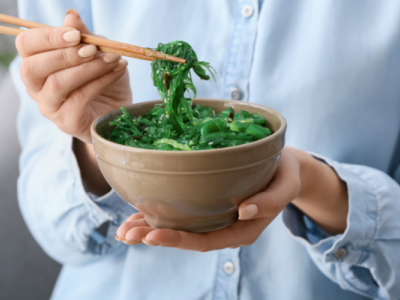
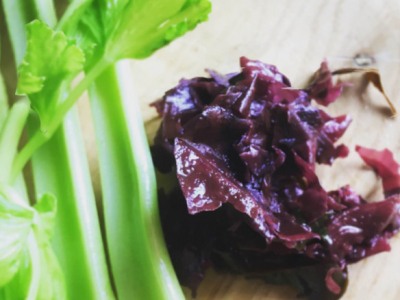
Direct answer: dulse, a plant-based source of omega-3 EPA
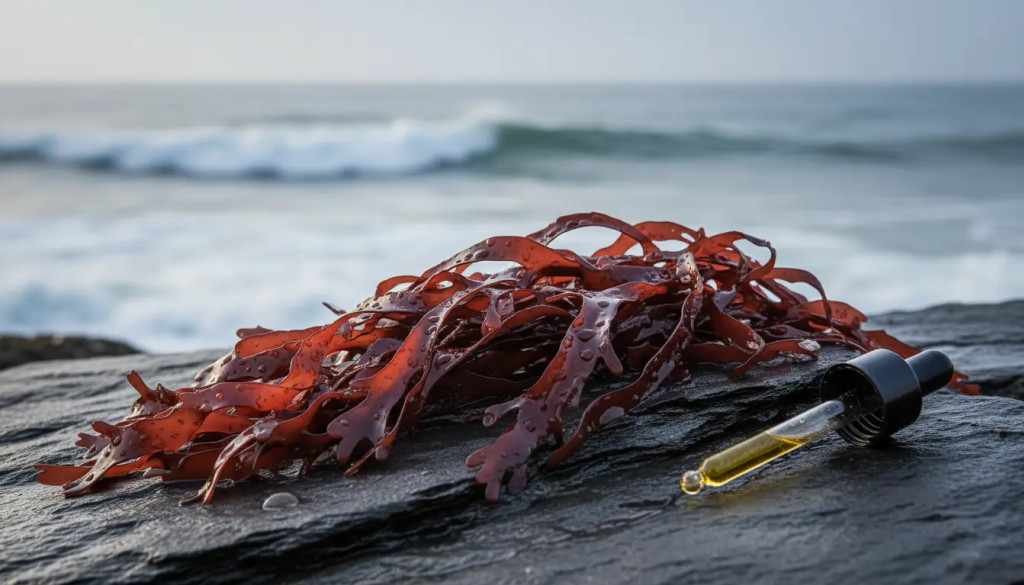
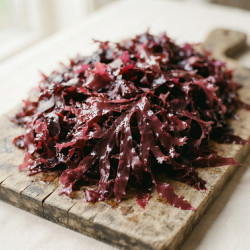
DulsePalmaria palmata) is a red algae naturally rich in EPA, one of the two essential omega-3s usually found in fish. This organic Breton algae provides a 100% plant-based alternative, free from mercury and without impacting fish stocks. Studies published in the Journal of Applied Phycology confirm that red algae have a favorable profile in polyunsaturated fatty acids, with a significant content of EPA (Fleurence and others., 1994). After 18 years of expertise in raw food, at Biovie we offer dulse harvested in Roscoff, dried at low temperature to preserve all its nutrients.
Here is an article that was very dear to my heart. We are looking for the best sources of omega-3 for our clients and for ourselves. And frankly, when you delve into the issue of fish, you come across some rather concerning realities. That's what I'm sharing with you today, along with a solution that truly excites us.
Why omega-3s from fish are problematic today
Mercury and heavy metals: the scientific data
We have been told for decades that we need to eat fish for omega-3s. It's true that fatty fish contain a lot of them. But here's the problem: these same fish also accumulate contaminants and heavy metals along the food chain because many of these molecules are liposoluble. This bioaccumulation is particularly true for large fish (tuna, swordfish, halibut...) that need to eat several kilos of fish to produce a kilo of flesh, and then to stay alive, so the bigger and older they are, the more heavy metals they contain in their tissues.
You can see this in the part of the documentary "Eating Our Way to Extinction," where the famous coach Anthony Robbins collapsed on stage due to mercury poisoning.
His doctor has formally advised him against continuing to consume fish so regularly.
The concentration of mercury in his blood was such that he initially suspected malicious poisoning to eliminate him, before realizing that the cause was actually his consumption of fish.
This anecdote left a mark on me. It shows that even with the best intentions, eating a lot of fish can become counterproductive. We needed to find another solution: a plant-based source of omega-3 like dulse.
The data from the European Union set the mercury limit in fish at 0.5 mg/kg. However, according to analyses published by the EFSA (European Food Safety Authority), some fish regularly exceed this limit (EFSA CONTAM Panel, 2012). Swordfish, for example, shows levels between 0.8 and 1.0 mg/kg. Bluefin tuna ranges between 0.5 and 0.8 mg/kg according to the data from the European regulation (European Commission, 2006).
Mercury is a powerful neurotoxin. It accumulates in the body over time, a phenomenon that scientists call bioaccumulation. A study published in Environmental Health Perspectives demonstrated that regular consumption of predatory fish significantly increases blood mercury levels, with a clearly established dose-response correlation (Mahaffey and others., 2004).
Overfishing: An Ecologically Unsustainable Model
Beyond health issues, there is the environmental question. According to the 2022 FAO report on the state of world fisheries, more than 34% of global fish stocks are currently overexploited (FAO, 2022). Fatty fish rich in omega-3, such as mackerel, herring, or sardines, are under increasing pressure.
In reality, we are facing a model that cannot last. Asking 8 billion human beings to eat fatty fish twice a week for their omega-3s is mathematically impossible without depleting the oceans.
Understanding Omega-3s: ALA, EPA, and DHA Explained Simply
Why your body needs direct EPA and DHA
Omega-3s are not all the same. There are three main forms:
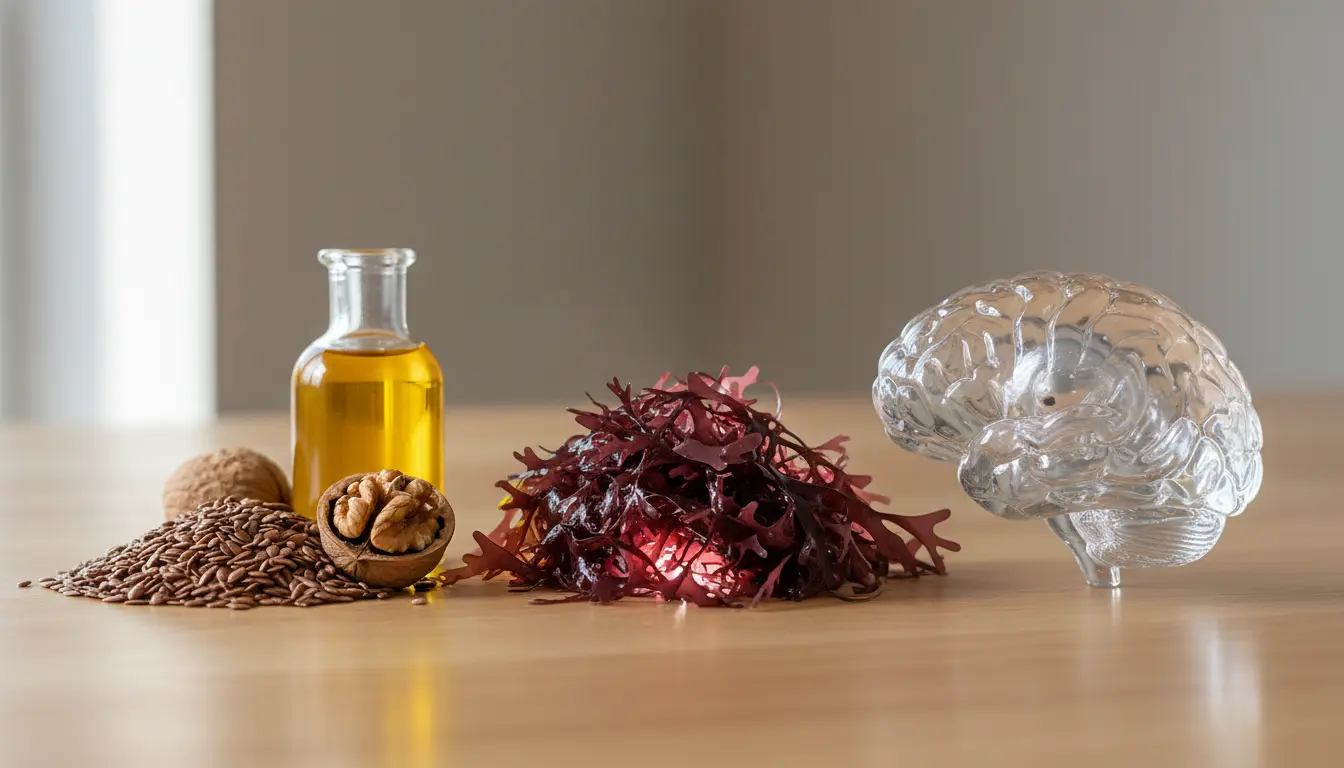
ALA (alpha-linolenic acid) : present in vegetable oils such as flaxseed, rapeseed, or walnuts
EPA (eicosapentaenoic acid) : contributes to the normal functioning of the heart according to the EFSA
DHA (docosahexaenoic acid) : contributes to the normal functioning of the brain and vision
EPA and DHA are the forms directly usable by the body. They are the ones that provide the cardiovascular and cerebral benefits that are sought after. A meta-analysis published in the Journal of the American College of Cardiology synthesized data from 20 clinical studies confirming the role of omega-3 EPA and DHA in maintaining normal cardiac function (Mozaffarian & Wu, 2011).
The conversion problem: only 5% of ALA becomes EPA
That's where things get complicated. In theory, our body can convert ALA into EPA and DHA. In practice, it's a different story.
The research published in Reproduction Nutrition Development show that the conversion rate of ALA to EPA is only 5 to 10% in adults. And for DHA? It drops to about 1 to 2% only (Burdge & Calder, 2005). In other words, even by consuming a lot of flaxseed or walnut oil, you will only obtain a fraction of the EPA and DHA that your body needs.
This is why vegetarians and vegans often have lower levels of EPA and DHA in their blood, as demonstrated by a comparative study published in The American Journal of Clinical Nutrition involving 232 participants (Rosell and others., 2005). Hence the major interest in a direct plant source of omega-3 EPA like dulse.
EFSA recommendations: how much omega-3 per day ?
The EFSA recommends an intake of 250 mg of EPA+DHA per day for the maintenance of normal cardiac function. For brain function and vision, 250 mg of DHA are also recommended (EFSA NDA Panel, 2010).
These quantities may seem modest, but let's remember that 90% of the French population is reportedly deficient in omega-3 according to ANSES data (ANSES, 2016). This is a public health issue that largely goes unnoticed.
DulsePalmaria palmata): the red algae that concentrates omega-3
Complete nutritional profile of Breton dulse
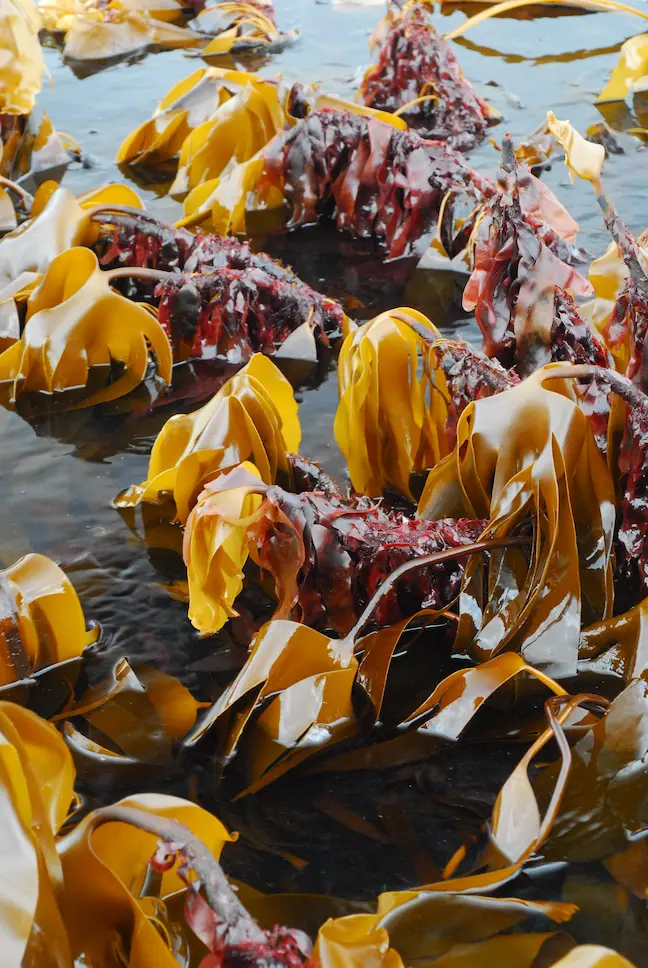
Dulse is a red seaweed found on the coasts of the North Atlantic, particularly in Brittany. It has been part of our diet for centuries in Northern Europe and the British Isles.
Its scientific name, Palmaria palmata, comes from the shape of its fronds which resemble an open hand (palm means palm in Latin). It is an algae that naturally grows on rocks in tidal zones.
What makes dulse particularly interesting is its exceptional nutritional profile. A study published in Journal of the Science of Food and Agriculture analyzed its composition in detail (Mæhre and others., 2014). In addition to omega-3 EPA, it contains:
20 to 35% protein according to dry weight, with all essential amino acids
Highly bioavailable iron : a 5g serving contributes to the daily intake
Vitamin B12 : rare in the plant kingdom, precious for vegetarians
Natural iodine : contributes to the normal functioning of the thyroid
EPA content: what scientific studies demonstrate
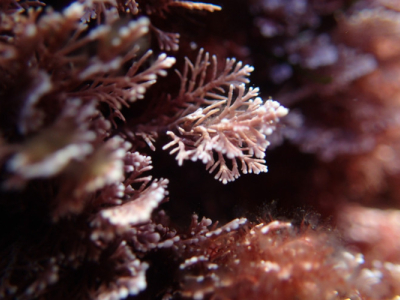
Let's get to the heart of the matter. Red algae like dulse have a particularly interesting fatty acid profile. A study published in the Journal of Applied Phycology analyzed the lipid composition of 11 species of algae from the Breton coasts and confirms the significant presence of EPA in Palmaria palmata (Fleurence and others., 1994).
Concretely, how is this possible? Algae are the primary producers of omega-3 in the marine food chain. They are the ones that synthesize EPA and DHA, which fish then accumulate by consuming them. A review published in Biochemistry Explain clearly this mechanism of polyunsaturated fatty acid biosynthesis in algae (Harwood & Guschina, 2009).
In reality, by eating omega-3-rich seaweed like dulse, you go directly to the source. You bypass the fish intermediary, along with all the risks of heavy metal contamination.
Health bonus: complete proteins, bioavailable iron, and vitamin B12
Dulse has a protein content comparable to soy, making it a valuable supplement for people reducing their consumption of animal products. These proteins are complete, meaning they contain the eight essential amino acids that our body cannot synthesize.
For iron, red algae stand out with a bioavailability superior to that of terrestrial plants, as demonstrated by a study published in the Journal of Agricultural and Food Chemistry (García-Casal and others., 2007). The natural presence of vitamin C in dulse further enhances this absorption.
As for vitamin B12, it is a recent discovery that has caused quite a stir in the scientific community. While this vitamin is almost absent from the plant kingdom, certain algae contain it in bioactive form. A study in the Journal of Nutritional Science and Vitaminology confirmed the presence of bioavailable B12 in Palmaria palmata (Watanabe and others., 2002), the scientific name for Dulse.
Dulse is nothing new nutritionally, and that's worth remembering whenever the word "superfood" comes up. The earliest documented traces of its consumption date back roughly 1,400 years, on the coasts of Ireland and Scotland, where it was dried on rocks and eaten as is, much like a snack today. It has also long featured in Icelandic and Breton cuisine.
Beyond the omega-3s covered above, it's a complete mineral profile that it brings, because it concentrates what seawater contains. It's notably well supplied in magnesium, calcium and iron - for the latter, the content exceeds that of spinach several times over on an equal dry-weight basis, a comparison worth taking with a grain of salt but useful as an order of magnitude.
What really decides whether people adopt it, though, is taste. Dulse has a flavour close to hazelnut, slightly peppery, far less marine than its origin might suggest - it's the seaweed we recommend starting with when iodine puts people off. It works very well in salads, sauces and soups, and makes seaweed tartares that surprise guests.
Organic dulse vs. algae oil supplements: what's the difference ?
Schizochytrium sp.: the microalgae in omega-3 capsules
When we talk about algae omega-3, we often think of dietary supplements. Most of these products use oil extracted from a microalgae called Schizochytrium sp. This microalga is cultivated in a fermenter and allows for obtaining an oil that is very concentrated in DHA.
It is an approach that has its merits. It allows for high DHA intake with only a few capsules per day. The dietary supplements market in France is expected to reach 2.9 billion euros in 2024 according to Synadiet, and the plant-based segment is experiencing a growth of 8.9% per year (Synadiet, 2024).
But frankly, swallowing capsules is not our philosophy at Biovie.
Whole food vs capsule: the advantage of nutritional synergy
With Aurélie, we have been defending for 18 years the principles of living food. The idea is simple: eat whole, minimally processed foods that retain all their nutritional vitality.
An algae oil capsule is a processed product. The oil has been extracted, refined, and encapsulated. It contains only the omega-3s, isolated from the rest of the nutrients.
Dulse is a complete food. When you eat dulse, you benefit from the synergy of all its components: proteins, minerals, fibers, vitamins, and of course omega-3 EPA. This nutritional synergy does not exist in a capsule.
A study published in Proceedings of the Nutrition Society has furthermore demonstrated that nutrients consumed in the form of whole foods are often better absorbed and utilized by the body than in isolated form-a concept called "food synergy" (Jacobs & Tapsell, 2013).
The Living Food Approach: Our Philosophy at Biovie
The Nutritional benefits of seaweed are numerous and go well beyond a simple supply of omega-3s. Edible seaweeds provide soluble fibers that nourish the gut microbiota. They contain polysaccharides with recognized prebiotic properties, as confirmed by a review published in Marine Drugs (O'Sullivan and others., 2010).
At Biovie, our organic fresh dulse from Roscoff and our convenient daily dulse flakes are dried at low temperatures (below 42°C) to preserve all of their nutrients. This is a choice we made from the start, out of conviction.
Beyond omega-3: copper, dulse's forgotten trace element
Omega-3s are why people come to dulse. They're not the only reason to stay. It's particularly rich in copper, a trace element rarely talked about and one that's missing more often than people think in diets low in seafood.
Copper contributes to the normal transport of iron in the body, to normal connective tissue formation, and to the protection of cells from oxidative stress. It's also what allows iron to actually be used: without enough copper, iron supplementation falls short - a point we cover in detail in our article on plant-based iron.
The advantage of finding it in a whole food rather than a capsule is the same as for omega-3s: it arrives together with the seaweed's other minerals, in proportions nobody needs to calculate. A tablespoon of dried dulse on a salad is enough to provide a useful amount, as part of a varied and balanced diet and a healthy lifestyle.
How to incorporate dulse into your daily routine for your omega-3s
How much dulse per day to meet your needs ?
The question often arises. In addition to a balanced diet that includes oils rich in plant-based omega-3s (rapeseed, walnut, flax), consuming 2 to 5 grams of dehydrated dulse per day is a good goal.
It is an easy quantity to achieve. 5 grams of dulse flakes is about a tablespoon. You can sprinkle it on your dishes, add it to your soups, or mix it into your salads.
Specifically, here's how we use dulse daily with Aurélie:
As a condiment : Sprinkle 1 to 2 pinches of dulse flakes on your eggs, vegetables, soups, or salads. Its slightly iodized taste enhances the dishes without overpowering them.
Rehydrated in salad : Soak the dehydrated dulse for 5 minutes in cold water. It regains its supple texture and can be mixed into a salad with rapeseed oil and lemon.
In tartares and pestos : Dulse adds an incomparable marine note to raw preparations.
For those who want to go further, I invite you to discover our seaweed tartare with hazelnuts recipe. This is a dish that we regularly serve at home. It combines dulse, sea lettuce, and nori with roasted hazelnuts, olive oil, and a few capers.
The result looks like fish tartare, without the fish. It's amazing. Our guests are often surprised when we reveal that it's 100% plant-based.
For choose from the different edible seaweeds, our guide will help you find your way. Each type of seaweed has its own specific characteristics and preferred uses in cooking.
FAQ - Your questions about dulse and omega-3
Do algae contain as much omega-3 as fish ?
Algae are the primary source of omega-3 EPA and DHA in the marine food chain. Fish accumulate them by consuming algae and phytoplankton. By eating algae directly, such as dulse, you go to the source, bypassing the fish and avoiding the risk of heavy metal contamination. Scientific studies confirm that red algae have a favorable EPA profile (Fleurence). and others., 1994).
Is dulse a good source of plant-based omega-3s ?
DulsePalmaria palmata) is a red algae particularly rich in EPA, one of the two essential omega-3s. The analyses published in the Journal of the Science of Food and Agriculture confirm that red algae have a favorable fatty acid profile, with a notable content of EPA (Mæhre and others., 2014). Our Biovie dulse, harvested in Brittany and dried at low temperatures, preserves these valuable nutrients.
How to get enough omega-3 without eating fish ?
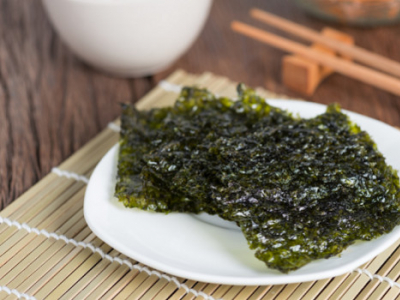
Three options are available to you: regularly consume edible seaweeds rich in EPA such as dulse or nori, take algae oil supplements (microalgae). Schizochytrium), or combine the two approaches. The EFSA recommends 250 mg of EPA+DHA per day for normal heart function (EFSA NDA Panel, 2010). A varied and balanced diet combining algae and vegetable oils rich in ALA (rapeseed, walnut, flaxseed) helps meet these needs.
Why avoid fish for omega-3s ?
Three main reasons: firstly, the mercury that large fish (tuna, swordfish) accumulate in their tissues, with levels that can exceed regulatory limits (European Commission, 2006). Secondly, overfishing, which threatens 34% of fatty fish stocks (FAO, 2022). Thirdly, other pollutants (PCBs, dioxins, microplastics) that contaminate the fish. Algae cultivated or harvested in controlled areas avoid these problems.
What is the difference between EPA and DHA ?
EPA (eicosapentaenoic acid) contributes to the normal functioning of the heart and has properties studied by research in connection with inflammation (Mozaffarian & Wu, 2011). DHA (docosahexaenoic acid) contributes to the normal functioning of the brain and the maintenance of normal vision (EFSA NDA Panel, 2010). Red algae like dulse are rich in EPA, while microalgae of the type Schizochytrium provide more DHA.
How much dulse to eat per day for omega-3 ?
In addition to a balanced diet that includes oils rich in plant-based omega-3s, consume 2 to 5 grams of dehydrated dulse per day. You can add it directly to your dishes as a condiment, or rehydrate it for 5 minutes for your salads and tartares. This amount easily fits into daily eating habits.
Are omega-3s from algae well absorbed by the body ?
Scientific studies confirm that the bioavailability of omega-3 from algae is equivalent to, or even greater than, that from fish. A study published in the Journal of the American Dietetic Association compared the absorption of omega-3 from algae oil and fish oil, showing similar results (Arterburn and others., 2008). The fatty acids from algae are present in the form of natural triglycerides, the form best absorbed by the body.
In summary
Here you go, I hope this article has shed light on this alternative that fascinates us. Dulse represents a coherent solution for those who are looking to maintain a good intake of omega-3 without the drawbacks of fish.
For my part, having been vegan since 1992 and after all these years of exploring the most relevant nutritional solutions, I am convinced that algae have a major role to play in our diet. Not as a miracle food, but as a valuable component of a varied and balanced diet.
If you wish to try, our organic fresh dulse from Roscoff or our dulse flakes are an excellent starting point. To try it is to adopt it !
A varied and balanced diet and a healthy lifestyle are important. The beneficial effect of omega-3 EPA and DHA on heart function is achieved by a daily intake of 250 mg.
Bibliographic references
ANSES (2016). Actualisation des repères du PNNS : révision des repères de consommations alimentaires. Rapport d'expertise collective. Agence nationale de sécurité sanitaire de l'alimentation, de l'environnement et du travail, Maisons-Alfort.
Arterburn, L.M., Oken, H.A., Hall, E.B., Hamersley, J., Kuratko, C.N., & Hoffman, J.P. (2008). Algal-oil capsules and cooked salmon: nutritionally equivalent sources of docosahexaenoic acid. Journal of the American Dietetic Association, 108(7), 1204-1209. https://doi.org/10.1016/j.jada.2008.04.020
Burdge, G.C., & Calder, P.C. (2005). Conversion of α-linolenic acid to longer-chain polyunsaturated fatty acids in human adults. Reproduction Nutrition Development, 45(5), 581-597. https://doi.org/10.1051/rnd:2005047
EFSA CONTAM Panel (2012). Scientific Opinion on the risk for public health related to the presence of mercury and methylmercury in food. EFSA Journal, 10(12), 2985. https://doi.org/10.2903/j.efsa.2012.2985
EFSA NDA Panel (2010). Scientific Opinion on the substantiation of health claims related to eicosapentaenoic acid (EPA), docosahexaenoic acid (DHA), docosapentaenoic acid (DPA) and maintenance of normal cardiac function. EFSA Journal, 8(10), 1796. https://doi.org/10.2903/j.efsa.2010.1796
FAO (2022). The State of World Fisheries and Aquaculture 2022: Towards Blue Transformation. Food and Agriculture Organization of the United Nations, Rome. ISBN 978-92-5-136364-5. https://www.fao.org/documents/card/en/c/cc0461en
Fleurence, J., Gutbier, G., Mabeau, S., & Leray, C. (1994). Fatty acids from 11 marine macroalgae of the French Brittany coast. Journal of Applied Phycology, 6, 527-532. https://doi.org/10.1007/BF02182406
García-Casal, M.N., Pereira, A.C., Leets, I., Ramírez, J., & Quiroga, M.F. (2007). High iron content and bioavailability in humans from four species of marine algae. Journal of Nutrition, 137(12), 2691-2695. https://doi.org/10.1093/jn/137.12.2691
Jacobs, D.R., & Tapsell, L.C. (2013). Food synergy: the key to a healthy diet. Proceedings of the Nutrition Society, 72(2), 200-206. https://doi.org/10.1017/S0029665112003011
Mæhre, H.K., Malde, M.K., Eilertsen, K.E., & Elvevoll, E.O. (2014). Characterization of protein, lipid and mineral contents in common Norwegian seaweeds and evaluation of their potential as food and feed. Journal of the Science of Food and Agriculture, 94(15), 3281-3290. https://doi.org/10.1002/jsfa.6681
Mahaffey, K.R., Clickner, R.P., & Bodurow, C.C. (2004). Blood organic mercury and dietary mercury intake: National Health and Nutrition Examination Survey, 1999 and 2000. Environmental Health Perspectives, 112(5), 562-570. https://doi.org/10.1289/ehp.6587
Mozaffarian, D., & Wu, J.H.Y. (2011). Omega-3 fatty acids and cardiovascular disease: effects on risk factors, molecular pathways, and clinical events. Journal of the American College of Cardiology, 58(20), 2047-2067. https://doi.org/10.1016/j.jacc.2011.06.063
O'Sullivan, L., Murphy, B., McLoughlin, P., Duggan, P., Lawlor, P.G., Hughes, H., & Gardiner, G.E. (2010). Prebiotics from marine macroalgae for human and animal health applications. Marine Drugs, 8(7), 2038-2064. https://doi.org/10.3390/md8072038
Rosell, M.S., Lloyd-Wright, Z., Appleby, P.N., Sanders, T.A., Allen, N.E., & Key, T.J. (2005). Long-chain n-3 polyunsaturated fatty acids in plasma in British meat-eating, vegetarian, and vegan men. The American Journal of Clinical Nutrition, 82(2), 327-334. https://doi.org/10.1093/ajcn/82.2.327
Synadiet (2024). Rapport annuel du marché des compléments alimentaires 2024. Syndicat National des Compléments Alimentaires, Paris.
Watanabe, F., Takenaka, S., Kittaka-Katsura, H., Ebara, S., & Miyamoto, E. (2002). Characterization and bioavailability of vitamin B12-compounds from edible algae. Journal of Nutritional Science and Vitaminology, 48(5), 325-331. https://doi.org/10.3177/jnsv.48.325