






Every late summer raises the same question: what to do with figs when the tree gives more than you can eat fresh. These squares are a delicious answer, somewhere between the fig bar of childhood and a homemade cereal bar. A thick layer of spiced fig paste slips between two sheets of almond dough, and the whole thing cuts into clean squares once firm. Two options depending on your equipment: a few hours in the dehydrator for a firmer, drier result, or simply a stint in the fridge or freezer if you do not have one.
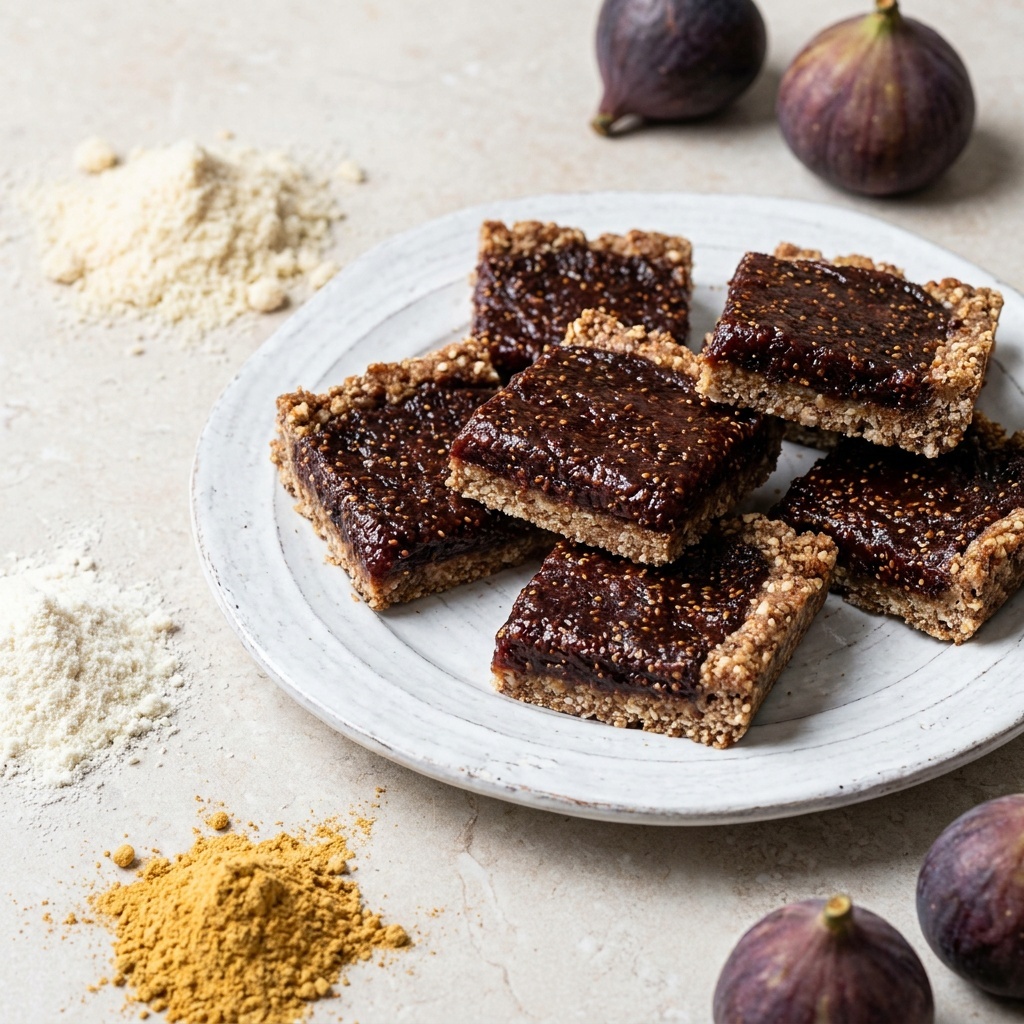
Fresh fig squares

Share this article
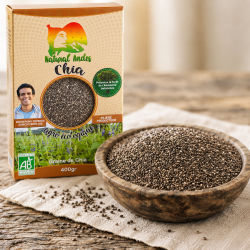
Organic and fair trade Chia Seeds
€6.50 BACK IN STOCK IN EARLY OCTOBER
Ingredients
Biscuit base
- 350 g raw almond meal
- 110 g coconut flour
- 25 g lucuma powder
- 1 tsp Himalayan pink salt
- 1/2 tsp ground cinnamon
- 1 tsp vanilla powder
- 60 ml honey (up to 80 ml if the dough stays dry)
- 140 g pitted medjool dates (about 20 to 25 dates)
Fig paste
- 900 g fresh figs, stems removed
- 1 tbsp raw honey
- 1 tsp ground cinnamon
- 1 tsp Himalayan pink salt
- 1/2 tsp ground ginger
- 1 tsp vanilla powder
- 1 tbsp cold-pressed virgin coconut oil
- 40 g chia seeds (up to 55 g if the paste stays runny)
Method
- Blend all the dry base ingredients in a food processor to combine them well.
- Add the vanilla and the honey, then blend again until smooth.
- Add the dates and blend until a soft dough forms. Divide it into two equal parts and shape two balls.
- Roll out each ball between two sheets of baking paper, to make two squares the size of a dehydrator tray. Add a little almond meal if the dough sticks too much. Set aside.
- For the fig paste, blend the fresh figs until they break down.
- Add all the remaining ingredients except the coconut oil and the chia seeds, then blend well.
- Stir in the coconut oil and blend until you have a thick paste. Transfer to a bowl.
- Add the chia seeds and fold them in gently. Leave to rest for about 5 minutes, the time they need to swell and bind the paste.
- If you are dehydrating: lay one dough square on a tray, spread all the fig paste in a thick, even layer, then cover with the second square. Trim the uneven edges, score squares with a knife and dehydrate for about 2 hours. Then flip onto a rack and dehydrate for another 2 hours before separating the squares.
- If you are not dehydrating: cut the squares directly on the worktop, place them on a tray and leave them to firm up for about an hour in the freezer, or several hours in the fridge, before serving.
Tip
Figs vary enormously in water content depending on variety and ripeness: that is why the quantity of chia seeds is given as a range. Wait out the five minutes of resting before judging, the paste thickens a great deal during that time. Keep the skins on if your figs are organic and well washed, they add colour and character. Without dehydration, these squares are at their best within 24 to 48 hours. With dehydration, they keep considerably longer but lose a little of their softness.
The full range Sprouted seeds
46 products
Discover the full range
FAQ: your questions about fresh fig squares
How do you make an easy fresh fig cake?
The simplest version needs no baking at all. Blend nuts and dates into a dough that holds together, spread it over the bottom of a tin, then cover it with fresh figs blended and bound with chia seeds. A few hours in the fridge is enough to firm everything up. The advantage: the figs keep their fresh perfume, which cooking tends to turn into jam.
When are fresh figs in season?
In France, the main season runs from August to October, peaking in September. Some so-called biferous varieties give a first small crop in late June, called the breba fig, then a far more abundant second one in late summer. Outside that window, what you find comes from the southern hemisphere or from greenhouses, with far less developed flavour. Better then to fall back on rehydrated dried figs.
What is the difference between a green fig and a red fig?
These are different varieties, not stages of ripeness. Figs with green or blond skin, such as the Blanche d'Argenteuil, have pale flesh and a milder, almost honeyed taste. Figs with purple or black skin, such as the Violette de Solliès, have bright red flesh and a franker, more fragrant taste. For a well-coloured fig paste, the latter give a more striking result.
Why eat figs in the evening?
It is an old habit rather than a rule: the fig is a sweet, filling fruit that satisfies well at the end of the day. Nothing requires you to eat it in the evening rather than at any other time, and its natural sugars make it just as good an afternoon snack. The real criterion remains ripeness: a fig picked at the right moment, soft under the finger, is better to eat and to enjoy, whatever the hour.
Share this article