Vegan Seaweed Tarama: Raw, Protein-Rich, and Tofu-Free Recipe
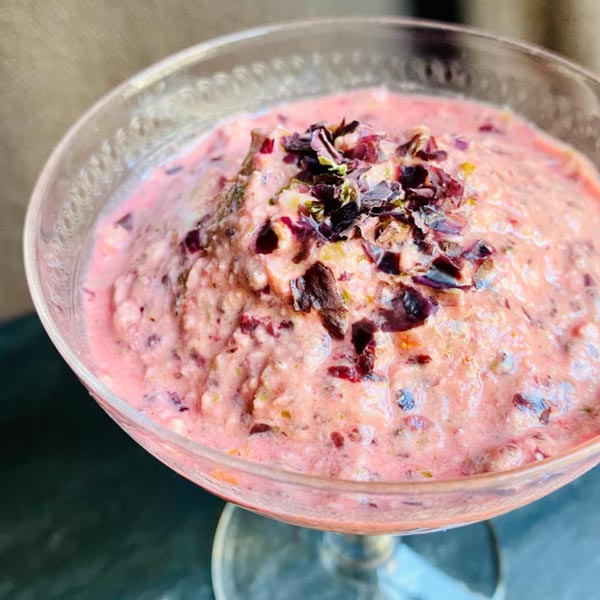
Tarama, this creamy pink spread of Greek origin, is traditionally made from smoked cod roe. Good news: it is entirely possible to prepare a vegan tarama that is impressive, without any animal products, thanks to Breton seaweed. Our raw plant-based tarama recipe replaces fish with a mix of dulse, nori, and sea lettuce, and replaces bread with soaked cashews. The result? A creamy, iodine-rich spread packed with plant proteins, ready in 10 minutes.
Unlike most vegetarian tarama recipes you’ll find online - almost all based on smoked tofu and white beans - this 100% raw version focuses on the nutritional benefits of seaweed and nuts. An appetizer that combines indulgence with living food.
Our Raw Vegan Tarama Recipe (without tofu, no cooking)
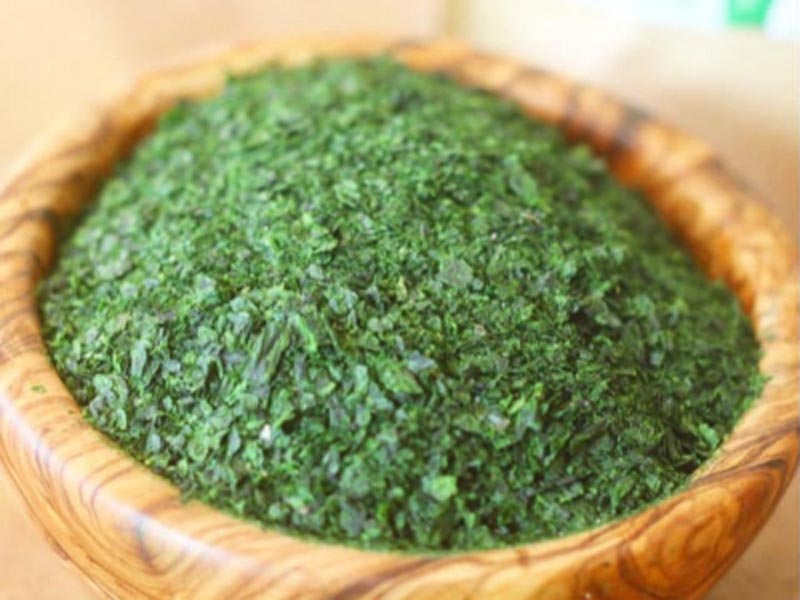
This vegan tarama recipe is prepared in 10 minutes, without cooking. The creamy base is achieved with pre-soaked cashews, a technique from living food that activates enzymes and improves digestibility. The dehydrated seaweed provides the characteristic iodine flavor of tarama, while raw beetroot gives it that beautiful natural pink color - without any coloring.
Ingredients (for 4 people)
70 g of organic cashew nuts, previously soaked for 4 to 6 hours in water
1 teaspoon of chia seeds, soaked for 10 minutes in a little water
1 small raw beetroot, diced (for color)
1 sun-dried tomato
5 cl of filtered water
The juice of half a lemon
Freshly ground pepper
Step-by-step Preparation
Prepare the ingredients: Drain and rinse the soaked cashew nuts. Ensure the chia seeds have formed a gel (10 minutes of soaking is sufficient).
Blend: Place all the ingredients in a blender or food processor. Blend until you achieve a smooth and creamy texture. If the mixture is too thick, add a splash of water.
Taste and adjust: Adjust the seasoning to your taste (more lemon for acidity, more seaweed for a marine flavor).
Refrigerate: Transfer to a bowl, cover, and place in the refrigerator for at least 30 minutes. The vegan tarama will firm up as it cools and the flavors will develop.
Serve: Serve in a nice bowl, drizzle with olive oil, and sprinkle with sprouted seeds or fresh dill.
Tips and Variations
More umami: Add 30 g of smoked tofu for a stronger tarama (non-raw variant).
Nut-free: Replace cashew nuts with soaked sunflower seeds - the result is just as creamy, as in our sprouted sunflower hummus.
Festive version: Serve the vegan tarama on buckwheat blinis, cucumber slices, or endive leaves. Discover other holiday appetizer ideas.
Storage: 3 days in the refrigerator in an airtight container. Remove 10 minutes before serving.
Why this recipe is more nutritious than classic tarama
Traditional tarama is mainly composed of oil (often refined rapeseed) and fish roe - a product high in sodium and cholesterol. Our vegan tarama with seaweed and cashew offers a significantly more interesting nutritional profile.
The cashew nuts provide 18 g of protein per 100 g, magnesium (292 mg/100 g, about 70% of the recommended daily intake), and unsaturated fatty acids beneficial for the cardiovascular system (source: Ciqual ANSES Table).
The chia seeds are one of the best plant sources of omega-3 (ALA), with about 20% of their weight in essential fatty acids. They also contain 34% fiber and 16% complete proteins. A meta-analysis published in Nutrition & Metabolism in 2024 (Coelho et al.) confirms that chia consumption improves cardiometabolic markers.
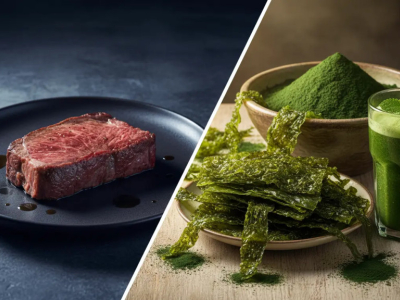
As for seaweed, they concentrate minerals that are difficult to access in a regular diet. The dulse seaweed contains as much protein as soy (20 to 35% of dry matter), iron, calcium, and iodine. Nori offers about 40% protein and is one of the rare plant sources of vitamin B12, although its bioavailability is still being studied. Discover all the benefits of nori seaweed.
As Marinella C., a Biovie customer, highlights: "The seaweed tartare is a pure marvel, so important for the thyroid. An exceptional nutritional contribution."
Breton seaweed: the secret of our vegan tarama
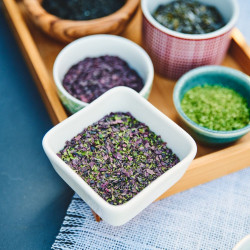
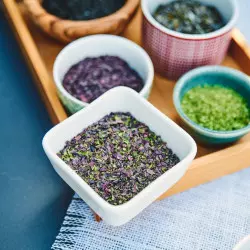
What fundamentally differentiates this vegan tarama from other plant-based versions is the seaweed. While most recipes rely on smoked tofu to mimic the marine taste, we use a mix of three Breton seaweeds dehydrated at low temperature (<42 °C) to preserve all their nutrients.
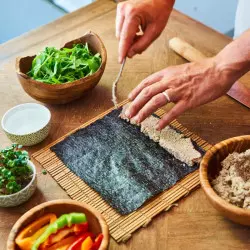
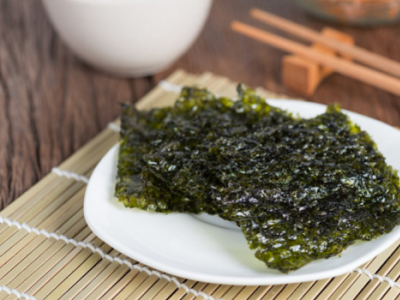
Nori (Porphyra): a star of raw appetizers, it provides the characteristic umami taste and a protein richness comparable to some legumes.
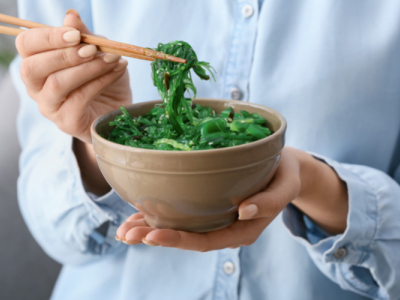
Sea lettuce (Ulva): a green seaweed with a mild and iodized flavor, 8 to 10 times richer in vitamin C than an orange (source: Université Bretagne Sud).
It is this combination that gives the tarama its oceanic flavor, without any seafood. To delve deeper into the subject, check out our complete guide to seaweed and microalgae.
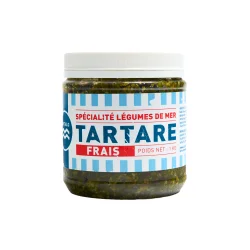
Florence D., a Biovie customer, shares: "I have been ordering from Biovie for years, my fresh seaweed to make my Seaweed Tartare, Nori sheets for my Sushi... I have always been delighted with the quality of the products."
Barbara W., another loyal customer, recommends: "Sea lettuce for excellent tartares with capers, olive oil, and pickles: a delight packed with protein."
This plant-based tarama is suitable for many occasions. Here are some ideas to showcase it during your appetizers.
Festive Appetizer: Serve it in a ceramic bowl, surrounded by warm buckwheat blinis, breadsticks, and raw vegetable sticks (carrots, celery, radishes).
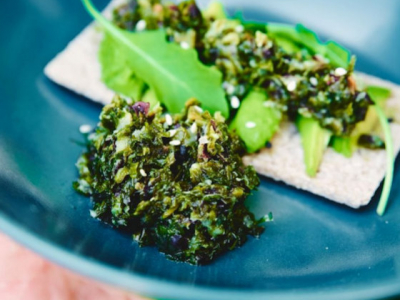
Vegan Brunch: Spread it on whole grain sourdough toast, with sprouted seeds and a few capers.
Picnic: Take it in a glass jar with flaxseed crackers - a protein-rich and easy-to-carry dip.
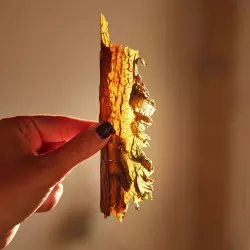
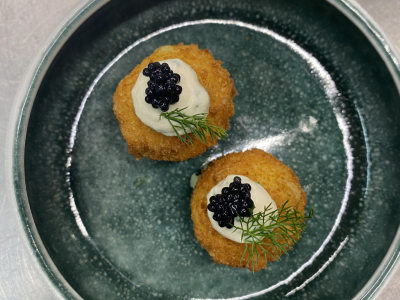
Elegant Starter: Arrange a quenelle of vegan tarama on a crispy nori leaf, garnished with dill and a lemon zest.
FAQ - All About Vegan Tarama
Is tarama vegetarian?
No, traditional tarama is made from smoked cod roe, an animal product. Therefore, it is neither vegetarian nor vegan. However, it is entirely possible to prepare a plant-based tarama by replacing fish roe with Breton seaweed (dulse, nori, sea lettuce) which naturally provide the characteristic iodized and marine taste of tarama.
What is the composition of traditional tarama?
Traditional tarama mainly consists of smoked and salted cod roe (about 40%), rapeseed oil, breadcrumbs (wheat flour, water, salt, yeast), concentrated lemon juice, and sometimes preservatives (E211). Some industrial versions also contain colorants to achieve the pink color. Our plant-based version replaces all these ingredients with cashew nuts, dehydrated seaweed, chia seeds, and raw beetroot.
How to give tarama a fish taste without fish?
Marine seaweeds like dulse and nori naturally provide an iodized and marine taste reminiscent of seafood products. It is the richness in iodine and aromatic compounds of the seaweeds that creates this oceanic flavor. A teaspoon of dehydrated seaweed mix is enough to recreate the characteristic taste of tarama, without any animal product.
Can you make vegan tarama without tofu?
Yes, and that is precisely the originality of our recipe. The creamy base is obtained thanks to cashew nuts soaked for 4 to 6 hours, which give a smooth and velvety texture once blended. It is an ideal alternative for people allergic to soy or who wish to avoid processed products like tofu.
Is vegan tarama healthy?
Vegan tarama with seaweed and cashew nuts has a remarkable nutritional profile. Cashew nuts provide 18 g of protein per 100 g and magnesium. Chia seeds supply essential omega-3s and fiber. Seaweeds concentrate iron, iodine, calcium, and vitamin B12. All without cholesterol, preservatives, and artificial colorants.
How long does homemade vegan tarama last?
Homemade vegan tarama keeps for 3 days in the refrigerator in an airtight container. For optimal flavor, take it out of the fridge 10 minutes before serving to regain its creaminess. It is not recommended to freeze it as the texture might be altered upon thawing.
At Biovie, our dried seaweed is dried at a low temperature (40 °C) to preserve its nutrients, and it goes straight into a dish without any long soaking: wakame (iodine, calcium), nori (protein, B12, perfect for sushi), kombu (potassium, fucoidan), dulse (iron, potassium) and sea lettuce (iron, calcium). To get started, nori sheets are the easiest to use; to season your everyday dishes, the dehydrated gourmet mix combines several varieties in one box; curly wakame is ideal for travel thanks to its light, compact format. Between wakame, dulse and sea lettuce, it is best to start with wakame or sea lettuce, both mild in taste, before moving on to dulse, which has a stronger, more iodine-rich flavour., 10
products
“Seaweeds are the key to this recipe. When I started working with Breton seaweeds over 15 years ago, I immediately understood their potential to replace marine flavors in plant-based cuisine. This vegan tarama is the perfect illustration of what living food can offer: taste, nutrition, and respect for the oceans. With Aurélie, in our book Seaweeds for Everyday Use - awarded the Gourmand World Cookbook Award and the National Academy of Cuisine Prize - we wanted to show that seaweeds are much more than a condiment: they are a superfood accessible to everyone.” - Eric Viard, founder of Biovie.
Disclaimer: The information presented in this article is provided for informational purposes only and does not constitute medical advice. Consult a qualified healthcare professional before making any significant changes to your diet or supplementation. As part of a varied and balanced diet and a healthy lifestyle.