Button mushrooms are at their peak in autumn, and they lend themselves beautifully to a raw version of the great appetizer classic. Nothing goes to waste: the stalks, removed to make room for the stuffing, are blended with pine nuts, basil, spinach, garlic and lemon juice. The result is a thick stuffing somewhere between pesto and tapenade, into which a little chopped bell pepper is folded at the end for crunch and color. Once the caps are filled, the dehydrator does the rest: it softens the mushrooms, concentrates their woodsy flavor and gives them a melting, almost confit texture, all while keeping them raw. Served warm, they disappear in minutes.
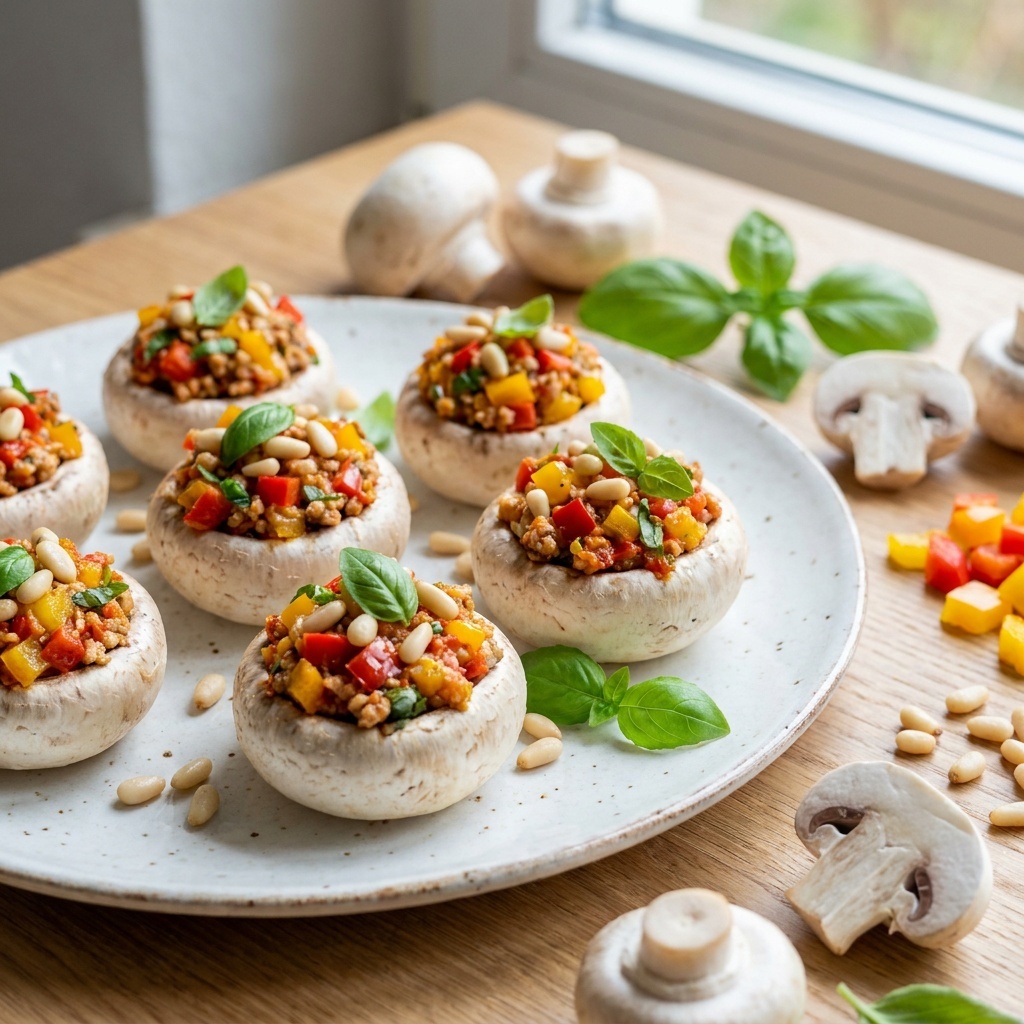
Raw stuffed mushrooms with pine nuts and basil
Share this article

Organic activated whole almonds
€18.90 In stock
Ingredients
- 20 small, very fresh button mushrooms
- 45 g red or yellow bell pepper, in pieces (green is too bitter here)
- 90 g pine nuts, or failing that activated almonds soaked for 8 hours
- 1 to 2 garlic cloves
- 15 g fresh basil, packed (a generous handful), or fresh cilantro
- 15 g baby spinach leaves, packed
- 15 ml lemon juice (1 tablespoon)
- 3 g sea salt (1/2 teaspoon)
Method
- Clean the mushrooms with a dry cloth or paper towel, without running them under water. Remove the stalks by gently twisting them off.
- Set the caps aside, hollow side up.
- Put the mushroom stalks in the food processor with the pine nuts, garlic, basil, spinach, lemon juice and salt. Blend until coarsely chopped, like a thick pesto.
- Transfer the stuffing to a bowl.
- Put the bell pepper in the processor and pulse a few times to chop it finely without turning it into a purée. Add it to the stuffing and stir with a spoon.
- Fill each cap generously with the stuffing.
- Place them on the dehydrator trays and dry for 1 hour 30 at 55 °C, then lower to 42 °C and continue for 3 to 24 hours depending on the texture you want: tender after a few hours, concentrated and melting after a night.
- Serve straight from the dehydrator, still warm.
Tip
The first phase at 55 °C doesn't warm the stuffing as much as the air: the mushrooms, full of water, stay well below that temperature as long as they are sweating, which speeds up drying without cooking them. For a smaller, more intense bite, extend the dehydrating until the mushrooms are well shrunken. Without a dehydrator, you can serve them raw, simply stuffed and left for an hour in the fridge: they will be crunchier, but just as tasty. Any leftover stuffing spreads well on vegetable sticks or raw crackers.
The full range Oilseeds, nuts, seeds
Fair trade tiger nut from Niger, Amazon nuts from Bolivia, activated buckwheat from Brittany, and activated oilseed purées made in Alsace by Kaly: this range brings together oilseeds and seeds of raw quality, most of them soaked then dehydrated at low temperature (activation). To get started with activation, an activated almond or hazelnut purée is easier to use than a whole oilseed you have to soak yourself. For everyday raw cooking, tiger nut (whole, sliced or as a purée) comes in several formats suited to different uses, from homemade plant milk to crunchy snacks., 20 products
Discover the full range

FAQ: your questions about raw stuffed mushrooms
How do you stuff raw mushrooms?
Choose very firm button mushrooms whose cap is still closed over the gills, clean them dry, then gently twist out the stalks to make a cavity. Fill each cap with a stuffing thick enough to hold: fresh cheese, a nut cream or, as here, a pesto of pine nuts, herbs and blended mushroom stalks. Simply spoon the stuffing in and serve chilled, or warm in the dehydrator.
Which mushrooms can be eaten raw?
The button mushroom is the most commonly eaten raw, in salads or carpaccio, along with its brown and portobello cousins. Very fresh, firm porcini can also be enjoyed in thin slices. On the other hand, many wild mushrooms, such as morels, absolutely must be cooked, and foraging should only be done with certain identification. When in doubt, stick to cultivated mushrooms from the shop.
How do you prepare raw mushrooms?
The most important thing is to choose them very fresh, firm and unblemished, then clean them without soaking: a damp cloth or a small brush is enough, because they absorb water like a sponge. Then trim the earthy end of the stalk, and slice them thinly, stuff them or marinate them for a few minutes in lemon and olive oil to tenderize them. The lemon also keeps them from turning dark.
Share this article