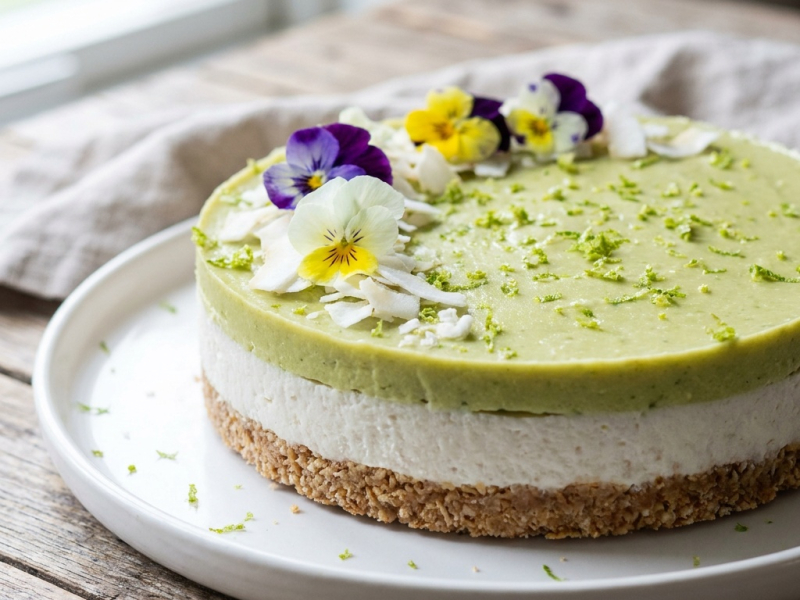


Light, silky and free from any colouring, this cake owes the pretty purple shade of its base to a single spoonful of crushed blueberries. With no nuts, it suits anyone who avoids them, while staying very creamy thanks to the flesh of a young coconut. Lime zest brings the freshness that balances the sweetness of the cream.
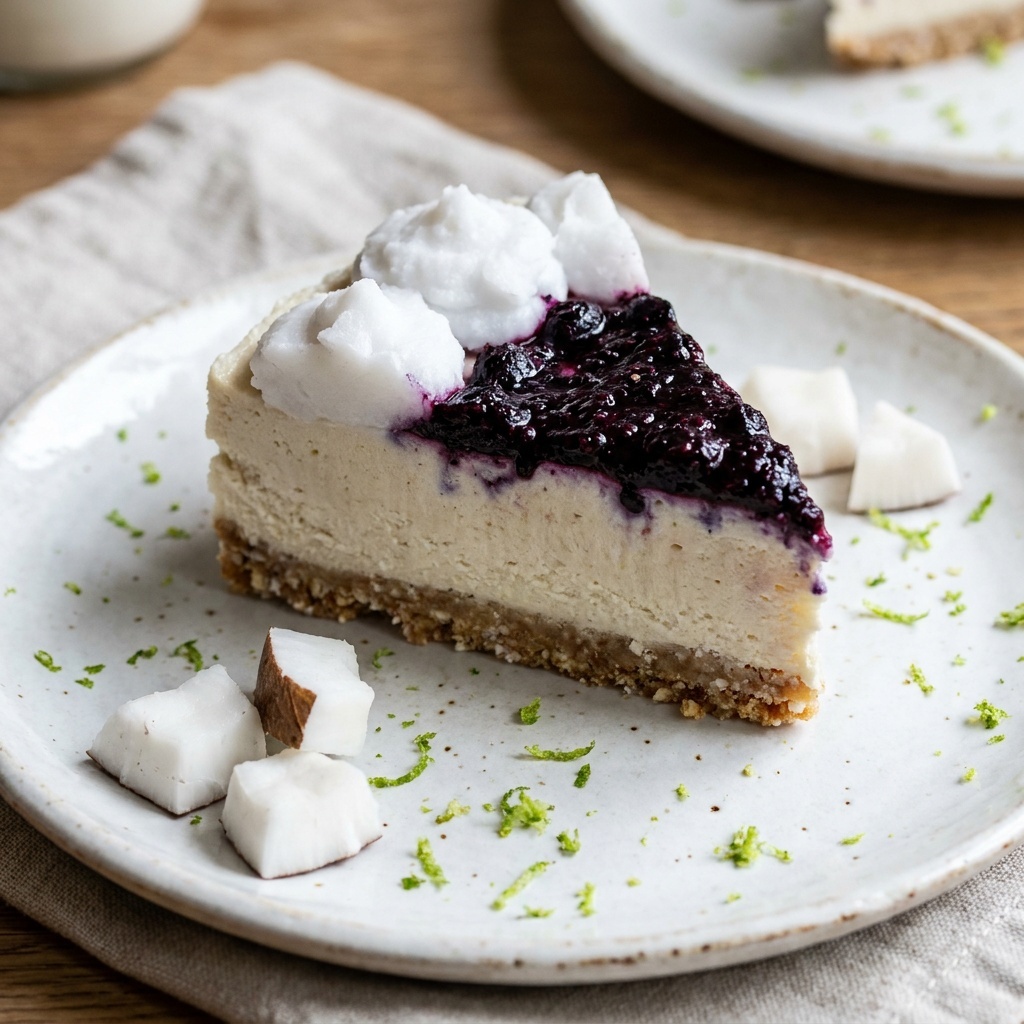
Raw coconut and lime cake, nut-free

Share this article
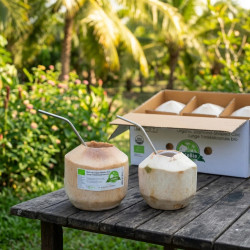
Certified organic fresh coconuts
€33.90 NEXT SHIPMENT ON SEPTEMBER 14
Ingredients
Base
- 3 heaped tablespoons coconut butter
- 2 level tablespoons crushed blueberries
Coconut and lime cream
- the flesh of one young coconut (about 200 g)
- the zest and juice of 1 lime
- 2 tablespoons honey (3 for extra sweetness)
- 2 tablespoons coconut oil
To finish
- Chia seeds
- edible flowers (rosemary, basil or dried lavender, for example)
Method
- Line a small cake tin with cling film.
- Mix the coconut butter and crushed blueberries with a spoon.
- Press this mixture into the bottom of the tin: it is soft at this stage and will harden in the cold.
- Place the tin in the fridge.
- Blend the coconut flesh, lime zest and juice, honey and coconut oil for a few seconds, until you have a smooth, silky cream. Taste and adjust the sweetness.
- Pour the cream over the base.
- Return to the fridge until the cake has set firmly.
- Decorate with chia seeds and edible flowers before serving.
Tip
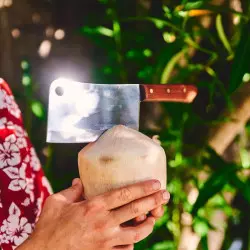
To open a young coconut, cut a square in the top with the tip of a large knife, pour out the water (for drinking!), then scoop out the tender flesh with a spoon. If you have a little cream left over, enjoy it just as it is, with a spoon.
The full range Fresh coconut
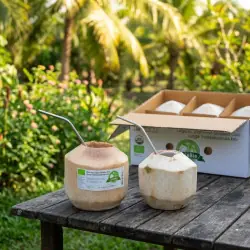
Enjoy a gourmet and nutritious coconut flesh thanks to these Thai organic green coconuts, proposed with its machete for easy opening, 5 products
Coconut machete CoCoBio
€20.95
-10%

Organic fresh coconut pallet (18 cartons of 9 coconuts)
€24.90 €27.66
FAQ: your questions about the raw coconut and lime cake
How do you use coconut flesh?
It all depends on how ripe the fruit is. The flesh of a young coconut, thin and tender, blends into a smooth cream, ideal for raw desserts such as the filling of this cake, with lime, honey and coconut oil. The flesh of a mature coconut, thicker and firmer, can be grated, blended into coconut butter or used to make coconut milk.
What are the different types of coconut?
In shops you mainly find two stages. The young coconut, sold green or white and trimmed to a point, contains a lot of water and thin, jelly-like flesh. The mature coconut, with a brown fibrous shell, has less water but thick, firm flesh. For the creamy filling of this cake, a young coconut is what you need.
Can you replace lemon with lime in cooking?
Yes, in most recipes, in equal quantities. Lime is a little more acidic and more aromatic, with a slight bitterness, and its zest is very fragrant. Here, it is what brings the freshness that balances the sweetness of the coconut; lemon would give a milder version.
What is the liquid inside a coconut called?
It is coconut water, a clear, slightly sweet liquid, particularly abundant in young coconuts. It should not be confused with coconut milk, which is made by blending the flesh with filtered water and then straining. When you open a young coconut for this cake, save its water: drink it chilled or add it to a smoothie.
Share this article
Related articles