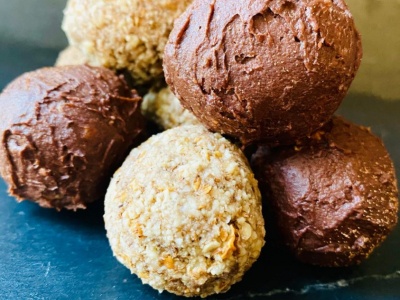
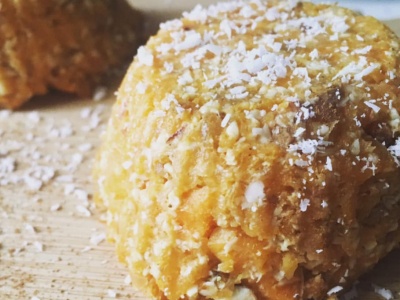
The coconut-lemon energy balls are prepared in 10 minutes without cooking, using only 8 raw ingredients: Medjool dates, almond flour, fresh coconut pulp, virgin coconut oil, lemon juice, and zest. Each energy ball provides about 97 kcal, fiber, healthy MCT fats, and vitamin C - a healthy, raw, and vegan snack, validated by our over 17 years of experience in living food at Biovie.
With Aurélie, we've been making these little coconut-lemon truffles for years - they've become a household classic, especially in the summer when we want a fresh snack without using the oven. The recipe has evolved over time, and this version is our favorite. Honestly, once you've tried them, it's hard to go back to industrial bars.
What is an energy ball?
An energy ball - also known as an energy bite, raw truffle, or bliss ball - is a sweet bite made without cooking, based on dried fruits, nuts, and sometimes superfoods. The concept comes from the Anglo-Saxon raw food movement and has become popular due to its simplicity of preparation.
What appeals about homemade energy balls is that there's no cooking (we stay below 42°C, preserving enzymes), they're portable, and you can vary the flavors endlessly. Unlike industrial energy bars, there are no refined sugars, no additives, no preservatives. You know exactly what goes into them.
The nutritional benefits of our coconut-lemon energy balls
Each ingredient in this recipe was chosen for its nutritional qualities. Here's what our coconut-lemon truffles concretely provide.
Medjool dates: natural energy and fiber
Medjool dates are the sweet core of our energy balls. Rich in soluble and insoluble fiber, they contribute to satiety and support intestinal transit. According to USDA FoodData Central, dates are a notable source of potassium (696 mg/100 g) and polyphenols with antioxidant properties.
A study published in Frontiers in Nutrition (Alnujaidi et al., 2025) showed that date-based energy balls have a low glycemic response and high in vitro protein digestibility. In other words, a snack that doesn't cause a blood sugar spike - and for a sweet snack, that's significant.
Coconut: healthy MCT fats and minerals
Whether it's fresh organic coconut pulp or coconut flour, this ingredient provides medium-chain triglycerides (MCTs), known for their rapid assimilation. According to the Ciqual table from ANSES (code 15036), shredded coconut is also a source of manganese, copper, and iron.
If you have access to our fresh organic coconuts, the fresh pulp gives an even creamier result. And fresh coconut water can also replace water in many raw recipes. A study by Melo et al. (2025, Food Science & Nutrition) confirmed that date balls with coconut butter provide 538.9 kcal/100 g with a favorable fatty acid profile (comparative trial on formulations based on vegetable butters).
Almonds: Protein and Magnesium
Almond flour provides plant-based proteins, magnesium, and vitamin E. Magnesium helps reduce fatigue as part of a varied and balanced diet. To maximize the bioavailability of these nutrients, consider activating your almonds by soaking them before blending. It's a simple habit that changes everything.
⚠️ Allergen: this recipe contains tree nuts (almonds). If you are allergic, you can replace almond flour with extra coconut flour or blended sunflower seeds.
Lemon: Vitamin C and Freshness
Lemon juice and zest provide vitamin C, which aids in the absorption of plant-based iron. Beyond the nutritional aspect, lemon gives these coconut truffles an incomparable freshness that sets them apart from classic chocolate energy balls. It's truly this tangy touch that makes the difference.
Raw and Vegan Coconut-Lemon Energy Balls Recipe
Preparation time: 10 minutes Servings: about 15 balls (~97 kcal per ball) Storage: 2 weeks in the refrigerator, 3 months in the freezer
Ingredients:
200 g of fresh coconut pulp or 120 g of coconut flour
140 g of almond flour
½ teaspoon of Himalayan salt (or a few drops of marine plasma)
6 teaspoons of fresh lemon juice
Zest of ½ organic lemon
6 pitted Medjool dates
125 ml of virgin coconut oil
A dash of vanilla extract
Preparation:
Place all ingredients in a blender or food processor.
Blend until you obtain a smooth and slightly sticky dough. If the texture is too dry, add an extra date. If too wet, add a bit of coconut flour.
Scoop out a tablespoon of dough and roll it between your palms to form a ball.
Roll each energy ball in shredded coconut for decoration and a perfect finish.
Refrigerate for at least 30 minutes before enjoying.
Living food tip: replace the salt with a few drops of marine plasma (isotonic seawater) to provide more than 78 natural trace elements to your energy balls. That's what we do at home with Aurélie - the difference is subtle but real, especially in terms of mineralization.
Add 2 tablespoons of raw cocoa powder to the basic recipe. Raw, unroasted cocoa retains its flavonoids and richness in magnesium. It's the best of both worlds: indulgence and intact benefits. Personally, it's the version I prefer when I have a little craving in the late afternoon.
Protein-Packed Spirulina Version
Incorporate 1 teaspoon (about 3 g) of organic spirulina powder. Spirulina contains up to 65% protein and enriches your energy balls with iron and phycocyanin. The green color may be surprising at first, but the taste remains very subtle, masked by the sweetness of the dates and coconut.
Festive Version with Pollen
After forming the balls, roll them in organic fresh pollen. Pollen provides proteins, B vitamins, and a touch of vibrant color. Perfect for impressing your guests - we served them like this during a workshop at our place, and everyone wanted the recipe.
The coconut-lemon energy balls can be stored in the refrigerator in an airtight container for 2 weeks. In the freezer, they keep for up to 3 months without losing quality. Take them out 5 minutes before eating to regain their soft texture.
For transport (office, hiking, picnic), wrap them individually in parchment paper. Their compact format and durability make energy balls an ideal snack to take anywhere. There you have it, a truly healthy no-bake snack that can be prepared on Sunday night and nibbled on throughout the week.
Why Choose Raw Energy Balls Over Industrial Ones?
Commercial energy bars often contain added sugars (glucose syrup, maltodextrin), refined oils, and artificial flavors. By making your own homemade energy balls, you control every ingredient. With raw and organic ingredients - Medjool dates, virgin coconut oil, almond flour - you get a nutrient-rich snack free of additives.
This is the fundamental principle of living food: consuming foods in their state closest to nature, unprocessed and not heated above 42°C, to preserve enzymes and micronutrients. And honestly, when you compare the cost of a box of organic bars in the store (often 4-5 € for 3 bars) with our homemade energy balls (less than 0.50 € per ball with organic ingredients), the calculation is quickly made.
As noted by a Biovie customer, Alime: “The first recipes were appreciated by the family, especially the children.”
Frequently Asked Questions
Are energy balls healthy?
Yes, homemade energy balls are a healthy snack when made with raw ingredients and no added sugars. They provide fiber, plant proteins, and healthy fats. A study published in Frontiers in Nutrition (2025) confirms that date-based energy balls have a low glycemic response, making them a balanced snack that does not cause a blood sugar spike. As part of a varied and balanced diet and a healthy lifestyle, they provide an interesting nutritional intake between meals.
How many energy balls can you eat per day?
Due to their caloric density (about 90 to 100 kcal per ball), it is reasonable to consume 2 to 3 energy balls per day as a complement to a balanced diet. They make an excellent mid-morning or afternoon snack, or a pre-sport snack.
How to store homemade energy balls?
Store your energy balls in an airtight container in the refrigerator (up to 2 weeks) or in the freezer (up to 3 months). Separate the layers with parchment paper to prevent them from sticking together. Take them out 5 minutes before eating to regain a soft texture.
What are the benefits of energy balls?
Energy balls combine natural carbohydrates (dates), healthy fats (coconut, almonds), and fiber to provide stable and long-lasting energy. Depending on the recipe, they can also offer antioxidants (raw cocoa), proteins (spirulina, almonds), and micronutrients (pollen). They contribute to satiety without the drawbacks of ultra-processed snacks, as part of a varied and balanced diet.
Can you make energy balls without dates?
Yes, dates can be replaced with other sticky dried fruits like dried figs or dried apricots. The result will be slightly different in taste and texture, but the consistency will be maintained. Be sure to blend well to achieve a homogeneous paste.
Do energy balls cause weight gain?
Like any food, energy balls consumed in excess contribute to a caloric surplus. However, as part of a varied and balanced diet, 2 to 3 balls per day constitute a reasonable intake (~200-300 kcal). Their richness in fiber and healthy fats promotes satiety, which helps avoid compulsive snacking.
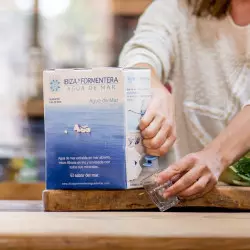
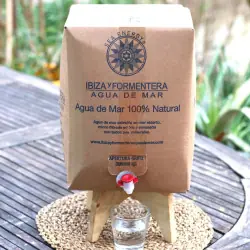
What is marine plasma ?
So-called hypertonic marine plasma is simply seawater harvested and filtered under very specific conditions.
Our supplier Ibiza Agua de Mar collects sea water from a depth of 25 meters off the coast of Ibiza in a UNESCO listed area.
Concerning the harvest, here are the different physico-chemical parameters measured during the search for an optimal place for the harvest of hypertonic marine plasma, first on the radar with reading of the currents and according to the marine weather (wind, swell, rain. ..) and then by local measurement of these different parameters: taste of seawater, dissolved O2 level, PH level, redox level (ORP), salinity level (TDS), conductivity level ( PSU), alkalimetric title (TA), Pressure. It is the empirical practice of the harvesters and the reading of the various measuring instruments that makes it possible to decide on the best complex combination of these measures together to decide whether the harvest is triggered on the site or whether another location is sought.
Where does marine plasma come from ?
The marine plasma is collected in the high seas, off the coast of Ibiza, in a specific area classified as UNESCO with high planktonic activity and with a presence of tens of square kilometers of Posidonia. It is indeed in this specific area that lives the largest living organism listed on Earth, a posidonia herbarium of 80,000 to 200,000 years extending over 15 kilometers in length.
Source: Sophie Arnaud-Haond, Carlos M. Duarte, Elena Diaz-Almela, Núria Marbà, Tomas Sintes, Ester A. Serrão: Implications of Extreme Life Span in Clonal Organisms: Millenary Clones in Meadows of the Threatened Seagrass Posidonia oceanica
When is it best to take marine plasma ?
The ideal is to consume marine plasma, which contains, let's remember, all the elements that make up Mendeleev's periodic table, in the morning when you get up, on an empty stomach. take 1/4 of hypertonic marine plasma to mix 3/4 of spring water or filtered water.
What are the benefits of marine plasma ?
Minerals are the "fuel" used primarily by our body, which is necessary for our cells to perform their functions optimally. They are also essential for the absorption of vitamins and are responsible for enzymatic processes in cells. Cells perform all their functions with maximum vitality and the precise capacity for organic, bioavailable, alkaline cellular nutrition. Thus, sea water becomes the best mineral drink since it contains all the elements of Mendeleev's periodic table.
Another of the great benefits of seawater is its pH. As Otto Warbürg, father of cellular respiration and two-time Nobel laureate, said, “all diseases are acidic and where there is oxygen and alkalinity there can be no disease”. Due to the quality of our raw material, the hyper-oxygenated waters of Posidonia meadows (recognized by UNESCO as a World Heritage Site in 1999) and sea currents providing purity and clarity: Ibiza and Formentera Agua de Mar have an alkaline pH , between 8.1 and 8.4, which will help the body maintain a neutral pH through homeostasis. The ingestion of sea water is advised to control and maintain our PH, as well as an exceptional supplement for alkaline diets.
The antioxidant and anti-acidity power produced by seawater is due to the alkalinity provided by the minerals.
Drinking filtered seawater in a direct and controlled way is very beneficial for your health, because seawater is an excellent nutrient, containing most of the minerals of the periodic table and all of them dissolved in the best universal solvent available: l 'water.
Seawater contains all the minerals of the periodic table of elements in a bioavailable way. It is thanks to this that foods cooked in seawater are rehydrated and remineralized to make foods with high nutritional power. The problem today is that our intake of minerals through food has dropped dramatically and what is causing this? The answer is very simple: pollution, soil depletion due to intensive agricultural production and our stressful pace of life have considerably reduced the quality of food and its mineral intake, drastically reducing the minimum contribution necessary for the proper functioning of the body.
Seawater also helps us stay young, for a simple reason: the body regularly and cyclically regenerates all its cells, because their lifespan is limited in time. As we age, one of the first faculties the cell loses is the ability to hydrate. We know that the older we get, the less we drink, so drinking and ingesting seawater can help us "wake up" this ability to hydrate ourselves., 4
products
Disclaimer: The information presented in this article is provided for informational purposes only and does not constitute medical advice. Consult a qualified healthcare professional before making any changes to your diet or supplementation. As part of a varied and balanced diet and a healthy lifestyle.