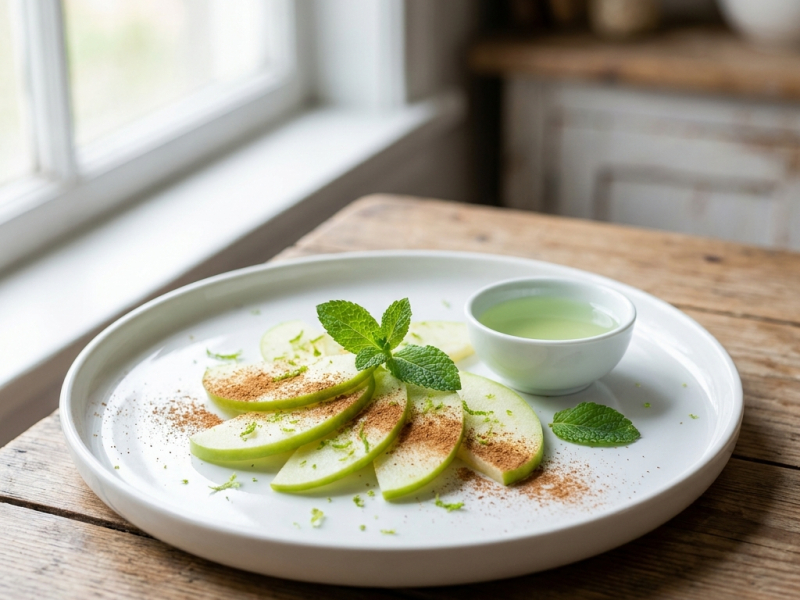






This light, springy mousse borrows the airy texture of a marshmallow while staying entirely raw, thanks to Irish moss gel. Cinnamon, vanilla and a touch of nutmeg give it a warm, comforting scent. Served in small glasses, it can be made ahead and simply waits in the fridge.
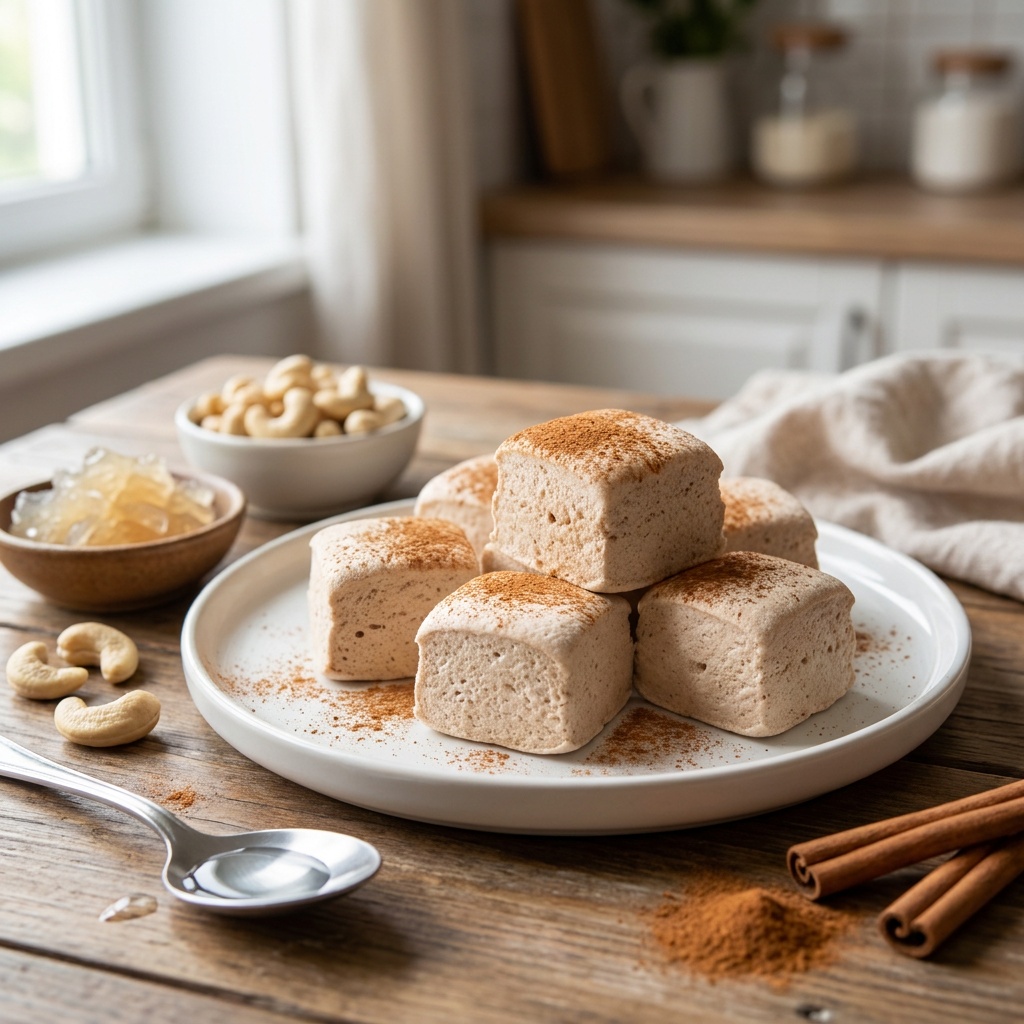
Raw cinnamon marshmallow mousse
Share this article

Ingredients
Mousse
- 1 cup Irish moss gel (recipe below)
- 3/4 cup cashews
- 6 tbsp filtered and hydrogenated water
- 6 drops of stevia
- 5 tbsp coconut nectar or honey
- 1.5 tsp cinnamon
- 1 tsp lecithin powder
- 1/2 tsp pure vanilla extract
- the seeds of 1/2 vanilla pod
- 1/8 tsp freshly ground nutmeg
- 1 pinch of Himalayan pink salt (equivalent to 1 tablespoon - 15 ml - of seawater)
- 1/3 cup plus 2 tbsp melted coconut oil
Irish moss gel
- 3/4 cup filtered and hydrogenated water
- 60 g soaked Irish moss
Preparation
- For the Irish moss gel, rinse a handful of Irish moss under cold water until the water runs clear.
- Soak the moss for 6 to 12 hours in cold water.
- Chop the soaked moss and blend it with the water until the mixture warms slightly and turns into a gel.
- Let the gel chill in the fridge for 5 to 7 days, or use it straight away.
- For the mousse, blend all the ingredients except the coconut oil in a high-speed blender until smooth and creamy.
- Add the melted coconut oil and blend again to incorporate it fully.
- Divide between ramekins or dessert dishes.
- Chill for at least a few hours, until the mousse has set properly, then decorate to taste before serving.
Tip
Irish moss gel can be made ahead and keeps for several days in the fridge: make a big batch to use in other raw desserts.
The full range Plant-based oils and spices
First cold-pressed virgin oils (camelina, flax, hemp) and organic spices dried below 42 °C make up this range: turmeric, ginger, Ceylon cinnamon (lower in coumarin than the Cassia sold commercially) and Bourbon vanilla. In cooking, turmeric pairs well with black pepper and a fat. Camelina or flax: camelina keeps better, while flax, with its stronger taste, oxidises faster once opened., 11 products


FAQ: your questions about raw cinnamon mousse
What is Irish moss?
It is a red seaweed from the coasts of the North Atlantic, Chondrus crispus, also known as carrageen or sea moss. Dried, it comes as small pale, brittle fronds. Rinsed and then soaked for several hours, it blends with water into a gel with a neutral taste, which thickens and stabilises cold preparations. It belongs to the same family of gelling molecules as the carrageenans used by the food industry, but here it is used whole rather than extracted.
What is the difference between Ceylon cinnamon and ordinary cinnamon?
They are two distinct species. Ceylon cinnamon, Cinnamomum verum, comes from Sri Lanka: its bark is thin, pale, rolled in several layers like a cigar, and its scent is sweet, floral, almost sugary. The cinnamon usually sold as ordinary is most often cassia, Cinnamomum cassia, from China or Indonesia: thick, dark red bark, curled from one side only, with a sharper taste. Cassia contains far more coumarin, a molecule whose daily intake European health authorities recommend keeping limited.
Which type of cinnamon is best?
It depends entirely on the use. For a raw dessert like this mousse, where cinnamon is used generously and never cooked, Ceylon cinnamon is the better choice: its delicate scent does not take over and its coumarin content is very low. Cassia, sharper and cheaper, holds its own in a hot, heavily sweetened preparation where you are after character. If you cook with cinnamon every day, Ceylon is the sensible reflex.
Where can you find genuine Ceylon cinnamon?
Rarely in a supermarket spice aisle, where the label often says nothing more than cinnamon. Look instead in organic shops, delicatessens or specialist suppliers, and check that the label states Cinnamomum verum or Cinnamomum zeylanicum, with Sri Lanka or southern India as the origin. In sticks, the visual clue is unmistakable: Ceylon is pale, thin and layered, and crumbles between your fingers, whereas cassia forms a hard, single-piece tube.
Share this article