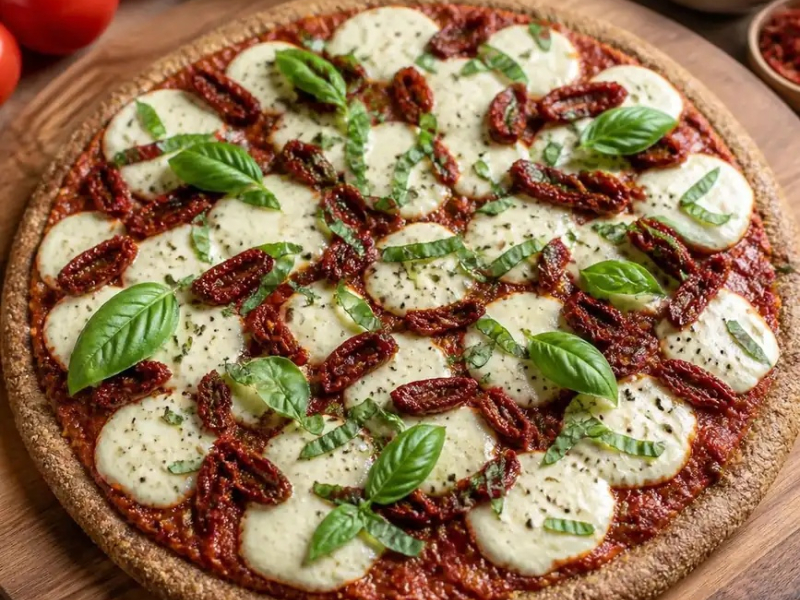




Here is an indulgent raw pizza, designed for living food enthusiasts who enjoy a challenge. The crust, made from soaked then dehydrated buckwheat, replaces the traditional dough. It is topped with a fermented cashew and hemp cheese with a fine peppery taste, slowly confit onions and a spiced, crisp coconut bacon. The recipe calls for several stages and plenty of patience, but the result impresses the most demanding guests.
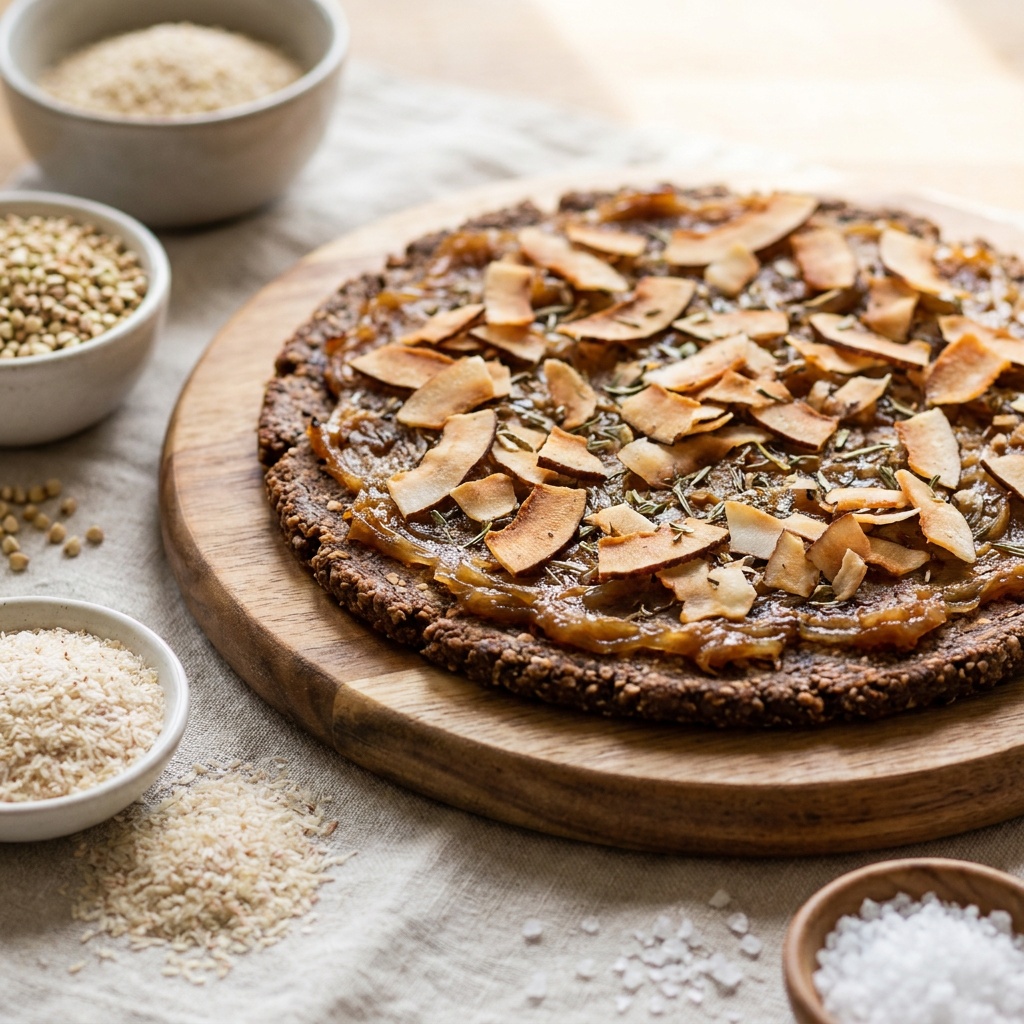
Raw pizza with caramelised onion and coconut bacon
Share this article
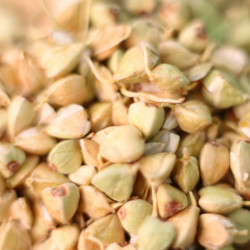
Organic activated buckwheat seeds
€21.90 In stock
Ingredients
For the crust
- 3 cups hulled buckwheat (soaked then dehydrated)
- 1 cup psyllium
- 1 tsp Celtic sea salt
- 2 cups filtered and hydrogenated water
- 1/4 cup olive oil
- 1/4 cup Irish moss gel
- 1 tbsp honey
- The juice of one lemon
For the cashew and hemp cheese
- 1 cup soaked cashews
- 1 cup soaked hemp seeds
- 1 cup filtered and hydrogenated water
- 2 probiotic capsules (acidophilus)
- 1 tsp cracked peppercorns
- 2 tsp dried thyme
- 1 tbsp lemon juice
- 1/2 garlic clove, finely chopped
- 1/4 tsp sea salt
For the caramelised onions
- 2 onions, finely sliced
- 1 tbsp honey
- 1 tbsp tamari
- 1 tbsp olive oil
- A pinch of sea salt (equivalent to 1 tablespoon - 15 ml - of seawater)
For the coconut bacon
- 1 cup dehydrated coconut flakes
- 1 tbsp olive oil
- 1 tbsp tamari
- 1 tbsp cider vinegar
- 1/2 tsp cumin
- 1/2 tsp chilli powder
- 1/2 tsp paprika
- 1/4 tsp cayenne
Preparation
- Blend the buckwheat, psyllium and salt to obtain a fine flour.
- Blend the liquid ingredients of the crust separately, then work them gradually into the flour in the processor, until a supple dough forms.
- Spread the dough into a circle on a dehydrator sheet and dehydrate at 40 °C for 24 hours.
- For the cheese, blend the cashews, hemp, water and the contents of the probiotic capsules in a high-speed blender until creamy.
- Pour into a glass jar and leave to ferment, covered, in a warm dark place for about 18 hours.
- Once fermented, stir in the cracked pepper, thyme, lemon juice, garlic and salt.
- For the onions, mix all the ingredients and dehydrate on a non-stick sheet until golden, about 6 hours.
- For the bacon, coat the coconut flakes evenly with the remaining ingredients, then dehydrate for 1 to 3 hours, until crisp.
- Spread the crust with the cashew and hemp cheese, top with the caramelised onions, then scatter generously with coconut bacon before serving.
Tip
Without a dehydrator, an oven at very low temperature (60 °C) with the door ajar will do for the crust and the coconut bacon, even if the result loses a little of its raw character. Plan the buckwheat soaking and the cheese fermentation the day before: that is what spreads the recipe over two days.
The full range Oilseeds, nuts, seeds
Fair trade tiger nut from Niger, Amazon nuts from Bolivia, activated buckwheat from Brittany, and activated oilseed purées made in Alsace by Kaly: this range brings together oilseeds and seeds of raw quality, most of them soaked then dehydrated at low temperature (activation). To get started with activation, an activated almond or hazelnut purée is easier to use than a whole oilseed you have to soak yourself. For everyday raw cooking, tiger nut (whole, sliced or as a purée) comes in several formats suited to different uses, from homemade plant milk to crunchy snacks., 20 products
Discover the full range

FAQ: your questions about raw pizza
What are some recipes for a raw food diet?
The repertoire is wider than you might think. On the savoury side: tabbouleh made from riced cauliflower, cold blended soups in the gazpacho style, courgette noodles from a spiraliser, stuffed cabbage leaf wraps, nut pâtés, and the dehydrated breads and crackers that stand in for baking. On the sweet side: smoothies, nice creams from frozen banana, tarts based on dates and nuts, raw truffles. This pizza belongs to the most technical category, the one that calls for a dehydrator and a preparation time spread over two days.
Can you eat raw pizza dough?
A classic pizza dough, no: raw wheat flour can carry bacteria that only cooking eliminates, and the risk is well documented by health authorities. The crust in this recipe is something else entirely: it is made of soaked then dehydrated buckwheat, psyllium and water, with no wheat flour and no baker's yeast. The 24 hours at 40 °C do not cook the dough but dry it through, which stabilises it. It is that dehydration, and not any cooking, that makes the crust both edible and crisp.
What is the recipe for a cold pizza?
Two things need separating. Cold pizza in the everyday sense is a baked pizza eaten the next day, straight from the fridge - nothing to do with raw cuisine. Cold pizza in the raw food sense is this one: a base dehydrated at low temperature, a raw topping assembled cold, and a final assembly at the last moment so the crust stays crisp. What the two share? They are eaten without an oven. Where they part ways? Here, no ingredient has ever gone above 42 to 45 °C.
Share this article
Related articles