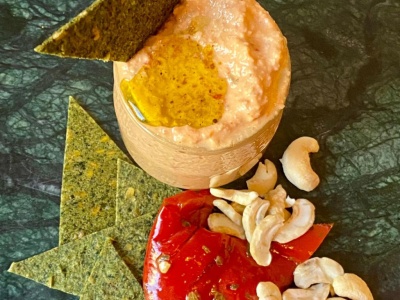
This raw version of baba ganoush swaps the traditional roasting of the aubergine for a spell in the freezer followed by thawing, which softens the flesh without any oven. Raw garlic gives it all its character: start gently and adjust to your taste. Served with flatbreads or crackers, it is a simple spread packed with flavour.
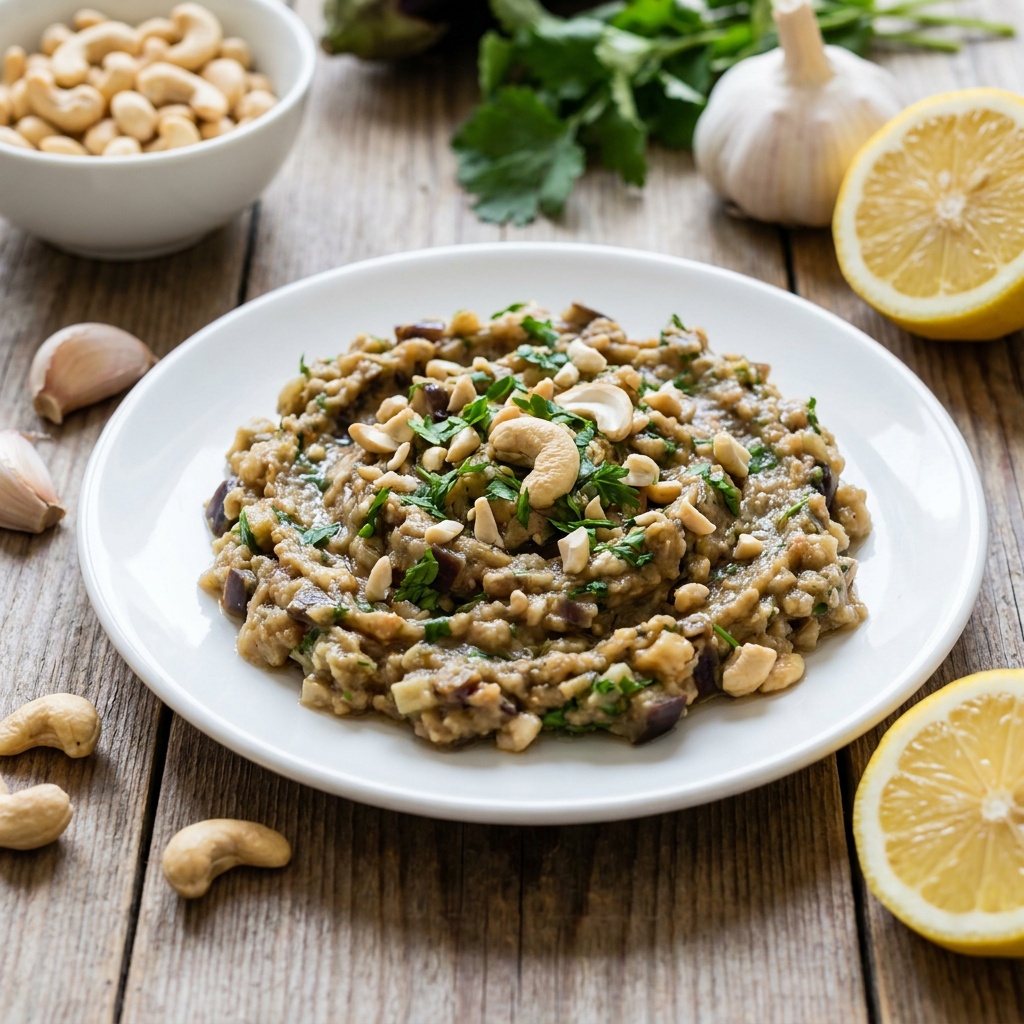
Raw baba ganoush with aubergine and cashews
Share this article

Ingredients
- 2 to 3 garlic cloves
- 1/2 cup cashews, soaked for at least 2 hours
- 1 large aubergine, diced, frozen then thawed
- juice of 1/2 lemon
- 2 tbsp olive oil
- 1 pinch of salt (equivalent to 1 tablespoon - 15 ml - of seawater)
Preparation
- Ahead of time, peel and dice the aubergine, then freeze it; thaw it before making the recipe. Soak the cashews.
- Start the food processor and drop the garlic cloves in one by one through the spinning blade, so they are finely minced.
- Add the cashews and blend until smooth.
- Add the thawed aubergine, lemon juice, olive oil and salt, then blend until the mixture is even.
- Serve with the flatbreads of your choice.
Tip
Add the garlic gradually and taste as you go: the raw version is far punchier than cooked garlic.
The full range Oilseeds, nuts, seeds
20 products
Discover the full range

FAQ: your questions about raw baba ganoush
Can aubergine be eaten raw?
Yes, in small amounts and properly prepared. Raw aubergine has spongy flesh and a bitter edge linked to its solanine content, which is highest in very ripe or greenish fruit. Choose a young, firm, glossy aubergine and soften it before blending: that is exactly what the trip to the freezer does here, breaking down the fibres and taming the bitterness. If you have a sensitive gut, start with small portions.
What is the difference between baba ganoush and aubergine caviar?
Baba ganoush is the Levantine version: the aubergine pulp is mixed with tahini, lemon juice and garlic, which gives it that distinctive sesame note. Aubergine caviar, more Mediterranean, usually sticks to olive oil, garlic and herbs, with no sesame. Our raw version borrows the structure of baba ganoush but replaces the tahini with soaked cashews, for a gentler creaminess.
Do you need to peel aubergines?
For this recipe, yes: without cooking, the skin stays tough and would make the spread stringy, with unappealing dark flecks. So peel the aubergine before dicing and freezing it. In a cooked preparation, on the other hand, the skin softens and brings colour and fibre, so you can happily keep it.
Do aubergines really need salting first?
No, it is no longer truly necessary: modern varieties have lost most of their bitterness. Salting still has two benefits, drawing out some water and firming up the flesh, especially before frying. Here, freezing already does that job: as it thaws, the aubergine naturally releases its water. Simply squeeze it between your hands before blending if it seems too wet.
Share this article
Related articles