







For the apple you will bite into tonight, the pesticides omnibus changes nothing yet: the Member States adopted their position on 30 September 2026, but the European Parliament has not voted. Pesticides in produce remain monitored, and a few simple steps, from washing to choosing organic, reduce the residues. That is the practical answer to how to remove pesticides from fruit, within clear limits. The figures below come from the 2024 report of EFSA, the European Food Safety Authority, and from official EU documents.
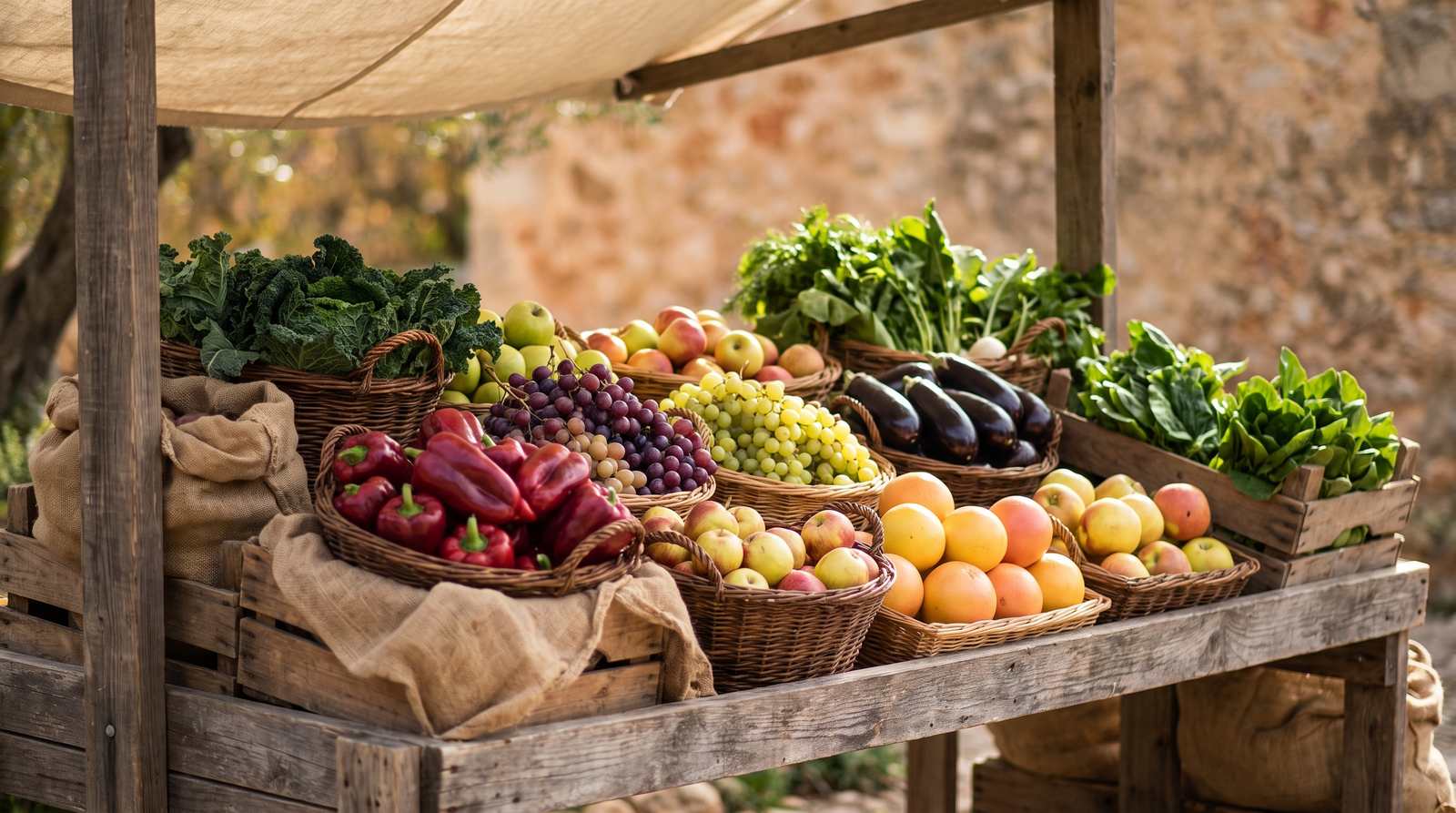
A fruit bowl on the table, a grape picked off in passing, and then, on the radio, the word "omnibus" stuck next to "pesticides". Naturally, a question comes up. What does this text change for your plate, and what can you do starting today?
As an ISTOM engineer and founder of Biovie since 2007, I also spent about ten years at Bio Bourgogne helping farms convert to organic: reading an inspection report before a press headline has become a reflex. So here is the text, then the controls, then the steps, with no forecast whatsoever on the vote.
The pesticides omnibus: what the European text contains
The word "omnibus" brings to mind the old bus that stops at every stop. A legislative omnibus is a single text that amends several regulations at once, here in food safety, pesticides in fruit and vegetables included. In reality, nothing is settled yet. The text has not been adopted: it still has to be voted on by Parliament and then negotiated with the Member States.
What the Commission proposes (December 2025)
In December 2025, the European Commission presented a "food and feed safety simplification" package, in two texts: COM(2025) 1030 and COM(2025) 1021. On pesticides, it announces "more targeted" renewal procedures and faster market access for biocontrol products. The rules on residues in imported products would, for their part, be tightened.
Now, of course, speeding up biocontrol: the engineer in me understands that perfectly well.
What the Member States endorsed on 30 September
On 30 September 2026, the ambassadors of the Twenty-Seven, meeting in Coreper, adopted the negotiating mandate of the Council of the EU. According to the Council, the mandate keeps the principle of lowering the maximum residue limits, or MRLs, of the most hazardous substances to the limit of quantification (the lowest level that can be measured reliably).
According to PAN Europe, an NGO opposed to the text, this mandate sets the maximum duration of first approvals at 15 years and of renewals at 25 years, reserves approvals with no time limit for "low-risk" substances, and extends the sell-off periods after a withdrawal to up to 3 years. Twenty-five years is roughly a generation. These figures are PAN Europe's, and the final text may still change.
Where the European Parliament stands
On 17 September 2026, more than 500 scientists and doctors, at the initiative of Professor Martina Vijver, handed in an open letter asking for a pause pending an independent assessment (Leiden University). The joint vote of the AGRI and ENVI committees, planned for 5 October, has been postponed until further notice. No new date is known.
What the stakeholders say
For Générations Futures (press kit of 3 September 2026) as for PAN Europe, the omnibus is deregulation; the Commission, for its part, talks about simplifying while keeping a high level of protection.
In France, the NGO Pollinis published on 24 September 2026 a report, "Anses, l'expertise sous pression", which describes an agency under budget constraints (franceinfo). It notes 138 derogations of 120 days granted since the start of 2026, against 110 over the whole of 2025 and 83 in 2024: the 2025 total has been exceeded before the end of the year. An NGO report remains an NGO report, and Anses remains the reference assessment agency in France.
Pesticides in fruit and vegetables: what EU controls measure
EFSA's 2024 figures
In the EU national programmes, 58.4% of the food samples analysed in 2024 contained no quantifiable pesticide residue, 38.3% contained residues below the legal limit and 3.3% exceeded it, of which 1.8% were judged non-compliant, according to the EFSA report published on 5 May 2026.
In practice, out of ten samples, nearly six contained nothing measurable. The scope is wide. More than 125,000 samples were taken in the 27 Member States, Norway and Iceland. These figures cover all the foods tested, fruit and vegetables included.
| Programme (EFSA, 2024 data) | No quantifiable residue | Residues below the MRL | MRL exceedance (of which non-compliant) |
|---|---|---|---|
| EU coordinated programme (9,842 samples, 12 products) | 43.1% | 54.5% | 2.4% (of which 1.2%) |
| National programmes (86,449 samples, all foods) | 58.4% | 38.3% | 3.3% (of which 1.8%) |
| Import controls (39,433 samples) | 38.3% | 56.2% | 5.5% (of which 3.6%, blocked at the border) |
"Exceedance" and "non-compliant": not the same thing
Think of the speed limit in town. The sign does not tell you from what speed an accident becomes certain: it sets a common rule. A maximum residue limit is a legal limit set food by food, not a toxicity threshold.
The speed camera, for its part, takes its own margin of error into account before issuing a ticket. Laboratories do the same: a measured exceedance only becomes "non-compliant" once measurement uncertainty is taken into account, hence 3.3% of exceedances but only 1.8% of non-compliances in the national programmes.
Hold on, so a compliant food can contain residues? Yes, as long as they stay below the limit, as in 38.3% of the national samples.
Organic products, imported products
Of the 5,939 organic samples analysed (6.9% of the total), 80.4% contained no quantifiable residue, 18.8% contained residues below the MRL and 0.9% above it. Four organic samples out of five, then, with nothing measurable. Organic products contain quantifiable residues markedly less often, without being entirely free of them.
On the import side, 5.5% of samples exceeded an MRL, against 3.3% in the national programmes. I talk about this at more length when telling what we see as a fruit importer: a fruit travels with the practices of the farm that grew it.
What EFSA concludes on risk, and what it does not assess
EFSA judges the risk to consumers "low", reasoning substance by substance: for 333 of the 334 substances assessed, the probability of exceeding the acceptable daily intake is below 1 person in 1,000,000. In a city of one million inhabitants, that would be fewer than one person.
One point is worth knowing, though: 25.5% of the samples contained several residues, about one in four. The routine assessment does not cover these mixtures: it examines each substance separately. I remain convinced that ignorance is a choice, and knowing the limits of a report is already taking back a little control.
Which fruits and vegetables contain the most pesticides?
Type "pesticides in fruit and vegetables" into a search engine and you will quickly land on lists of "15 fruits and vegetables without pesticides" or, the other way round, of the most sprayed ones. Most of them, the dirty dozen pesticides list and its cousins, come from an American ranking built on American analyses. Farming practices and origins differ, and these lists cannot be transposed as they are to Europe.
Honestly, a list is reassuring.
The coordinated European programme works differently, since its basket changes every year, with around a dozen different products. In 2024, the highest MRL exceedance rates concerned peppers (4.7%), table grapes (4.3%) and grapefruit (3.7%), according to EFSA. For peppers, that is a little under one sample in twenty.
Another frequent question: fruit and vegetables from Spain and pesticides. A Spanish fruit sold in France follows the same European MRLs as a French fruit, and the country of production is shown on the label of fresh fruit and vegetables. Origin and growing method say more than a fixed list, especially as the basket that is checked changes from one year to the next.
And then, let us keep the essentials in mind. Eating fruit and vegetables remains the priority, organic or not, as part of a varied and balanced diet and a healthy lifestyle.
How to remove pesticides from fruit and vegetables: what really works
The first step, you probably already take it: running the fruit under water while rubbing it. Which leaves one question: how to remove pesticides from fruit beyond that, and how far to go.
Washing: plain water or baking soda?
A pesticides in produce study carried out in the laboratory looked at organic Gala apples sprayed with two pesticides: thiabendazole, a fungicide, and phosmet, an insecticide (Yang et al., 2017). The researchers compared tap water, diluted bleach and a 1% baking soda bath (about 10 g per litre). Baking soda proved the most effective, but it took 12 to 15 minutes of soaking to remove 80% of the thiabendazole and 96% of the phosmet present on the surface.

Fifteen minutes is the time of a coffee: nothing like a quick rinse. The thiabendazole had also penetrated up to 80 micrometres into the fruit, about the thickness of a sheet of paper, and the phosmet up to 20. The bath acts on the surface; what has gone into the fruit is more a matter of peeling.
The study covers a single fruit and two pesticides, tested in the laboratory: the "98%" that circulates on social media does not come from it. For the water itself, I detailed the pesticides present in tap water; for freezing, see "should you wash fruit before freezing it".
Peeling, blanching, processing
A meta-analysis (Keikotlhaile et al., 2010) reviewed washing, peeling, blanching, boiling, juicing and canning: these steps reduce residues, with an average "residue after / residue before" ratio of 0.10 to 0.82 depending on the method. Put another way, 18 to 90% of the starting residues are removed. Some processing steps, such as baking in the oven, even sometimes show increases.
Peeling also removes some of the fibre and of the compounds in the skin, and that is a real trade-off. I have, by the way, ranked the methods of processing vegetables, from the least to the most respectful of the food.
Choosing organic
A meta-analysis of 343 publications found pesticide residues four times more often in conventional crops than in organic crops (Barański et al., 2014), which fits with EFSA's 80.4% of organic samples with no quantifiable residue. Organic farming bans synthetic pesticides, but not drift from a neighbouring field: we are talking about less frequent residues, never zero. This meta-analysis does not, however, demonstrate any health benefit in humans.
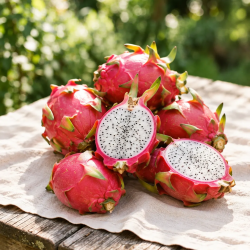
At Biovie, for example, the organic dragon fruit (pitayas) comes from Spain, to be enjoyed raw, as part of a varied and balanced diet and a healthy lifestyle.