


Summary
An activated carbon filter or a gravity filtration system effectively removes 85 to 99% of common contaminants from tap water, such as chlorine, pesticides, and long-chain PFAS. In France, 43% of tap water contains PFAS, those infamous "forever chemicals" that everyone has been talking about for the past two years.
At Biovie, we have been working on the subject of water for several decades because, for us, water is the foundation of everything. Honestly, what's the point of eating organic, sprouting seeds, and making beautiful juices with an extractor if the water we use for all that is contaminated with pesticides and eternal pollutants ?
Water is the primary living food. It's the one we consume the most, the one that is part of everything we prepare. And yet, it might be the one we pay the least attention to. So today, I suggest we take a closer look at what your tap water really contains, why it has become essential to filter it, and especially what concrete solutions exist - without breaking the bank and without complicated installations.
What is really in your tap water in 2025
PFAS - the "forever chemicals" present in 43% of French water
Let's start with the topic that has been making the most noise in recent months: PFAS. This somewhat daunting acronym stands for per- and polyfluoroalkyl substances, more commonly known as "forever chemicals" because they hardly ever break down in the environment. They are found in food packaging, non-stick pans, waterproof clothing, firefighting foams, and unfortunately, in our drinking water.
In France, according to the study conducted by Générations Futures in 2024, 43% of tap water contains PFAS. But this figure doesn't tell the whole story. Anses, in its 2023-2025 national campaign, revealed that TFA (trifluoroacetic acid), a particularly widespread PFAS, is detected in 92% of distributed water samples. 92%. And the most troubling part is that this TFA is not included in any regulatory standards to date.
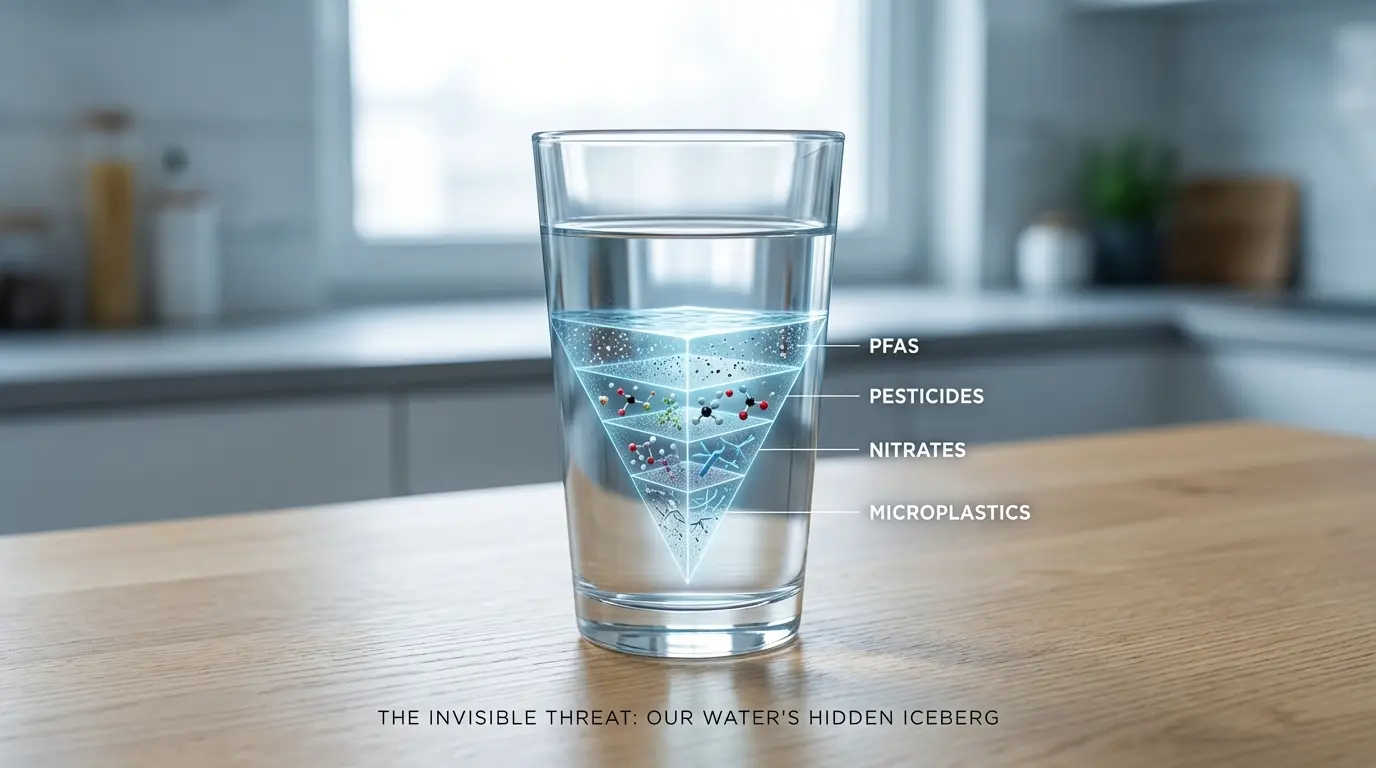
Concretely, what does that mean? That your tap water can be declared "compliant with standards" while containing substances that no one officially measures. Three cities have been identified as exceeding regulatory thresholds: Cognac, Martres-Tolosane, and Saint-Symphorien-d'Ozon. But these cases only represent the tip of the iceberg.
There are more than 12,000 different PFAS, and French standards cover only about twenty of them. The French standard is set at 100 ng/l for 20 PFAS, compared to 4 ng/l in the United States and 2 ng/l in Denmark. This discrepancy is quite striking.
Pesticides, nitrates, and pharmaceutical residues - an invisible cocktail
Unfortunately, PFAS are not the only unwanted guests in our water. In France, 93% of watercourses are contaminated by pesticides. These substances end up in groundwater and therefore in our drinking water, particularly in regions of intensive agriculture such as Hauts-de-France, Grand Est, and Île-de-France.
And then there are nitrates, pharmaceutical residues, microplastics... A true invisible cocktail whose combined long-term effects are still very poorly understood. What is certain is that since 1980, 14,300 water catchments have been closed in France, 32% of which were due to water quality degradation. This figure alone should concern us.
Chlorine and PVC - the unknown risks of treatments and pipelines
Chlorine, we know it well: it's what gives tap water that unpleasant taste. It is added to disinfect the water during its transport through the pipes, and it is actually the primary source of dissatisfaction among French consumers. 59% of them would be willing to drink more tap water if the taste were improved. The activated charcoal is actually the oldest and most proven solution to eliminate that chlorine taste.
But there is a topic that is much less talked about: VCM, vinyl chloride monomer. According to an investigation by Reporterre published in January 2025, 6,410 non-conformities were identified between 2014 and 2024 in 9 French regions. VCM comes from the degradation of old PVC pipes, and it is a known carcinogen. This is an angle that almost no one addresses, yet it is a real public health issue.
Pesticides and nitrates: the figures rarely quoted
PFAS get the media attention, but they're neither the most frequent contaminants nor the ones behind the most non-compliance findings.
About a third of French water distribution networks show traces of pesticides or their metabolites - molecules from the breakdown of applied substances, often more mobile than the parent molecules and long overlooked in testing. One family dominates the picture on its own: chlorothalonil and chloridazon-desphenyl, metabolites of now-banned fungicides and herbicides, account for the very large majority of exceedances found. Banned doesn't mean absent: they've been circulating in groundwater for decades.
Nitrates, for their part, stem from diffuse, long-standing agricultural pollution. The European standard caps them at 50 mg/l, a threshold set against the risk to infants; several major farming basins regularly come close without exceeding it, so it never shows up as a non-compliance.
Not all regions are in the same boat
This is the point that changes how you read an article like this one the most: water quality plays out at the scale of the watershed, not the country.
- The North and Grand Est concentrate the most degraded situations, a combined legacy of intensive farming and a dense industrial past.
- In Île-de-France, groundwater contamination is old and persistent, with pesticide metabolites found very regularly.
- In PACA and Rhône-Alpes, the situation is generally better, with occasional severe local cases linked to identified industrial sites.
- Mountain areas and protected catchments show the best results - living in the countryside guarantees nothing: the catchments most exposed to pesticides are rural ones.
Checking what you drink, town by town
No article can replace local data, and it's public. Three sources, from simplest to most complete:
- DansMonEau.fr compiles the health authorities' analyses and makes them readable with a single search by town - the quickest starting point.
- The French Ministry of Health's official portal, eaupotable.sante.gouv.fr, publishes the raw results of every sample, with the parameters tested and the measured values. Less convenient, but it's the source.
- Your water bill carries, once a year, a summary of the quality of the water supplied, and your town hall is required to provide the analyses on request.
One useful habit before drawing conclusions: look at the parameters actually tested for, not just the word "compliant." Water can be compliant on the substances it was tested for and never have been tested for TFA or a given metabolite at all. This is the reading that then guides the choice of filter described further below.
Why filtering your water has become essential
Is tap water really drinkable? What the standards say
So yes, we are told that tap water in France is one of the most monitored food products. And it's true. In fact, 80% of French people say they trust their tap water - but this is a historically low level. Trust is eroding, and for good reason.
The problem is that "potable" does not mean "pure." Potability standards cover about 60 substances, but thousands are detected in our water. It's a bit like organic products, and it reminds me of what I wrote on Mediapart: we monitor those who do well, and let those who pollute continue quietly. Here, it's the same: the standards are reassuring, but they only cover a fraction of emerging contaminants.
The impact of contaminants on health
Without falling into alarmism, we must face the facts. PFAS are proven endocrine disruptors. Even at low doses, chronic exposure can have consequences on the thyroid, immune system, and fertility. Pesticides in water are associated with increased risks of certain diseases. Microplastics, traces of which are found in almost all tested waters, are only just beginning to be studied for their effects on our bodies.
For sensitive populations - pregnant women, infants, immunocompromised individuals - the issue of water quality is truly not trivial. And even for all of us, on a daily basis, reducing our exposure to these substances is a sensible approach.
Filtered water and raw food: why they are inseparable
This is where our approach at Biovie stands out from what you will find elsewhere. And it's an angle that no one addresses in articles about filtration, yet it is fundamental.
When you germinate your seeds, when you prepare a green juice with the extractor, when you rinse your organic vegetables, when you prepare a kefir or a Kombucha - you are using water. A lot of water. And if this water contains chlorine, pesticides, PFAS, you are significantly reducing the benefits of your raw food approach.
It's like buying organic food and cooking it in contaminated water. It doesn't make sense. Filtered water is the foundation, the basis of any coherent living diet. And frankly, it might be the simplest and most impactful action you can take for your health on a daily basis.
Comparison of filtration solutions - advantages and limitations
Now that we have thoroughly examined the problem, let's move on to the solutions. And there are several, each with its strengths and weaknesses. I will present to you the four main filtration technologies, honestly, sharing what we at Biovie think about them after 18 years of experience in these matters.
Here is a comparative summary:
- Activated carbon (block) : partially removes PFAS, effective against chlorine and pesticides, annual cost of 30 to 80 €, very easy to use
- Gravity filter (Ecofiltro type) : partially eliminates PFAS, effective against chlorine and pesticides, annual cost of 20 to 40 €, very easy to use, zero energy
- Reverse osmosis : eliminates more than 90% of PFAS, chlorine, and pesticides, annual cost of 100 to 200 €, more complex installation
- Water filter pitcher : low effectiveness on PFAS and pesticides, partially reduces chlorine, annual cost of 50 to 100 €, very easy to use
- UV : does not eliminate PFAS, chlorine, or chemical pesticides (only effective against bacteria), annual cost of €80 to €150
Activated charcoal - the most versatile natural technology
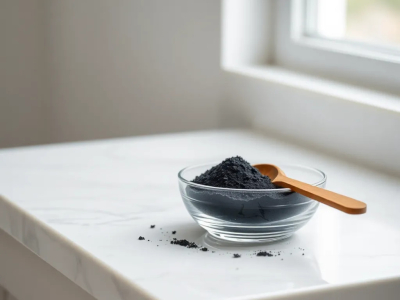
The activated charcoal, It is an ancient technology that has proven its worth. Its principle is simple: water passes through a block of charcoal that captures chlorine, pesticides, heavy metals, some long-chain PFAS, and even pharmaceutical residues through adsorption.
What makes the difference is the shape of the charcoal. Block activated charcoal is significantly more effective than granular activated charcoal (the kind found in filter pitchers) because the contact time between the water and the charcoal is much longer. This is an important point that many people are unaware of.
At Biovie, we offer Binchotan charcoal, a traditional Japanese activated charcoal that naturally purifies water in a carafe. It is an accessible solution for those who want to start gently purifying their tap water.
Gravity filtration - simplicity, zero energy, zero plastic waste
Gravity filtration is the simplest principle that exists for filtering tap water: the water passes through a filter solely due to the force of gravity. No electricity, no connections, no pressure. It's low tech in its finest form, and you know how much this topic is dear to us at Biovie.
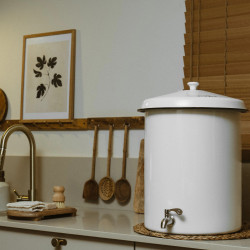
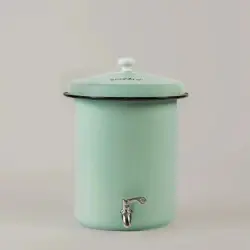
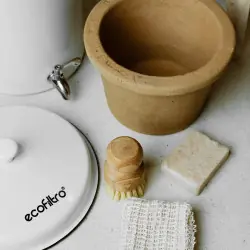
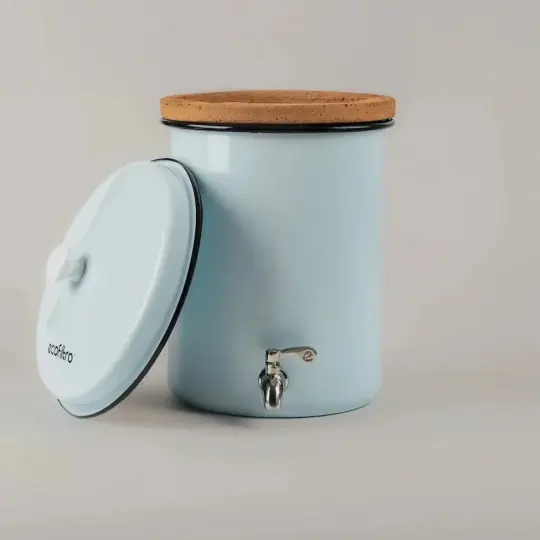
TheEcofiltro, which we have been distributing since 2023, operates exactly on this principle. Its filter is made of clay, compressed sawdust, and colloidal silver. The clay and sawdust create a microporous structure that retains bacteria, chlorine, pesticides, and some heavy metals. The colloidal silver provides additional antibacterial action.
What convinced us about the Ecofiltro is the combination of its efficiency, simplicity, and its ridiculously low cost of use: about €0.02 per liter. Compared to bottled water at €0.30-0.50 per liter, the calculation is quickly made. We have been using it daily for 18 months now, and frankly, the taste of the water is nothing like what we had before. The children of our friends who try it at our place drink more easily, and it's a real pleasure to cook with water that has a neutral and clean taste.
For families, there is the Ecofiltro 20L model, which is perfectly suited for the daily consumption of 4 to 6 people.