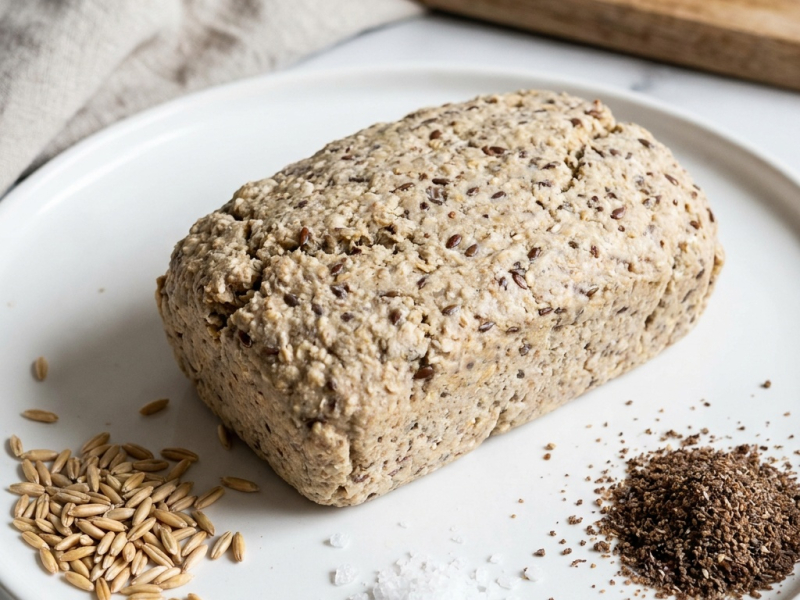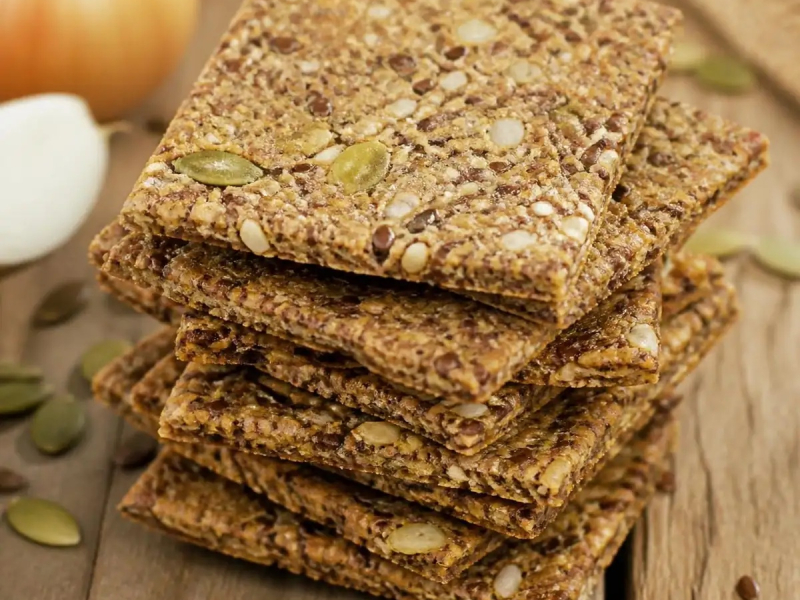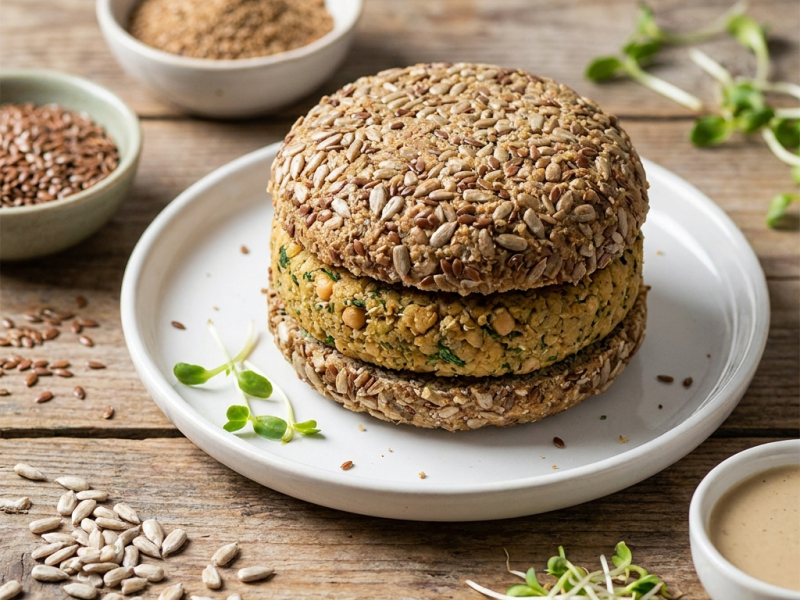



These little cumin-spiced bites replace conventional bread with a mixture of seeds and buckwheat, entirely gluten free and nut free. Depending on the drying time, they stay soft like bread or turn crisp like crackers. Ideal spread with hummus or nut butter, or as the base of an open sandwich with vegetables and avocado.
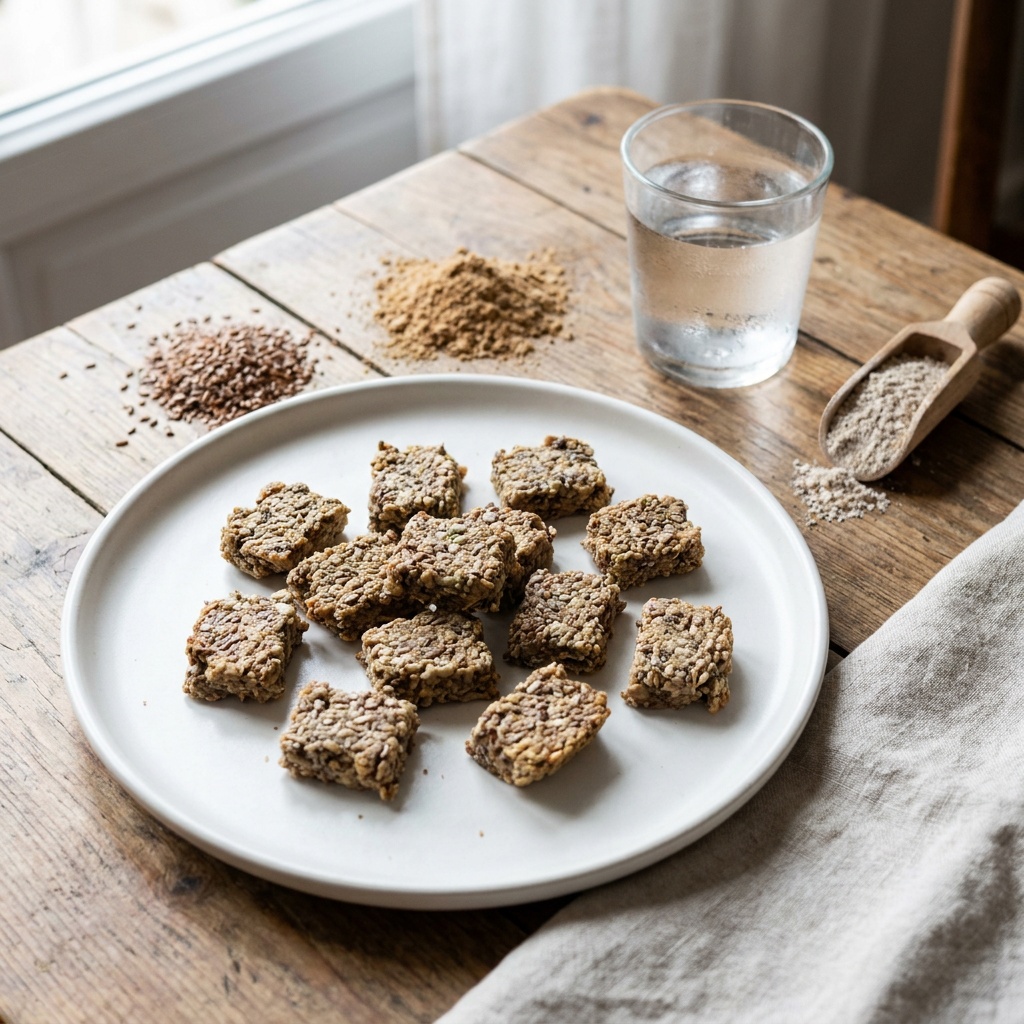
Grain-free dehydrated bread bites
Share this article
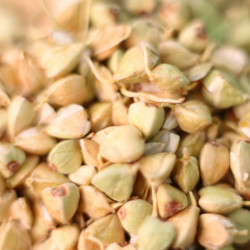
Organic activated buckwheat seeds
€21.90 In stock
Ingredients
- 1/2 cup flaxseed meal (to grind in a coffee grinder or blender)
- 1 cup filtered and hydrogenated water
- 1/2 cup buckwheat flour (ground the same way; for a lighter flour, the buckwheat can be sprouted then dried beforehand)
- 1/2 cup ground sunflower seeds
- 2 tsp sesame seeds
- 1 tbsp cumin seeds (crushed in a mortar)
- A pinch of sea salt (equivalent to 1 tablespoon - 15 ml - of seawater)
- 1/4 cup extra filtered and hydrogenated water (if needed)
Preparation
- Soak the flaxseed meal in the cup of water and leave to stand until it forms a gel.
- In a bowl, mix the buckwheat flour, the ground sunflower seeds, the sesame seeds, the cumin and the salt.
- Add the flax gel to the dry mix and work it with a spatula (or by hand) until you have an even dough.
- Spread the dough on a sheet of baking paper as thinly as possible, around 1 cm thick or less.
- Score the dough with a knife into the shape of bites you want.
- Dry in the oven at the lowest possible temperature, with the door ajar, until the bites are completely dry (allow around an hour); a dehydrator works too if you have one.
Tip
For a lighter and more digestible buckwheat flour, sprout the grains and dry them before grinding, as the author of this recipe suggests.
The full range Oilseeds, nuts, seeds
Fair trade tiger nut from Niger, Amazon nuts from Bolivia, activated buckwheat from Brittany, and activated oilseed purées made in Alsace by Kaly: this range brings together oilseeds and seeds of raw quality, most of them soaked then dehydrated at low temperature (activation). To get started with activation, an activated almond or hazelnut purée is easier to use than a whole oilseed you have to soak yourself. For everyday raw cooking, tiger nut (whole, sliced or as a purée) comes in several formats suited to different uses, from homemade plant milk to crunchy snacks., 20 products
Discover the full range

FAQ: your questions about dehydrated bread bites
How do you store homemade crackers?
The principle is the same as for any dried preparation: the enemy is moisture. Wait for them to cool completely - a cracker that is still warm gives off steam that will condense inside the box - then store them in an airtight glass jar, at room temperature and away from light. Allow one to two weeks for thoroughly dry crackers, only a few days for bites that have stayed soft, which are better kept in the fridge. If they soften, around thirty minutes in the dehydrator or a very low oven restores their crunch.
Is buckwheat bread good to eat?
Buckwheat is not a cereal but a plant of the knotweed family, a cousin of rhubarb and sorrel. It therefore contains no gluten, which makes it an option for people avoiding it. In terms of composition it provides protein containing the essential amino acids, fibre, magnesium and flavonoids, including rutin. Its pronounced, slightly earthy taste is not to everyone's liking: sprouting the grains beforehand softens it noticeably. As with any food, the value lies in the place it occupies within a varied diet, not in its qualities taken in isolation.
Which flour is best for crackers?
There is no best flour in absolute terms, only roles to share out. A base flour holds the structure: buckwheat, brown rice, oats. A fatty flour brings softness and taste: almond, hazelnut, ground sunflower. And a binder ensures cohesion without gluten: ground flax, psyllium, chia. A good cracker generally combines all three, aiming for about a third of each. Coconut flour is the exception: highly absorbent, it should only be used in small amounts, or you end up with a dough that is impossible to roll out.
Share this article
Related articles