





Some recipes need nothing more than good ingredients and a bit of patience: this is one of them. Four ingredients, five if you count the optional sweetener, and a dough you roll out flat between two sheets of baking paper. The result is a soft bread, more tender than a cracker but less dense than a classic seed bread - exactly right for an open sandwich. Oat groats soaked overnight form the base; ground flaxseed binds it and gives it body. Salt is enough for the plain version, but the dough takes just about anything: onion powder and dried parsley for a savoury version, more sweetener and a little mashed banana for a sweet one, cracked pepper for something with more of a kick. The step to watch is thickness: don't go below 6 mm, or the bread dries too fast and turns into a cracker. Allow four dehydrator trays, two hours at 48°C, then at least another hour after flipping the sheets and removing the paper. The finished bread should be firm, not hard.
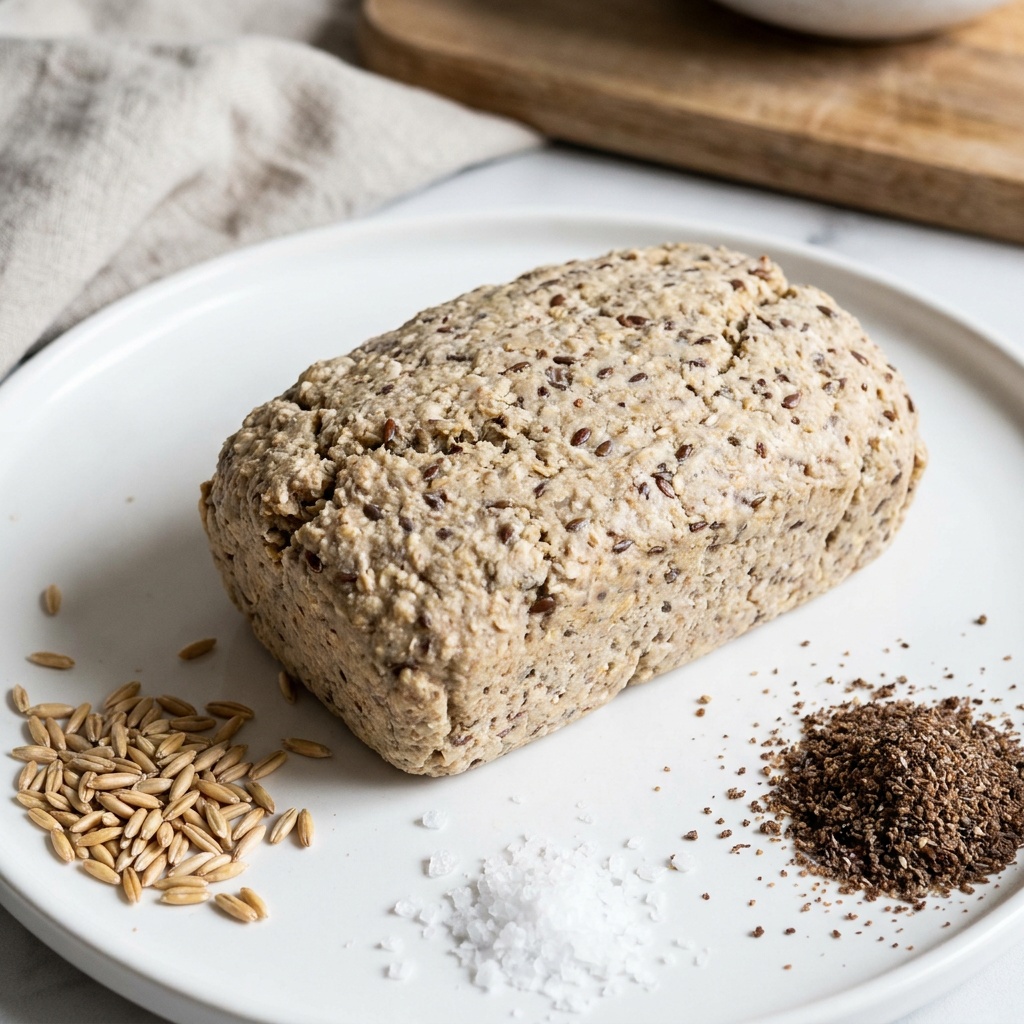
Raw Oat and Flaxseed Bread
Share this article

Ingredients
- 4 cups oat groats, soaked overnight
- 100 g ground flaxseed
- 1 teaspoon sea salt, or to taste
- 3 tablespoons black or white sesame seeds, optional
- 250 ml filtered and hydrogenated water mixed with 3 teaspoons date sugar, the sweetener remaining optional
Method
- In a food processor, pulse the soaked oat groats and ground flaxseed until you get a roughly chopped texture. By hand, work in small batches.
- Transfer to a bowl and add the salt, the sesame seeds if using, the date sugar and the water.
- Mix with a spoon or hand mixer until the water and seeds are evenly distributed.
- Divide the dough into four portions.
- Place one quarter of the dough in the centre of a large sheet of baking paper, fold the sheet over it, flatten by hand, then roll out with a rolling pin. Fold the edges of the sheet in and keep rolling to even it out, never going below 6 mm thick.
- Cut out the desired shape with scissors, leaving the bottom sheet intact, then move on to drying.
- Place the bread, bottom sheet included, in the dehydrator and leave for 2 hours at 48°C.
- After 2 hours, flip the bread and remove the baking paper, then continue for at least 1 more hour. The finished bread should be firm but not hard; if it's still too soft, extend the time.
Tip
For a savoury version, add 2 tablespoons of onion powder and dried parsley, with a little cracked pepper. For a lightly sweet version, reduce the water by 60 ml and add 4 tablespoons of date sugar or mashed banana. This recipe makes a good amount of bread: freeze what you won't eat in the coming days, and pop it back in the dehydrator to thaw.
FAQ: your questions about raw oats and flaxseed
Can you eat rolled oats without cooking them?
Yes, as long as you hydrate them. Rolled oats are already steamed during manufacturing, which makes them fit to eat without further cooking: that's the whole principle behind overnight oats. Oat groats, on the other hand, need real soaking - overnight at the very least - to soften and become digestible, as in this recipe. In both cases, soaking also improves mineral availability by reducing phytic acid.
What are the benefits of ground flaxseed?
Flax is one of the best plant sources of omega-3, with plenty of soluble fibre and lignans thrown in. Ground, it releases these compounds, whereas the whole seed often passes through the gut unopened. It also plays a very concrete role in raw cooking: mixed with water, it forms a gel that replaces egg as a binder, and that's exactly what holds this bread together. One to two tablespoons a day is a reasonable benchmark.
Should flaxseed be ground or not?
Ground, without hesitation, both for nutritional purposes and for cooking. But with one important caveat: once ground, the seed oxidises quickly, since its fragile oils are exposed to air. It's best to grind it as you go, in a small coffee grinder, and keep the rest in the fridge in a sealed jar for just a few weeks. Flaxseed meal that smells rancid has had its day.
Share this article