









Autumn is the ideal season for cooking with butternut squash, packed with antioxidants and beta-carotene. Here it is cut into spaghetti and arranged in nests, topped with a creamy cashew-based sauce scented with white wine, sage and mushrooms marinated beforehand. A comforting plant-based dish with everything a real autumn meal should have, without any cooking. For a change, this recipe also works very well with fresh lion's mane mushrooms.
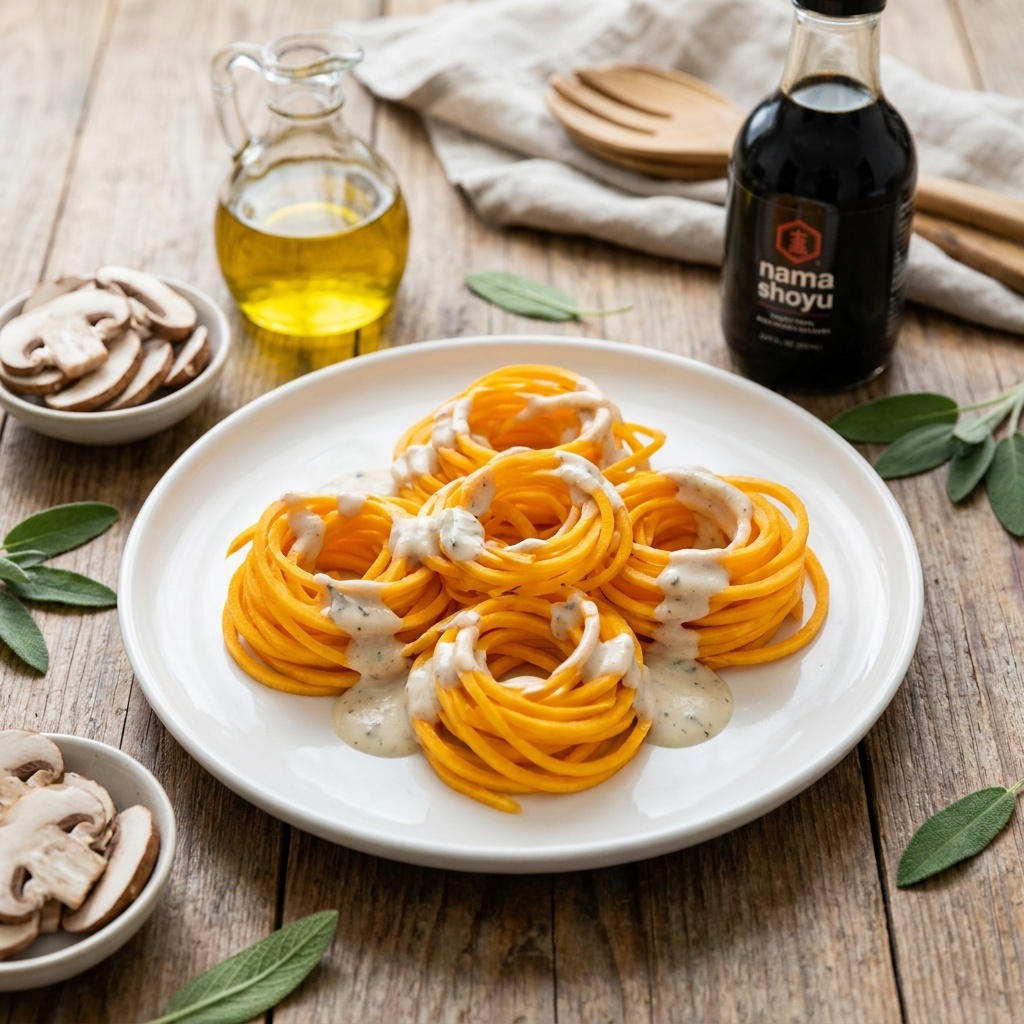
Butternut squash nests with white wine and sage mushroom cream
Share this article
Ingredients
Marinated mushrooms
- 280 g finely sliced mushrooms
- 80 ml olive oil
- 60 ml nama shoyu or tamari
- 30 ml honey
Mushroom, sage and white wine cream
- 120 g cashew nuts soaked overnight in the fridge, rinsed and drained
- 60 ml organic or biodynamic white wine
- 80 ml filtered and hydrogenated water
- 1 tablespoon lemon juice
- 2 tablespoons dried sage
- Pink Himalayan salt and pepper, to taste (or the equivalent of 1 tablespoon - 15 ml - of seawater)
- 140 g marinated mushrooms, rinsed and drained
Squash nests
- 1 medium butternut squash, cut into spaghetti
- Pink Himalayan salt and pepper, to taste (or the equivalent of 1 tablespoon - 15 ml - of seawater)
Method
- Whisk together all the marinade ingredients except the mushrooms.
- Pour the marinade over the mushrooms, mix and leave in the fridge overnight, stirring from time to time.
- Place all the cream ingredients, except the mushrooms, in a powerful blender or a food processor and blend until smooth.
- Stir in the marinated mushrooms by hand.
- Arrange the spiralized squash into nests.
- Season lightly with salt and pepper.
- Top with the mushroom cream.
- Sprinkle with a little extra dried sage before serving.
Tip
No spiralizer? Simply grate the squash by hand: the look will be a little different, but the result just as tasty.
Spotlight on mushrooms
Once marinated, mushrooms bring a pronounced umami flavour without the fat of meat. Finely sliced, they readily soak up the aromas of a marinade while keeping their firm texture.
The full range Blender Mixeur
Blender vital Mix, 9 products


We offer our Hurom Power blender in our Blender section.
FAQ: your questions about raw butternut squash
Can butternut squash be eaten raw?
Yes, without reservation - it is even one of the few squashes whose raw flesh is pleasant to eat as it is. Its firm texture is reminiscent of carrot and its taste leans towards slightly sweet, not-quite-ripe melon. What matters is the cut: coarsely grated, shaved into thin ribbons with a peeler or passed through a spiralizer, it becomes tender to the bite. In large chunks, it stays hard and disappointing. A little acidity - lemon, vinegar - softens it further, which is what the white wine and lemon cream does here.
Do you have to peel butternut squash?
For a raw preparation, yes: butternut skin is much tougher than that of red kuri squash and does not soften without cooking. A swivel peeler deals with it easily, especially if you first cut the squash in half lengthways to keep it steady on the worktop. Keep the peelings if you dehydrate: dried at low temperature with a little oil and salt, they make respectable crisps rather than going in the bin.
What is the difference between a pumpkin, a red kuri squash and a butternut?
Three cucurbits, three uses. The pumpkin is the largest and most watery, with stringy flesh and a mild taste: it is the soup vegetable par excellence. The red kuri squash, smaller and bright orange, has dense flesh with a chestnut flavour and a thin, edible skin, which makes it the favourite of plant-based kitchens. The butternut, recognisable by its beige pear shape, has the sweetest, smoothest flesh, with no fibres - it is the one best suited to raw dishes and very fine purées.
Share this article
Related articles


