
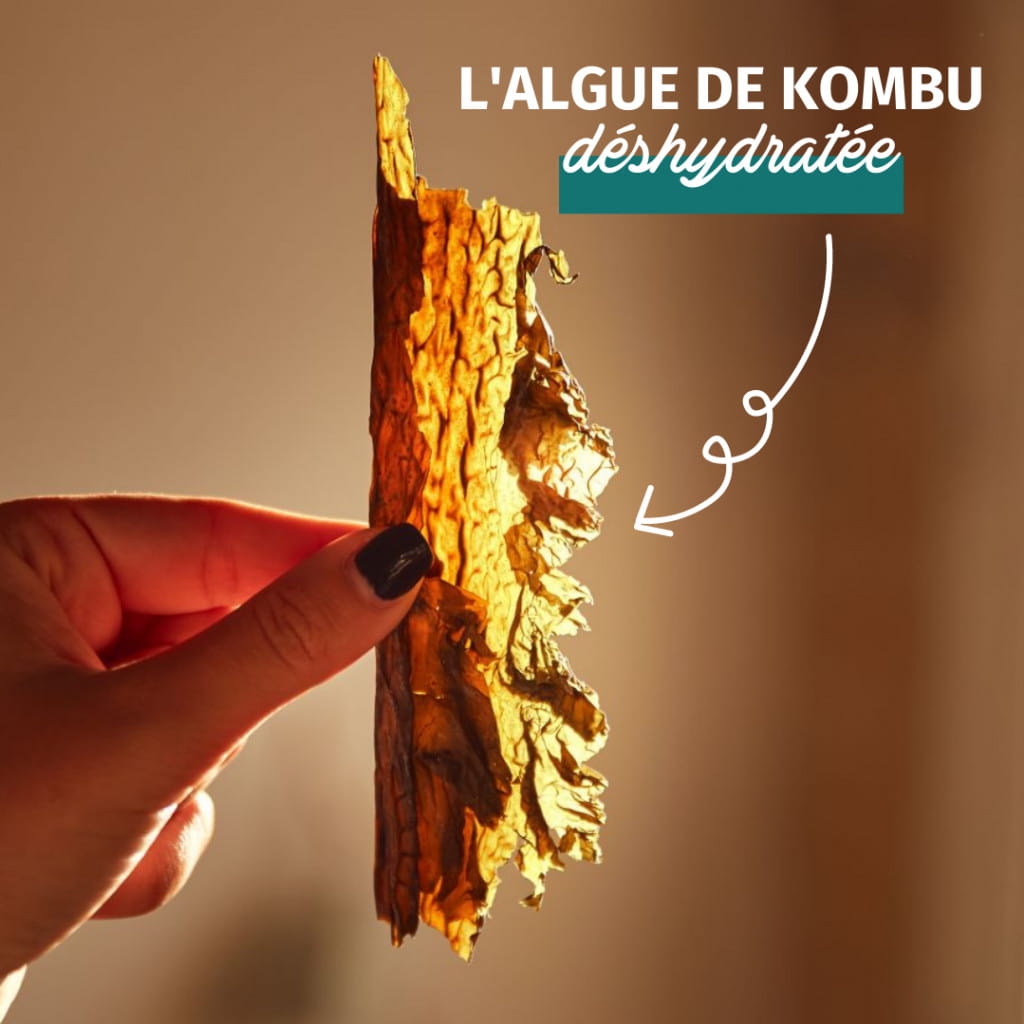

KombuLaminaria digitata) is the queen of brown algae: the base of Japanese dashi since the 8th century, it is also directly responsible for the discovery of umami.umami, the fifth flavor, by chemist Kikunae Ikeda in 1908. What is less known is that this same kombu grows just a few strokes from the Breton coast, in the cold waters of the North Atlantic. Since 2007, Biovie has been working hand in hand with Bretalg, the oldest organic seaweed harvester in France, based in Roscoff. We have the privilege of being the only ones to distribute dehydrated kombu in Europe. in whole sheets, dried at a low temperature (40 °C) to preserve all its nutrients.
In this guide, you will discover what the real meaning of thekombu seaweed, his/her/its/their nutritional benefits sourced by ANSES and the Ciqual table, how to cook it daily (dashi, tomato sauce, legumes, tartare), and especially the essential precautions related to its high iodine content. For an overview of the edible seaweed family, I refer you to our Complete guide to edible seaweeds: dulse, wakame, sea lettuce, and sea beans.
What is kombu seaweed ?
Laminaria digitata, the Atlantic kelp
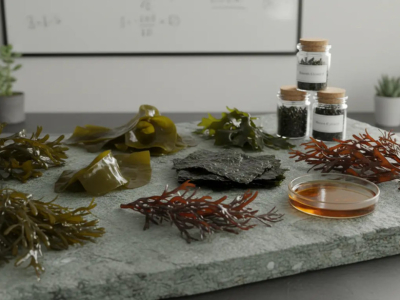
The kombu belongs to the family of Laminariales, these large brown algae that form true underwater forests. Laminaria digitata, The Atlantic kombu measures two to four meters at maturity. It grows on the rocky shore and in the subtidal zone of the North Atlantic, mainly in Brittany, Ireland, Norway, and Iceland. It is distinguished from Japanese kombu (Saccharina japonica) : these are two related species with very similar nutritional profiles, but they live in different waters.
The fingered kelp is recognized by its long stipe (the "foot") crowned with a large frond cut into palmate strips — hence its name. It lives between three and six years. When harvested sustainably, it respects the regrowth cycle and only affects a portion of the populations. This is exactly the philosophy of Bretalg in Roscoff.
Kombu in the history of world cuisine
In Japan, kombu is documented as a cooking ingredient as early as the 8th century. It is the base of the Dashi, this foundational broth that flavors miso soups, ramens, nabemonos, and many other preparations. In 1908, the Japanese chemist Kikunae Ikeda, intrigued by the unique flavor of a kombu infusion, manages to isolate free glutamic acid — he names this fifth taste umami, "Delicious" in Japanese is 「おいしい」 (oishii).
In Europe, the consumption of seaweeds from the kelp family has historically been documented in Brittany, Ireland, and the Hebrides—whether as food, fertilizer, or fodder. Today, thanks to the Breton industry, kombu is once again becoming a fully-fledged ingredient in European cuisine.
The Bretalg kombu: a European exclusive in whole leaves
The Bretalg sector, the oldest organic harvester in France
Since 2007, Biovie has been working with Alexandre Coléno and Bretalg, the oldest organic seaweed harvester in France, based in Roscoff in Finistère. For over twenty years, Bretalg has developed a rare expertise: harvesting while freediving or at low tide on the Breton shores, respecting regrowth cycles, organic certification, and complete traceability from frond to packaging. To see the report filmed on-site in Roscoff, don't miss our Video report at Bretalg.
Why low-temperature dehydration at 40°C changes everything
Most kombus imported from Asia are dried at high temperatures, sometimes smoked, sometimes treated with iron. Bretalg has made a radically different technical choice: a gentle dehydration at 40°C. At this temperature, thermosensitive compounds — polyphenols, residual vitamin C, accessory pigments — are preserved. The endogenous enzymes of the algae are not destroyed. The taste remains clear, iodized, with a typical umami roundness.
Packaging designed for preservation
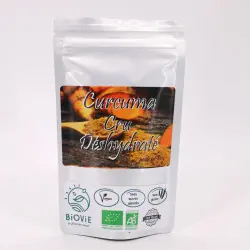
Biovie kombu is sold in a resealable opaque bag that protects it from light and oxygen, the two enemies of long-term preservation of dried seaweed. Once opened, the bag can be resealed, and the kombu retains its organoleptic qualities for many months.
The nutritional benefits of kombu seaweed
Kombu is a rare nutritional concentrate among plant foods. Here is what research and official composition tables tell us.
An exceptional source of iodine
TheIodine is the key nutrient of kombu. According to the table Ciqual of ANSES and the scientific opinions of ANSES, Laminaria digitata contains between 0.75% and 1.2% iodine on a dry matter basis — that is, 7,500 to 12,000 micrograms per gram. A single gram of dried kombu can therefore more than cover the recommended daily iodine intake for adults. It is a valuable resource for vegan diets, which have historically been deficient in iodine, but it also requires strict precautions that we detail below.
Mineralization: calcium, magnesium, iron, potassium
Beyond iodine, kombu provides a exceptional mineral density : approximately 800 mg of calcium and 650 mg of magnesium per 100 g, 4 mg of iron, and nearly 9,000 mg of potassium (Ciqual 2017, Laminaria digitataRegularly used in small quantities in broths and cooking, kombu contributes to a foundational remineralization strategy, which is particularly useful in plant-based diets.
Umami and natural glutamic acid
The content of free glutamic acid The kombu contains between 2,290 and 3,380 mg/100 g of glutamate depending on the species and the seasons. It is this natural glutamate that gives dashi its savory depth and "round" mouthfeel. Unlike industrial monosodium glutamate, it is part of a complete food matrix here — and this is precisely what Ikeda described in 1908.
Bioactive polysaccharides: fucoidan, alginate, laminarin
Brown algae concentrate unique sulfated polysaccharides. The fucoidan, "the"Alginate and the Laminarin are the subject of an abundant scientific literature, particularly in the journal Marine Drugs. The published studies describe interesting properties regarding the microbiota, postprandial blood glucose, and the immune system.PMC8004118, Marine Drugs 2021These compounds also contribute to the gelling power of kombu when cooked — this is what gives tomato sauce its more enveloping texture when a sheet of kombu is added.
To delve deeper into the nutritional benefits of different types of seaweed, check out our full article. Benefits, nutrients, and recipes of seaweed and microalgae.
How to use kombu seaweed in cooking
Rehydrate the dehydrated kombu
Rehydration is the first step: immerse 3 to 5 g of dried kombu (a small square of about 5 cm) in 100 ml of cold or lukewarm water for 15 to 20 minutes. The kombu regains its suppleness and color. Do not throw away the soaking water. : it is already a mineralizing and iodized broth, perfect for starting a soup or a risotto.
Prepare a vegetable dashi in 10 minutes
Dashi kombu is the simplest and most profound broth in Japanese cuisine. Immerse a 5 g piece of kombu in 500 ml of cold water, let it soak for 20 minutes, then heat gently. Remove the kombu just before boiling. : If it boils for too long, the alginate releases a slimy texture. For a more complex vegetable dashi, add two dried shiitakes during soaking. This dashi becomes the base for your miso soups, risottos, legume cooking, and even your sauces.
The anti-acidity trick for tomato sauces
This is the trick we've been sharing for years: slip in half a sheet of kombu (about 2 g) at the beginning of cooking your homemade tomato sauce. The kombu neutralizes the acidity, enriches the sauce with minerals and umami, and gives a much rounder taste. Remove it before serving. You can reuse this sheet in a broth to avoid any waste.
Cook legumes with kombu
Add a 5 cm piece of kombu to the cooking water of your dried beans, lentils, or chickpeas. Kombu helps partially hydrolyze the oligosaccharides responsible for intestinal fermentation, while enriching the cooking process with minerals. The result: more digestible and mineral-rich legumes. For beginners with legumes, it's a true ally.
In salads, tartares, and infusion
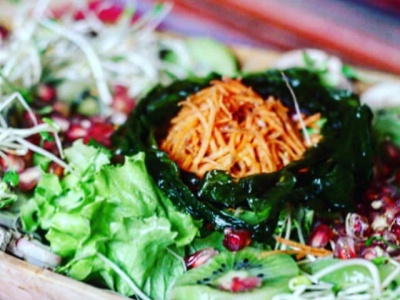
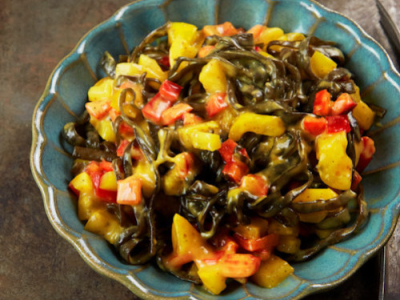
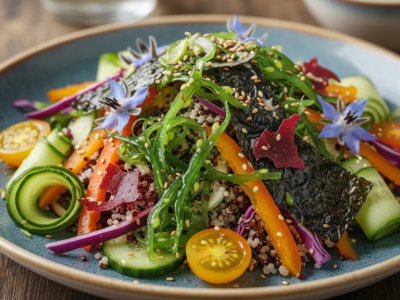
Finely sliced after rehydration, kombu integrates very well into a Japanese-style fresh seaweed tartare or in a salad. As a digestive infusion, one gram of dried kombu in 250 ml of simmering water for 5 minutes creates a mineral-rich, iodine-flavored, and slightly umami drink.
Fresh kombu or dehydrated kombu: how to choose
At Biovie, you will find kombu in two forms, each with its own use.
The fresh kombu in brine has a more marine flavor, a supple texture, and limited refrigeration storage. It is the ideal choice for raw seaweed tartares, cold salads, and applications where texture matters. Its aroma is very pronounced.
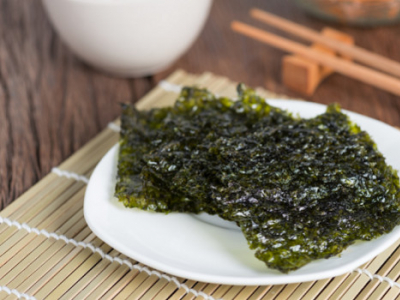
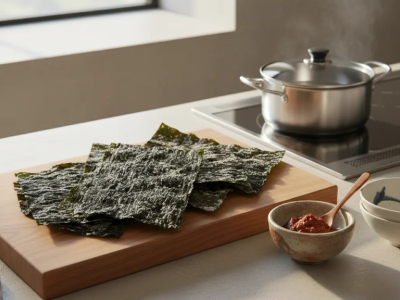
The Dehydrated kombu in whole leaves It can be stored for several months in its resealable bag, concentrates flavors, and is very easy to handle in small quantities. It is the ideal choice for dashi, broths, cooking legumes, and as a tomato sauce tip. In equivalence, 1 g of dried kombu ≈ 5 g of fresh kombu.
To delve deeper into the culinary angle and umami, also discover our Culinary Guide to Kombu and Umami, more focused on recipes and dashi.
Precautions: iodine, thyroid, pregnancy, and interactions
Kombu is a powerful food, and like anything that is concentrated, it requires clear precautions. This section is essential before consuming it regularly.
Iodine. Kombu is one of the most concentrated food sources of iodine in the world. According to theANSES (opinion NUT2017SA0086, June 2018), the fingered kelp can contain up to 12,000 µg of iodine per gram of dry matter. The recommended daily intake for adults is 150 µg per day, and the upper safety limit set by theEFSA is from 600 µg per day. In practice, this means that the consumption of kombu should be limited to 1 to 2 dry grams per week and never consume it every day. Think of kombu as a mineralizing condiment, not as a staple vegetable.
Pregnancy and breastfeeding. ANSES advises against the regular consumption of kombu during pregnancy due to the risk of fetal hyperthyroidism linked to excess iodine. An occasional small leaf in a broth is tolerable, but any daily consumption should be avoided. When in doubt, seek advice from your midwife or doctor.
Thyroid pathologies. If you suffer from Hashimoto's thyroiditis, Graves' disease, or are undergoing thyroid treatment (Levothyrox, etc.), do not consume kombu without prior medical advice. Our article Seaweed, iodine, and thyroid: solid scientific evidence Take stock of the available data.
Anticoagulant treatments. Kombu alginates can interact with certain anticoagulants. Talk to your doctor if you are concerned, especially if you have scheduled surgery.
Allergies. Allergic reactions to algae proteins are rare but documented. If you are allergic to seafood or iodine, test in very small amounts initially.
Quality and traceability. Seaweed can concentrate certain marine contaminants. Opt for an organic, traceable, and controlled source — like the Bretalg kombu that we distribute at Biovie.
FAQ — All about kombu seaweed
What are the benefits of kombu seaweed ?
KombuLaminaria digitataIt is one of the richest food sources of iodine (7,500 to 12,000 µg/g dry), calcium (about 800 mg/100 g), magnesium, and potassium. It also provides natural glutamate responsible for the umami flavor and unique polysaccharides such as fucoidan, alginate, and laminarin, which are studied for their effects on the microbiota and blood sugar levels. Consumed in small regular amounts, it contributes to the remineralization and nutritional enrichment of broths and dishes.
How to use kombu seaweed in cooking ?
The most classic use is dashi: soak 5 g of dried kombu in 500 ml of cold water for 20 minutes, heat gently, and remove before boiling. Kombu is also used in cooking legumes (to improve their digestibility), in homemade tomato sauce (to neutralize acidity), in seaweed tartare, or as a digestive infusion. Use 3 to 5 g of dried kombu for 100 ml of water during rehydration.
How much kombu can one eat per week ?
Due to its very high iodine content, ANSES and EFSA recommend limiting the consumption of kombu to about 1 to 2 grams dry per week, and not consuming it every day. The upper safety limit for iodine in adults is 600 µg per day. Kombu should be used as a mineral-rich and flavorful condiment, not as a daily vegetable.
Can kombu be consumed during pregnancy ?
ANSES advises against the regular consumption of kombu during pregnancy and breastfeeding due to the risk of fetal hyperthyroidism linked to excess iodine. An occasional small leaf in a broth is tolerable, but any daily consumption should be avoided. If in doubt, seek advice from your midwife or doctor.
What is the difference between Japanese kombu and Breton kombu ?
Traditional Japanese kombu is primarily Saccharina japonica, harvested off the coast of Hokkaido. The Breton kombu is Laminaria digitata, a cousin species from the North Atlantic harvested in Brittany. Their nutritional profiles are very similar (iodine, calcium, glutamate, polysaccharides). The kombu Bretalg distributed by Biovie is dehydrated at 40°C in whole leaves, which better preserves the thermosensitive compounds compared to industrial high-temperature drying.
What are the risks of kombu seaweed ?
The main risk is excess iodine: just one gram of dried kombu can exceed the recommended daily intake of iodine. In cases of thyroid disorders (Hashimoto's, Graves'), pregnancy, breastfeeding, anticoagulant treatment, or allergy to marine proteins, medical advice is necessary before consumption. For the general public, the rule is simple: small regular amounts (1 to 2 g dried per week), never every day.
In practice: the opinion of Eric Viard, ISTOM
"When I started working with Alexandre Coléno and Bretalg over twenty years ago, kombu was still an almost unknown seaweed to the French public. Today, it is undoubtedly the seaweed I recommend first to those who want to start cooking with seaweeds. With a simple dashi, an enriched tomato sauce, or a lentil dish, you enter a world of flavors and minerals that you wouldn't expect. But I repeat it every time: kombu is powerful. One to two leaves per week are more than enough. When Aurélie and I wrote 'Seaweeds for Everyday Use,' we dedicated an entire chapter to kombu precisely because it concentrates the best and most delicate aspects of the kelp family." — Eric Viard, founder of Biovie.
Update: April 2026. Article approved by Éric Viard, founder of Biovie and engineer ISTOM, co-author of " Seaweed in everyday life "(Gallimard, 2024) —" Best cookbook in the world, Gourmand Cookbook Awards 2025, and Best cookbook in France, National Academy of Cuisine 2025.
Warning: The information presented in this article is provided for informational purposes only and does not constitute medical advice. Consult a qualified healthcare professional before making any significant changes to your diet or supplementation. As part of a varied and balanced diet and a healthy lifestyle.
Find all our organic ingredients for raw food on https://www.biovie.fr/en/