

Summary
We often talk about living food on the Biovie blog, about sprouted seeds, of superfoods... but algae truly deserve more attention. And among them, the Kombu occupies a completely unique place. This brown algae, which the Japanese have been using for centuries, holds absolutely fascinating taste and nutritional properties.
Honestly, when we discover the Kombu For the first time, one wonders how a simple marine plant can add so much depth to a broth and facilitate the digestion of legumes and concentrate such wealth in minerals. This is what I propose we explore together in this article: to understand what this really is kombu seaweed, discover its benefits, and especially learn to use it practically on a daily basis.
What exactly is kombu ?
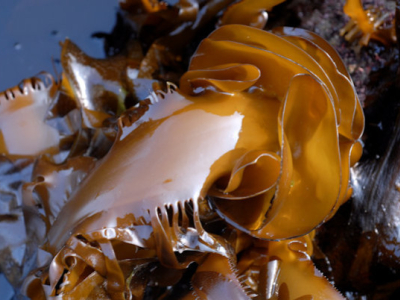
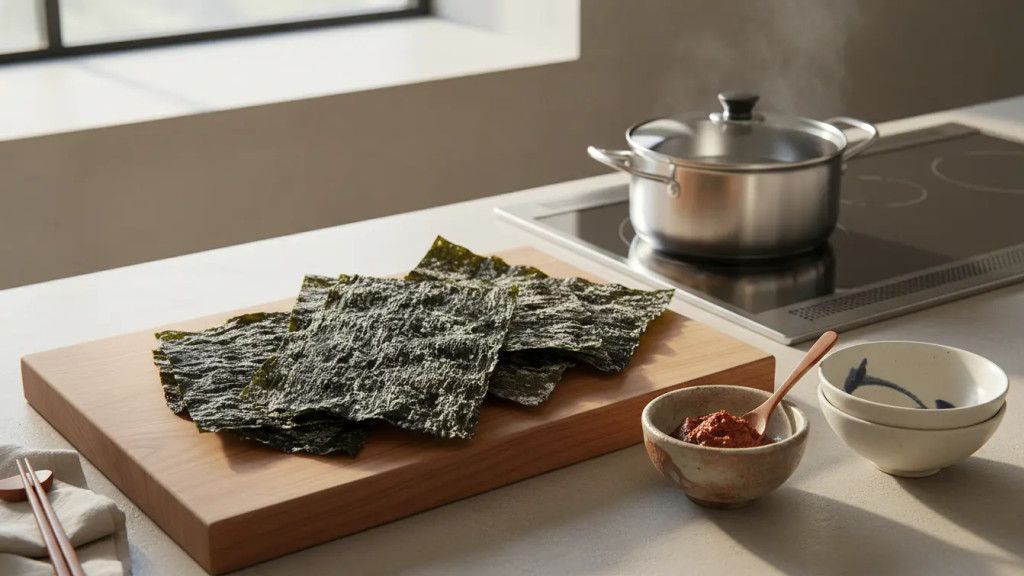
The Kombu is a brown algae from the family of kelps, these large algae that form true underwater forests in cold and temperate waters. Its scientific name, Saccharina latissima for the Breton seaweed or Saccharina japonica for the Japanese kelp, may not mean much to you. But what you need to remember is that this seaweed grows naturally on our Breton coasts, where it is hand-harvested by passionate producers.
In Brittany, it is sometimes called "Royal kombu"or even "witch's whip" - a name that is not lacking in poetry! Its long fronds can reach several meters in length and are characterized by a firm texture, slightly crunchy once rehydrated, with a subtly iodized and sweet flavor.
A Millennial History from Japan to Brittany
In Japan, the KombuIt has been consumed since at least the 8th century. During the Edo period (1603-1868), it was so valuable that it served as a form of currency and was the subject of thriving trade between Hokkaido, where it grows naturally, and the rest of the archipelago. Samurai offered it as a good luck gift, as the word "kombu" phonetically evokes happiness in Japanese.
On our Breton and Norman coasts, kelp has also been harvested for centuries, although its use was different: it was mainly used as agricultural fertilizer or to extract theIodine and alginates. It is only recently that we have rediscovered their exceptional culinary potential.
Today, the Brittany became the leading European producer ofedible seaweed, with committed producers who harvest the Royal kombu by hand, respecting natural cycles and marine resources.
But what makes the Kombu truly unique among all algae is its exceptional concentration of glutamic acid. And it is precisely this compound that leads us to discuss a major scientific discovery: that of theUmami.

Umami: the fifth flavor that kombu has revealed to us
Here is a fascinating culinary story that very few people know. In 1908, the Professor Kikunae Ikeda, a chemist at the Imperial University of Tokyo, asks himself a very simple question while enjoying his broth Dashi : Where does this unique flavor, this sensation of "gustatory fullness" that this traditional Japanese broth provides, come from ?
Professor Ikeda will then conduct in-depth research on the Kombu, basic ingredient of the Dashi. And he will isolate a compound responsible for this unique flavor: theglutamic acid. He names this new flavor "Umami", a Japanese word that could be translated as "delicious flavor" or "savory"."
Concretely, theUmami is today scientifically recognized as the Fifth flavor fundamental, alongside sweet, salty, sour, and bitter. Our tongue has specific receptors to detect this flavor, which proves that it is not just a marketing invention but indeed a physiological reality.
Natural glutamate: let's not confuse everything !
I know that many of you will frown upon reading "Glutamate"Of course! We've heard so much about the infamous 'Chinese restaurant syndrome' and the supposed dangers of monosodium glutamate (MSG, or E621) added to industrial dishes.
But there you have it, it's important to clearly distinguish between two completely different things:
- Natural glutamate present in the Kombu, Parmesan, ripe tomatoes, shiitake mushrooms, or soy sauce are integral parts of these foods. It is bound to proteins and gradually released during digestion.
- Monosodium glutamate (MSG) added in ultra-processed products is an isolated, concentrated additive that enters the body abruptly.
The KombuNaturally contains between 2,290 and 3,380 mg of glutamic acid per 100 g - making it one of the richest natural sources of Umami which exists. But this glutamate is accompanied by fibers, minerals, other amino acids... in short, a complete nutritional context that totally changes the situation.
Moreover, you may have noticed this thin white film that sometimes appears on the Kombu dried? It is not mold, but rather Crystallized glutamate Naturally! It is precisely this "powder" that gives the Kombu its natural flavor-enhancing power.
Umami synergy: when 1 + 1 = 3
Japanese chefs have long understood empirically: by combining the Kombu with other ingredients rich in nucleotides (such as bonito flakes Katsuobushi or the dried shiitake mushrooms), you get an explosion of flavor Umami far greater than the sum of the parts.
Science has confirmed it: the optimal ratio for a perfect dashi is approximately 25 g of katsuobushi for 10 g of kombu in 1 liter of water. This synergy allows for a significant reduction of salt in preparations while maintaining a rich and deep flavor.
For those who follow a plant-based diet, the good news is that the dried shiitake mushrooms offer this same synergy with the Kombu. A 100% plant-based dashi can thus compete in intensity Umami with the traditional version. At Biovie, we also offer dried seaweed perfectly suited for this preparation.
The benefits of kombu for your health
Beyond its taste qualities, the Kombu presents a truly remarkable nutritional profile. Here is what it can offer you:
An exceptional richness in iodine
The KombuIs one of the most concentrated food sources of Iodine that exists. We are talking about 366 mg of iodine per 100 g of dehydrated kombu - which is about 100,000 times more than seawater! TheIodine is an essential trace element for the proper functioning of the thyroid, this gland that regulates our metabolism, our energy, and many other vital functions.
In our regions, deficiencies in Iodine are common, especially among people who consume few seafood products. The Kombu can therefore help meet these needs naturally. However, caution is required, as this richness also entails certain precautions that I will detail later.
A concentrate of bioavailable minerals
The kombu, it is the algae of records because it contains 8 times more calcium than milk and 5 times more iron than spinach. It also contains magnesium, potassium, phosphorus, and numerous trace elements. Unlike isolated supplements, these minerals are present in a naturally bioavailable form, accompanied by cofactors that facilitate their absorption.
If you are looking for other sources of marine minerals, our Hypertonic seawater also offers an exceptional and complementary mineral profile.
Soluble fibers beneficial for the intestine
The Alginates and the fucoidans present in the Kombu are soluble fibers that possess properties prebiotics. Specifically, they nourish the good bacteria in our gut microbiota and contribute to maintaining regular transit.
These fibers also have the ability to form a gel in the stomach, which provides a feeling of fullness and can help regulate the absorption of sugars and fats. To optimize your digestion, you can also discover our digestive enzymes who work in synergy with these fibers.
The trick to better digest legumes
Here is a traditional use of the Kombu who deserves to be much more well-known! Japanese and Korean populations have always added a piece of Kombu in the cooking water of their beans, lentils, and others legumes (which we always advise you to soak for at least 12 hours and preferably to sprout for 24 to 36 hours before cooking).
Why? Because the Kombu contains some natural enzymes which help to break down oligosaccharides - those well-known complex sugars responsible for bloating and digestive discomfort after a meal of legumes.
The protocol is simple: add a piece of Kombu about 5 cm in your cooking water of the legumes from the start. Let it cook normally. The Kombu will not only tenderize the legumes and reduce cooking time, but also make them much more digestible. You can then remove the Kombu or consume it with your legumes.
This trick works particularly well with lentils, chickpeas, white and red beans, azuki beans... Honestly, once you've tried it, you can't do without it !
Important precautions: iodine, friend or foe ?
I prefer to be transparent with you: the wealth of the Kombu in Iodine, which is an asset, can also become a problem if consumed excessively or inappropriately.
Best practices for enjoying kombu safely:
- Limit your consumption 2-4 times per week maximum
- Soak the kombu 1 hour in lukewarm water before use: this reduces the iodine content by about 30%
- Prolonged boiling can reduce iodine from 50 to 70% Additional
- Favor using it in broth (dashi) where the kombu is not consumed directly
- Vary the species of algae : the wakame or the Dulse are lower in iodine
People who should avoid or strongly limit kombu:
- People suffering from troubles Thyroid (hyperthyroidism)
- People already undergoing thyroid hormone treatment
- As a precaution: pregnant or breastfeeding women (consult a healthcare professional)
- As a precaution: young children
In case of doubt, consult your doctor or healthcare professional before incorporating the Kombu regularly into your diet. The inhabitants ofOkinawa, known for their exceptional longevity, consume about 1 g of Kombu per day - but this practice is part of a very specific overall dietary context.
How to use kombu in cooking
Let's move on to practice now! The Kombu can be used in many ways, from the most traditional to the most creative.
Traditional dashi broth
The Dashi is the foundation of Japanese cuisine. It is a light but intensely flavorful broth thanks to theUmami from the Kombu. Here is the traditional recipe:
- Place 10-15 g of Kombu fresh in 1 liter of cold water
- Let soak for at least 30 minutes (ideally several hours or overnight).
- Slowly bring to a simmer (never boil!)
- Remove the Kombu as soon as the water reaches 80-90°C
- For a vegan dashi, then use dried shiitake mushrooms
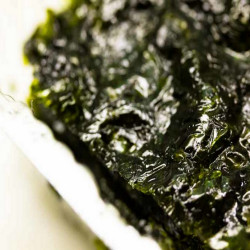
Tip : do not throw away the Kombu Used! You can slice it and add it to a salad, sauté it with vegetables, or store it in the refrigerator for another preparation.
Cooking soaked and/or sprouted legumes
- Add a piece of Kombu 5 cm in your pot of cold water
- Add your legumes (previously soaked for a minimum of 6 hours)
- Bring to a boil then let simmer normally.
- The Kombu will soften and can be consumed with legumes or removed
This technique also works very well for cooking rice, whole grains, or even soups.
As a condiment: kombu gomasio
A simple way to use the Kombu on a daily basis is to grind it into powder and incorporate it into your seasonings. Blend some dehydrated kombu with roasted sesame and a pinch of salt to make a gomasio with Kombu Delicious on rice, salads, or grilled vegetables.
In salad
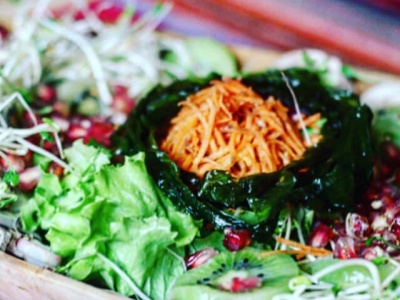
The Kombu can also be enjoyed in a salad after rehydration:
- Soak the Kombu 10-15 minutes in warm water
- Drain and finely slice
- Season with rice vinegar, sesame oil, a few sesame seeds, and a dash of soy sauce.
In green smoothies and juices
Less known but just as interesting: a small amount of Kombu Powdered can be added to your green smoothies to enhance their mineral profile. Use about 1/2 teaspoon maximum per smoothie. The iodine taste will be masked by the fruits, but you will benefit from the minerals.

How to choose and store your kombu
Which variety to choose ?
Several types of KombuExist on the market:
- Breton kombu (royal kombu): locally produced, in a short supply chain, with a reduced carbon footprint. Its taste is slightly milder than the Japanese kelp.
- Japanese kombu : the most traditional, often more intense in flavor Umami.
- Salted fresh kombu (that we offer you at Biovie) : it offers a more tender texture but requires desalting. It can be kept for at least 6 months in the refrigerator.
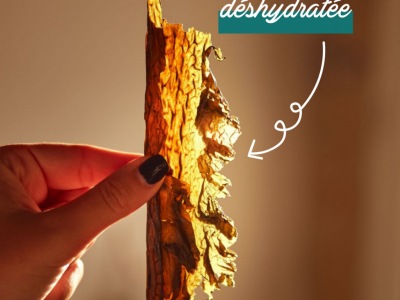
- Dehydrated kombu : the most practical for regular use, it keeps for a very long time.
At Biovie, we prioritize algae sourced from sustainable and controlled harvesting, with transparent traceability regarding the origin and production methods.
Conservation
The dehydrated kombu is easily preserved:
- In an airtight container, away from light and moisture
- Shelf life: up to 2 years for the Kombu dried
- Once the package is opened, consume it within 3-4 months for optimal quality.
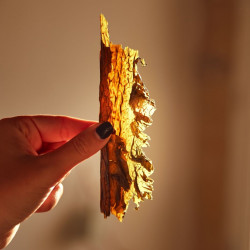
Do not worry if you see a fine white powder appear on the surface of the Kombu dried: it's from crystallized natural glutamate, a sign of quality! Do not rinse it before use, as you would lose some of the flavor. Umami.
Frequently Asked Questions About Kombu
What are the benefits of kombu ?
The Kombu offers 6 major benefits: an exceptional richness in Iodine natural (366 mg/100g dehydrated) essential for proper thyroid function, a natural source ofUmami thanks to glutamic acid (up to 3,380 mg/100g), an improvement in the digestion of legumes Thanks to its natural enzymes, an intake of bioavailable minerals (calcium, magnesium, iron, potassium), properties prebiotics for the gut microbiota via alginates and fucoidans, and assistance in detoxification due to its ability to capture heavy metals.
How to eat kombu seaweed ?
The Kombu is used in 4 main ways: in broth Dashi (Infuse 10-15g in 1L of cold water for at least 30 minutes, heat without boiling to a maximum of 80-90°C), to cook the legumes (add a 5cm piece to the cooking water - the enzymes reduce bloating), as a condiment (dehydrated kombu reduced to powder for sprinkling), or in a salad (rehydrate for 10 minutes in warm water, slice thinly and season with rice vinegar and sesame).
Does kombu contain MSG ?
No, the Kombu does not contain MSGmonosodium glutamate) added. It naturally containsglutamic acid, which is present in many foods such as tomatoes, parmesan, or mushrooms. It is this natural glutamate, accompanied by all the other nutrients of the seaweed, which gives kombu its flavor Umami Characteristic. The difference with synthetic MSG is essential: natural glutamate is bound to proteins and is gradually released during digestion.
Can you eat kombu after making dashi ?
Yes, absolutely! The Kombu used for the Dashi remains perfectly edible. You can slice it and add it to a salad, sauté it with vegetables, or blend it into a soup. Some even marinate it in soy sauce and mirin to make a condiment called tsukudani. It's an excellent way to reduce waste and fully enjoy the nutrients of the seaweed.
How much kombu can be consumed per day without risk ?
Due to its very high content of Iodine (366 mg/100g), it is recommended to limit its consumption to 1-2 times per week maximum. A portion of 5-10 g of Kombu (a piece of 5-10 cm) used in broth is generally well tolerated. TheANSES recommends not exceeding 600 µg of iodine per day. Tip: soaking kombu in warm water for 1 hour reduces iodine by ~30%.
Is kombu suitable for pregnant women ?
The needs in Iodine increase during pregnancy, but an excess can also be problematic for the development of the thyroid of the fetus. It is therefore preferable to seek the advice of your doctor or midwife before regularly consuming Kombu during pregnancy. In case of doubt, opt for seaweeds that are less rich in iodine, such as wakame.
What is the difference between kombu and wakame ?
The Kombu and wakame are two brown algae different. Kombu (kelp) is thicker and richer in glutamate (flavor Umami) and in Iodine. It is mainly used for broths and cooking. Wakame is more tender, less iodized, and is more commonly used in salads. Both are complementary in a varied diet.
Can kombu replace salt ?
The Kombu can indeed help reduce the amount of salt in your dishes thanks to its flavor Umami which adds depth of flavor. However, it does not completely replace salt and should be used to complement a balanced seasoning. The umami synergy allows you to halve the amount of salt while maintaining a satisfying flavor.
In summary
The Kombu is a algae truly exceptional that deserves its place in our daily cooking. Its ability to bring that famous flavor Umami, discovered over a century ago by Professor Ikeda, is actually an incomparable natural flavor enhancer. Its nutritional profile is rich in minerals and fibers, and it has the ability to facilitate digestion of legumes, all of this makes it a valuable ally for a vibrant and gourmet diet.
Of course, its richness in Iodine impose a moderate and thoughtful consumption. But by following the best practices I have shared with you, you will be able to enjoy all its benefits with complete serenity.
Here, this list is of course not exhaustive, and there would still be much to say about this fascinating algae. But I hope I have made you want to try it if you haven't already. As I often say: to try it is to adopt it !
Discover our selection Breton bio seaweed to start your adventure with the Kombu and the other treasures of the sea.
Update: March 2026. Article validated by Éric Viard, founder of Biovie and ISTOM engineer, co-author of "Seaweeds Daily" (Gallimard, 2024) — Best Cookbook in the World, Gourmand Cookbook Awards 2025, and Best Cookbook in France, National Culinary Academy 2025.