



Introduction: My Journey with Spirulina
If someone had told me 20 years ago that I would spend so much time talking aboutalgae, I would have laughed! But then, when we discover the extraordinary virtues of the spirulina for hair, it's hard not to want to talk about it.
Like many, I discovered the spirulina by chance, during an internship on theliving food with Dr. Brian Clement. At the time, I was mainly interested in his overall nutritional profile. But over the years, by observing our clients at Biovie and delving into the scientific literature, I realized the spectacular impact that this could have. microalgae on hair health.
What struck me the most? The testimonials. I read various testimonials from people who explained that their hair had regained vitality, that spirulina had become their favorite beauty routine for their... hair, that even their hairdresser had noticed the difference. So yes, it's anecdotal, but when it keeps happening, it starts to make you think.
I have been consuming spirulina every day for years. For hair, it's a real bonus that I had never thought of when I started consuming it. In this article, I will share with you everything I have learned about the benefits of spirulina for hair, based on solid scientific studies, as well as our nearly 20 years of field experience in living food and the superfoods.
The goal? To provide you with the keys to understanding how and why spirulina can transform your hair, and especially how to use it optimally. Because, between us, it's not enough to just sprinkle a few green flakes on your salad to get results. There is a method, and I am going to share it with you.
What exactly is spirulina ?
Alright, let's start at the beginning. The spirulina, what exactly is it? Technically, it's a cyanobacterium. Yes, a bacterium. But not just any bacterium: one that has existed for 3.5 billion years and has survived all mass extinctions. That says a lot about its resilience, doesn't it ?
Its scientific name is Arthrospira platensis, but everyone calls it spirulina because of its spiral shape when observed under a microscope. It naturally grows in the alkaline lakes of warm regions, particularly in Chad, Mexico, and India.
An exceptional nutritional composition
What makes the spirulina exceptional, is its nutritional density. It is often referred to as a "superfood," and frankly, it is well-deserved. Here is what you find in 100g of dried spirulina:
- Proteins : 55-70% (yes, you read that right!)
- Iron : 28.5 mg (more than in red meat)
- Beta-carotene : 342 mg (10 times more than in carrots)
- Vitamin B12 : 250 µg (controversial, I will come back to it)
- Essential fatty acids : including gamma-linolenic acid (GLA)
- Phycocyanin : this unique blue pigment with powerful antioxidant properties
For the hair Specifically, it is the proteins, iron, B vitamins, and fatty acids that will play a major role.
Why is spirulina so effective for hair ?
Our hair is made up of 95% keratin, a protein. To produce this keratin, our body needs quality amino acids. Spirulina contains 18 of them, including the 8 essential ones that our body cannot produce.
But that's not all. Hair growth also depends on an optimal intake of iron (for the oxygenation of the hair follicle), B vitamins (for cellular metabolism), and essential fatty acids (for scalp health and shine). Spirulina ticks all these boxes.
A study published in the Journal of Cosmetic Dermatology In 2018, it was shown that spirulina supplementation significantly improved hair growth in women experiencing hair loss. Researchers observed a 16% increase in hair density after 90 days of supplementation at a dose of 3g per day.
What I particularly like about this study is that it confirms what we observe empirically: spirulina and hair regrowth is not a marketing myth, but a measurable reality.
Before looking for a solution: where does hair loss come from?
A supplement only fixes what falls within its own domain. Four causes account for most non-medical hair loss, and they don't call for the same responses.
Nutritional deficiencies
This is the leading factor, by far. Iron, zinc, B vitamins and protein directly govern keratin production. Hair isn't a vital organ: when something is lacking, it's one of the first things the body sacrifices. It's also the cause diet acts on fastest.
Chronic oxidative stress
Pollution, smoking, too-short nights, prolonged stress: free radicals damage follicles and speed up their ageing. Dietary antioxidants, including the phycocyanin discussed further below, act precisely on this front.
Hormonal upheavals
Postpartum, menopause, stopping contraception, thyroid disorders: this kind of hair loss is often dramatic, and generally reversible. No supplement corrects it on its own; however, a proper nutritional status helps you get through the period. A thyroid check-up is warranted if the loss continues beyond a few months.
Restrictive diets
This is the classic trap: rapid weight loss is almost always followed by hair loss, two to three months later - the lag time of the hair cycle. The cause is twofold: less protein, and fewer micronutrients.
Hence the principle guiding the rest of this article: identify what's missing, then nourish it - rather than treating the symptom on the surface, as part of a varied and balanced diet and a healthy lifestyle.
The key nutrients of spirulina for your hair
Let's get to the heart of the matter. What exactly in the composition of spirulina affects hair health? It's all well and good to say "it's full of nutrients," but we need to understand which ones make a difference and how they work.
1. Proteins and amino acids: the building blocks of your hair
As I mentioned earlier, your hair is primarily made of keratin, a structural protein. To synthesize this keratin, your body needs a regular and quality supply of amino acids.
The spirulina contains between 55 and 70% protein (depending on the methods of cultivation and drying), making it one of the most concentrated protein sources in the world. And unlike many plant proteins, spirulina contains all the essential amino acids in balanced proportions.
Among these amino acids, some are particularly important for hair:
- Cysteine : a sulfur-containing amino acid essential for the formation of keratin. Cysteine makes up about 18% of hair keratin. A deficiency in cysteine results in fragile and brittle hair.
- Methionine : another sulfur-containing amino acid, precursor of cysteine. Methionine also helps prevent hair loss by reducing oxidative stress on the hair follicle.
- Lysine : essential for the absorption of iron and zinc, two crucial minerals for hair growth.
A Japanese study published in Nutrition Research In 2010, it was demonstrated that spirulina proteins were absorbed at a rate of 83-90%, a rate comparable to animal proteins and superior to most of the plant proteins.
Specifically, this means that when you consume spirulina for your hair, your body quickly has the "building blocks" needed to construct strong, thick, and resilient hair.
2. Iron: The Oxygen for Your Hair Follicles
Iron is often the overlooked element when it comes to hair health. Yet, it is an absolutely crucial component. Why? Because iron is essential for the production of hemoglobin, the protein that carries oxygen in the blood.
Your hair follicles are among the most active cells in your body. They divide rapidly and therefore require a constant supply of oxygen and nutrients. If your iron levels are low, your follicles do not receive enough oxygen and enter "survival mode": they stop producing hair and prematurely enter the resting phase (telogen).
Iron deficiency (with or without anemia) is one of the most common causes of hair loss, particularly in women. A study published in the Journal of Korean Medical Science In 2013, it was shown that 72% of women experiencing hair loss had low iron reserves (ferritin < 40 µg/L), even in the absence of anemia.
The spirulina contains 28.5 mg of iron per 100g, which is about 3 times more than beef liver (which contains about 8 mg/100g). But most importantly, the iron in spirulina is in a highly bioavailable form. Unlike the non-heme iron from plants (often poorly absorbed), the iron in spirulina appears to be better assimilated by the body.
A study published in the Journal of Agricultural and Food Chemistry In 2006, it was shown that spirulina significantly increased ferritin levels in anemic women in just 60 days.
However, be careful: if you have very low ferritin levels, spirulina alone will probably not be sufficient. You will need to consider a more concentrated iron supplement, ideally in the form of iron bisglycinate (which is very well tolerated). But for maintenance or prevention, spirulina is excellent.
3. B vitamins: the fuel for growth
B vitamins play a major role in hair health, particularly:
Vitamin B2 (riboflavin) : facilitates iron absorption. Without B2, your iron remains unusable, even if you consume enough of it.
Vitamin B3 (niacin) : improves blood circulation to the scalp. Better circulation = more nutrients and oxygen for the follicles = more vigorous hair growth.
Vitamin B8 (biotin) : probably the most well-known vitamin for hair. Biotin is involved in the synthesis of keratin. A biotin deficiency results in thin, brittle hair and significant hair loss.
Vitamin B12 : essential for cell division. The hair follicle is one of the fastest-dividing cells in the body, thus requiring a constant supply of B12.
Spirulina contains all these B vitamins. There is a controversy regarding B12 in spirulina: some claim that it is an inactive (analog) form that cannot be used by the body. Recent studies suggest that spirulina might contain true active B12, but in varying amounts depending on the strains and cultivation methods.
My opinion? If you are vegetarian or vegan, do not rely solely on spirulina for your B12 intake. Take a B12 supplement in the form of methylcobalamin or cyanocobalamin. However, for other B vitamins, spirulina is an excellent source.
4. Essential Fatty Acids: Shine and Suppleness
Essential fatty acids, particularly omega-3 and omega-6, are crucial for scalp health and the quality of hair fibers.
Spirulina contains gamma-linolenic acid (GLA), a specific omega-6 with anti-inflammatory properties that intensely nourishes the scalp. GLA is relatively rare in the diet (it is also found in borage oil and evening primrose oil).
A study published in the British Journal of Dermatology in 2005 showed that GLA supplementation significantly improved scalp hydration and reduced itching and inflammation.
A healthy scalp = stronger, shinier hair and fewer problems with dandruff or itching.
5. Phycocyanin: The Star Antioxidant
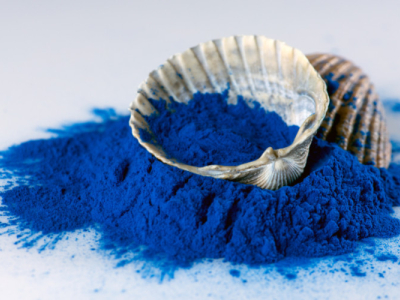
The Phycocyanin is the blue pigment that gives spirulina its color. It is an extremely powerful antioxidant, 20 times more effective than vitamin C according to some studies.
Why is it important for hair? Because oxidative stress is one of the major factors of hair aging: premature graying, thinning, and hair loss.
Phycocyanin protects hair follicles against free radicals and oxidative stress. It also has anti-inflammatory properties that can help with scalp issues (psoriasis, seborrheic dermatitis, etc.).
A study published in Biochemical and Biophysical Research Communications In 2018, it was shown that phycocyanin stimulated the anagen phase (growth phase) of the hair cycle and prolonged this phase, resulting in longer and thicker hair.
It is truly fascinating to see how a single component can have such a significant impact on hair physiology.
The concrete benefits of spirulina on your hair
Now that we have seen why Spirulina works, let's talk about what you can concretely expect in terms of results. Because in the end, that's what interests us, right ?
1. Slowing down and reducing hair loss
It is probably the most sought-after benefit. Hair loss is an issue that affects both men and women, and it can have multiple causes: Stress, nutritional deficiencies, hormonal imbalances, inflammation, etc.
Spirulina acts on several fronts:
- She corrects iron deficiencies. (a major cause of falls in women)
- It provides proteins and amino acids. necessary for the production of keratin
- It reduces inflammation. thanks to phycocyanin
- It improves blood circulation. to the scalp thanks to vitamin B3
A clinical study published in the Journal of Cosmetic Dermatology In 2018, a study followed 40 women suffering from diffuse hair loss. After 90 days of daily supplementation with 3g of spirulina, the researchers observed:
- A 34% reduction in the number of hairs lost daily
- A 16% increase in hair density
- A subjective improvement in hair quality (shine, thickness)
Personally, I have received numerous testimonials from clients who, after a few months of taking organic spirulina, noticed a significant reduction in the amount of hair found on their brush or in the shower.
However, it is important to remain realistic: if your hair loss is of hormonal origin (such as androgenetic alopecia), spirulina alone will probably not be sufficient. It can slow down the process and improve the quality of the remaining hair, but it does not replace an appropriate medical treatment.
2. Stimulation of hair growth
Beyond reducing hair loss, spirulina promotes hair growth by actively stimulating hair follicles.
Several mechanisms come into play:
- The intake of essential nutrients (proteins, iron, B vitamins) allows the follicles to function optimally
- Phycocyanin prolongs the anagen phase. (growth phase) of the hair cycle
- Improvement of blood circulation brings more oxygen and nutrients to the scalp
An in vitro study published in Biochemical and Biophysical Research Communications In 2018, it was shown that spirulina extract increased the proliferation of hair follicle cells by 142% compared to the control group. The researchers also observed a 17% prolongation of the anagen phase.
Specifically, this translates to:
- Hair that grows faster (about 1-2 cm more per month)
- Hair that stays in the growth phase longer before entering the resting phase
- A denser regrowth in sparse areas
It is important to note that the results are not immediate. The hair cycle is long (2-7 years depending on the individual), and it generally takes 3 to 6 months of regular supplementation to observe significant changes.
3. Improvement of thickness and texture
Many people notice that their hair becomes thicker and stronger after a few months of taking spirulina.
This is explained by:
- A better synthesis of keratin thanks to sulfur-containing amino acids (cysteine, methionine)
- A strengthening of the hair structure thanks to high-quality proteins
- Improved hydration thanks to essential fatty acids (GLA)
A study published in Recherche et Pratique en Nutrition In 2015, it was shown that spirulina supplementation increased hair diameter by 11% after a 6-month course at a dose of 2g per day.
Visually, this translates to hair that appears fuller, denser, with individual strands that are thicker and more resistant to breakage.
It is particularly interesting for people who naturally have fine hair, or whose hair has thinned with age or due to chemical treatments (coloring, straightening, etc.).
4. Increase in brightness and vitality
Dull and lifeless hair, does that sound familiar? It's often a sign of a nutritional deficiency or an unhealthy scalp.
Spirulina acts on two levels:
At the level of the scalp : GLA (gamma-linolenic acid) nourishes and hydrates the scalp. A healthy scalp produces better quality sebum, which naturally protects and adds shine to the hair.
At the level of the hair fiber Amino acids repair the scales of the cuticle (the outer layer of the hair). When the cuticle is smooth and well-sealed, light reflects better on the hair, resulting in increased shine.
A little personal tip: in addition to consuming spirulina orally, I occasionally like to make a homemade hair mask using spirulina powder mixed with coconut oil or plant-based yogurt. The shine effect is truly impressive.
5. Protection against oxidative damage and premature aging
Hair aging is a natural process, but it can be accelerated by:
- Oxidative stress (pollution, UV, tobacco, psychological stress)
- Nutritional deficiencies
- Repeated chemical treatments
- Hormonal imbalances
Spirulina, due to its richness in antioxidants (phycocyanin, beta-carotene, vitamin E, SOD), protects hair follicle cells from damage caused by free radicals.
A study published in the Journal of Medicinal Food In 2007, it was shown that spirulina reduced oxidative damage in capillary cells by 67% compared to the control group.
Specifically, this translates to:
- Delayed graying of hair
- Maintaining the texture and thickness of hair for a longer time
- A better resistance to external aggressions (UV, pollution, hairdryer heat, etc.)
Honestly, when I see people aged 50-60 with still thick and shiny hair, I'm ready to bet that they have a diet rich in antioxidants. In this context, spirulina is a valuable ally.

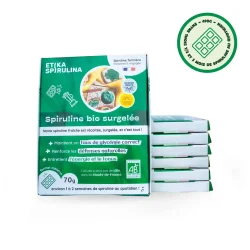
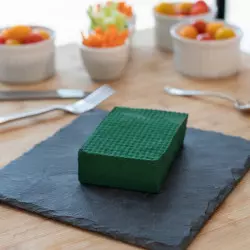
How to use spirulina for your hair
Alright, all of this sounds great, but concretely, how do we do it? What dosage? In what form? At what time of the day? I often receive these questions, so here are my recommendations based both on scientific literature and our experience at Biovie.
What dosage of spirulina for results on hair ?
Most clinical studies that have shown significant results on hair growth and quality have used doses between 2 and 5 grams per day.
My personal recommendation:
To give you an idea, 3g of spirulina is:
Personally, I take 3g every morning for years. Aurélie takes 2g. We adjust according to our needs and how we feel.
In what form should spirulina be consumed ?
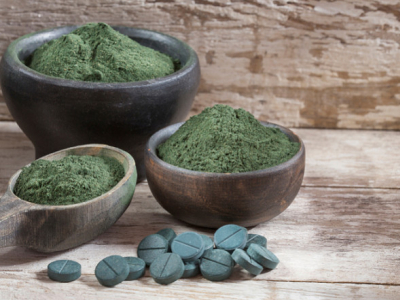
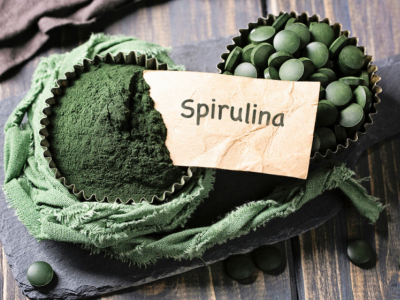
Here are the different forms of spirulina:
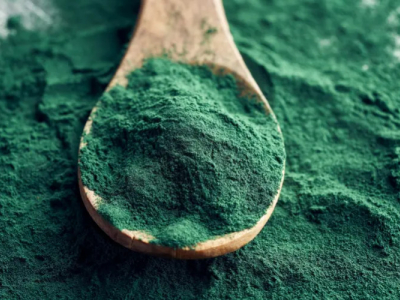
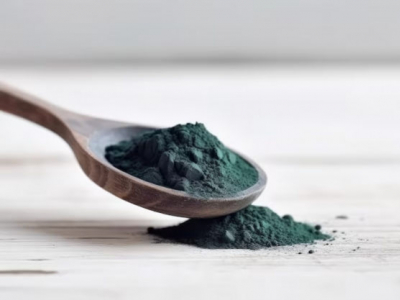
1. The powder
Advantages:
Disadvantages:
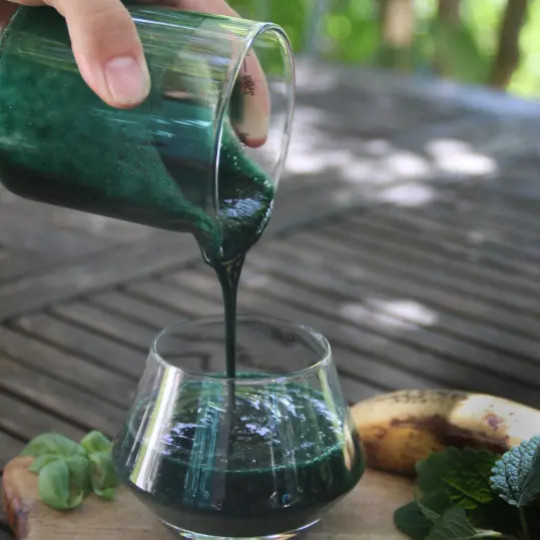
How to use it: In a green smoothie in the morning (banana, spinach, plant-based milk, spirulina), in a fresh fruit juice, or simply diluted in a bit of water with lemon to mask the taste.