


Here is a topic that comes up again and again in our conversations with you, especially as winter approaches: how can you take care of your natural defences through your diet? Spirulina is one of those food supplements you hear about everywhere as soon as immunity comes up, but what do the studies really say? After years of digging into the subject, reading the scientific studies and above all listening to feedback from our community, I felt it was time to share with you what we really know about the link between spirulina and immunity.
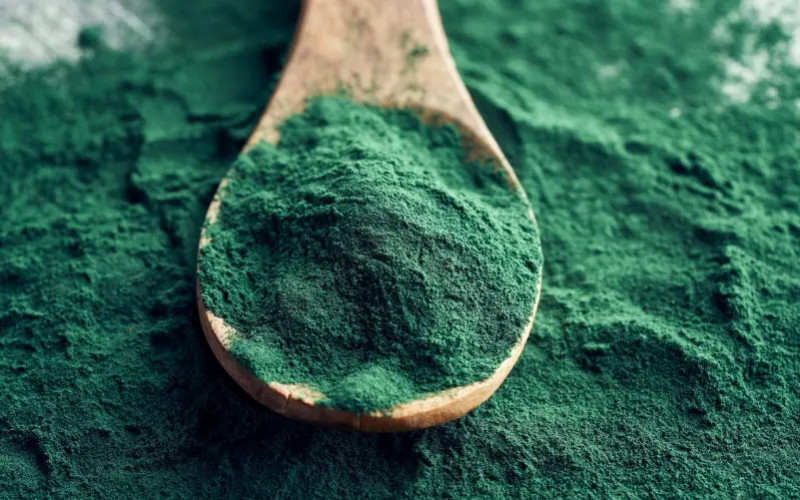
Spirulina and immunity: 12 scientific studies
Share this article

Why our immune system depends on what we eat
Frankly, our natural defences are put to the test every day. Between air pollution, chronic stress that has become the norm in our modern lives, a diet often lacking in essential micronutrients and a severe shortage of restorative sleep, our body is sounding the alarm. According to data from Santé Publique France, more than 60% of the French population is deficient in vitamin D, a vitamin that contributes to the normal function of the immune system. This deficiency particularly affects people living in regions with little sunshine and those who spend most of their time indoors.
The immune system is a bit like an inner army that defends us 24/7 against viruses, bacteria and other pathogens. But this army needs quality ammunition to work properly. That ammunition is the nutrients we provide through our diet. When our diet is unbalanced or deficient, our natural defences gradually weaken and we become more vulnerable to infections, particularly during the winter months.

Spirulina: a micro-alga widely studied in relation to immunity
Spirulina, or Arthrospira platensis for scientists, is a filamentous cyanobacterium that has existed on our planet for more than 3 billion years. This age is not insignificant: it reflects an exceptional capacity for adaptation and survival. Grown today in alkaline freshwater ponds, it concentrates in its microscopic filaments a nutritional cocktail of a density rarely found in the plant kingdom.
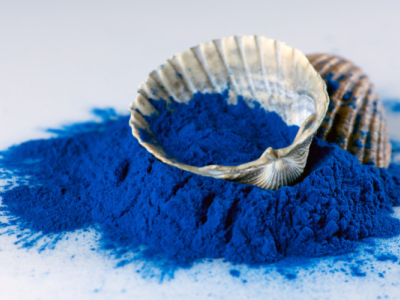
What makes the relationship between spirulina and immunity so interesting is its unique composition. It contains between 55 and 70% complete protein, meaning protein with all the essential amino acids our body needs. But beyond this protein content, it is above all its phycocyanin content that has caught researchers' attention for several decades. This blue-green pigment, characteristic of spirulina, is the subject of numerous studies, in particular on its interactions with immune cells.
Research published in the Journal of Medicinal Food in 2011 observed an increase in the activity of Natural Killer (NK) cells, white blood cells of innate immunity, in people consuming spirulina every day. In this study of 40 people aged over 50, participants who took 3 grams of spirulina a day for 12 weeks showed a 40% increase in the activity of their NK cells compared with the placebo group.
The mechanisms studied by researchers
Researchers have looked at several possible mechanisms. First, spirulina's sulphated polysaccharides, studied for their influence on the production of cytokines, the chemical messengers that coordinate the immune response. A Korean study published in the Journal of Korean Society of Food Science and Nutrition observed that a spirulina extract was associated with increased production of interleukin-2 and interferon-gamma, two key cytokines in antiviral defence.
Phycocyanin, the blue pigment I mentioned, is studied as one of spirulina's natural antioxidants, for its ability to neutralise free radicals in the laboratory. According to a Chinese study published in 2013, measured in vitro, the antioxidant capacity of phycocyanin is said to be 16 times greater than that of vitamin E and 20 times greater than that of vitamin C. These test-tube measurements do not translate directly to the human body, but they explain researchers' interest in this molecule. This is also the ideal moment to stress that the quality of spirulina is absolutely decisive. Spirulina grown under optimal conditions, with pure water and no heavy metal contamination, will retain its full content of active phycocyanin. At Biovie, we have chosen to offer only certified organic spirulina, grown on farms we have personally visited and whose practices we know.
Researchers have also looked at the link between spirulina and the gut. We now know that 70% of our immune system is located in the intestines. A permeable or inflamed intestinal lining seriously compromises our defences. A 2008 Turkish study looked at spirulina, intestinal inflammation and the balance of the bacterial flora, two parameters that research links to the functioning of immunity.
Spirulina nutrients linked to immunity
Beyond phycocyanin, spirulina concentrates several nutrients involved in the functioning of the immune system. It contains highly bioavailable iron, unlike conventional plant iron, which is often poorly absorbed. Iron contributes to the normal function of the immune system, and iron deficiency remains common, particularly among women of childbearing age and vegetarians. Three grams of spirulina provide about 8 mg of iron, or nearly 50% of the recommended daily intake.
Zinc, another trace element linked to immunity, is also present in spirulina, but in small quantities. This mineral is involved in the differentiation of T lymphocytes, the white blood cells specialised in recognising and destroying pathogens. Zinc contributes to the normal function of the immune system: for your intake, rely instead on pumpkin seeds, legumes and nuts.
Spirulina also provides essential omega-6 fatty acids, notably gamma-linolenic acid (GLA), a precursor of molecules involved in regulating inflammation. Chronic low-grade inflammation, which has become a public health issue in Western societies, disrupts the normal functioning of the immune system. Spirulina's GLA is one of the avenues researchers are studying on this subject.
As for vitamins, spirulina also provides B vitamins (B1, B2, B3, B5, B6, B8, B9, B12) in variable amounts. These vitamins act as cofactors for the metabolic enzymes involved in the energy metabolism of our cells. Vitamin B12, often lacking in vegans, is found in spirulina in a form whose real bioavailability is still debated in the scientific community. As a precaution, we recommend that people following a 100% plant-based diet take B12 from other verified sources.
What clinical studies say about winter infections
Research on spirulina and respiratory infections is of particular interest to anyone concerned about their natural defences in winter. A randomised double-blind study published in 2012 in the European Journal of Clinical Nutrition followed 169 people for 3 months during winter. The group taking 2 grams of spirulina a day showed a 32% reduction in the number of infectious episodes (colds, flu) compared with the placebo group. The average duration of symptoms was also 28% shorter, falling from 7.2 days to 5.2 days.
Another Japanese study conducted in 2004 looked specifically at older people, a population particularly vulnerable to infections because of the natural decline of immunity with age. Researchers observed an increase in IgA antibody levels in saliva, which play a part in mucosal defence, in participants taking 3 grams of spirulina a day for 16 weeks. These participants also reported feeling better overall.
Regarding seasonal allergies, which result from an overreaction of the immune system, several studies have looked at spirulina. A 2008 Turkish study of 127 people with allergic rhinitis observed a reduction in reported symptoms (sneezing, nasal congestion, itching) after 12 weeks at 2 grams a day, as well as lower blood histamine levels. These results come from a single trial and do not make spirulina a treatment for allergy.
How to include spirulina in your daily routine
The question of dosage comes up often. Scientific studies on spirulina and immunity generally use 2 to 4 grams of spirulina a day. Some research has used up to 8 grams a day without observing notable side effects, but this dose is not necessary for most people.
In practice, I recommend starting gradually, especially if spirulina is new to you. Start with 1 gram a day for a week (about half a teaspoon), then increase gradually to 3 grams. This progression lets your body adapt and avoids the mild digestive discomfort some people may feel at first (while your digestion gets used to this very protein-rich food).
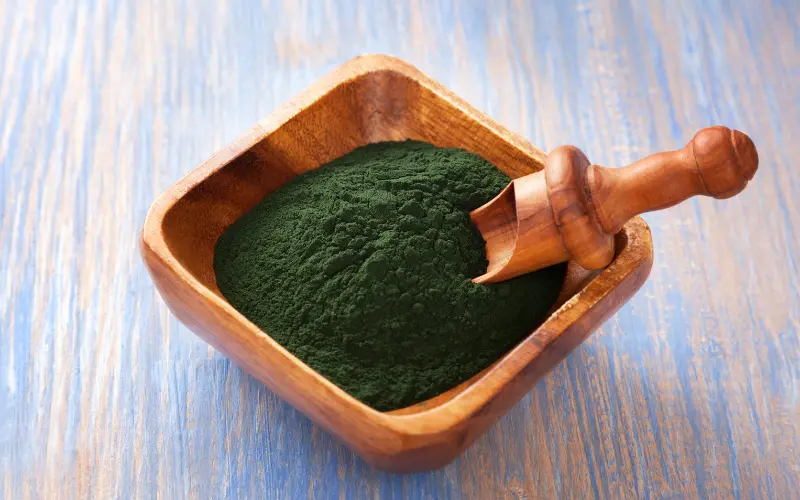
The best time to take spirulina is in the morning, ideally 30 minutes before breakfast or with it. Taking it in the morning fits easily into your routine, and the iron it provides contributes to the reduction of tiredness. You can mix it into fresh fruit juice, a green smoothie, or simply dilute it in a large glass of water. Personally, I really like combining it with fresh orange or lemon juice, as vitamin C increases the absorption of the iron in spirulina.
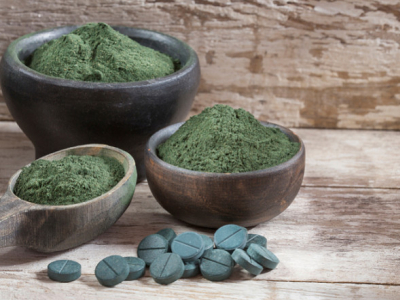
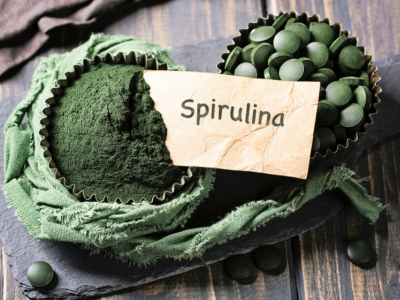
For those who do not like spirulina's particular taste, tablets are a practical alternative. These tablets are simply cold-pressed without any additives, preserving the full quality of the spirulina.
A spirulina course: when to start?
Many of you ask us when to take a course of spirulina. For your natural defences in winter, I suggest two key periods in the year: September-October before winter arrives, and February-March to support the body at the end of the cold season when reserves are at their lowest. A 2 to 3 month course at these times ensures a regular intake of iron, which contributes to the normal function of the immune system.
If you would like to take it all year round, continuous use is possible. In that case, many people prefer to take breaks, for example one week every two months. If you are immunocompromised or undergoing treatment, talk to your doctor first.
Children can also take spirulina, for example during the months when they attend a group setting (nursery, school). The doses will of course be adapted to age: 1 gram a day for 3-6 year olds, 2 grams for 6-12 year olds. Spirulina flakes can easily be sprinkled on their meals, making it fun and simple to take.
Spirulina and living food: a winning combination
As part of a living food approach, spirulina naturally finds its place. Its enzyme content and exceptional bioavailability make it an ideal supplement to accompany a transition towards more raw food. Many people starting out with raw food may feel a temporary dip in energy while their digestive system adapts. Spirulina then provides a dense nutritional helping hand that makes this transition easier.
Combined with sprouted seeds, rich in living enzymes and vitamins, spirulina complements a raw plant-based diet well. Sprouted seeds also provide antioxidants and bioavailable nutrients. At home, we particularly like combining spirulina with our alfalfa or broccoli sprouts in mixed salads or green juices. To sprout your seeds easily, our Easygreen Sol sprouter allows automatic sprouting without electricity.
This synergy comes from a perfect nutritional complementarity. Where spirulina provides complete protein and phycocyanin, sprouted seeds provide active digestive enzymes and fresh chlorophyll. Together, these living foods make up a plate that is particularly dense in nutrients.
Quality criteria for a good spirulina
Not all spirulinas are equal: this is something we have seen for years. The quality of spirulina depends on many factors: the purity of the growing water, sunshine, temperature, drying and of course the absence of contamination by toxins or heavy metals.
A quality spirulina must be grown in controlled water, free of pesticides and heavy metals. Drying is also crucial: drying at low temperature (below 42°C) preserves all the heat-sensitive nutrients, in particular enzymes and precious phycocyanin. Drying at high temperature degrades these fragile molecules and drastically reduces the nutritional value of the final product.
Organic certification, even though it is not compulsory for a micro-alga, is an additional guarantee of seriousness. It guarantees the absence of chemical fertilisers near the ponds and strict specifications on production conditions. At Biovie, we have chosen exclusively organic spirulina certified by Ecocert, from farms we have visited and whose practices we know.
Another often overlooked criterion: the phycocyanin content. A spirulina of exceptional quality contains between 15 and 18% phycocyanin. This high level reflects optimal growing conditions and careful drying. Unfortunately, many commercial spirulinas show much lower levels, around 10%, which makes them products significantly less rich in this pigment.
Beyond immunity: other avenues being studied
Although we have focused on immunity, it would be a shame not to mention the other topics being studied. Its iron content is interesting: iron contributes to the reduction of tiredness and to normal formation of red blood cells and haemoglobin. A 2011 Indian study of anaemic women observed after 30 days of spirulina a normalisation of haemoglobin levels in 87% of the participants.
Studies have also looked at spirulina's ability to bind certain metals. Research conducted in Bangladesh studied its use in populations exposed to arsenic-contaminated water, a very specific exposure situation.
On the cardiovascular side, several studies have looked at the lipid profile. A 2018 meta-analysis of 7 randomised studies observed in supplemented participants an average reduction in total cholesterol of 4.67% and in triglycerides of 11.2%. These differences remain modest.
Spirulina and lifestyles: adapting your supplementation
For athletes, spirulina is a particularly interesting supplement. Intense physical exercise generates oxidative stress and places heavy demands on the immune system, temporarily increasing the risk of infections (the well-known post-exercise immune window). A 2010 Greek study, conducted on a small group, observed with 6 grams of spirulina a day for 4 weeks a 7.3% improvement in endurance performance and a reduction in markers of muscle damage.
Vegetarians and vegans find in spirulina a concentrated source of complete protein and highly absorbable non-haem iron, two nutrients that can sometimes be tricky to cover on a 100% plant-based diet. Even though the question of vitamin B12 is still debated, spirulina provides many other interesting nutrients.
For seniors, whose immunity naturally declines with age (known as immunosenescence), several studies have looked at spirulina. Those conducted in this population observed changes in certain immune markers, such as the NK cells and IgA mentioned above. Its natural antioxidants, measured in the laboratory, are also the subject of research on ageing.
Conclusion
Spirulina is today one of the most studied food supplements in relation to immunity. The 12 studies presented here, its richness in phycocyanin and natural antioxidants, and above all its iron, which contributes to the normal function of the immune system, make it an interesting food to include in a varied diet. At Biovie, we have chosen to offer only very high quality organic spirulina. Do not wait until next winter to take care of your natural defences in winter: a course of a few months fits easily into your daily life.
The full range Spirulina
4 products
Frequently asked questions about spirulina and immunity
Can spirulina replace my medication for immunity?
No, spirulina is a food supplement, not a medicine. It notably provides iron, which contributes to the normal function of the immune system, but it can in no way replace prescribed medical treatment. If you take immunosuppressants following a transplant or for an autoimmune disease, consult your doctor before taking spirulina, as an interaction with this type of treatment cannot be ruled out.
How long does a spirulina course last in immunity studies?
In terms of vitality, the iron in spirulina contributes to the reduction of tiredness. In terms of immunity, studies assess their markers after at least 4 to 6 weeks of regular intake, and most protocols last around 12 weeks.
Can I give spirulina to my children?
Yes, spirulina is suitable for children from the age of 3. Doses should be adapted to age: 1 gram a day for 3-6 year olds, 2 grams for 6-12 year olds. Always start gradually and choose a high-quality organic spirulina, free from contamination.
Does spirulina have side effects?
Spirulina is generally very well tolerated. Some people may experience mild digestive discomfort (bloating, faster transit) at the start of a course, while their digestion adjusts. These symptoms usually disappear after a few days. If you have kidney disease or gout, ask your doctor for advice, as spirulina is rich in protein and purines.
Can you take spirulina all year round or should you take breaks?
Both approaches are possible. Many of our customers do 2-3 month courses in September and February. If you prefer continuous use, it is possible, with for example a one-week break every two months.
What is the difference between spirulina powder and tablets?
The nutritional quality is identical if the tablets are cold-pressed without additives. Tablets offer precise dosing and avoid the strong taste of spirulina, which some find hard to accept. The powder mixes easily into smoothies and juices, allowing more culinary creativity. Both forms provide the same nutrients.
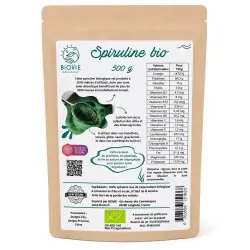
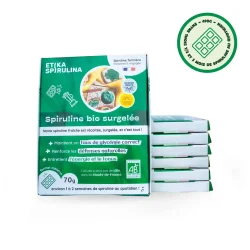
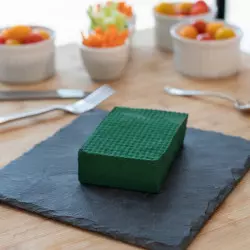
You will find the different forms of spirulina - powder, tablets, fresh frozen - in our Spirulina section.
Updated: October 2026. Article reviewed by Éric Viard, founder of Biovie and ISTOM engineer, co-author of “Algues au quotidien” (Gallimard, 2024) - Best Cookbook in the World, Gourmand Cookbook Awards 2025, and Best Cookbook in France, Académie Nationale de Cuisine 2025.
Share this article
Related articles