











Milk kefir and fruit kefir (or water kefir) are fermented drinks rich in probiotics that have grown in popularity in recent years as an alternative to soda or sparkling alcoholic drinks. Thanks to its tangy flavour, kefir is enjoyed by a wide audience of lacto-fermented drink and healthy-eating fans, and is even called a miracle drink. You'll find it easily in the chilled aisle of organic shops, but it's just as easy to make at home with kefir grains.
But many people wonder: can you drink it every day? Is it good or bad to have it 7 days a week? This drink is known for its many health benefits, but as with any food, excessive consumption of more than a litre a day can cause some temporary digestive discomfort. We'll give you everything you need to decide whether it's a good idea to drink this beverage every day, and whether it's worth adding to your daily routine to support your immune defences and your gut microbiota.
Share this article

What is the best time to drink kefir?
First of all, if you don't like the kefir sold in organic shops or supermarkets, or if you're after a more economical option, you can check out our blog post "How to make homemade kefir": there you'll discover our easy kefir recipe, suitable even for beginners! There's an endless variety of recipes and flavours to explore (such as our coconut water kefir recipe), and all you need is a handful of good-quality kefir grains to make it your favourite drink.
Milk kefir, a dairy drink, and fruit kefir are two different types of kefir, obtained through the symbiotic culture of micro-organisms, yeasts and healthy bacteria that drive the fermentation of these drinks.
Unlike fruit kefir, milk kefir contains lactose and milk proteins, which makes it unsuitable for a vegan diet and may not suit everyone.
> However, in our shop we also offer vegan starter cultures with which you can make plant-based milk kefir!
Whether it's milk kefir or fruit kefir, both can be enjoyed at different times of day. But to make the most of its benefits, it's best to start your day with a cup as soon as you wake up. This drink with countless virtues will give you a boost of energy in the morning and help you feel in a good mood. It lets the probiotics it contains wake up your digestive system by supplying good bacteria, and support your gut health by strengthening your microbiota from the start of the day.
Kefir can be enjoyed with every meal to ease intestinal transit and digestion, or between meals to curb small hunger pangs. It contains protein, calcium and B vitamins, making it a healthy, nourishing snack. Kefir contains protein for muscle recovery, in particular by reducing lactic acid build-up after physical effort, and electrolytes to rehydrate the body. After a workout, it makes a great drink rich in beneficial bacteria and natural probiotics.
The full range Drinks
11 products
Discover the full range


You'll find our kefir grains, alongside our other live cultures, in our Ferments range.
How do you do a kefir cure?
A cure helps support overall body health, and in particular the well-being of the digestive system.
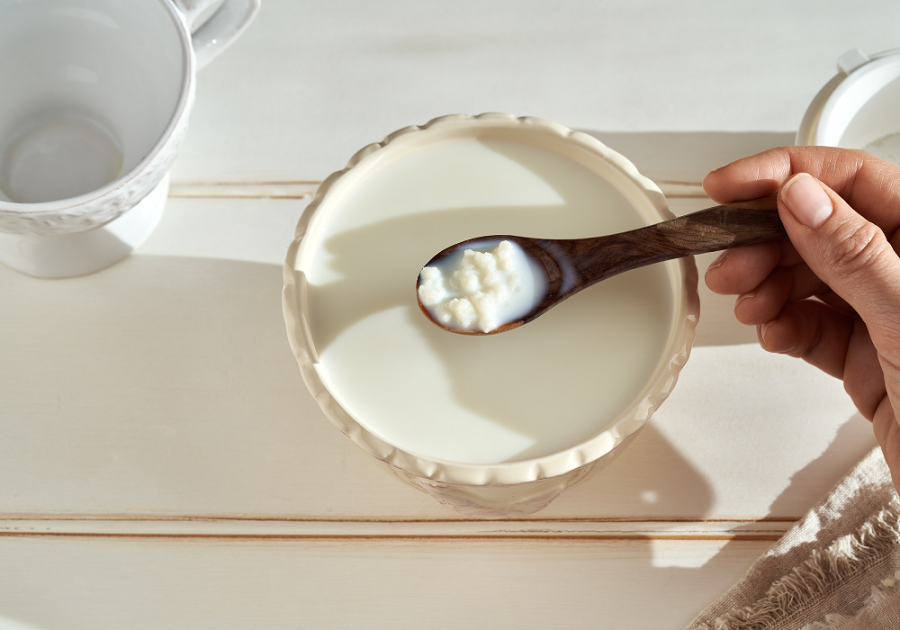
As a reminder, kefir grains drive the fermentation of the drink; they are a symbiotic mix of bacteria and yeasts (known as a SCOBY). The grains are said to contain up to 61 different strains, including the well-known lactic bacteria that produce bacteriocins with broad-spectrum antimicrobial action. This culture of micro-organisms ferments the sugar and nutrients in the mix of fruit and water or milk, and produces gas, after a fermentation process of 24 to 48 hours. The result: a sparkling, slightly tangy drink with a very low residual sugar content.
> It contains plenty of probiotics that are excellent for our body, feeding our gut microbiota, essential to our overall health. That said, if you're not yet used to kefir or lacto-fermented foods, it's best to adjust the guidelines below to your own body's reactions and start with less than half a glass a day for this cure.
> Generally speaking, you can consider a cure of up to 1 litre of kefir a day. There's no set length for a cure: some people opt for a one-week cure, while others may choose to extend it to two weeks or more. This will depend on how you feel and the benefits or positive effects you notice. Finally, if you're not making your own drink, choose an organic kefir for your cures to get the best food quality.
How much kefir should you drink per day?
To avoid upsetting your gut and its bacteria, it's recommended to start with a small amount if you're not used to kefir: half a glass to one glass a day (maximum) is enough for your gut to get used to it.
Once your body is used to it, you can increase the dose to up to 2 or 3 glasses a day. This amount can be drunk in one go or spread out over the day. It's important to listen to your body and adjust your intake based on your comfort and personal reactions.
To sum up, kefir is a natural probiotic drink rich in probiotics that offers many health benefits when consumed in moderation. Drinking up to a litre of kefir a day is an ideal way to start the morning and give your digestive system a good probiotic boost, enriching your gut microbiota with beneficial bacteria. However, it's important to listen to your body and stick to the recommended daily amount of kefir to avoid side effects.

Is it good to drink kefir every day?
Drinking kefir every day can bring health benefits for many people. But it's important not to exceed the recommended daily amount of one litre, as excessive consumption could cause unwanted effects such as intestinal upset or abdominal pain in sensitive people, faster transit or bloating. In fact, kefir is often recommended to ease intestinal transit for people who experience recurring constipation.
Daily consumption of this ancestral drink therefore depends on your individual tolerance.
> If you notice your body reacting strongly or negatively after drinking kefir, it's important to cut back on your daily intake.
> If, on the other hand, you feel beneficial effects such as improved digestion or intestinal transit, and an overall sense of well-being, keep up the same routine.
Some people with a chronic inflammatory condition even notice an improvement in their symptoms when drinking small daily amounts. That said, it's advisable to seek medical advice beforehand, including for pregnant women.
Note: these drinks contain less than 1% alcohol from the fermentation of the kefir grains.
Finally, this drink is also a source of essential nutrients such as protein, vitamins A and B (including folic acid B9), calcium, potassium and phosphorus. Drinking it daily can help support a balanced diet and be a plus for improving your quality of life.