



Organic dehydrated fruit kefir grains
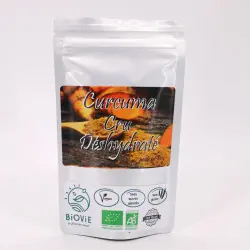
Dehydrated fruit kefir grains, to use for starting your kefir adventure at home. 5g. Certified organic.
New: Orisae becomes My Scoby! The kefir grains are dehydrated for easier and faster activation.
No queries yet, leave the first!
Price:
€15.90
Product availability:
In stock
Tax included


Organic dehydrated fruit kefir grains images


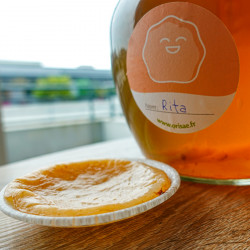
Dehydrated kefir grains (=SCOBY)
Kefir is a traditional drink that is making a comeback, mainly on organic shelves. There are two types of kefir, which do not require the same ferments: fruit kefir and milk kefir (you cannot make one with the grains of the other and vice versa). Here we are talking about fruit kefir!
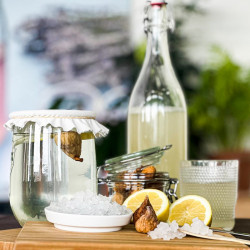
The traditional recipe used for fermentation requires water, sugar, a slice of lemon and a dried fig. This gives a sparkling drink, with a tangy, lively and very slightly alcoholic taste (less than 1%). Vary your aperitifs with a bottle of kefir with a surprising and truly unique taste.
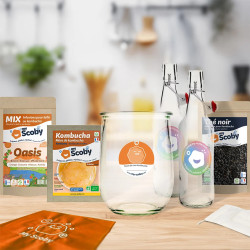
Find the complete kit with the kefir grains + the equipment here.
🍶 All the advantages of dehydrated kefir grains
Dehydrated kefir grains are of just as good quality as fresh grains and contain the same live ferments. The grains keep longer (one year) and are also easier to use and quick to activate. They multiply easily and can be used indefinitely.
Do you know the term SCOBY? It is actually an English acronym for kefir grains: Symbiotic Culture Of Bacteria and Yeast
which means ''symbiotic culture of bacteria and yeasts''.
🍶 How to make your kefir?
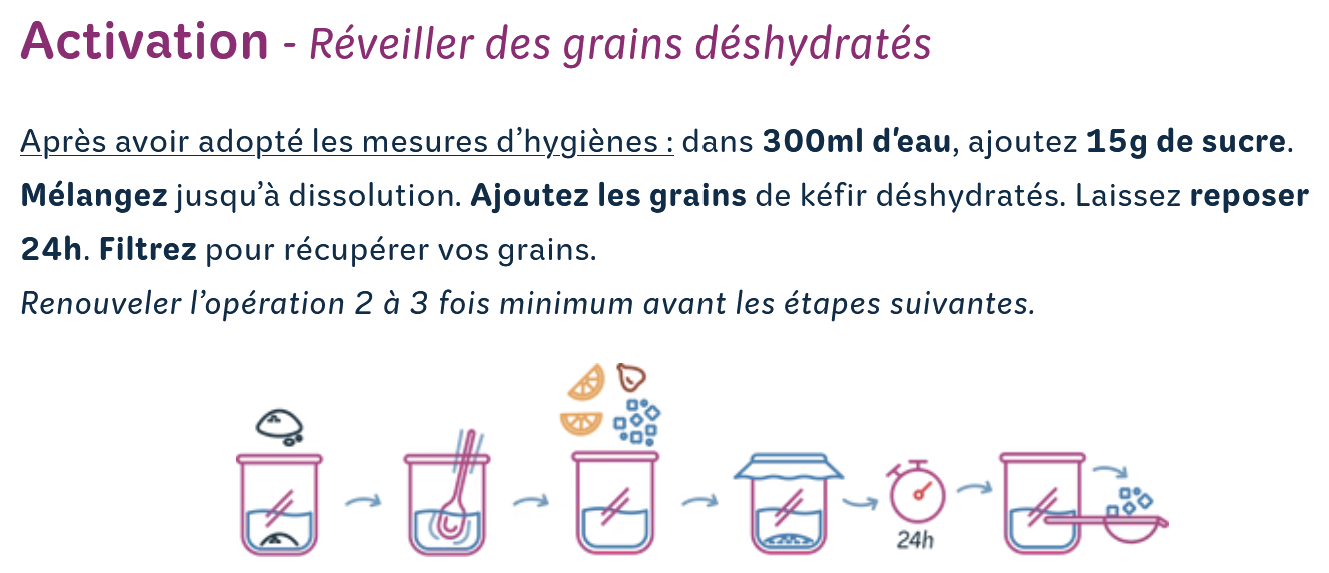
Please note, before first use, the dehydrated kefir grains need to be activated:
First of all, before handling the grains, it is crucial to wash your hands carefully to avoid contaminating them and to make sure you use thoroughly clean utensils and containers. Use hot water and soap to make sure your hands are really clean. Then proceed as follows:
🍶 Find here a tutorial video created by Héllyane one of our customers:
🍶 Then proceed to make your kefir:
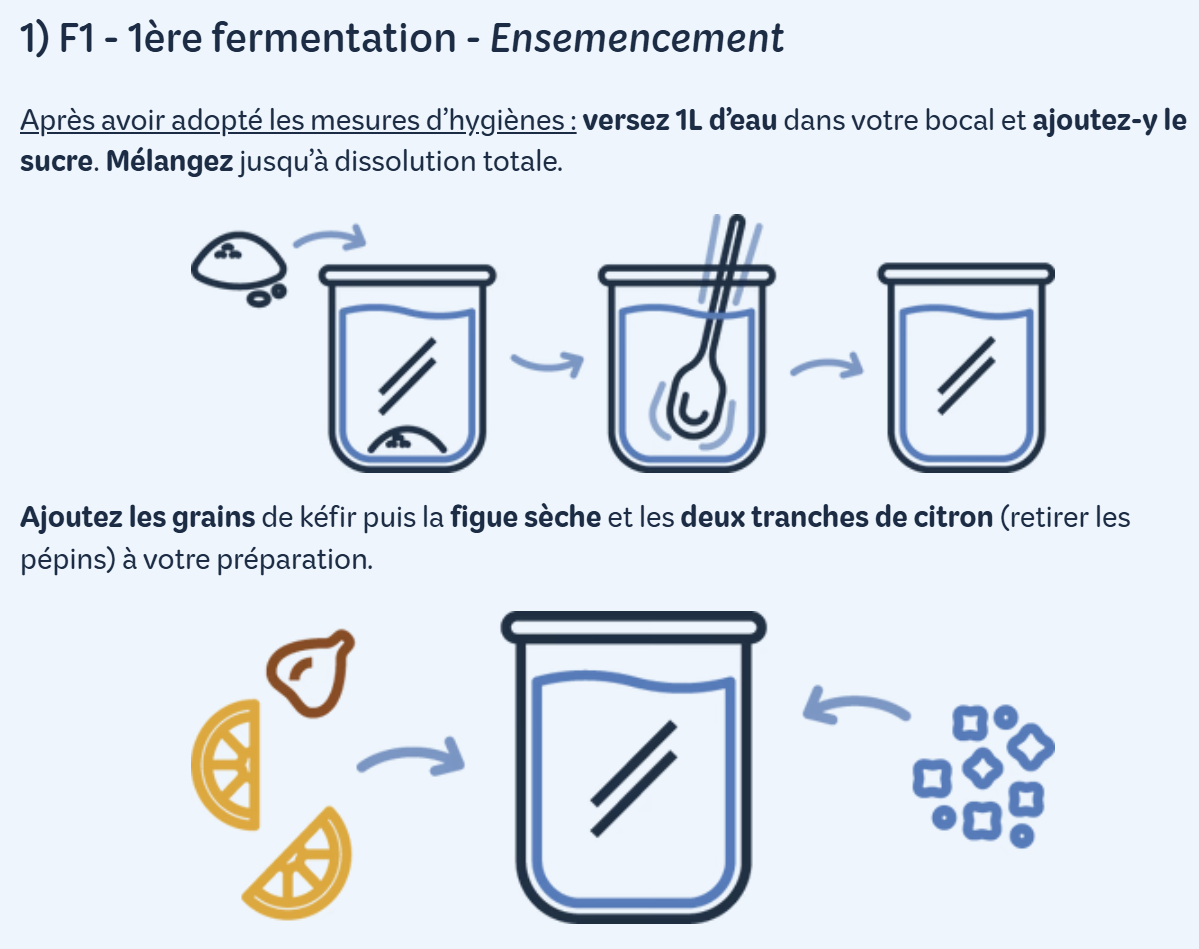
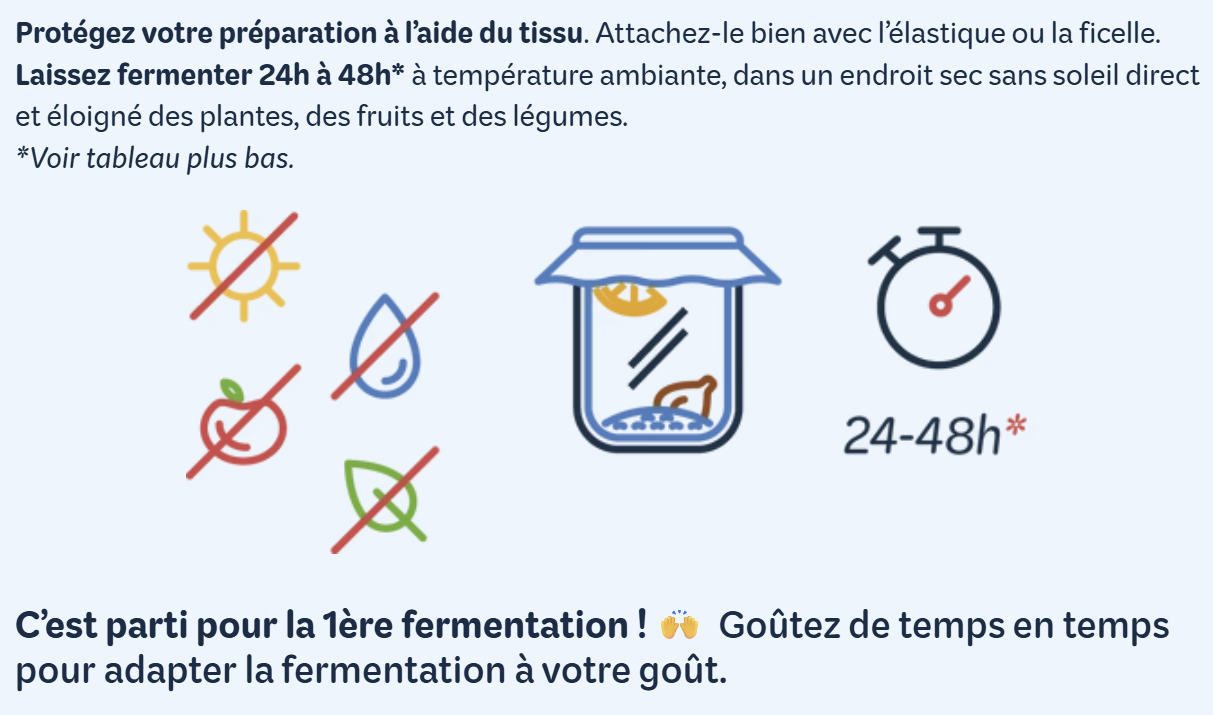
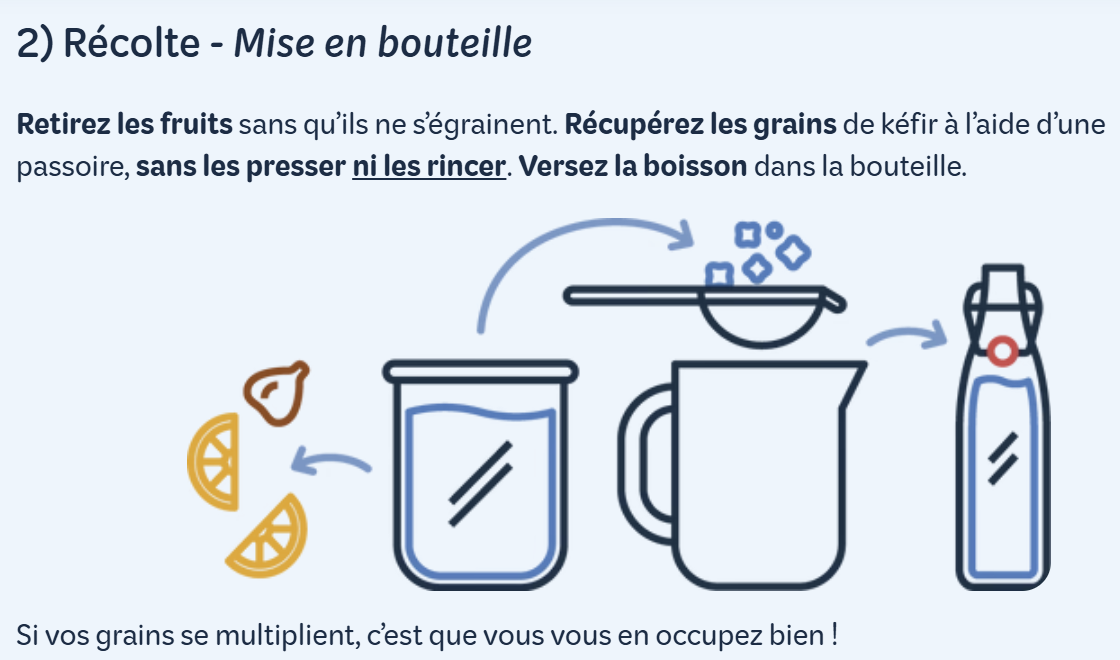
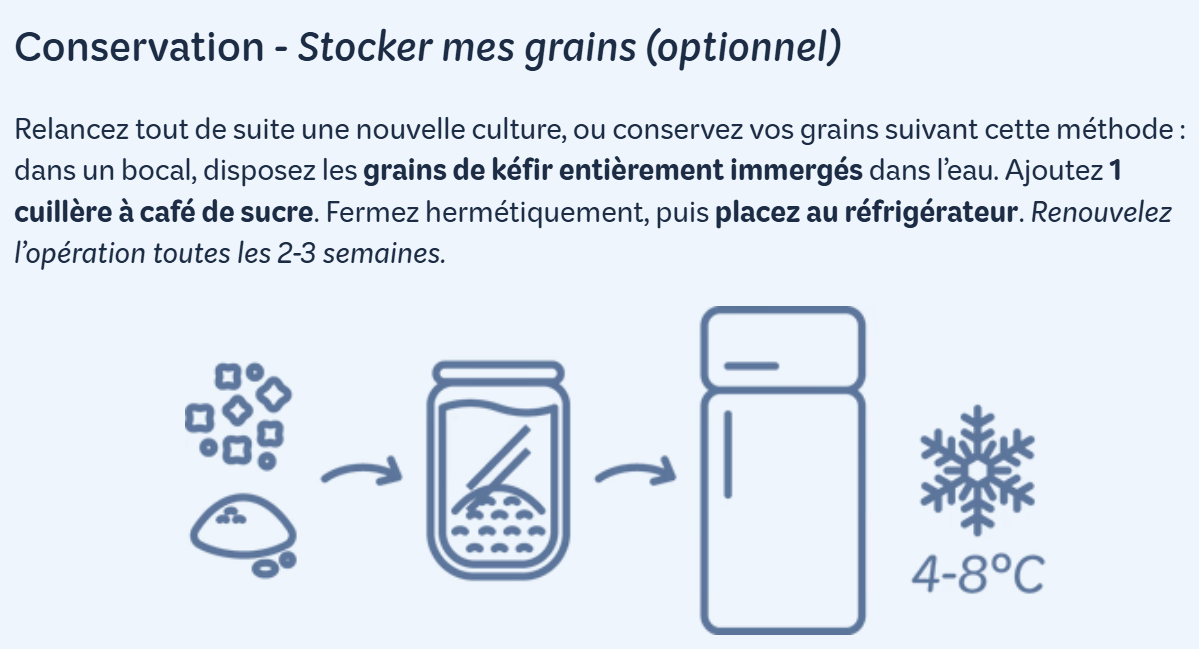
The process is done in several steps: a first fermentation of 24h in water with sugar, a dried fig and slices of lemon, using good-quality water at room temperature. Next comes the harvesting of the grains, which are set aside (either dormant in the fridge, or started again for another fermentation).
 |
 |
 |
 |
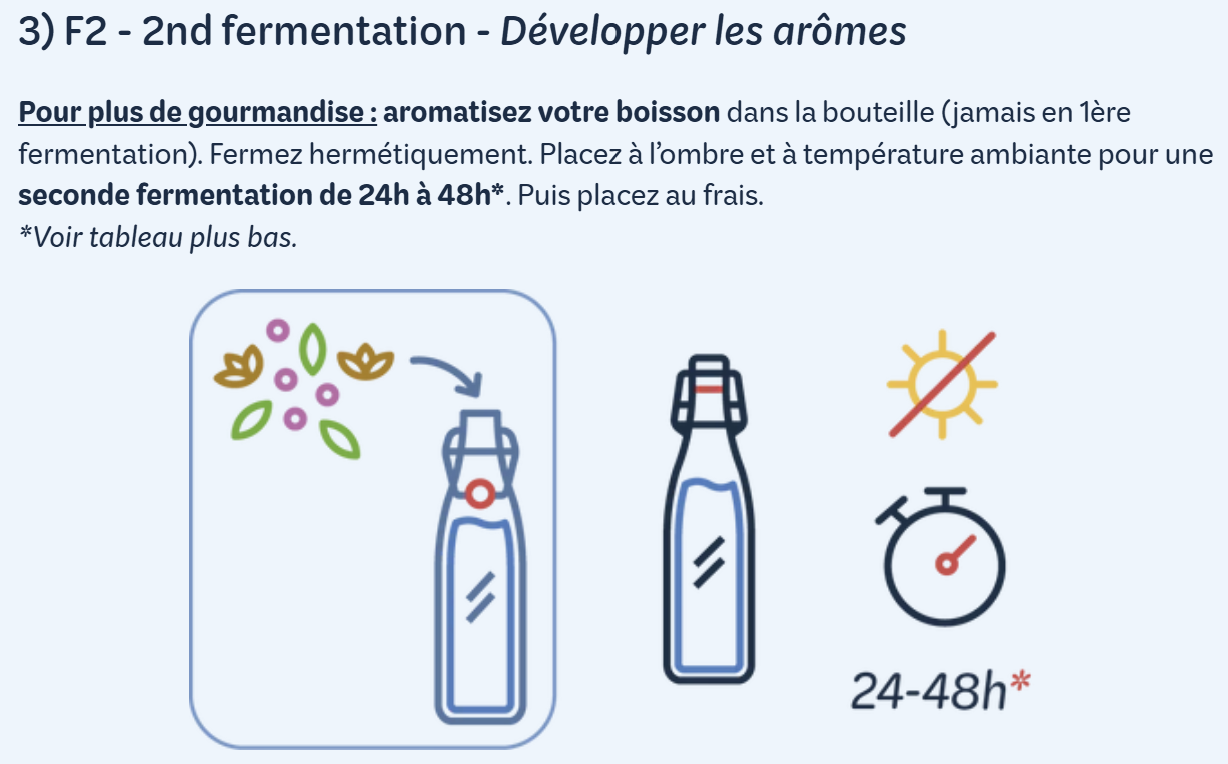
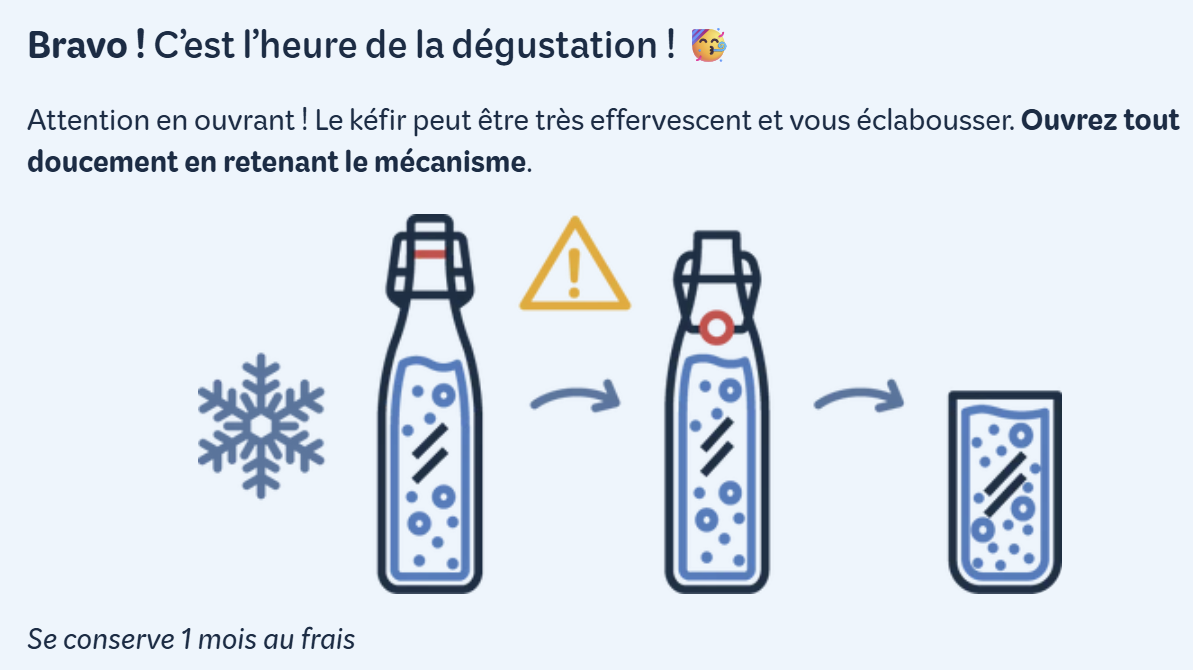
And finally, the second fermentation in the bottle, which gives the fizz, a less sweet taste and above all the development of the ferments.
All the sugar is consumed during fermentation; it is not (or hardly) found in the final drink.
 |
 |
Reminder: you CANNOT make milk kefir with fruit kefir grains.
Fruit kefir grains are a symbiotic culture of bacteria and yeasts (SCOBY), grown on unrefined beet sugar and dried fig, both from organic farming. The list of ingredients is in the PRACTICAL INFO tab.
🍶 Find various articles about kefir on our blog:
How to make 100% homemade fruit kefir?
Making a coconut water kefir
Can you drink kefir every day?
What are the differences between kombucha and kefir?
Kefir or kombucha: complete guide to choosing the ideal fermented drink
Home fermentation: where to start?
Home fermentation: where to start when you're a beginner?
ORISAE - My Scoby
Axel and Cléo founded Orisae in 2020, in the middle of the COVID pandemic. This couple of designers wanted to bring more meaning to their lives and so devoted their time to doing everything so that everyone can discover and adopt the most economical, most ecological and above all most delicious method: home fermentation.
Find here a video and interview we had the pleasure of filming with Cléo , co-founder of Orisae:Increasingly aware of the impact of food on living things, our health and our environment, they started from nothing and launched a crowdfunding campaign that almost tripled its target. Supported by hundreds of people in their project, the kefir and kombucha kits were born, along with a real exchange platform so that everyone can share their home fermentation adventure. Their goal? To make fermentation accessible, simple, fun and above all convivial!
Their workshop is located in Strasbourg and everything is made on site. You could even say they are ferment breeders!
Best before: 24/12/2026
Ingredients: water kefir grains (unrefined beet sugar* (9.1%), dried fig*(1.6%)).
*From organic farming.
Grains grown and tested in an independent laboratory in Strasbourg.
5 g sachet, enough for 1L of drink.
Find the complete kit with the kefir grains + the equipment here.
Best before : 12 months
The documents that back up what we write about this product. Every document is dated; we remove those that are no longer valid.
Biovie organic certificate
Valid until 31/03/2027Orisae organic certificate
Valid until 31/03/2027Wondering… ?
Everything you need to know before ordering.
Be the first to ask a question about this product!
Question about the product
Ask a question