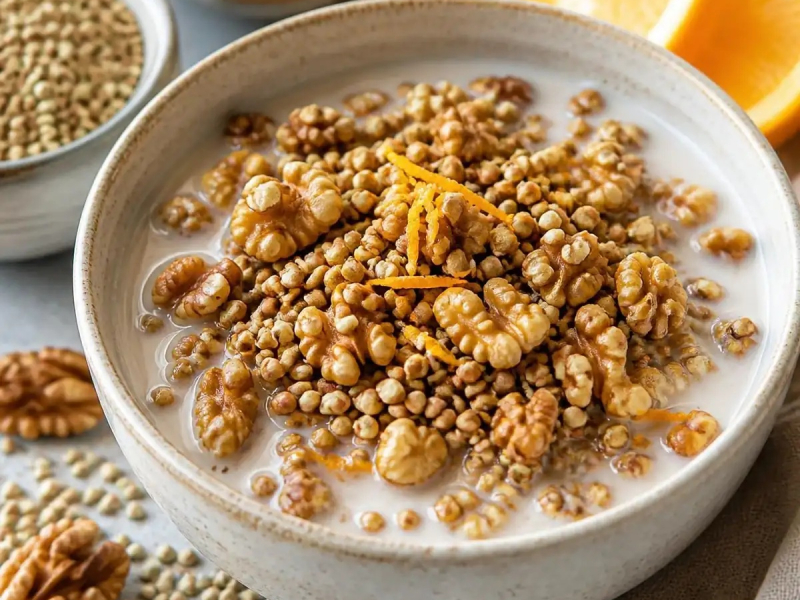


These tartlets are a tribute to the orange and vanilla ice creams of our childhood, in a version made of fruit and nuts. The tart base, built on coconut flakes and ground cashews, has the crunch of a macaroon. On top comes a silky filling of freshly squeezed orange juice, lifted by a generous amount of zest. One night in the fridge is enough for the cream to set and for the essential oils of the zest to spread through the whole mixture. It is a summer dessert to prepare the day before without thinking about it.
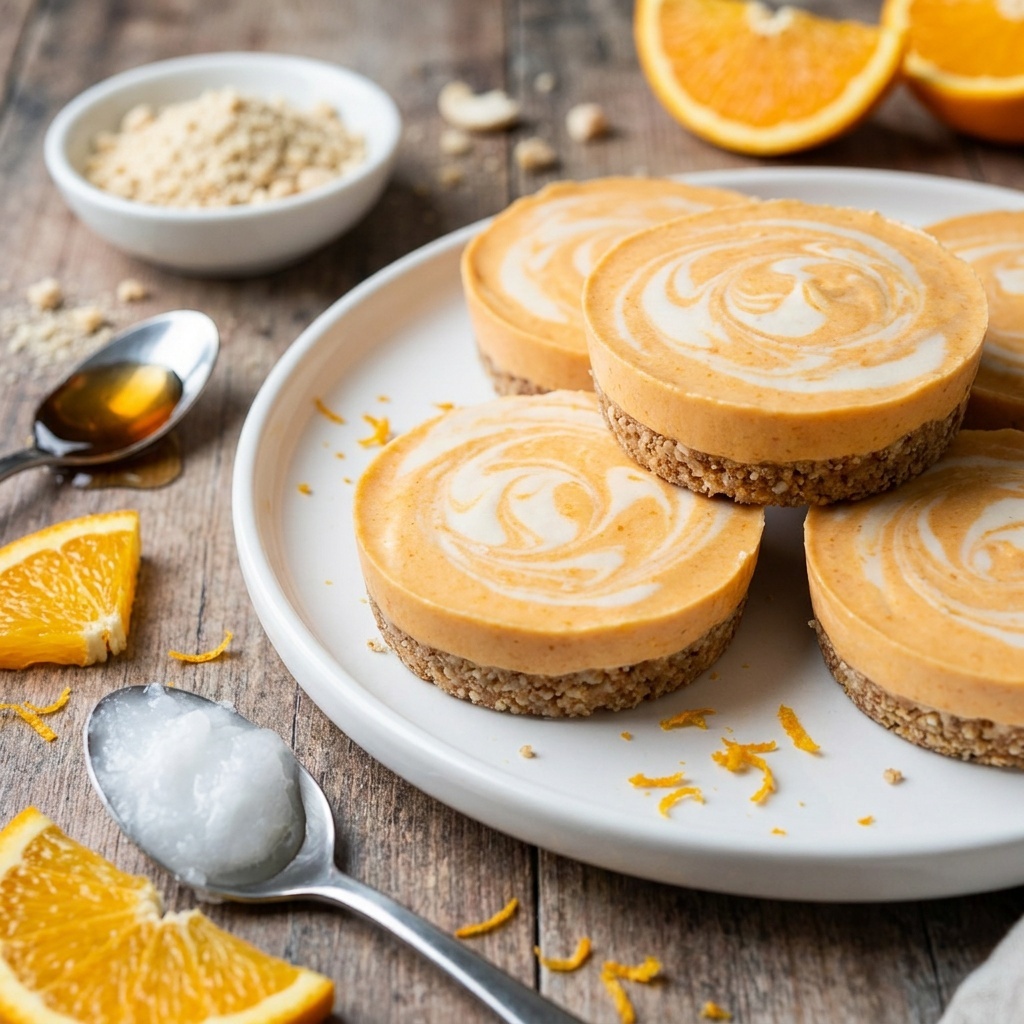
Raw orange and coconut tartlets

Share this article
Ingredients
For the macaroon-style tart base
- 120 g dried coconut flakes
- 65 g ground cashews
- 45 ml honey
- 2 tbsp melted coconut oil
- 1 pinch of Himalayan salt (or the equivalent of 1 tablespoon - 15 ml - of seawater)
For the orange filling
- 195 g cashews, soaked for 2 hours
- 240 ml freshly squeezed orange juice
- 60 ml honey
- 2 tbsp melted coconut oil
- 2 tbsp orange zest
Method
- In a food processor, blend the coconut and the cashews until you get a fine semolina texture.
- Add the honey, the coconut oil and the salt, then blend until the dough turns sticky and holds when pressed.
- Press about 60 g of dough into each tartlet mould, working the base and up the sides. Chill while you make the filling.
- Blend all the filling ingredients in the blender until perfectly smooth, with no grain at all.
- Taste: depending on how tart your orange juice is, add a little more juice or a little more honey to balance.
- Pour the filling into the chilled tart bases and leave to set in the fridge overnight.
- Scatter with fine strips of zest just before serving.
Tip
Always taste your orange juice before dosing the honey: between an end-of-season orange and a ripe juicing orange, the acidity varies by a factor of two. Soaking the cashews is not negotiable if you want a perfectly silky filling: two hours minimum, and rinse them well before blending. Take the zest off before juicing the oranges, it is far easier on a whole fruit. The night of rest is not only about setting: that is when the perfume of the zest spreads through the whole cream.
The full range Organic Fresh Fruit
Enjoy a refreshing and nutritious coconut water thanks to these Thai organic green coconuts, proposed with its machete and STAINLESS STEEL straws, 14 products


FAQ: your questions about raw orange tartlets
How do you prepare orange zest?
Two methods, depending on the tool. With a zester or a fine grater, you take off only the coloured part of the skin, turning the fruit, never reaching the white pith, which is bitter. With a peeler, you take wide strips that you then cut into fine slivers with a knife, which gives the decorative effect of this recipe. Either way, choose untreated oranges, since the zest is eaten raw and concentrates whatever was sprayed on the fruit.
How do you dry orange peel?
The simplest way is to spread it in a single layer on a rack, in a dry, airy room, and wait two to three days. In a dehydrator, allow eight to twelve hours at 40 °C, which preserves the essential oils. Once dry, the peel snaps cleanly and keeps for months in an airtight jar. Ground to a powder in a mill, it flavours a raw dough or a hot drink all winter.
Can oranges be frozen?
Yes, but not whole: the skin and membranes turn bitter and the flesh breaks down on thawing. The best approach is to freeze the juice, in an ice cube tray so you can take out small amounts, and the zest separately, in a small jar. You will then have both components of this recipe available all year round. Segments peeled to the flesh also freeze reasonably well, for use in smoothies.
Share this article
Related articles