

A very simple almond and date tart base holds a creamy, tangy filling, lifted by the liveliness of fresh ginger and lemon. Shaped into small individual pyramids, these cakes look as impressive on the table as they taste. This raw dessert needs a little planning for the soaking and the time in the dehydrator, but it remains very easy to make.
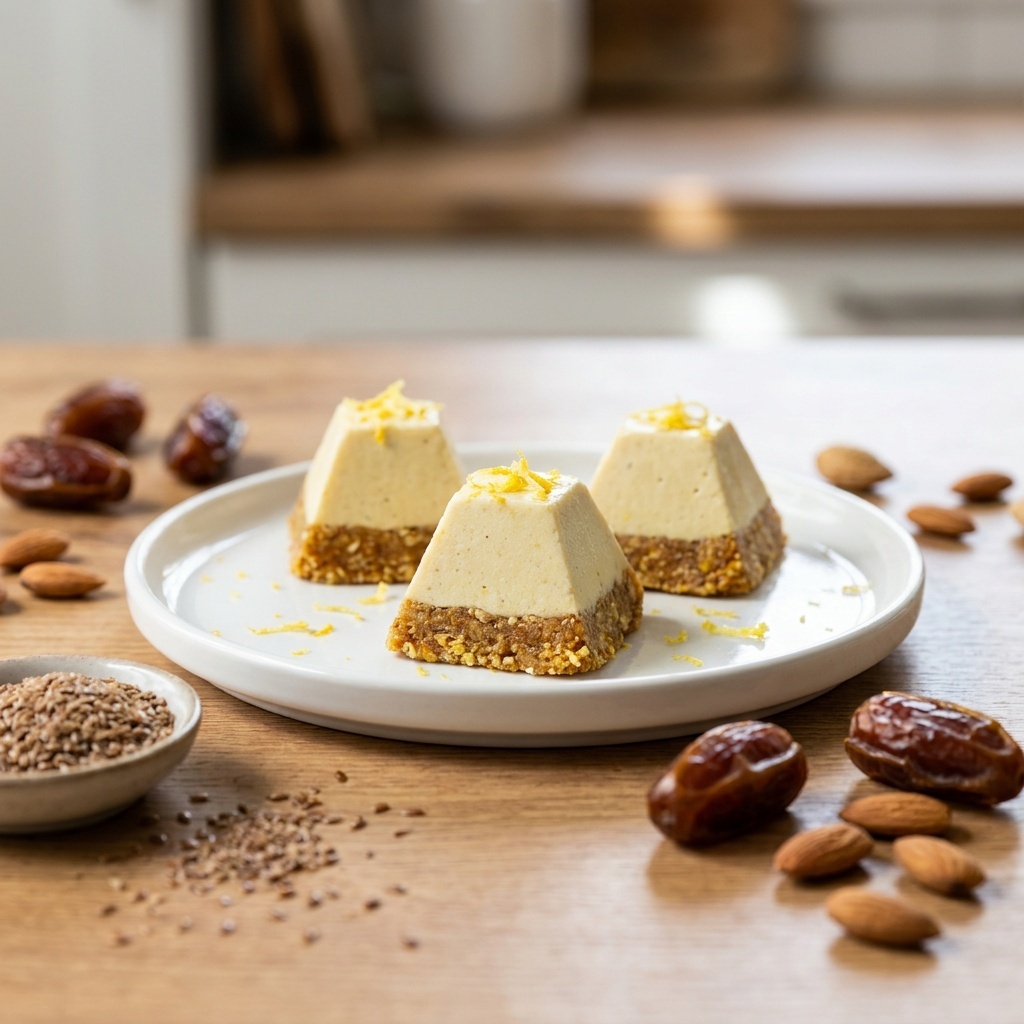
Raw lemon and ginger pyramid cakes

Share this article
Ingredients
Tart base
- 150 g pitted dates, soaked for 2 hours
- 280 g raw almonds, soaked overnight
- 3 tablespoons ground flaxseed
Lemon and ginger filling
- 150 g pitted dates
- 140 g raw almonds, soaked overnight
- 80 g young coconut meat
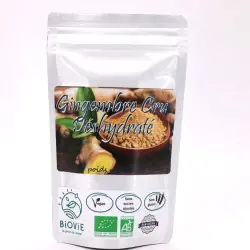
- 50 g chopped fresh ginger (or the equivalent in raw ginger)
- 240 ml freshly squeezed lemon juice
- 25 g zest from unwaxed lemons (about 4 tablespoons)
- 120 ml melted coconut oil
Method
- For the tart base, drain the dates and almonds, then blend them in the food processor with the flaxseed until you get a smooth paste that holds together.
- Transfer this paste to a 23 cm tart or cake tin.
- Press it down firmly with your fingers to form an even tart base.
- Rinse the bowl, then blend the dates, the drained almonds, the coconut meat and the ginger until well combined.
- Add the lemon juice and zest, then the coconut oil.
- Blend again until you get a smooth cream, then spread it over the tart base.
- Place in the dehydrator for about 6 hours at 43 °C: the cake should be firm, but not dry.
- Refrigerate for 2 hours before serving.
Tip
For individual pyramids, fill small silicone pyramid moulds: the lemon and ginger cream at the bottom, then the tart base pressed firmly on top. Leave to set for 3 to 4 hours in the freezer, turn out onto the dehydrator tray and continue as described. Just before serving, dust them with a light veil of powdered freeze-dried banana. Without a dehydrator, a night in the fridge is enough for them to set thanks to the coconut oil, with a softer, more melting texture.
The full range Plant-based oils and spices
11 products
FAQ: your questions about raw lemon and ginger cakes
How do you make a no-bake tart base with dates?
Simply blend pitted dates with nuts until you get a paste that holds together when you pinch it between your fingers. In this recipe, 150 g of dates soaked for 2 hours are blended with 280 g of soaked almonds and 3 tablespoons of ground flaxseed, which help bind everything together. Then press the paste down flat in the tin, with your fingers or the back of a spoon. If it crumbles, add one or two dates; if it is too sticky, a few almonds.
Is ginger eaten raw or cooked?
Ginger can be eaten both raw and cooked. Raw, it keeps all its heat and its lemony freshness: that is why it is used as it is, simply peeled and chopped, in the filling of these cakes. Cooking softens its flavour and tones down its bite. If you find it too strong, start with half the amount and taste the cream before adding the rest.
How can you use fresh ginger?
Peel it with the edge of a teaspoon, which removes the thin skin without wasting the flesh, then grate it, chop it or cut it into thin slices depending on the use. Grated, it flavours juices, sauces and dressings; chopped, it blends very well into raw desserts such as this lemon cream. Choose a firm rhizome with smooth, shiny skin. It keeps for about two weeks in the fridge and freezes easily, so it can be grated straight from frozen.
Is it possible to make a cake without an oven?
Yes, that is the whole idea behind raw cakes: blended nuts and dates form the base, and it is the cold or a dehydrator that gives them their structure. Here, about 6 hours at 43 °C firm up the filling without cooking it, then 2 hours in the fridge finish the setting. Without a dehydrator, the coconut oil in the cream also allows the cake to set in the fridge, with a slightly softer texture.
Share this article
Related articles